After our long, adventurous day yesterday train-travelling, we decided after breakfast this morning to explore Bergen by meandering at a slower pace to see what we came across. What would we find and discover?

There’s a briny scent in the air here as Bergen is surrounded not only by steep mountains, but by fjords. Nothing is far from the sea – it’s a maritime town. It’s still one of Europe’s busiest ports and has been since the 1000s. It’s also Europe’s rainiest town, but today it was only cloudy, and we even saw a few small patches of blue sky!
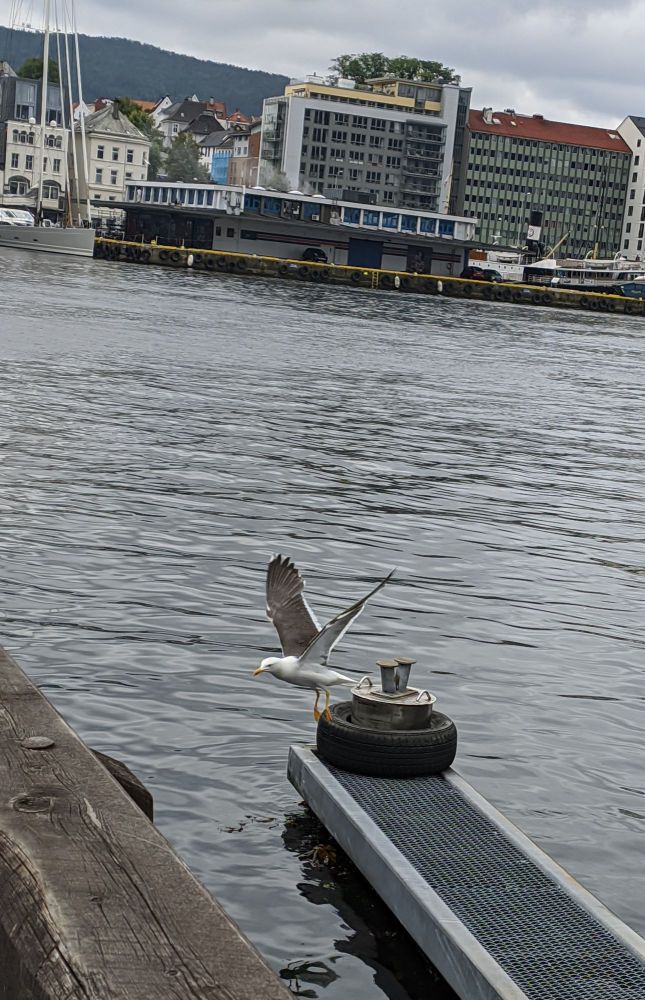
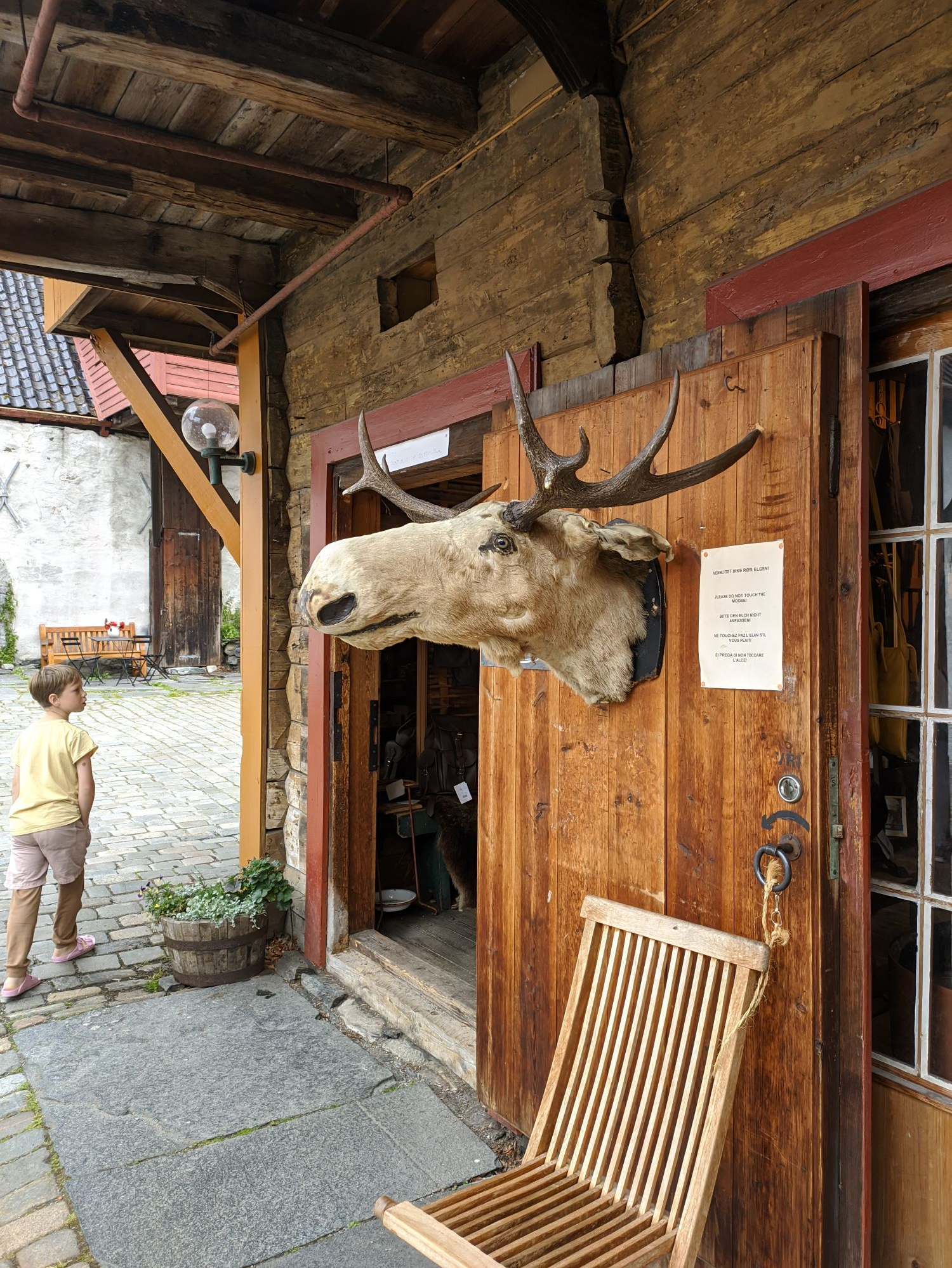
We walked with no particular destination in mind. This open garage attached to a little, ancient-looking wooden, wobbly cottage was the first interesting thing that caught my eye. No particular reason, but I appreciated the eclectic things jumbled together! Maybe it’s a symbolic collection of all that Bergen is and offers!

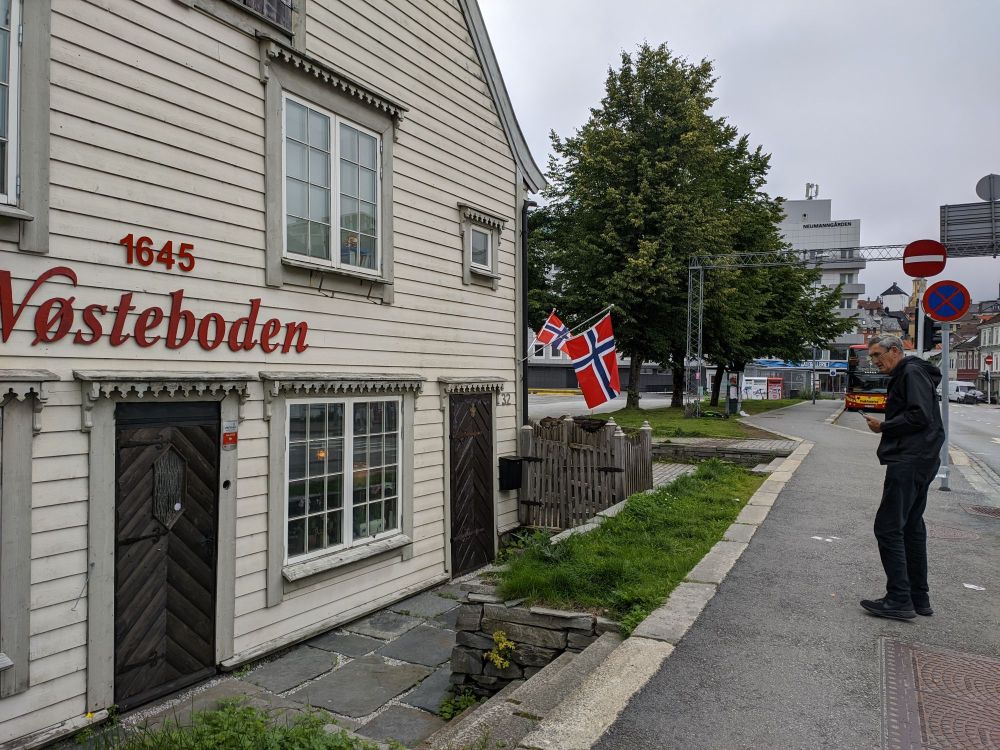
This house has what looks like a ship’s figurehead attached to its front wall.
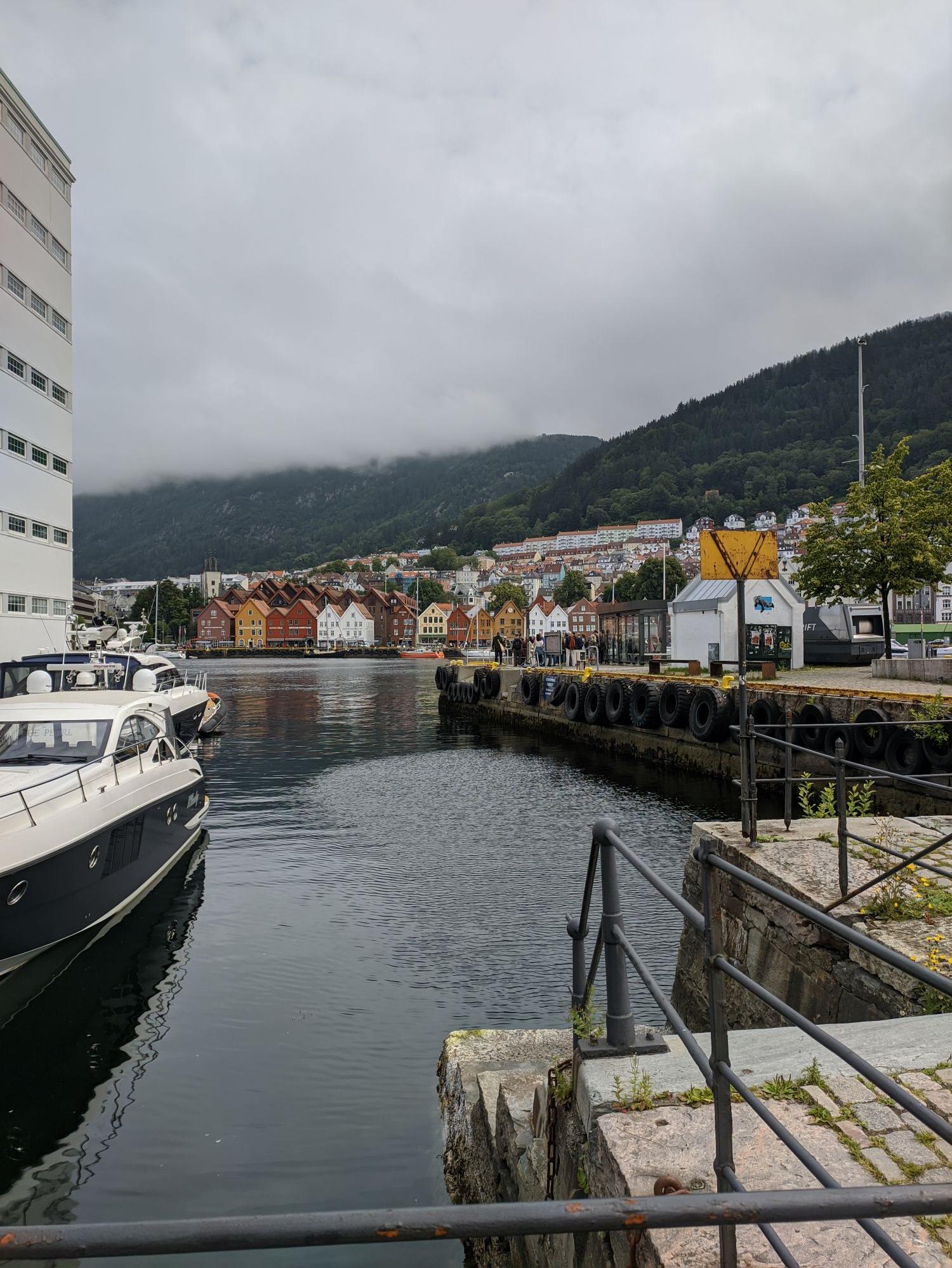
Boats, boats everywhere – from huge cruise liners to ordinary little boats and everything in between.
I liked the illustrations of this Sardine Factory.

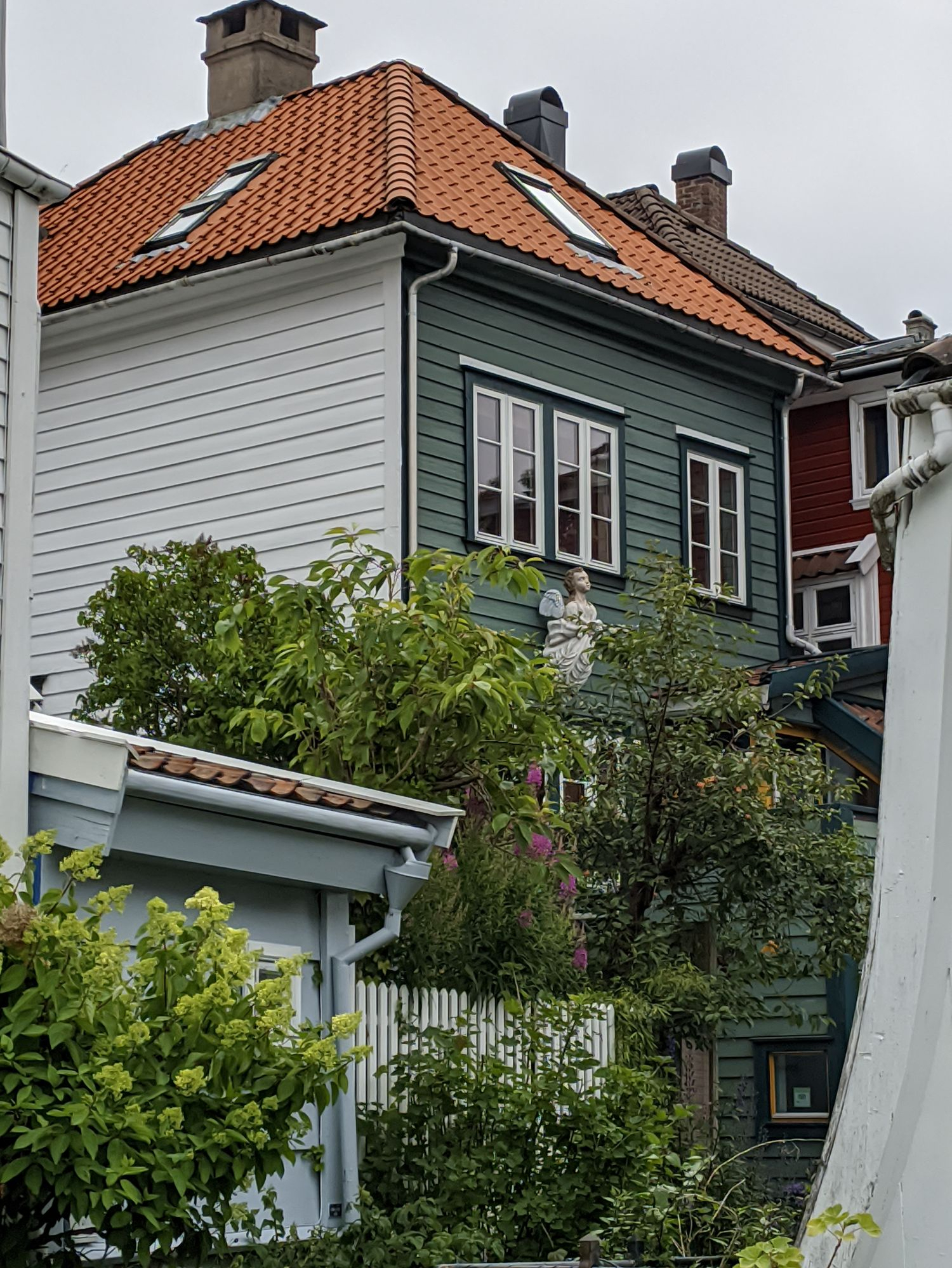
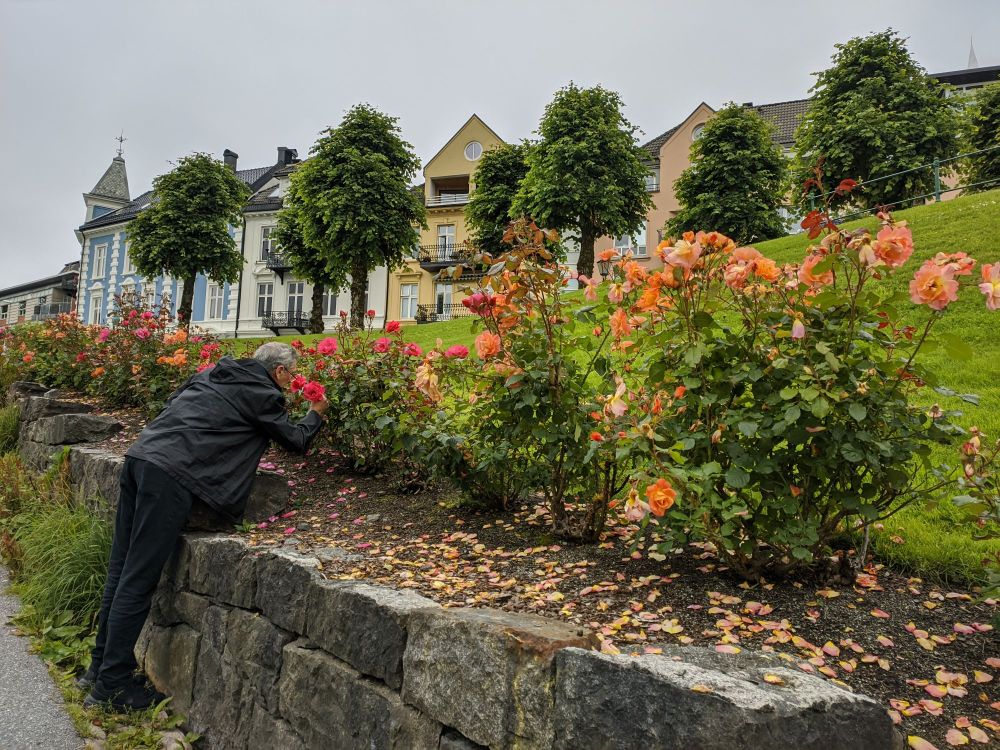
Philip stopped to smell the roses with very Bergin-looking houses in the background.
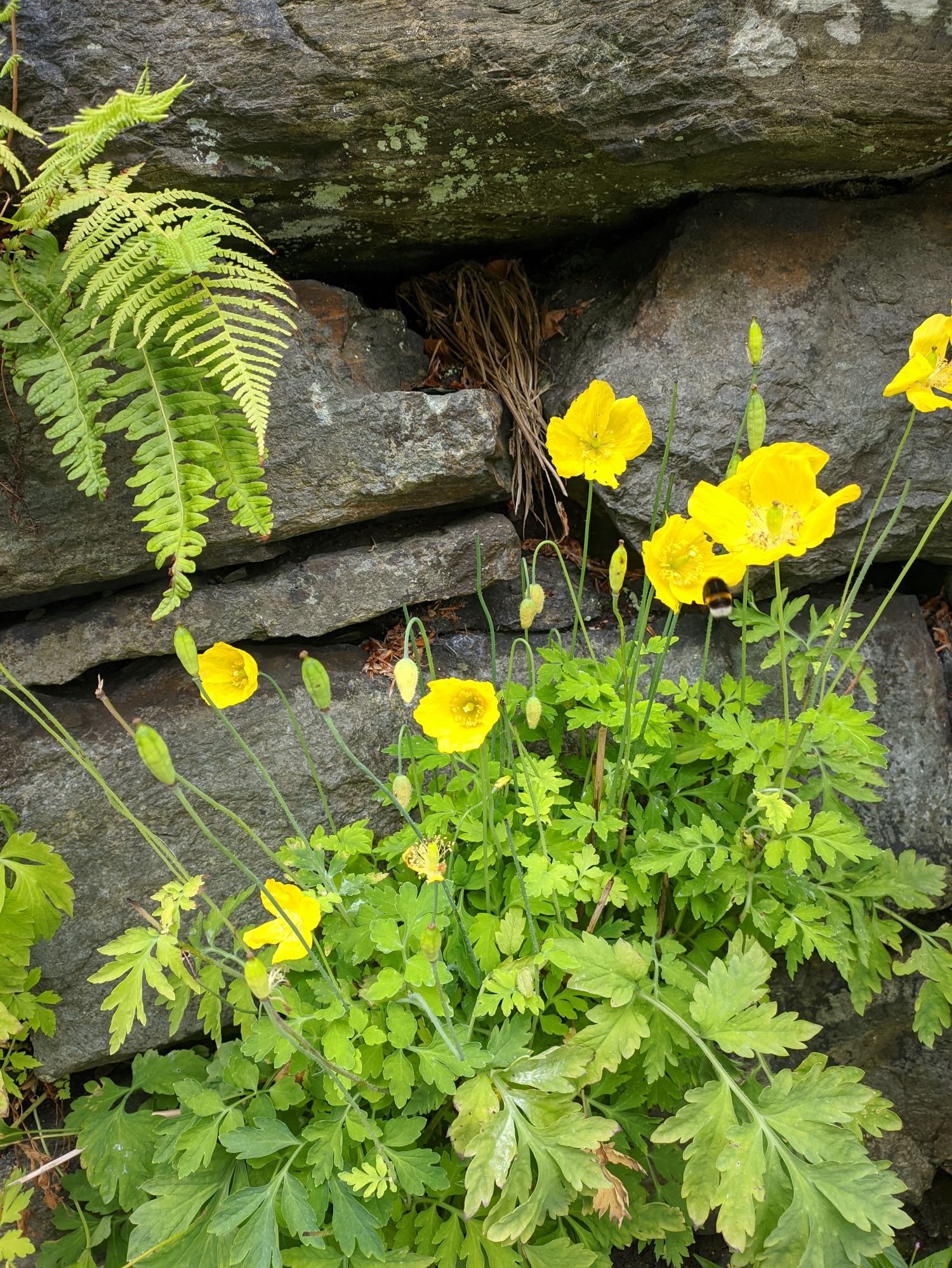
I found these yellow poppies growing out of a stone wall. Never seen yellow poppies before – they were keeping a huge bumble bee very busy. (You’ll have to look hard to see the bumble bee on the edge of a poppy.)
Norwegians love swimming. The bright blue pool is heated to 30C, but right next to it, people can go swimming in the sea water. If you look closely, there’s some people in swimming in the sea. Quite a few people were doing it! The sea water temperature was 14C! (I looked it up.) No wonder Norwegians are such a hardy lot. Between their long winters and cold-sea swimming…..!

Nearby was this totem pole given as a gift from North Pacific tribes near Seattle.

We meandered around the peninsula to the famous tourist spot of the Fish Market, selling everything from cheeses to live seafood to dried fish.

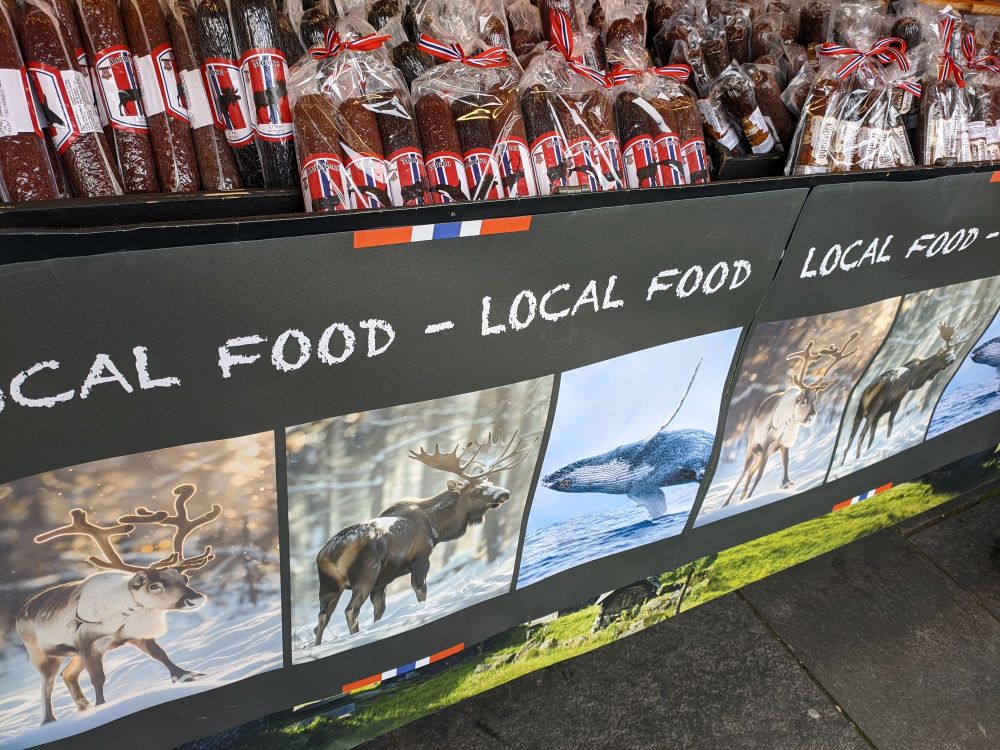
And not just fish – you can also buy and eat moose, reindeer, whale! But we didn’t. That was a surprise. In my small world, it hadn’t dawned on me that you could or would eat those meats.
Philip had been told by friends that Norwegian ice-cream and hot chocolate was “to die for”. He’s had trouble tracking them both down but managed it today. He enjoyed them both, but said they weren’t actually as good as the Gabriel’s chocolate we get down at Dunsborough in WA!

Nearby I took a photo of this statue of Shetlands Larsen whom I’d never heard of. I looked him up later. Leif Larsen was a highly decorated Norwegian sailor who escaped Norway in World War 2 in a fishing boat. He was a remarkable leader who then made 52 trips to Norway in ordinary, small fishing boats during that time doing dangerous war work, delivering Allied soldiers and ammunition and rescuing refugees and resistance operatives. A truly remarkable man who deserves wider recognition, I think.

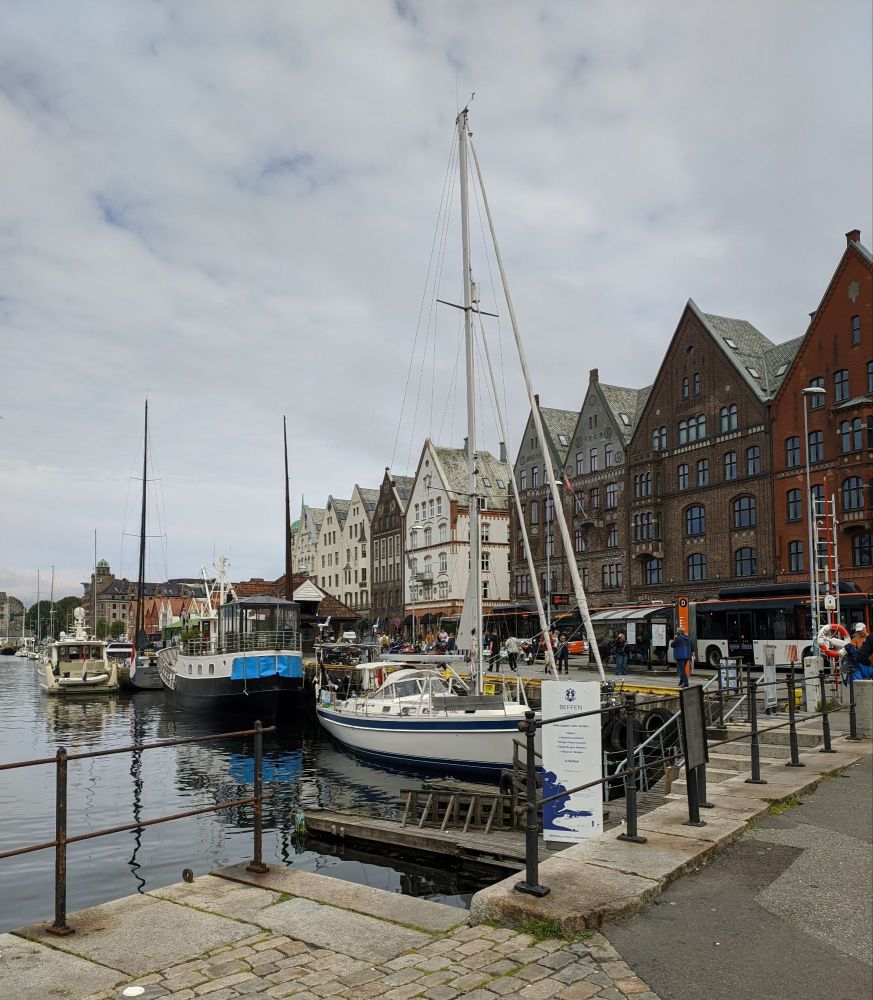
Nearby is the Hanseatic Museum (which is closed due to renovations) and Hanseatic houses. German merchants were here in this area for 400 years – from 1300s to 1700s, trading their grains for stockfish. This area is now UNESCO protected and was a fascinating discovery as we wandered through the little backstreets behind the shop fronts with interesting, poky little artisan shops. These tenement buildings are of medieval origin. Traditionally they were living quarters, offices, living rooms and storage space for the international trade based on stockfish.
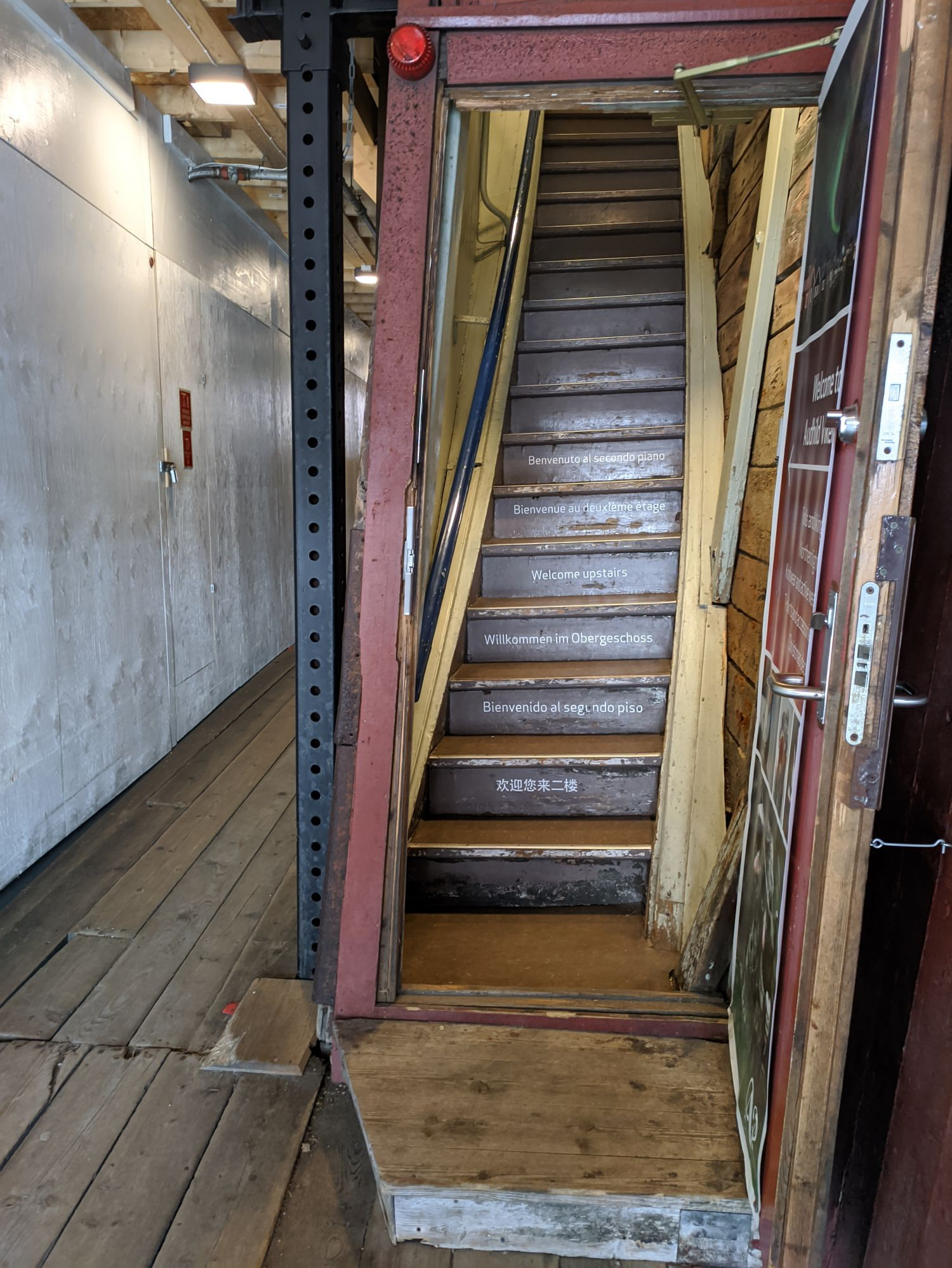
Notice the angle of the steps and door frames! They are being restored!
This wooden shop is “resting” on loose blocks of stone for its foundations.

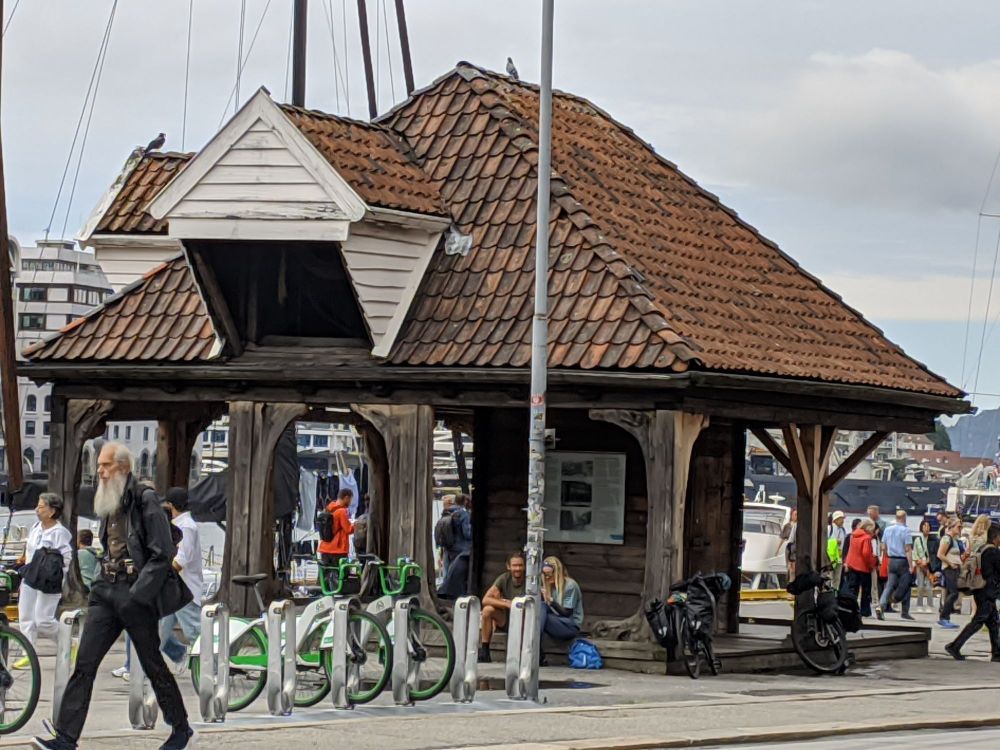
This is a replica of a Hanseatic wooden building used in their trading days
I noticed at the wharf, boats could either fill their engines with petrol or recharge their electric batteries. I’ve never seen that at a wharf before.

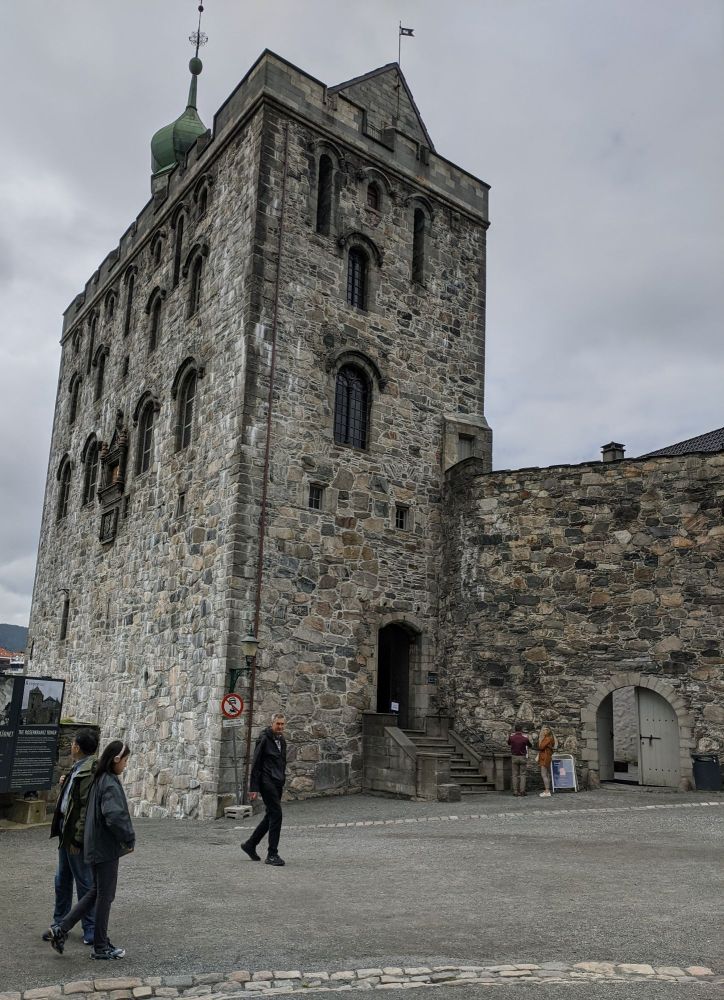
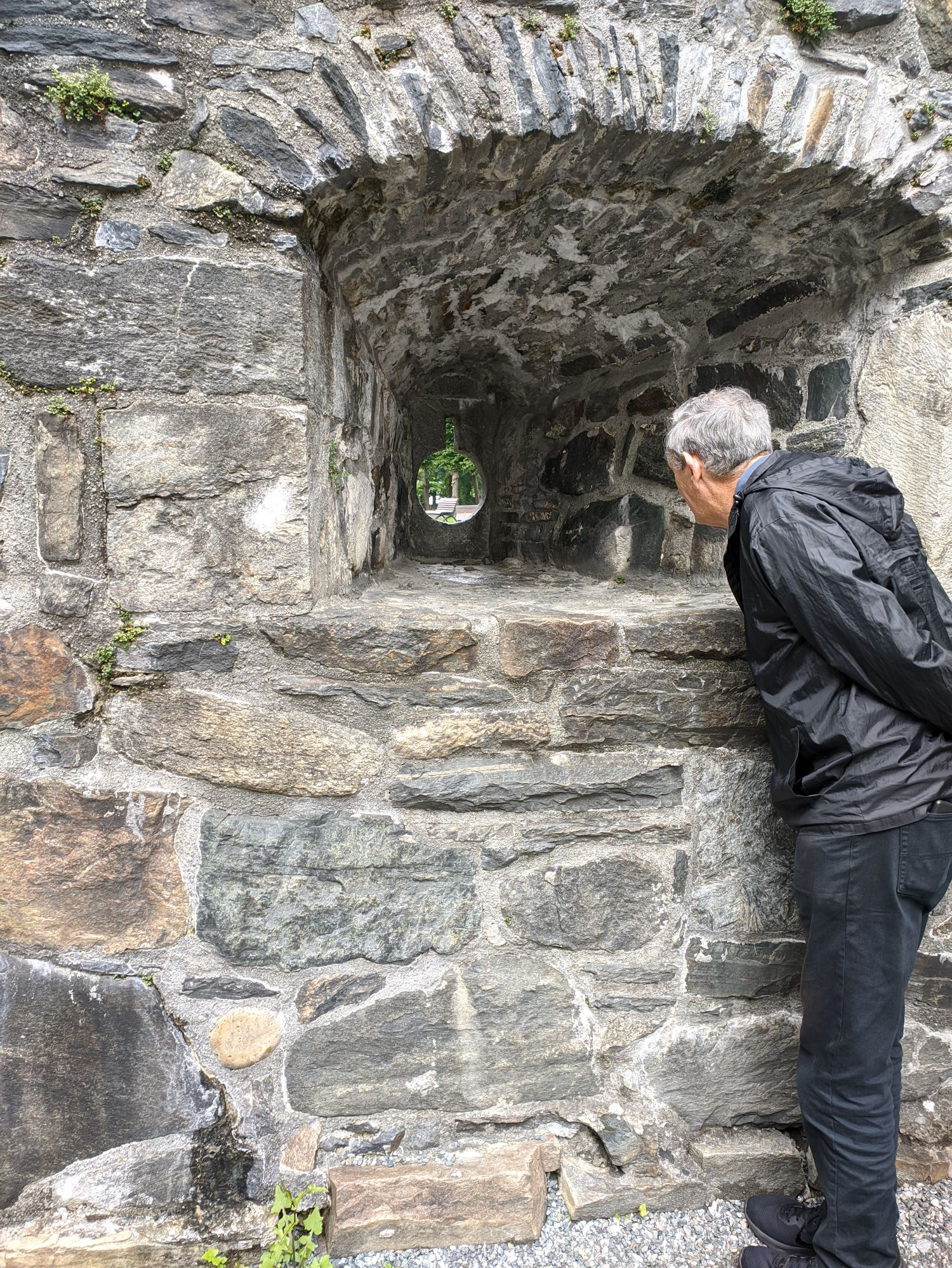
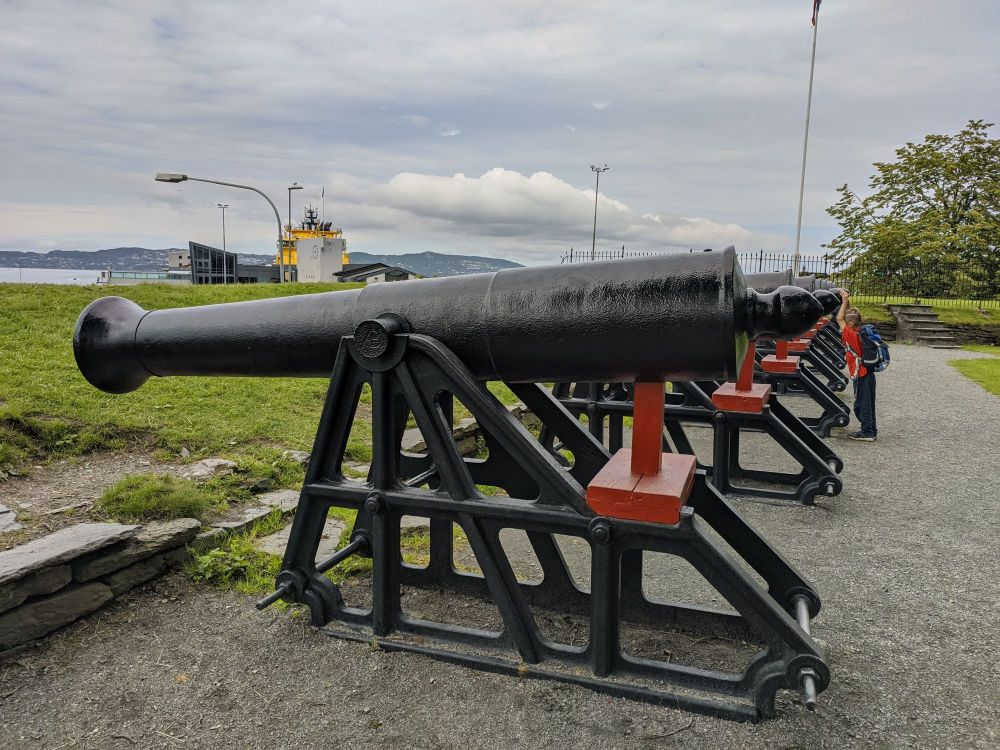
We meandered further down another peninsula to the Bergenhus Fortress. Started in the early 1500s it’s been used for military, royal and religious uses, sometimes simultaneously. It’s only ever been attacked militarily once in 1665 by the English. During World War 2 the Germans used it as their western headquarters. It’s still used today by different groups. We could freely wander around the grounds – and we did, eating my lunch there, but we didn’t pay to see inside.
This is called the Rosencrantz tower!
We finished our meanderings by sitting in a little park and reading our books in the late afternoon. There’s lots of beautiful parks around, and lots of bright, colourful annual flowers in pots scattered lavishly around. I guess they have to make the most of their short flowering season! We’d been walking for nearly four hours! So much to see, explore and learn – and we barely scratched the surface.
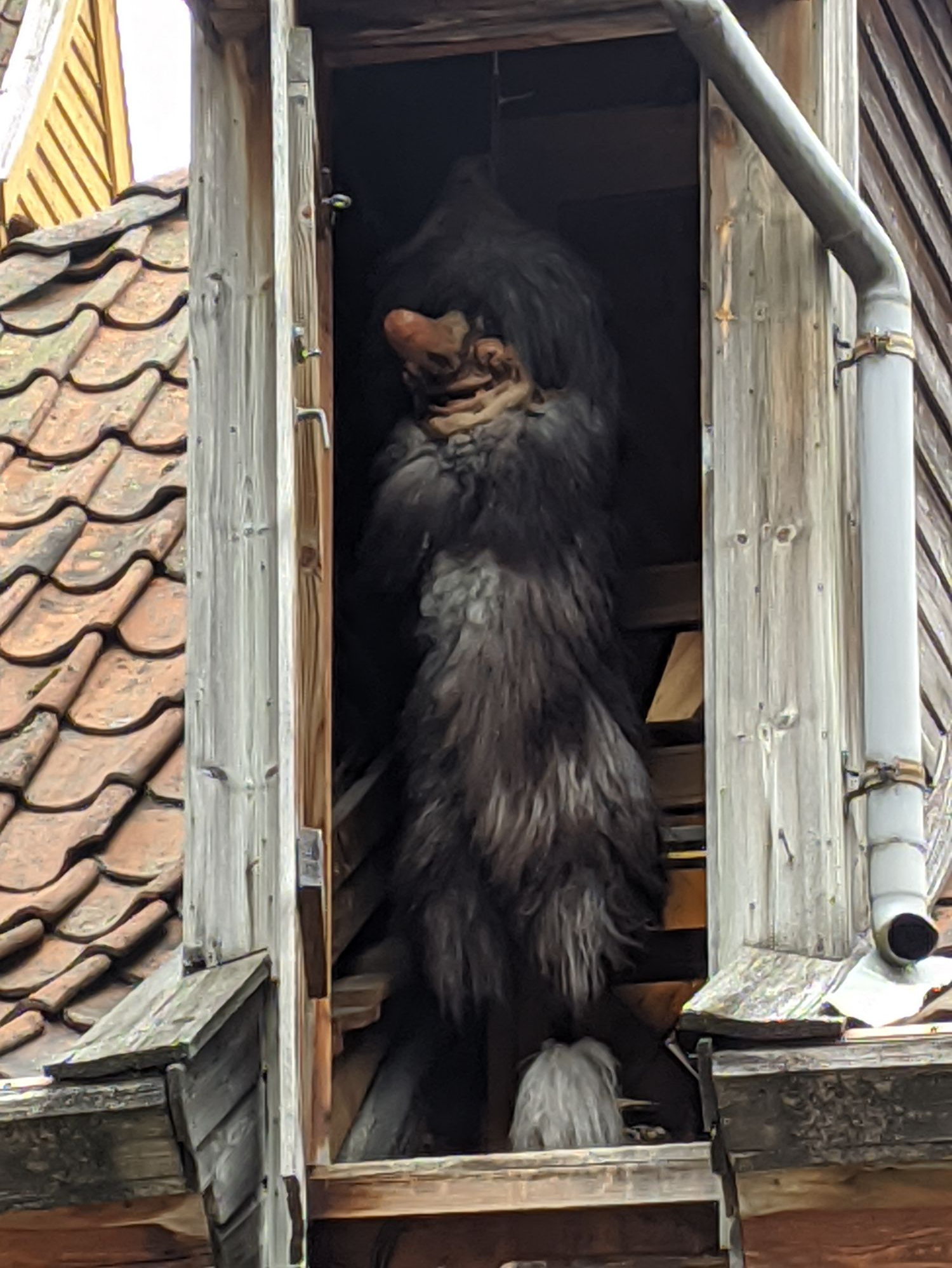
An eye-catching life-sized troll in the roof of one of the little shops near the wharf!
Bergen is a beautiful city with houses steeply stacked into the surrounding hillsides, full of interest and history. Tomorrow we’re on the move again!
 Standing on a hill
<
div dir=”ltr”>Oh Kathy, we are immersed