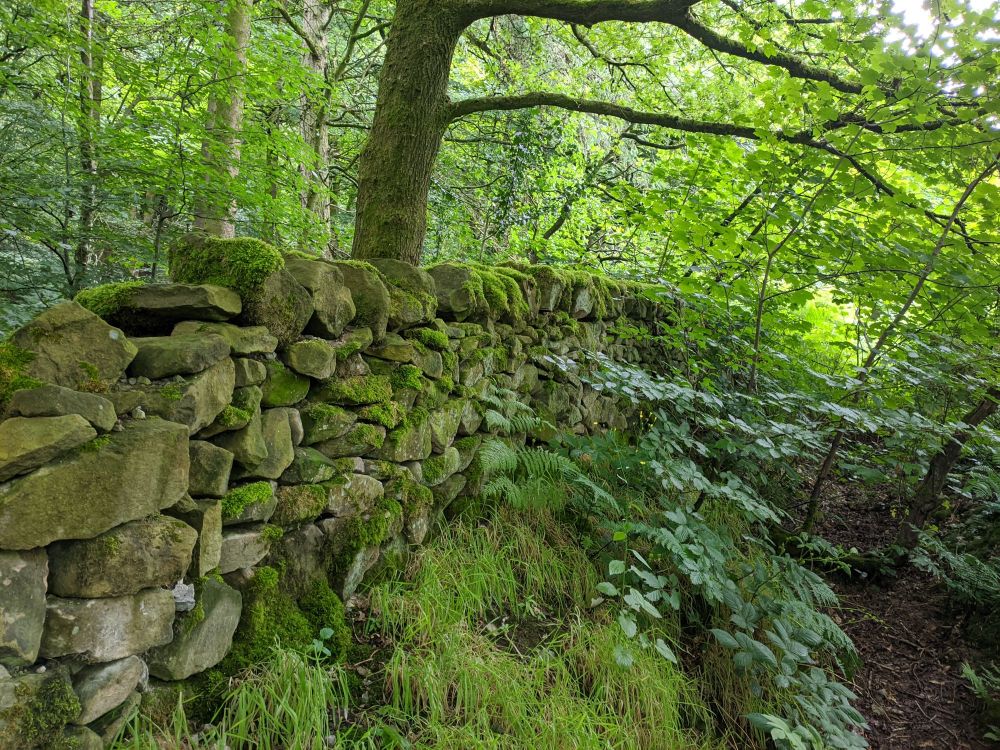
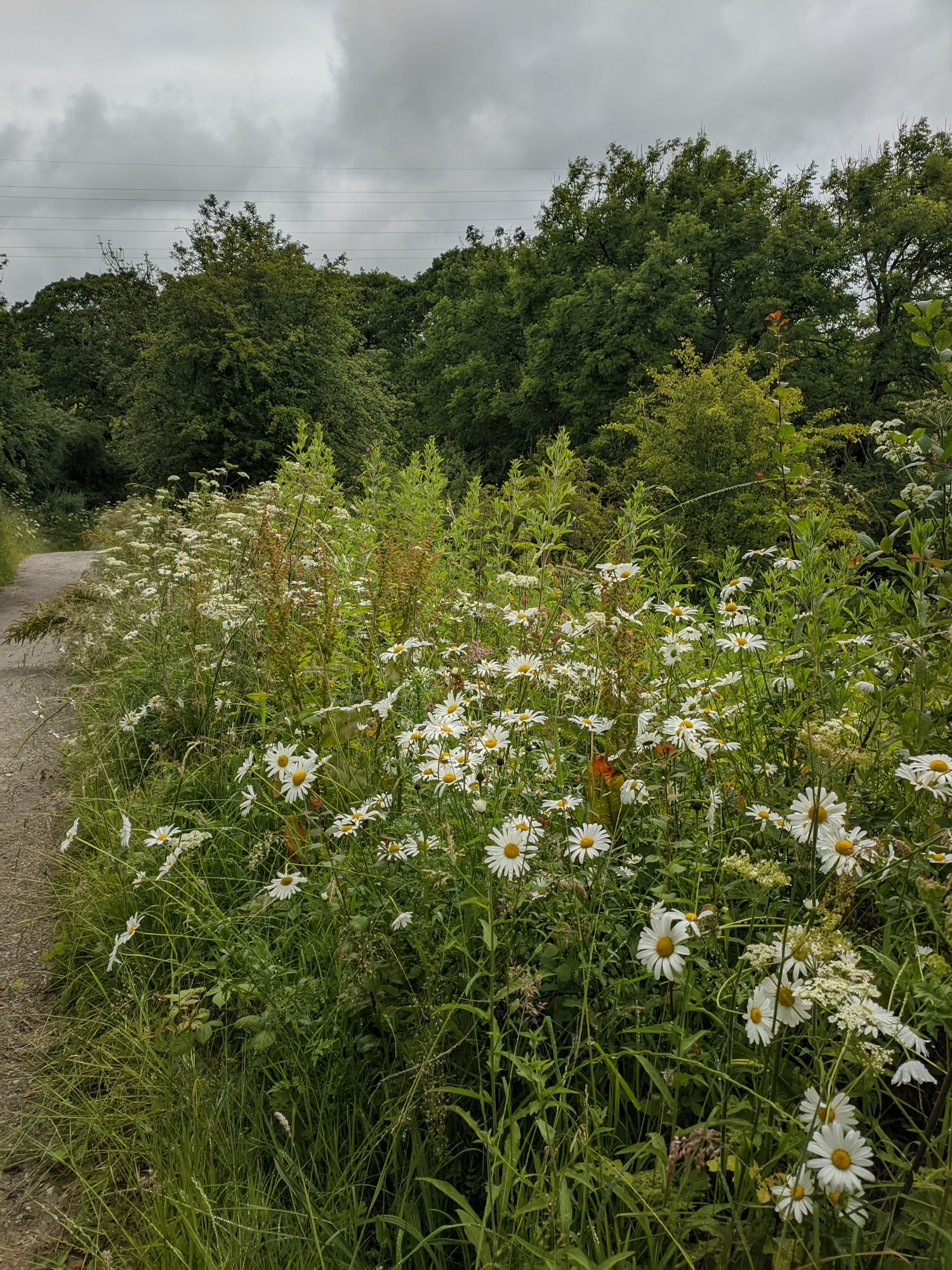
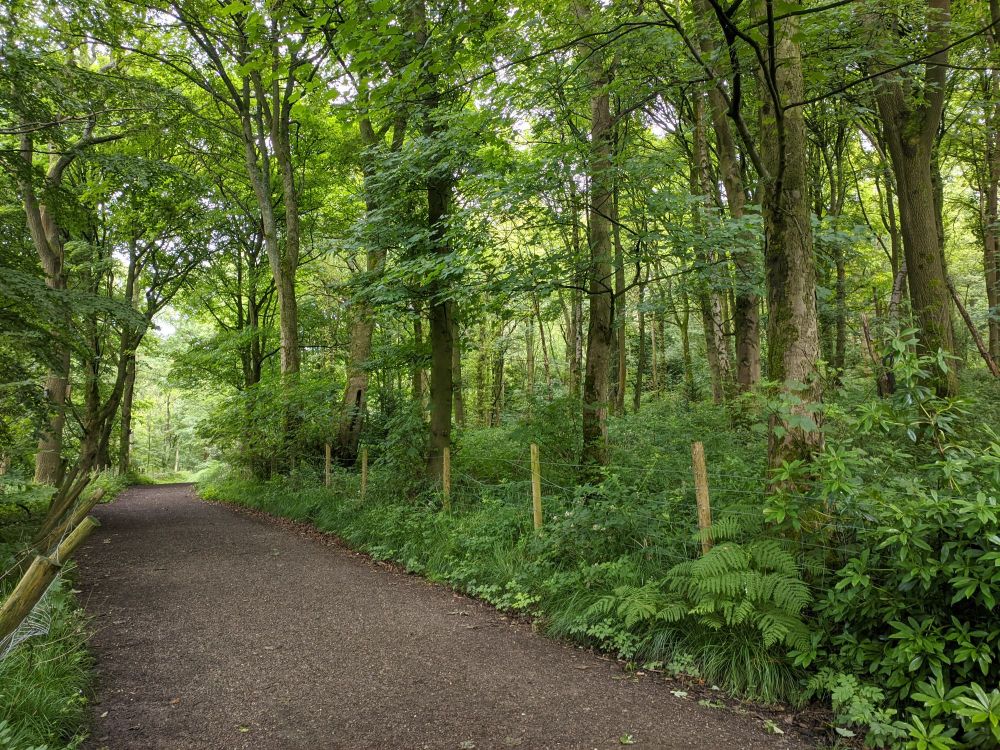
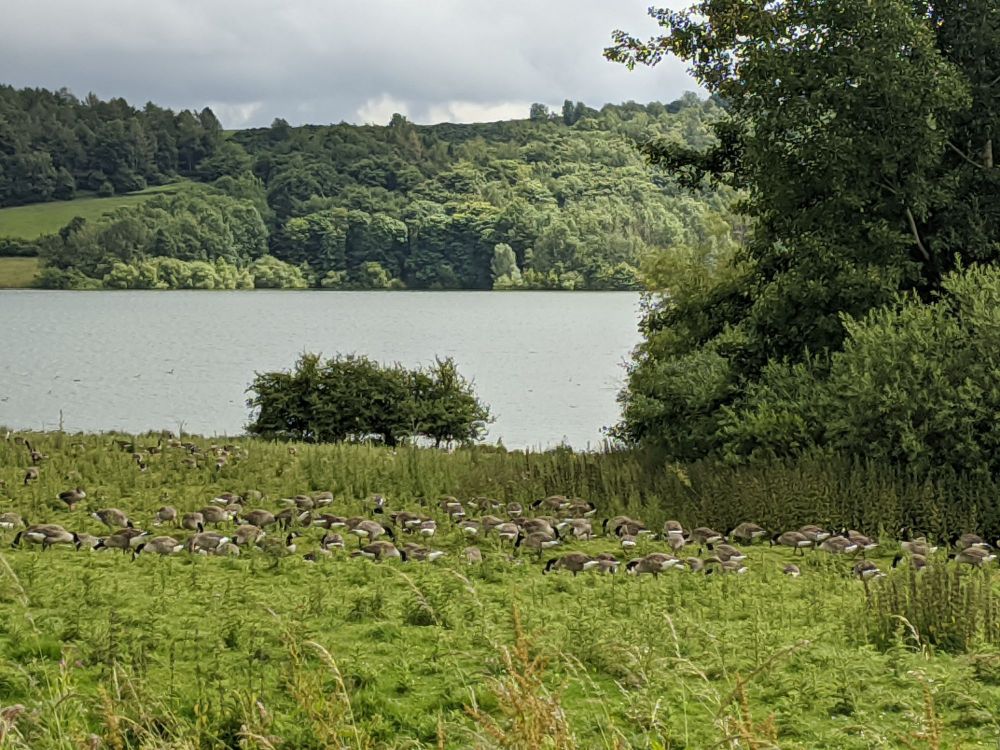
Running out of battery …

How do you write about a train journey that really defies description – of both words and pictures?

img_20240711_1550402483700010770367843

Philip and I took the seven-hour train journey from Oslo which is on the eastern side of Norway – near the Swedish border – to Bergen which is on the western coast of Norway.
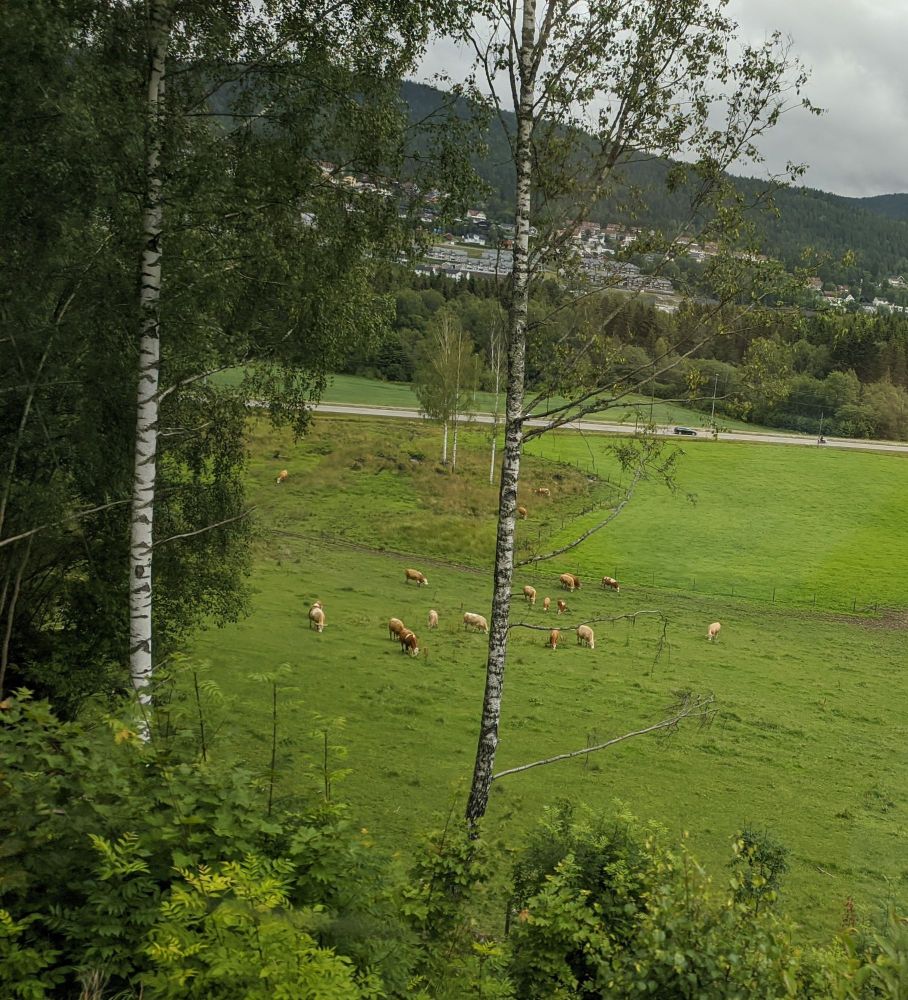
img_20240711_1836295983813842280130474

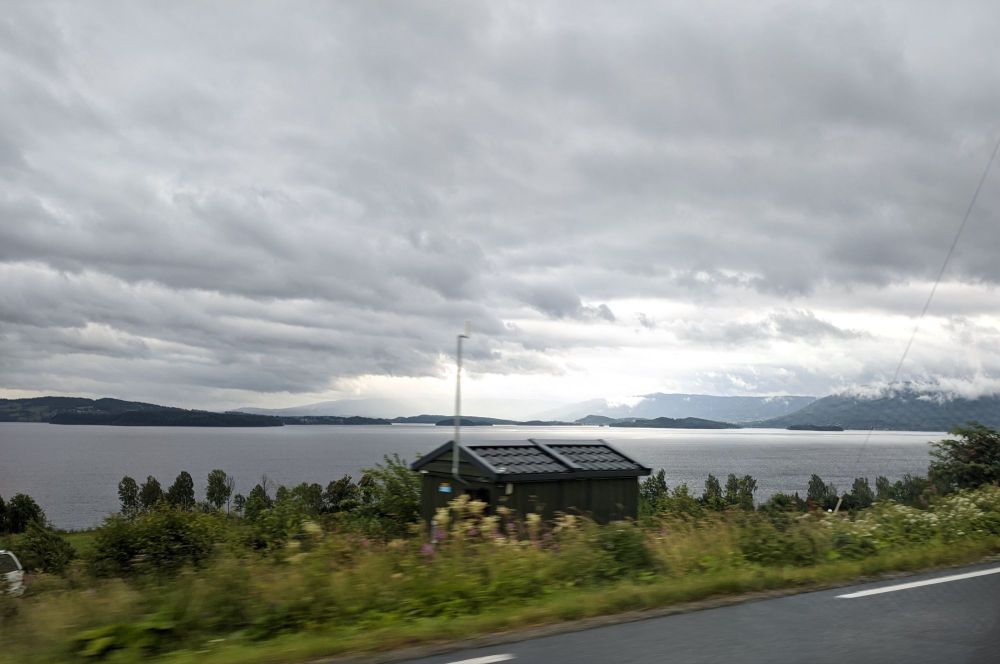
Not once was I tempted to pick up a book and read. Well…. maybe once or twice when we went through long, dark tunnels. There was always something new or jaw-dropping around each bend. No pictures will do it justice. I’ve deleted about 98% of my photos. Mind you, I took a lot. Sometimes just trying to capture glimpses of the grandeur and wonder of it. But I’m too slow and the train is too fast. Even if I did capture the scene – very occasionally – the picture fell disappointingly short. Most of the time I just looked out the wide windows, pointed out things to Philip in case I thought he missed it, gave a gasp or drew in my breath quickly.
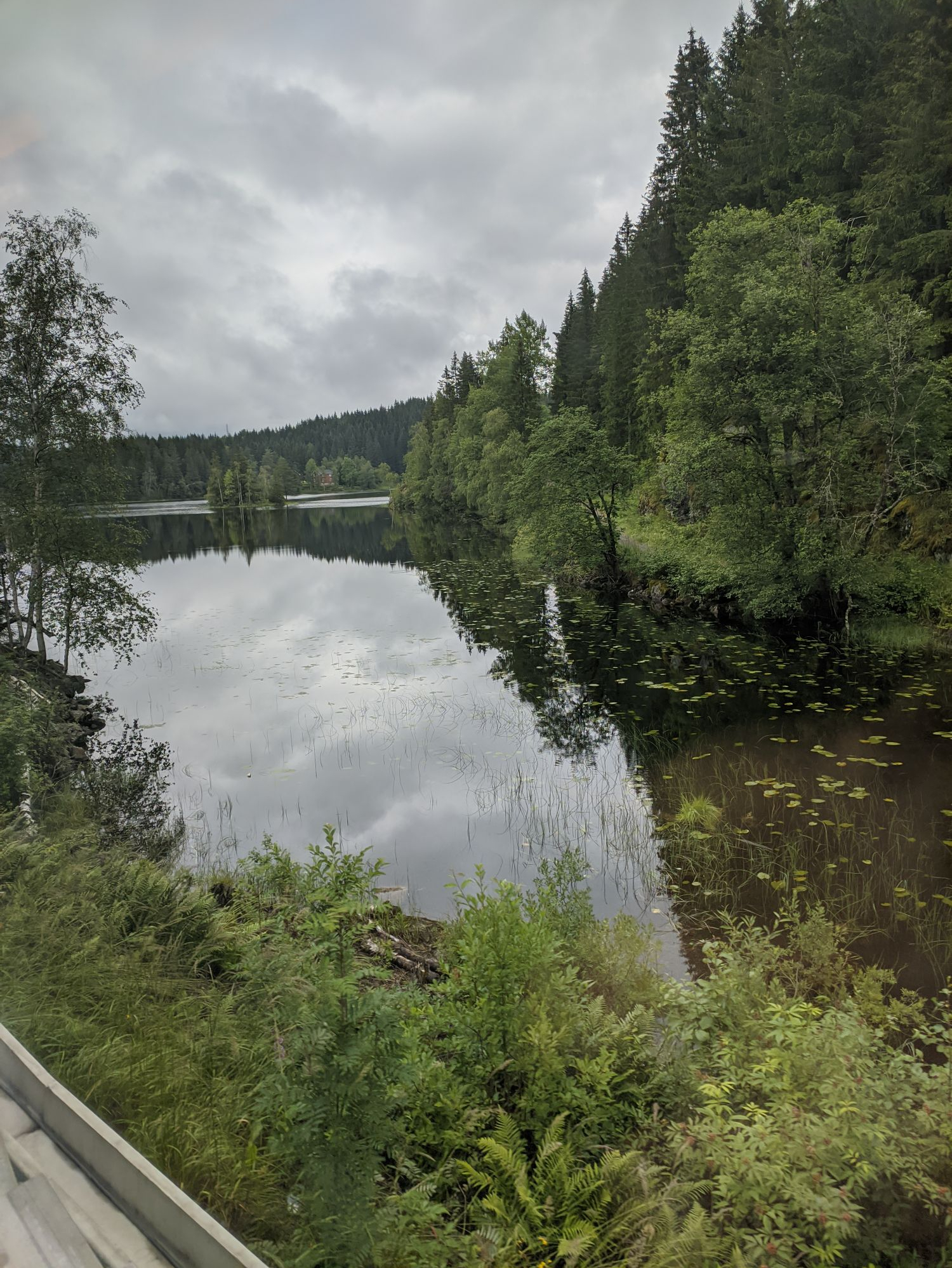
It’s just one of the many, many things in life that we have to experience for ourselves. I will still post a few pictures about it here. I took so many photos my phone/camera battery nearly ran out! Philip had a cord handy, so I plugged that in for a while to recharge it enough to take a few photos more.

img_20240711_2011165459022101415226356

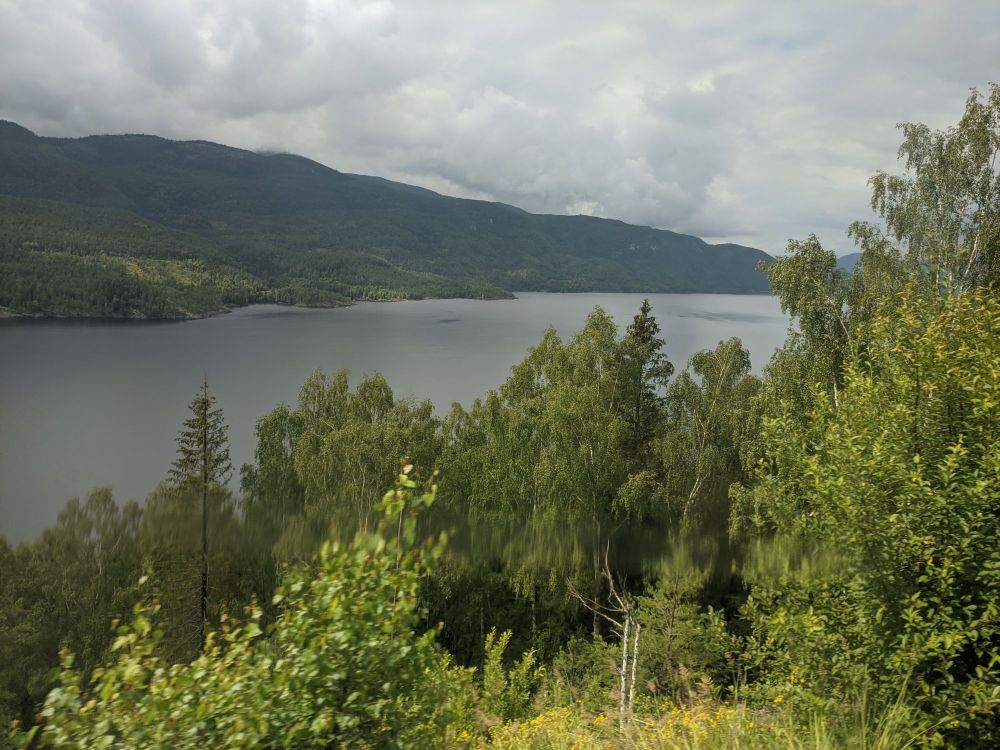
Oslo central bus station is very upmarket – more like a posh airport with hundreds of shops and eating places. After we boarded the Bergen train which was scheduled to leave at 12:03 (which I thought a strange time – why not 12:00 or 12:05?), the train pulled out of the station exactly at 12:03. No announcement or fanfare, it just glided smoothly out of the station very efficiently, right on time. We had wide windows to look out of and comfortable seats for our seven-hour journey. A train can be much more comfortable than a plane. You can get up and down as you please, stand up the back to stretch your legs, find a better spot while you take your photos, change your seat if you want to, and much more interesting to look out the window. The seats and leg room are more comfortable too.
img_20240711_2007552157714594898260089

We rolled through tall pine and birch forests with lots of calm, reflective lakes. Most of Norway’s forests are managed sustainably. The farmers leave some of the trees behind when they’re harvesting them, so that they can drop their seeds and start growing again. So many things are made of timber. I even saw a couple of station platforms made of them.

img_20240711_205118518688708835934510

A station platform built of timber

Wildflowers everywhere – cream, white, purple, pink, golden-yellow. Peter told me yesterday that they’ll be finished in a week or so. The season is very short. I saw lots and lots of wild ripe redcurrant bushes dripping with their ripe, ruby fruit in the forest. I looked at them longingly! When we stopped at one station, I glanced down beside the track and saw tiny, ripe wild strawberries too.
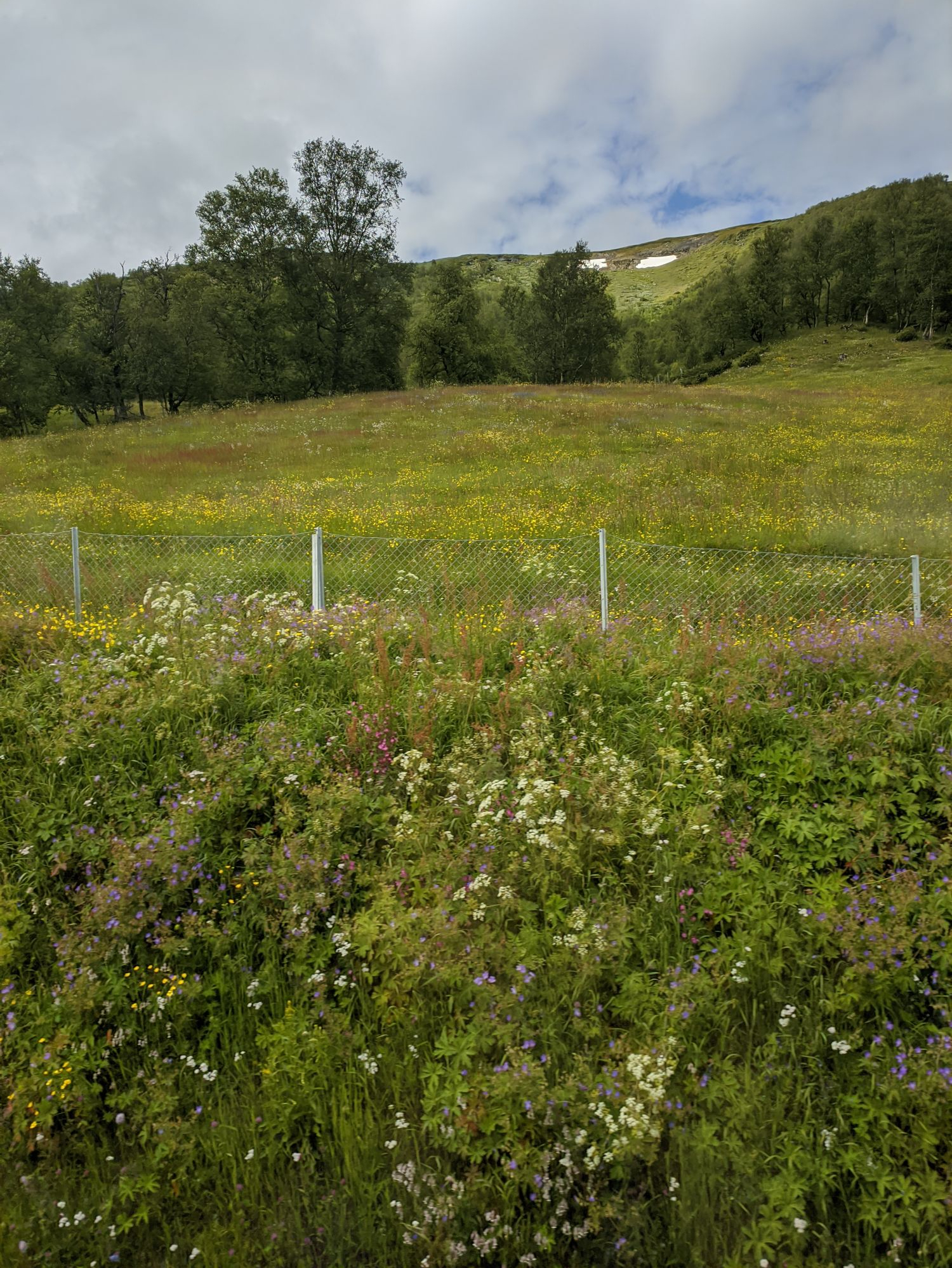
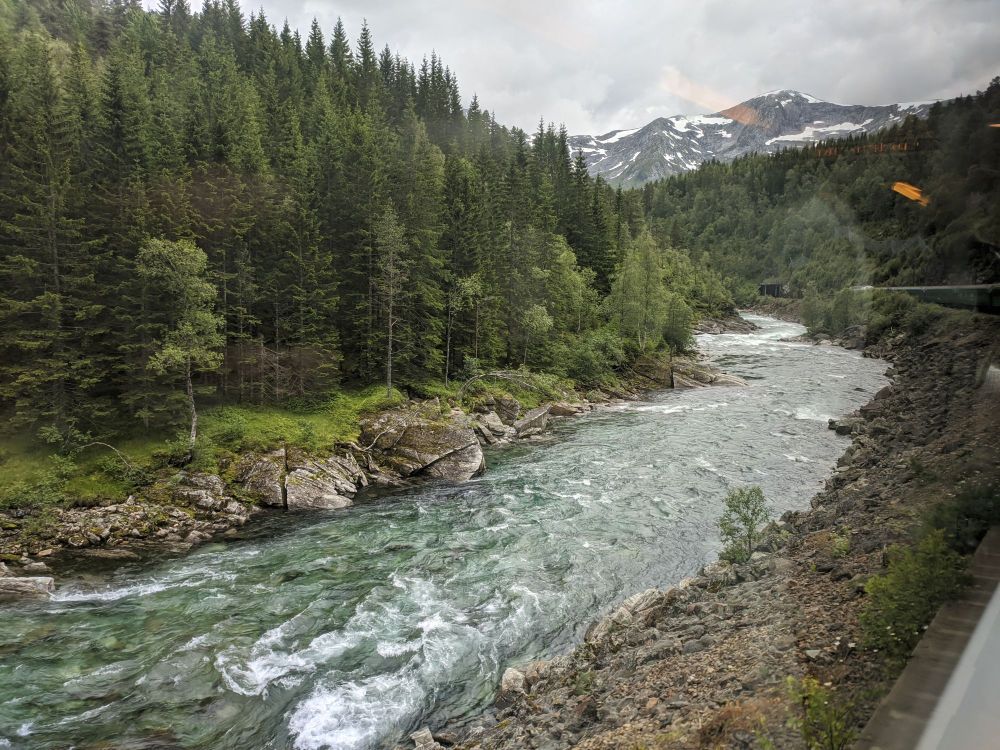
So much water! Wide, dark, smooth, calm lakes – both small and large and stretching as far as you could see in both directions.
img_20240711_2335251405614560142024239

Lots of fast, rushing, clear brown river streams – until we got higher up when the fast river colour changed to icy blue-green. In one fast-flowing stream I saw a huge chunk of ice – almost like a mini-iceberg – that had broken off a huge snow patch and had fallen into the river to become part of the river. But I wasn’t quick enough to get a photo of it.

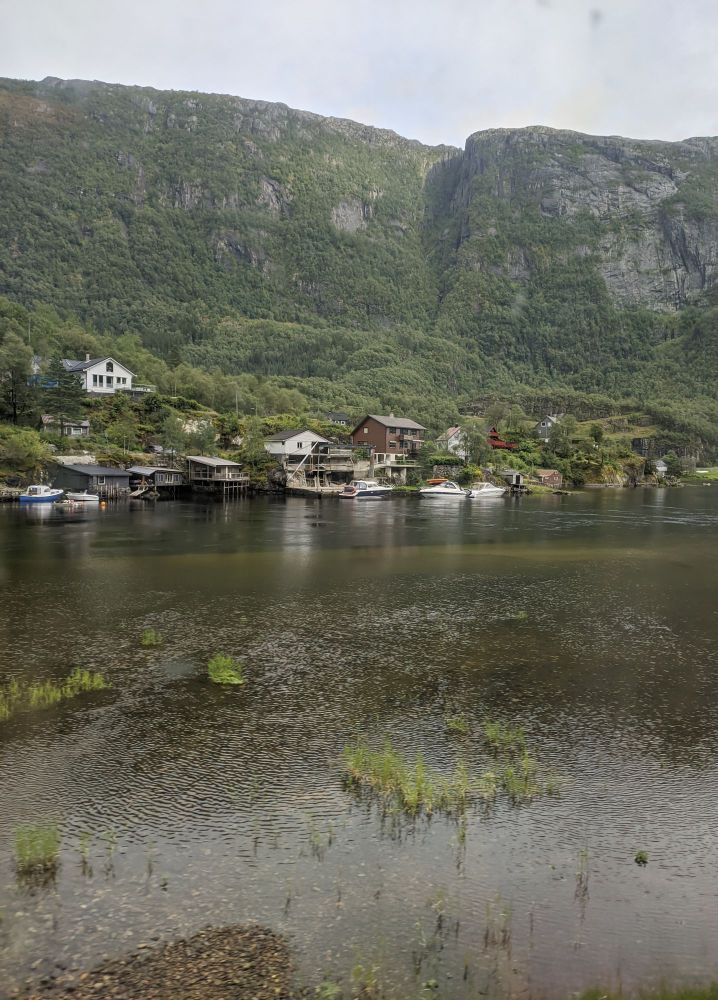
I was very surprised at how many houses there were on the trip. Red houses, ochre houses, dark grey or white houses. Very Norwegian looking houses. Lots of small settlements to bigger towns and we stopped at some to let passengers on and off. Lots and lots and lots of small cabins dotted everywhere, all over the hills and mountains. Auntie Mollie said yesterday that she thinks all Norwegians aspire to having a mountain cabin for the winter, and a beach or lake cabin for the summer.
img_20240712_0031406836102126442597302

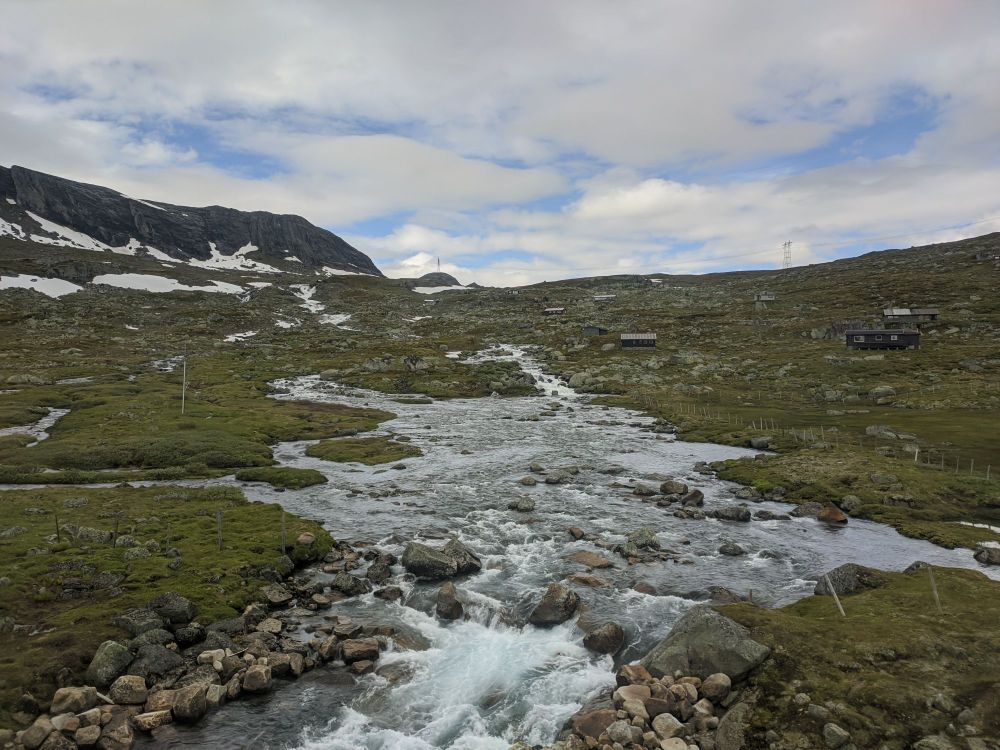
As we went higher and higher up the mountains the trees became shorter until there were only small, stunted birch trees straggling along and it got stonier with big patches of snow and ice. Mid-way on the journey, there were no trees anywhere to be seen – just huge smooth boulders everywhere with green grass between and lots of ice. Many hikers and bikers got off at the station platforms up there. It was 12 degrees!
img_20240711_2238075603367896270083504

You can see several cabins on the right side of the photo

I hadn’t expected to see so much snow at this time of the year. Mainly in big white patches on the high, dark mountainsides. But sometimes the patches were right beside the railway tracks.

img_20240711_225054194019152823961861

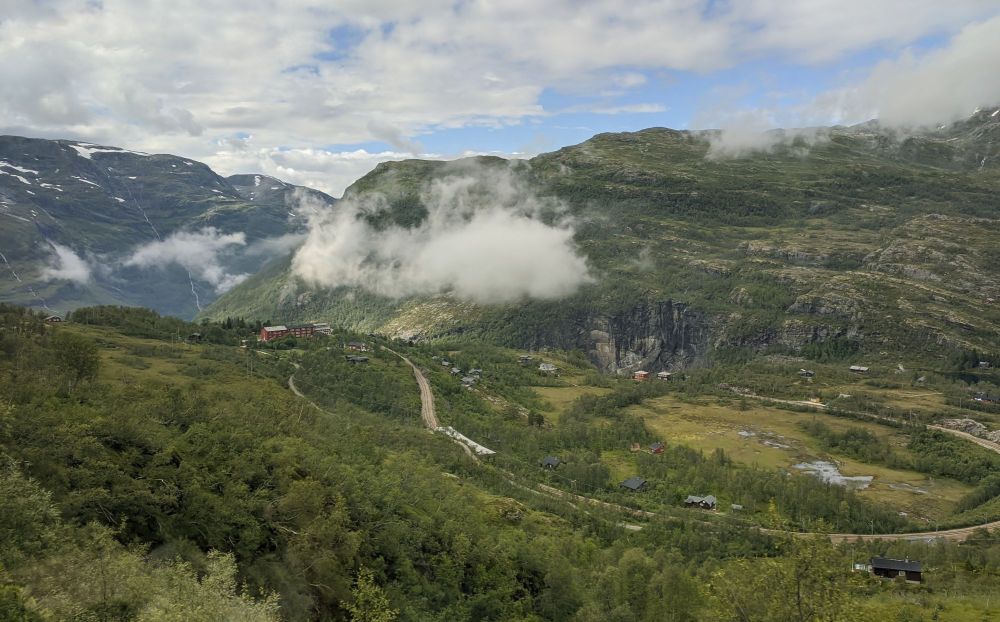
Then the trees start appearing again. First the birch getting taller and taller, then the pine trees join the birch trees. Sometimes the clouds were below us on the train.
img_20240711_225839_15657864721060708614

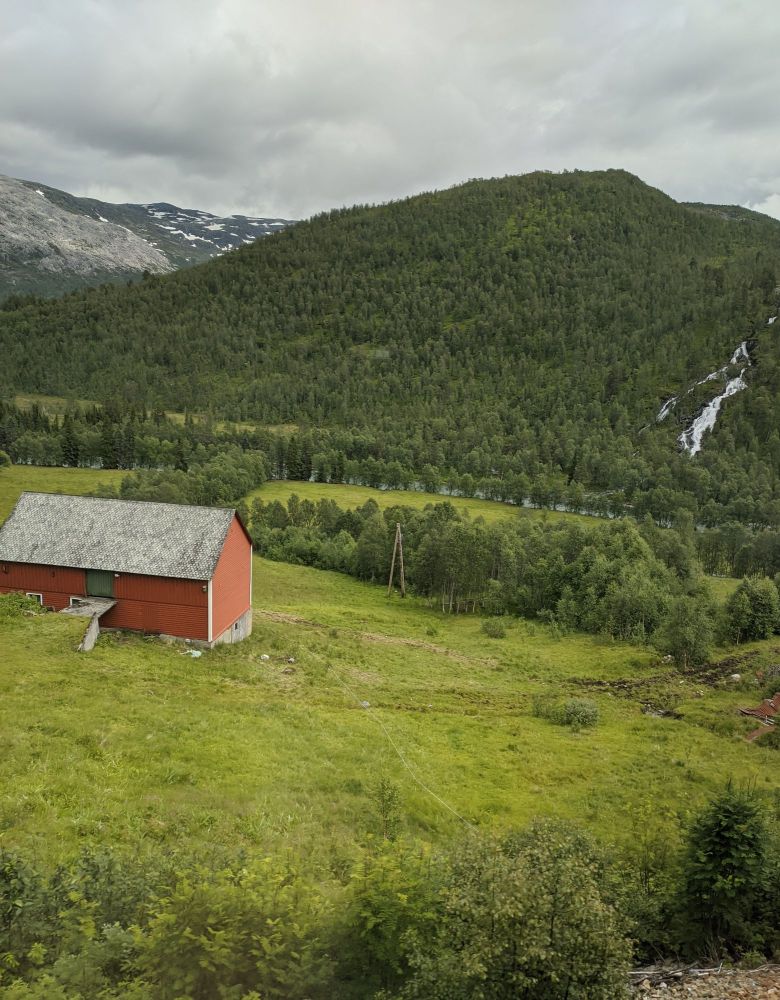
Huge, high, deep, steep ravines cutting and dropping down to the frantic, white-water river rushing and gushing and hurling itself over boulders and rocks in its path. You could see white waterfalls of all sizes and widths rushing down the long black rock, dropping down into the lakes, the river or fjord.
img_20240711_2323533692794913822090467

Sometimes there were wide valleys with wheat fields and hay fields squeezed in beside their farmhouses. I noticed every now and then that there would be sod-roof houses and farm buildings and storehouses shaped like we saw at the Folk Museum. I guess they know that there’s values in the old ways.

The wide, deep, dark and mysterious fjords wound round the mountains and the railway line followed it.

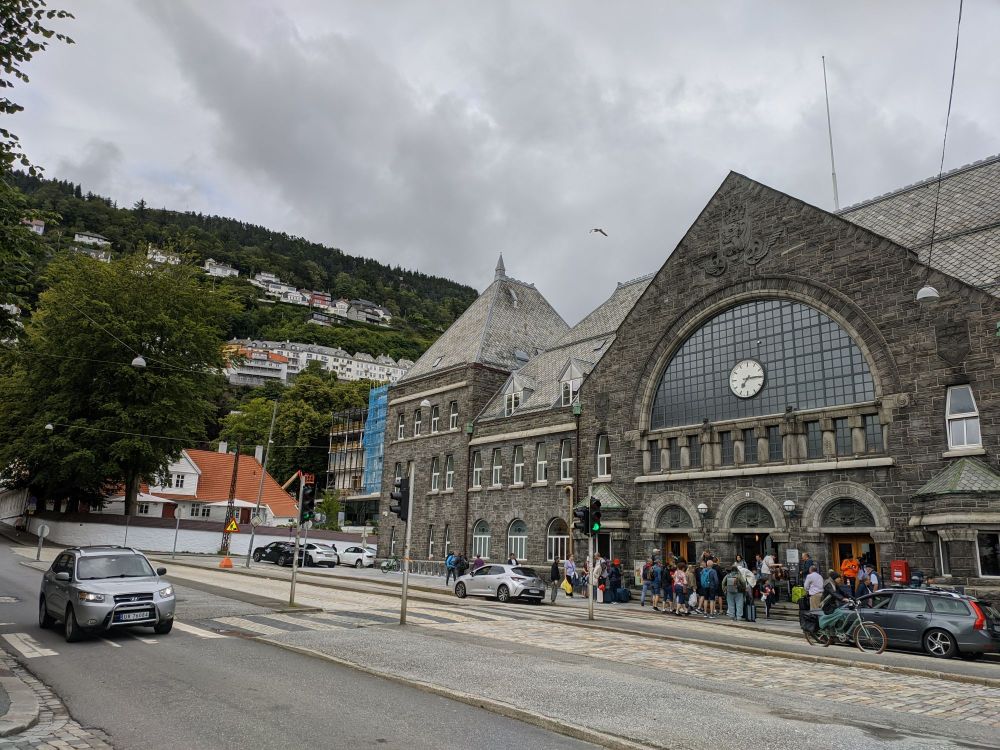
Now here we are in Bergen. Velkommen til Bergen!

img_20240712_0112173962492425429815962
img_20240712_0115152698806377718804538

But you really have to experience this for yourself someday. And if you already have, you understand my inadequate explanations!

Hearing stories…

Not only is it raining today, it’s rained all day – a mostly light, misty “Melbourne” type of rain such as I remember. Such a contrast to yesterday’s sunshine.

This is a different blog tonight. Lots of stories and not much action by us!

Peter picked us up late morning and while we waited for Auntie Mollie to be ready, he drove us around Drammen. (Us seeing Auntie Mollie who is 97 years old is the main reason we’re in Norway.)

img_20240710_1807325078638812823970129

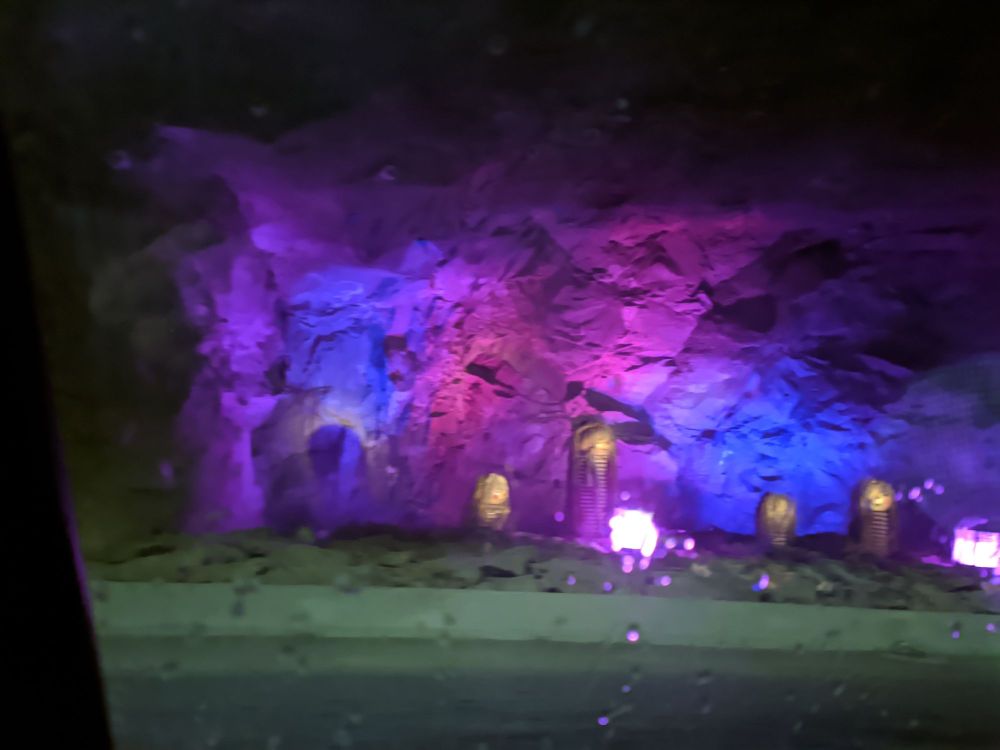
Peter drove us up into the nearby mountains which were draped with light grey, diaphanous clouds like a swirling scarf around its head. Back in 1960, an engineer who was digging out boulders from the mountain to construct new shipping places decided to not just dig into the mountainside, but to dig upwards in a huge spiral inside the mountain to come out at the top of the mountain. This spiral became a long spiral tunnel for cars, known as the Spiral Tunnel. Norwegians seem to have a puckish sense of humour because half-way up the tunnel is this grotto of trolls in a lay-by lit up. It’s not a good picture, but you get the idea!

img_20240710_174017234823362679896761

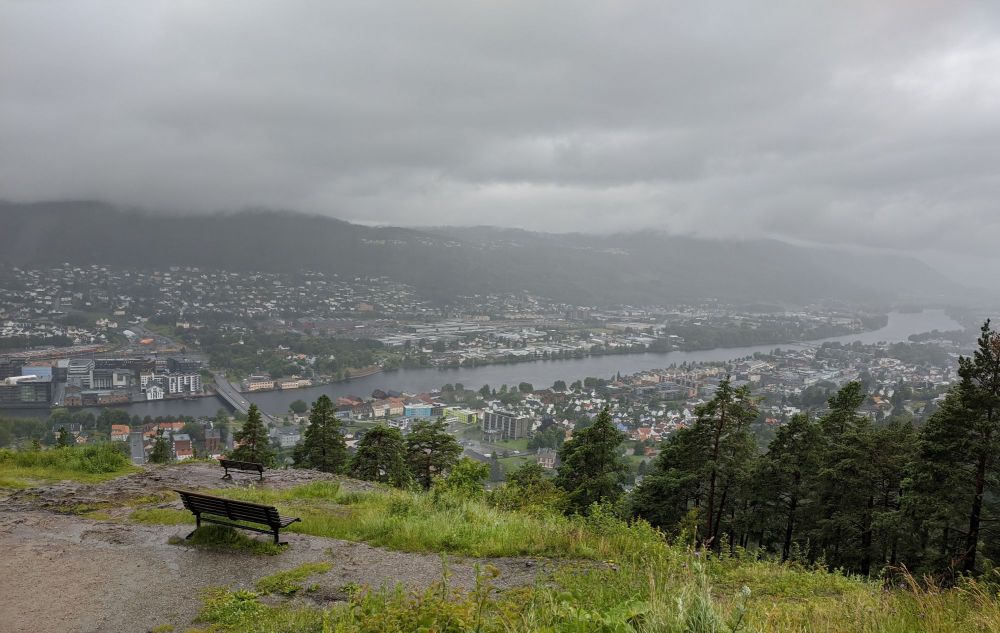
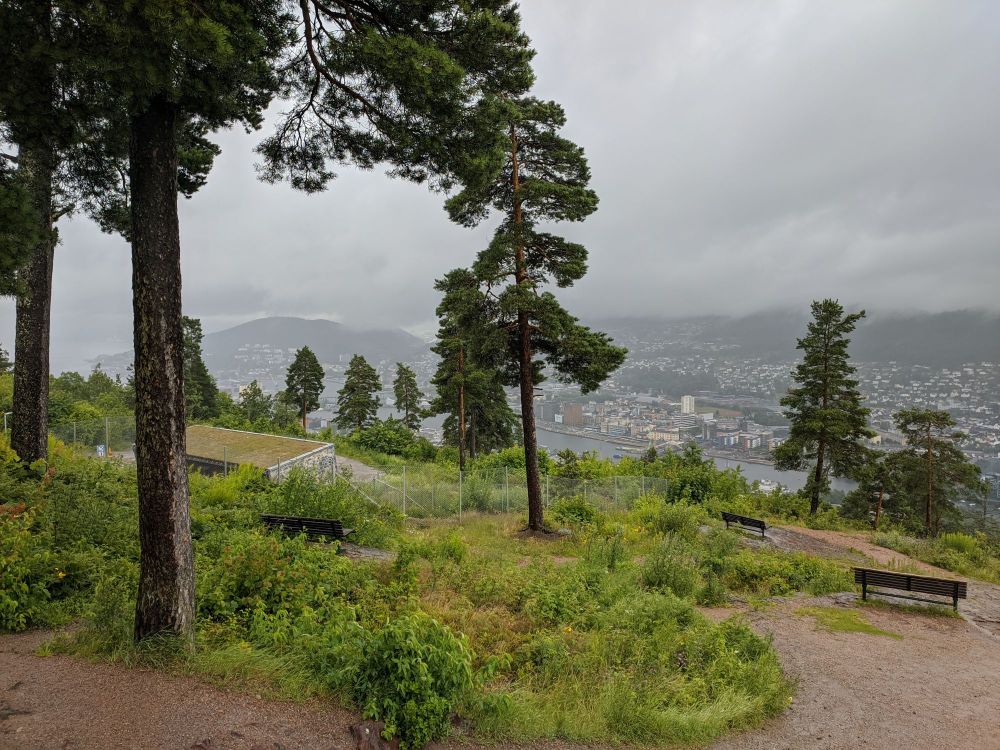
At the top of the mountain, you normally get great views of the city of Drammen below on both sides of the Drammen River which runs into the Drammen Fjord which runs into the Oslo Fjord which runs into the ocean. But today it was a very misty view. Still beautiful, but opaque.

img_20240710_1727431755303406961692352

Norwegians love their outdoors – skiing in the winter, and trekking and climbing in the summer. There’s paths and trails all over this mountain. They’re very energetic because these mountains are very steep.

img_20240710_1728081001767974166446240

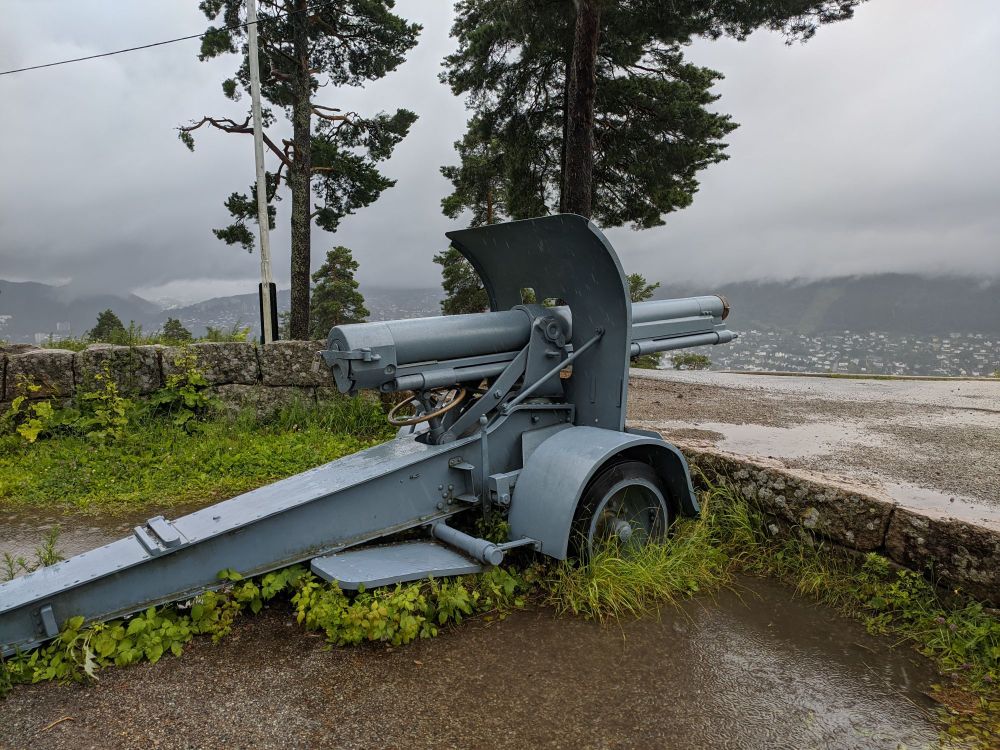
This cannon is the only one remaining from 1905 when it was feared that Sweden would invade Norway to incorporate it into Sweden. But the Swedes changed their mind and instead of war, let Norway become independent instead. If only all international conflicts could so easily be sorted out!

img_20240710_1730101191601470963609170

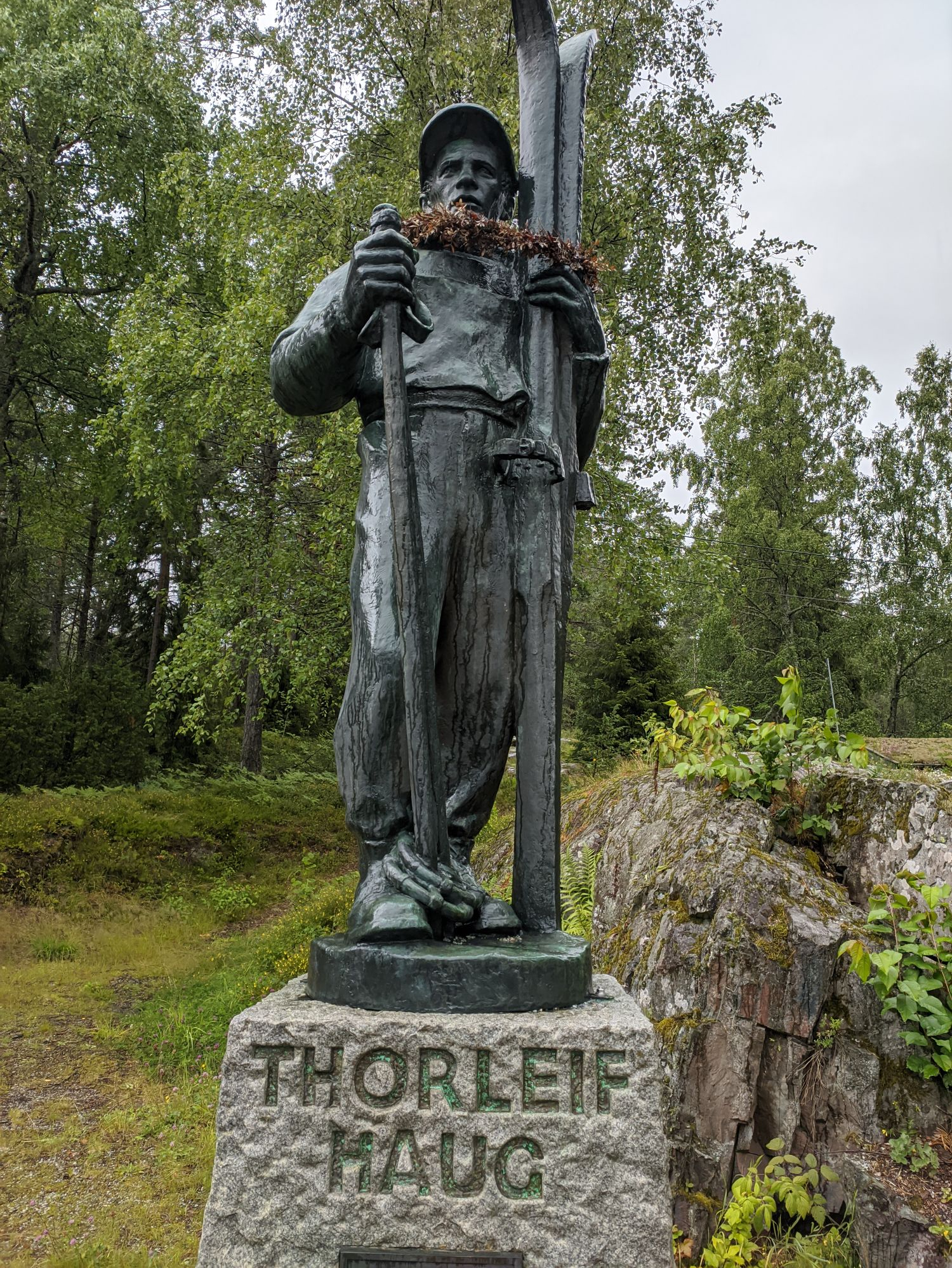
On the mountain top was also this statue so I asked Peter this story. Thorleif Haug lived nearby and in 1924 he skied across the country to Bergen. Philip and I are taking a famous train ride from Drammen to Bergen tomorrow and it’s going to take about seven hours by train! He skied all the way there – full of high Norwegian mountains and fjords! He won several gold medals in Olympic Games and European championships and is one of the most decorated sports heroes of Norway. After the Olympics he worked as a plumber and died 10 years later of pneumonia.

Peter drove us around the misty fjords – lots of farmlands, wheat fields, apple and cherry orchards dotted with farmhouses and small towns.

img_20240710_1838295147520504783507249

Auntie Mollie is “famous” in the family because she was awarded an Order of Australia medal, but she never talks of it. It was only recently that we heard about it, when we found out it was in connection with Australian War Graves in Norway. But we didn’t know anything more than that about it, so we asked Peter more details.

img_20240710_1915478225480226105386044

After Auntie Mollie married her Norwegian husband Gunnar, he took her around to the many different cemeteries around the country that had Commonwealth, and especially Australian war graves. She started wondering whether the families of these war dead knew where their loved ones were buried. So she spent inordinate amounts of time, effort and money in writing – it was back in the days of snail mail and when everything was “snail” – to newspapers, veterans services and clubs, trying to track the families of those buried young men. She eventually tracked them down over the years and heard the stories of the young men and in most cases, these families had no idea where their sons, husbands, brothers, nephews were buried. The War Office would give them no information. So Auntie Mollie set about rectifying all that and some of these grateful families years later came to visit the graves. She has also taken an active part in making sure the gravestones are looked after. Now Peter helps her and plans to continue the tradition after she’s gone. Every year, on 17 May local schoolchildren near wherever these cemeteries are, collect wildflowers from the forests and put them on the graves and there’s special ceremonies that are well attended. I was very moved while standing there in the graveyard. Norway suffered terribly during the war and many Norwegians were killed by the Germans.

Peter also told us stories about his father Gunnar and what he did as a very young man in those days of the war and how they could resist the invaders.

As he drove for over an hour to one of the cemeteries, Peter suddenly stopped the car by the side of the road to this.

It’s part of a World War 2 Sunderland plane that crashed. In April 1940 the Allies knew that something was brewing with Germany in regard to Norway, but they weren’t sure what it was. Norway was neutral in the War. The Allies sent a huge Sunderland plane – it was the only one with the range to get to Norway and back without refueling, but because it was so big it was slow and not manoeuvrable. The plane made it to Oslo and could see that the Germans had invaded Norway, but it couldn’t get away in time and was shot by a faster German plane and crashed in the mountains near Drammen. One of the men didn’t die in the crash – his escape from the plane is amazing – but he was badly injured and captured by the Germans and spent the war in a POW camp. You can read about the story online – truly amazing! And this is part of the plane that crashed.

img_20240710_2041587731707289020449825

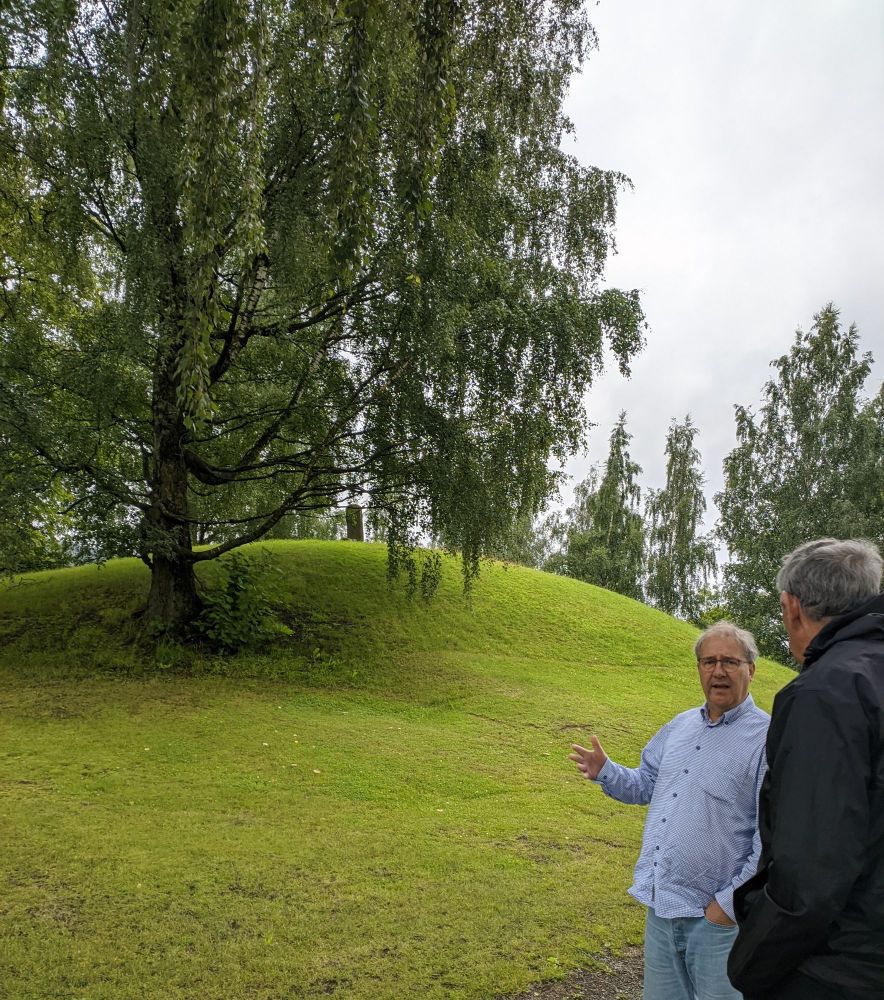
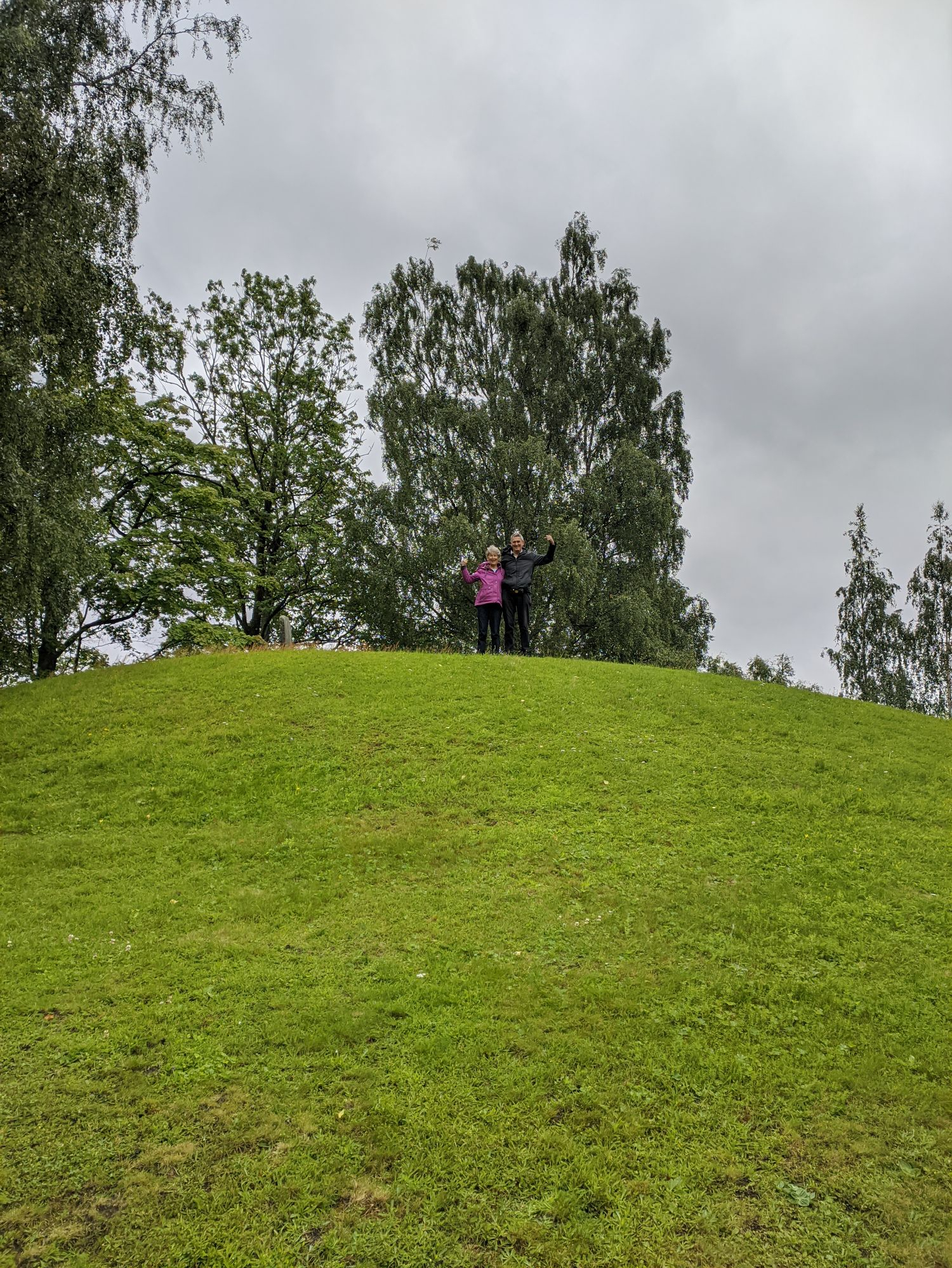
After visiting the cemetery, Peter drove around more misty, shrouded fjords and little villages and beautiful farmland and stopped at a big farm and next to some huge red Norwegian barns, there are a couple of Viking burial mounds.

img_20240710_1950524638049903443117978

They’ve never been excavated by archaeologists because it’s very time-consuming and inordinately expensive, not only to dig but to preserve if they find anything, especially a wooden ship, that hasn’t decomposed already.

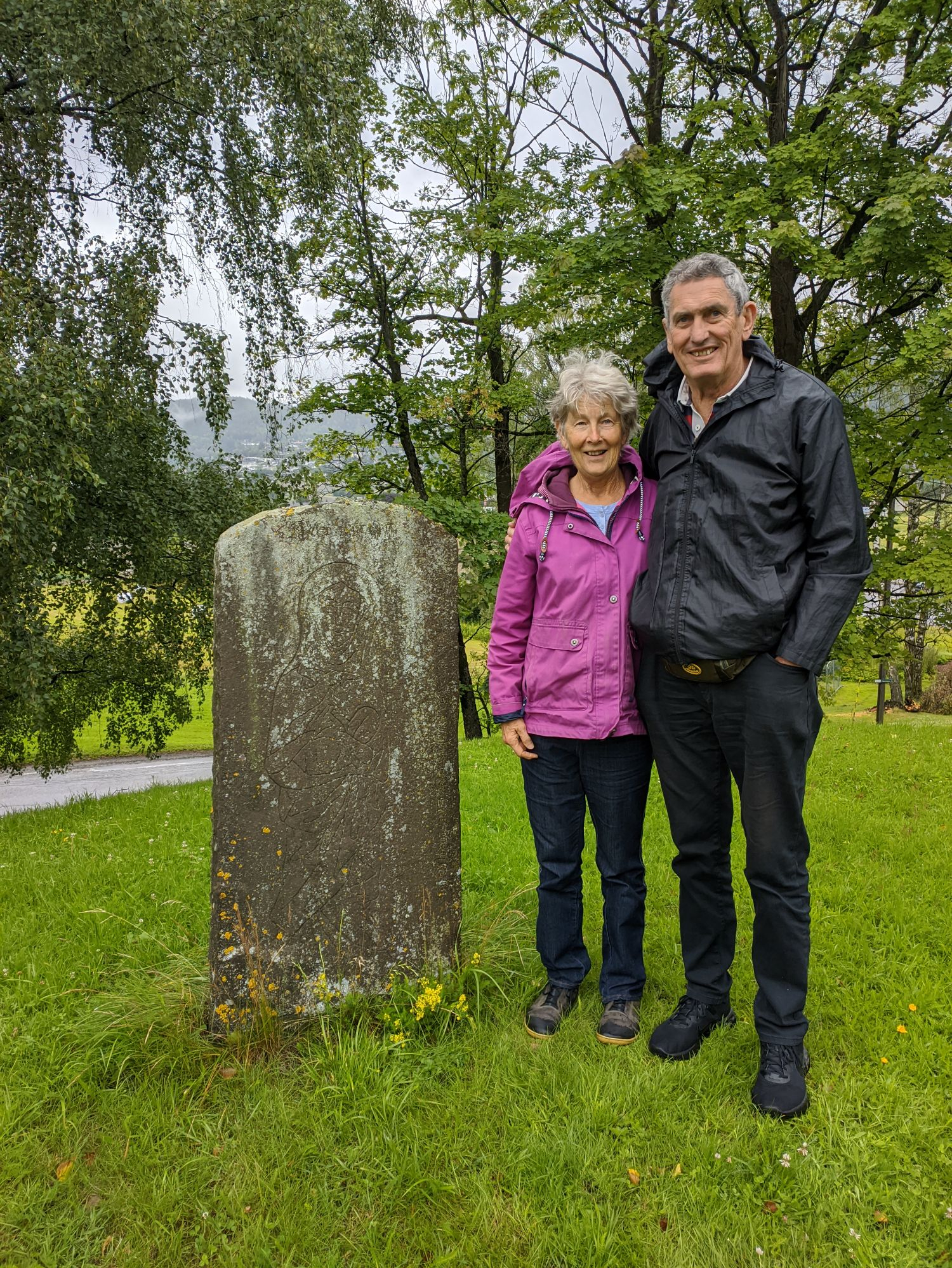
There are also stories, maybe legends, about a Saint Hallvard who lived and died a hero’s death in early 1000s. After miracles were claimed he was proclaimed a saint and he’s buried here too. Here’s his marker.

Then it was on to Auntie Mollie who had afternoon tea ready for us. We had such a lovely afternoon with her. Hearing stories, telling stories – not only of the early days of South Perth, but of ancestors in the Murchison region and her life that’s been lived to the full.

img_20240710_2307521491996131756466597

Stories I’ve heard before. Stories I’ve never heard before. Like when she was a nurse in a ship crossing the Tasman Sea from New Zealand to Australia in an horrific storm and assisting a newly minted paediatric doctor to perform an emergency appendicectomy on another passenger with very, very basic equipment. Just the two of them, being watched by the captain and all the senior ship people. No theatre – just desks pushed together – no sterile equipment, using ordinary cotton thread that was boiled in the ship’s galley. Auntie Mollie gave an anaesthetic of ether to the man – she’d never done that before. She had never liked theatre work and hadn’t done much of it. She was very pleased the man lived. And astounded when it was a headline news story around Australia, so that her family heard about it on the radio back in Perth. Not only is it a good story, but she tells it well. Lots of stories for four hours.

And then reluctantly it was time to leave her and head back to the hotel. And more travels tomorrow…

Hei!

Warm sunshine all day today in Drammen and Oslo. The hotel we’re staying at here in Drammen is very comfortable and cosy with breakfast and dinner and provisions for picnic lunches – they even provide you with paper bags for these lunches when you make them from the breakfast buffet. To the right side of the photo you can see red buildings. It’s a very popular house colour here.

img_20240710_00393213768748870889272

This is one of the views from the hotel – you can just see a sliver of water between the trees, but there’s a high wall and a railway line between the hotel and the water. Fir and pine trees on the mountainsides.

img_20240710_00443075044939123411294

I had pickled herring (amongst other things) for breakfast and Norwegian brown cheese. I’m more than happy to have pickled herring again – it was good. The Norwegian brown cheese I’d pass on however! Philip had bacon and eggs.

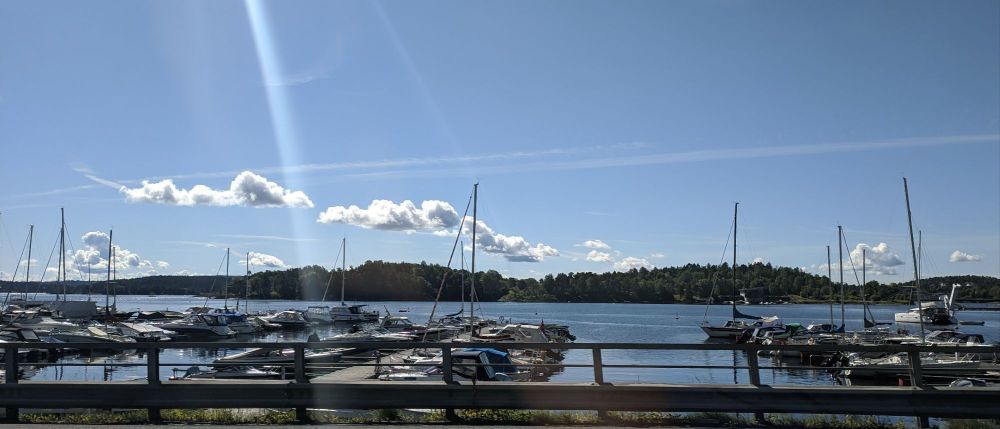
Peter Holst who is a few years younger than Philip picked us up this morning and drove us 45 minutes to Oslo – past water inlets with boats, past farms green with crops – fast highways and high bridges.

img_20240709_164137903725781155633254

He drove us to the Viking Boats Museum, but it was closed due to renovations. So we went next door to the Norwegian Folk Museum. What an amazing place to experience Norwegian history and culture through the centuries from the Middle Ages on.

img_20240709_1711566393050196997037391

We were there for five hours and didn’t nearly see everything.

img_20240709_1955153694370720023891555

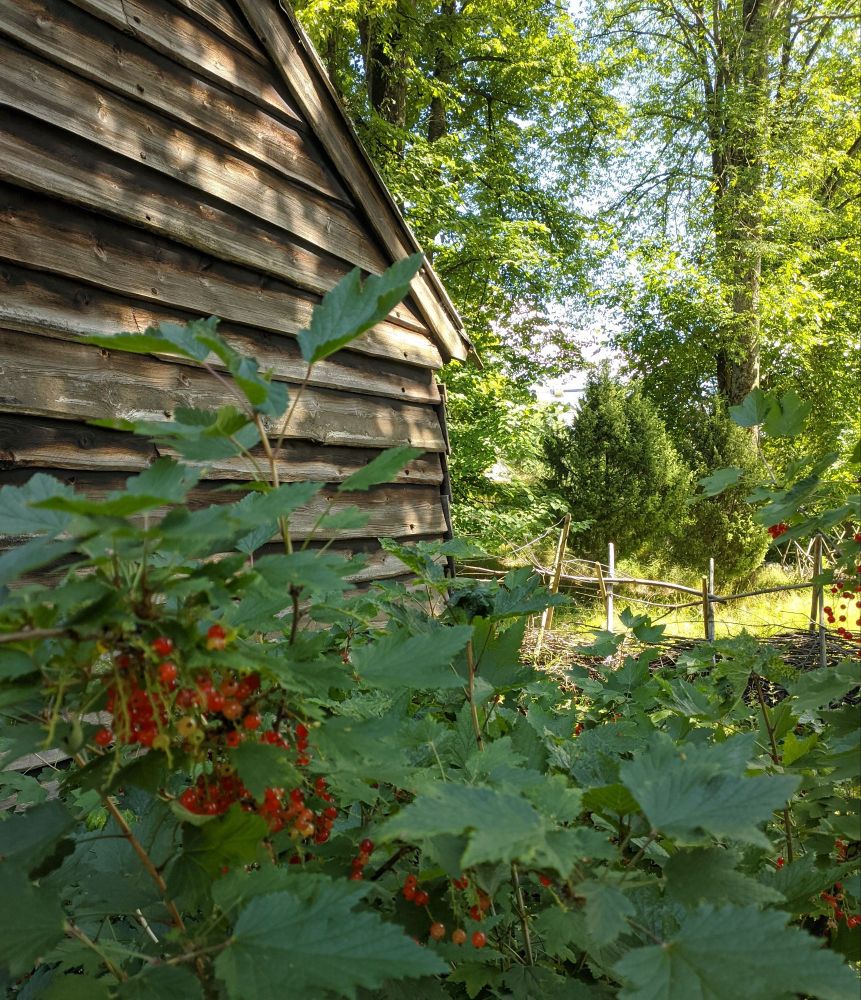
Wild redcurrants – they were deliciously tart!

They have buildings from different regions of Norway from the Middle Ages up till today spread over several acres. (By the way, you know you’re a relic yourself when you see items you grew up with in a museum!)

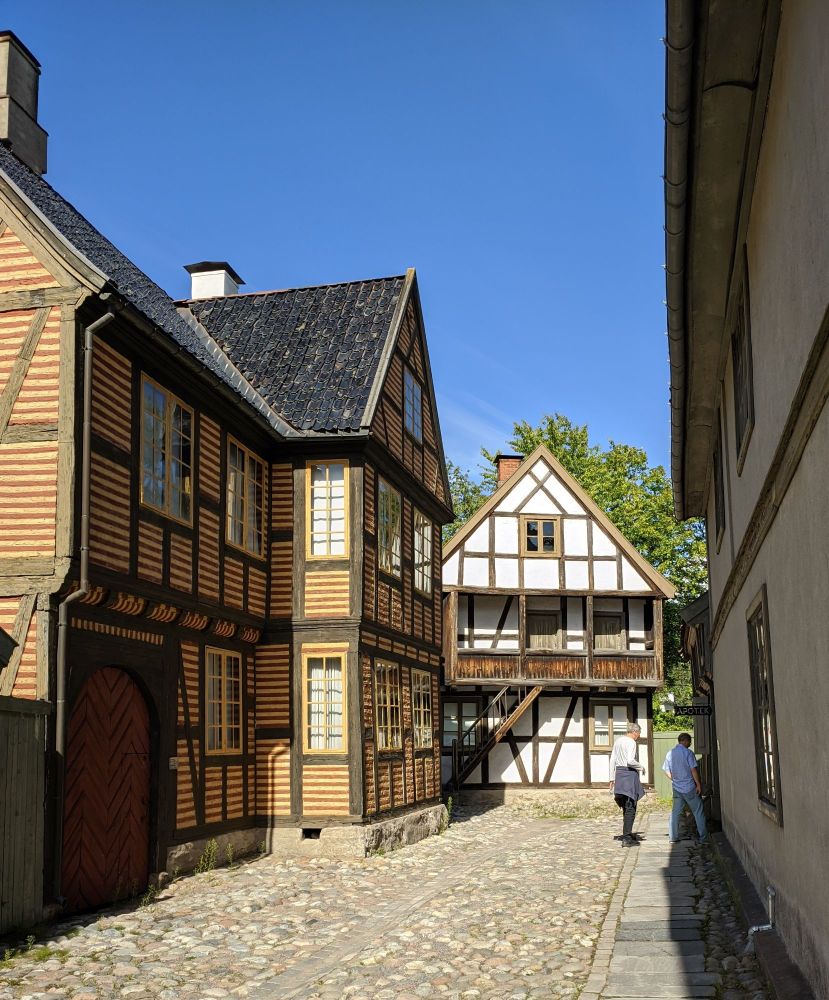
They had farmhouses, storehouses, schoolhouse, shops, bakehouse, blacksmith, green fields and cobblestone streets.

img_20240709_2221247552446426274452362

You can go into the houses and dwellings and see them set up as rooms as they were used at the time.

img_20240709_202056660972995436912711

Here are three pigs amongst some farm buildings

They had dozens and dozens of different houses and buildings on acres and acres.

img_20240709_1902143041477141018033820

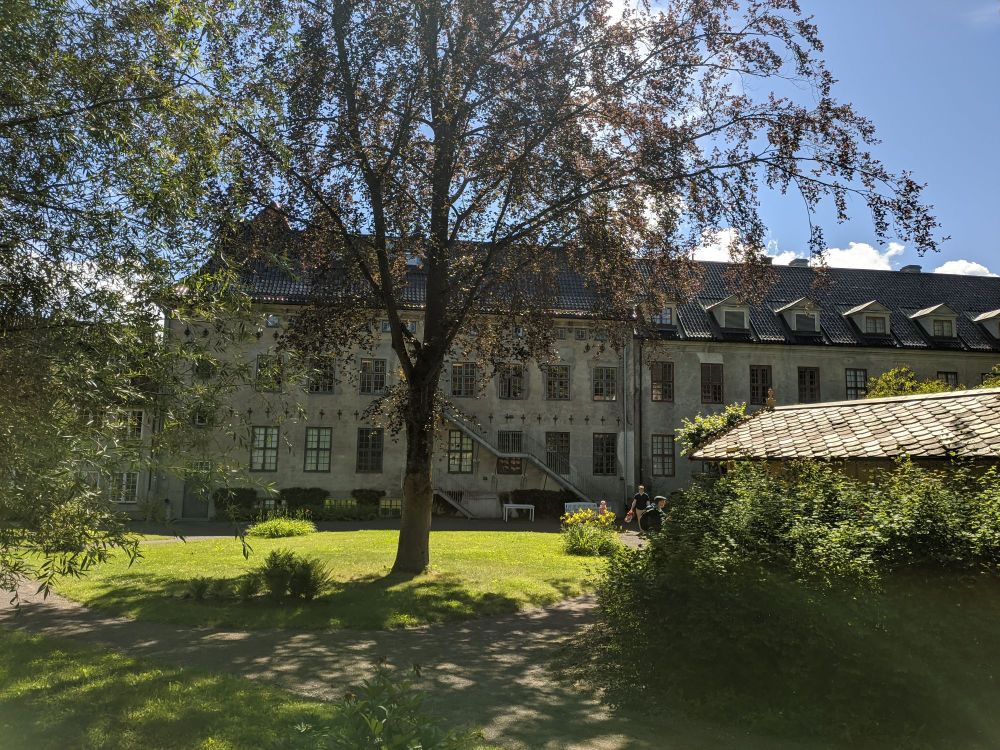
There are old town urban and suburban houses to show life for different social groups for different eras.

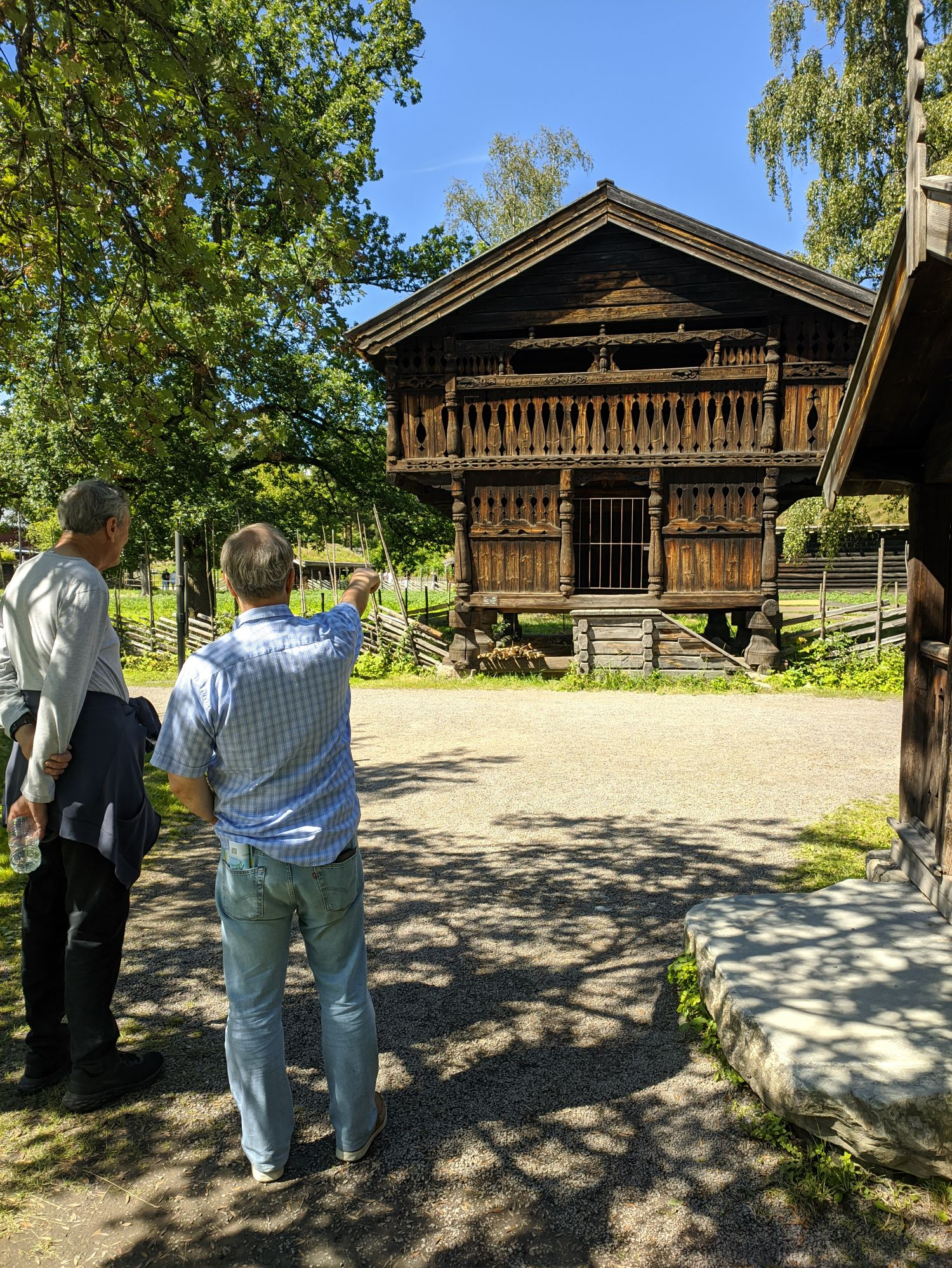
Peter showing Philip a storehouse – set up on stilts to keep pests out.

Like everywhere, there were comfortable well-off people, those who managed to get by and those who lived in abject poverty.

img_20240709_213709549711202906074379

This is a “gaming room” in a middle-class house in the late 1700s

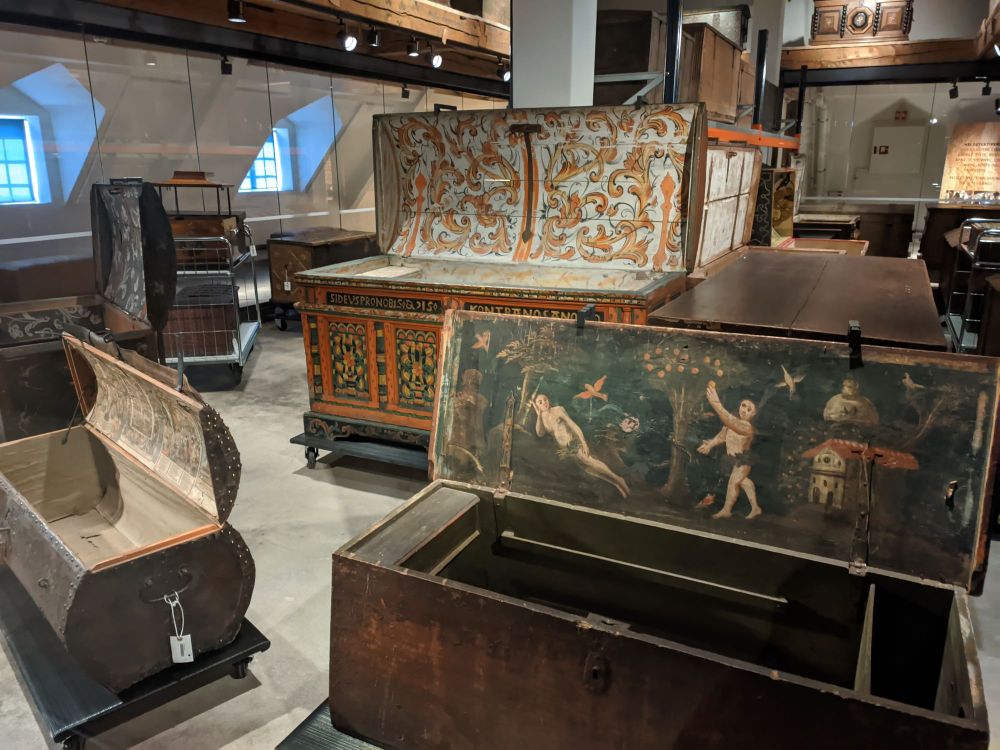
Inside one of the huge buildings they had exhibits to display national treasures through the centuries. Everything worth a photo and there were thousands of objects there – here’s just a few that caught my eye.

img_20240709_1748144241277194396371740

Chests down through the centuries, used for storing anything & everything.

img_20240709_1810343318197343461571178

A sleigh from the 1700s

I knew a little of Norwegian history – a lot of it from teaching history with Mikan and Cody in homeschooling and Philip knew hardly any, so he appreciated learning more too.

img_20240709_1903106547600034134793527

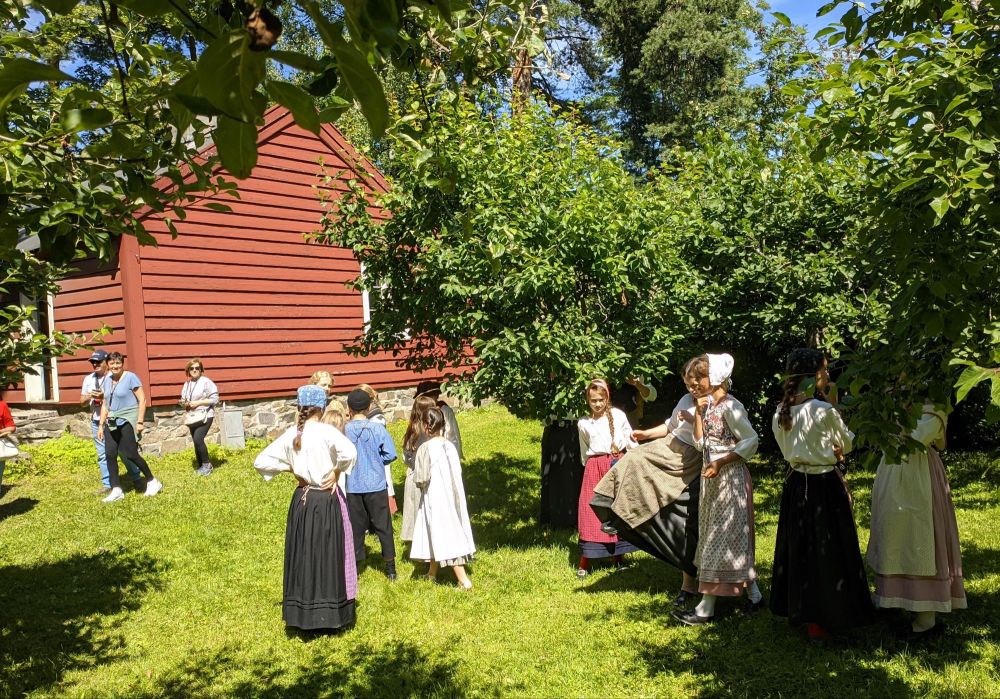
Children playing under the apple tree of the schoolhouse

Norway never had an elite nobility. Their merchants and public officials were the elite. Norwegians have always been famous for their maritime activities – from raiding, trading, exploring.

img_20240709_1916292373048537118607693

Grass on the roof of the storehouse to help insulation.

Historically the Church was rigidly controlled by the Monarchy and government, and were very influential, especially in improving education and life for the lower classes.

img_20240709_1921382567031290045586323

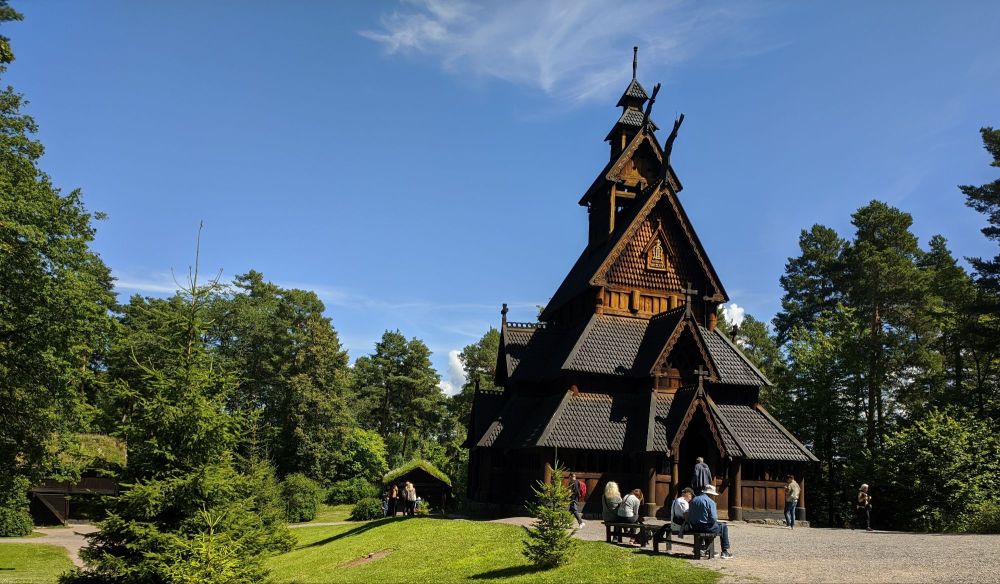
This is a Stave, a church from 1200s, restored in the 1800s. No windows, so very dark inside.

Philip at the doorway of the Stave.

img_20240709_1923503744629766510967985

Inside the Stave, at the altar.

Looking out the window of an urban house.

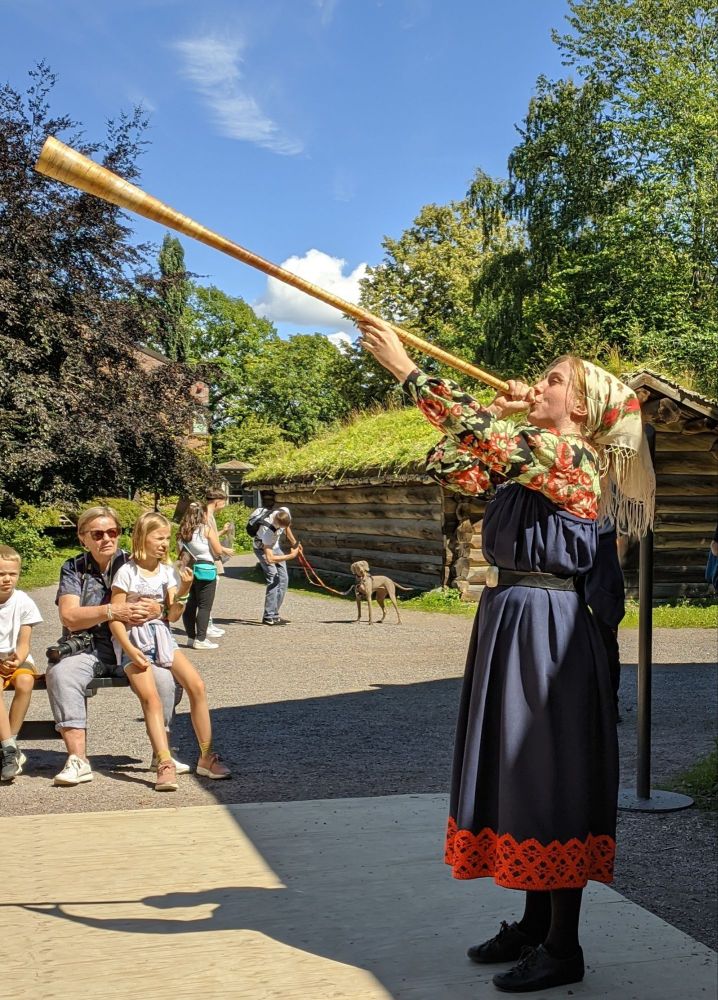
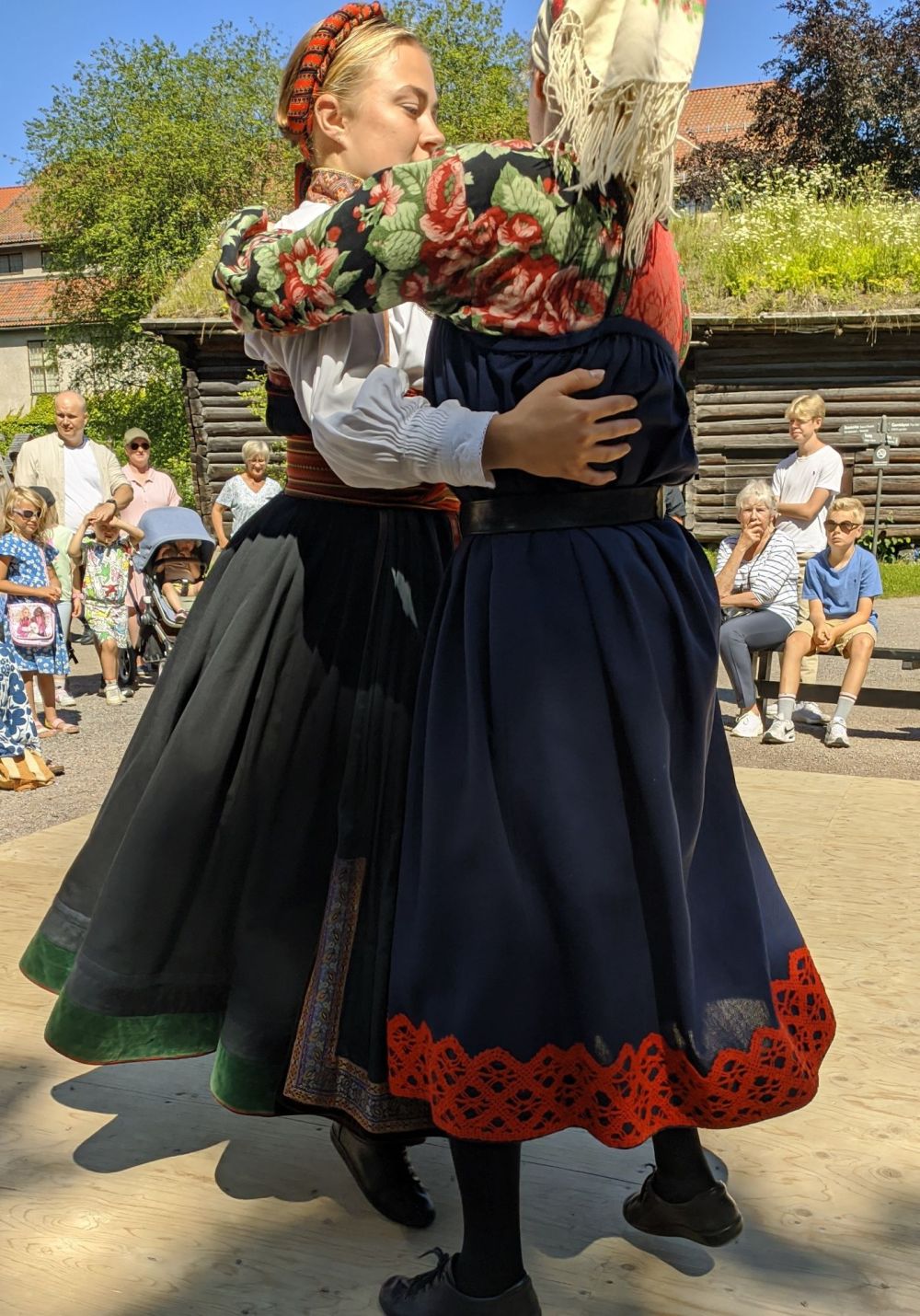
I really enjoyed a short demonstration of music and dancing.

img_20240709_2031174516735502670838965

A light horn used for music and communication over distances.

img_20240709_2035054175671943917197711
img_20240709_2038124314451001437478500

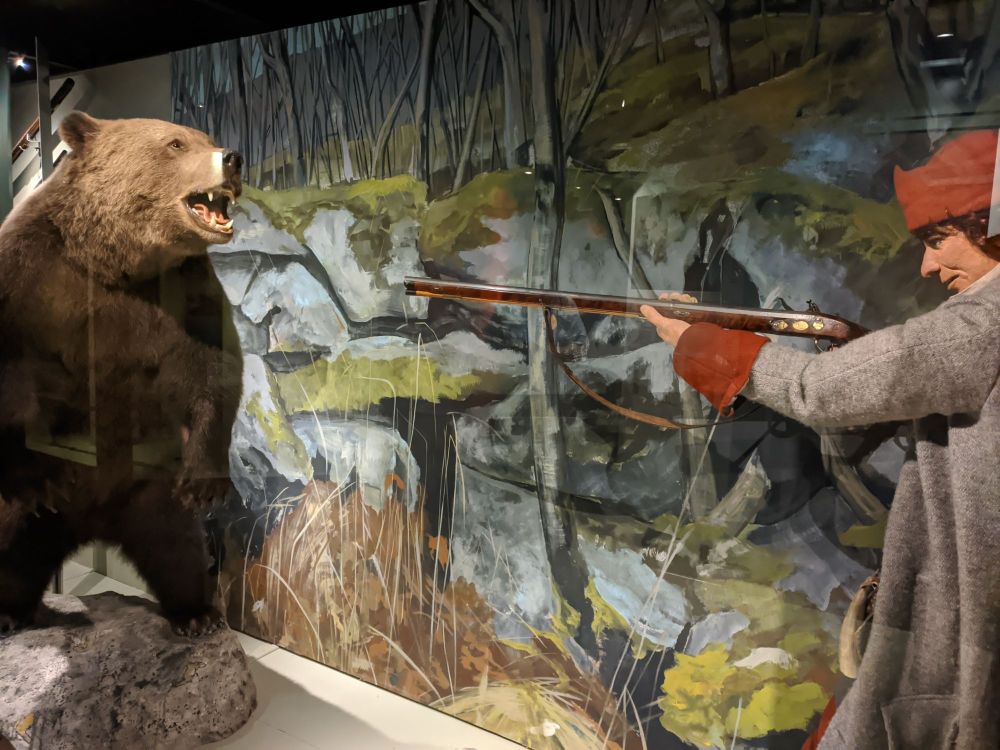
A lot of the wars fought were with other Scandanavian countries and Norway didn’t become independent till 1905. Usually, the soldiers in the army down through the centuries were farmers and peasants with guns and spears.

img_20240709_1847485038162483615223848

Blacksmiths made the guns they needed

I took some photos but realise now I missed many opportunities as I was too busy exploring and learning about it all.

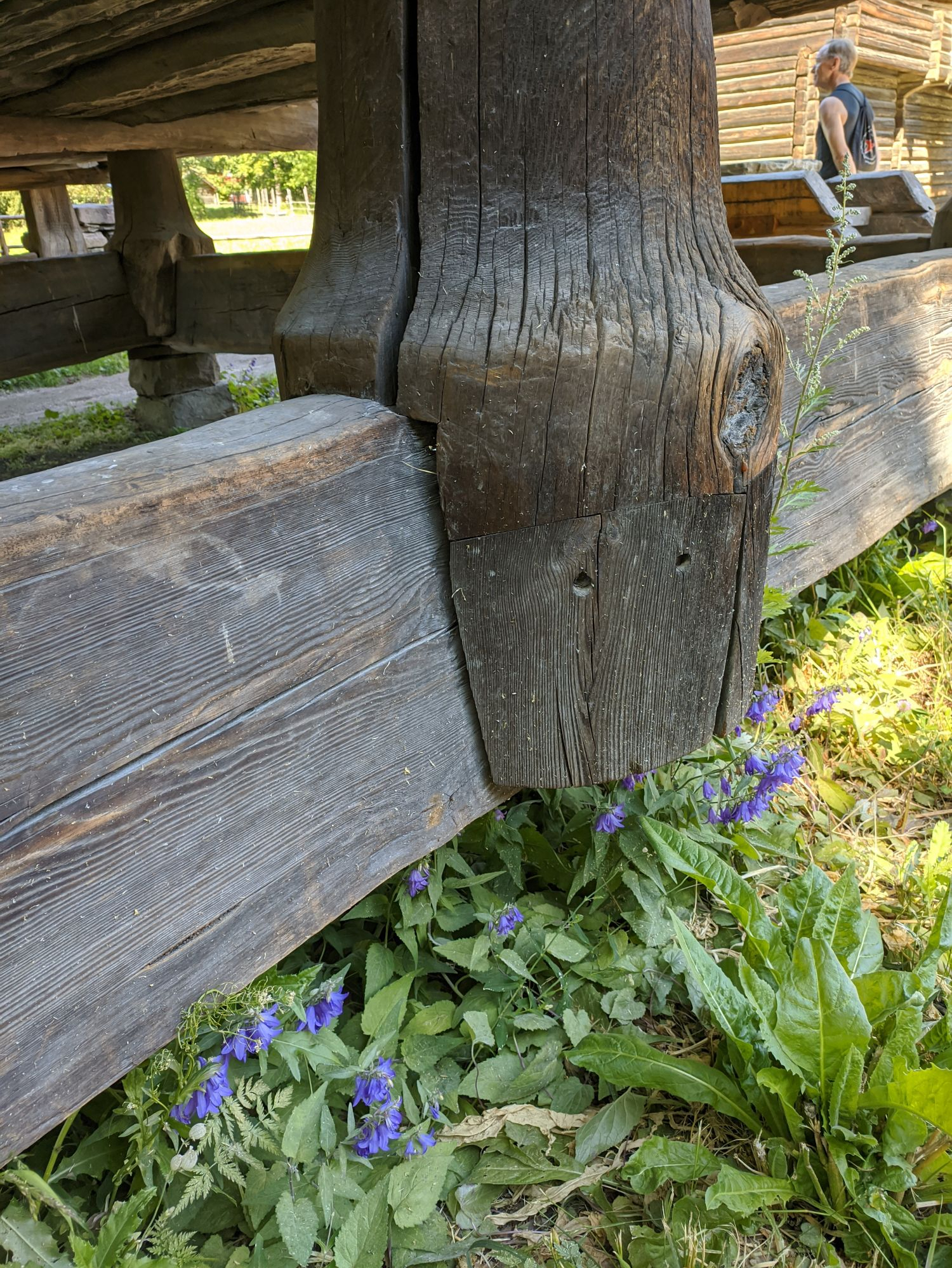
These are wild Norwegian bluebells, and showing the beautiful craftsmanship in making their storehouses and other buildings with basic tools

We’ve had another great dinner here at the hotel. Tomorrow is our last day here in Drammen. The sun is still high this evening but for now it’s “Ha det”.

img_20240709_2119552716339101954139303

Last photo for the day. It’s a Bridal Crown with images of saints. The lower part made in the 1500s and the upper part in the late 1600s, used by the upper classes from Middle Ages on.

Catching up …

But first, here’s a photo of Philip and I – so you know that we are on holidays together! We’re in the grounds of Chatswood House – Keith took the photo.

20240704_1540081944943438283047276

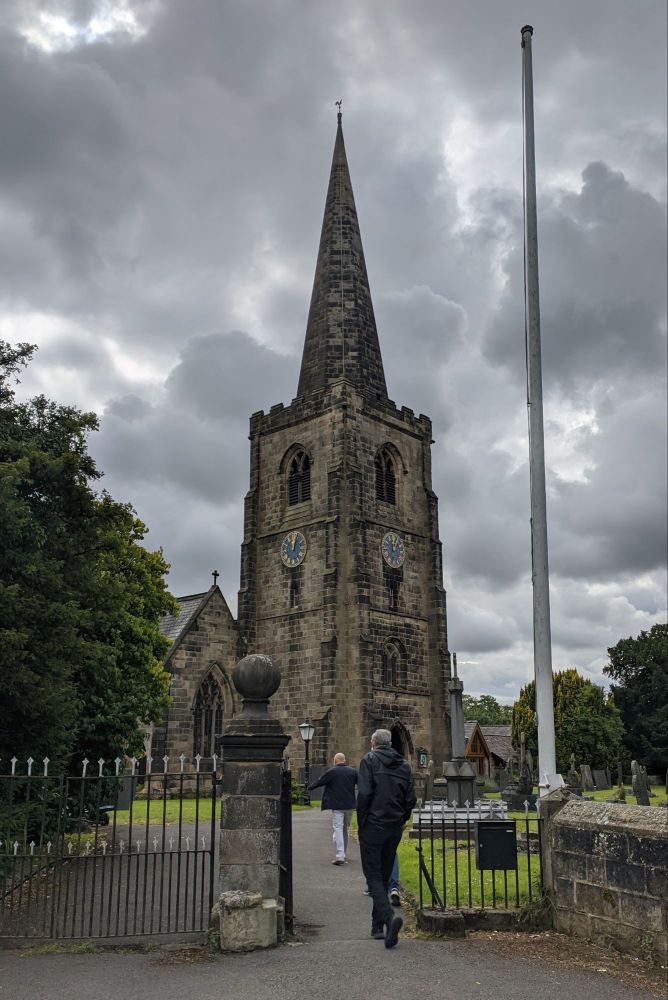
Yesterday morning, after a leisurely breakfast we walked with Debbie and Keith to their local Anglican church while the church bells were ringing by “proper” bellringers in the bell tower.

I thought it was a wonderful way to call us to worship God together. I loved it.

wp-17204634381713076006870262683451

I enjoyed the church service too – a great blend of informality and liturgical worship with good music and teaching.

This photo below is behind the church where there’s some interesting gravestone poems. Debbie showed us a great one of the Duffield blacksmith.

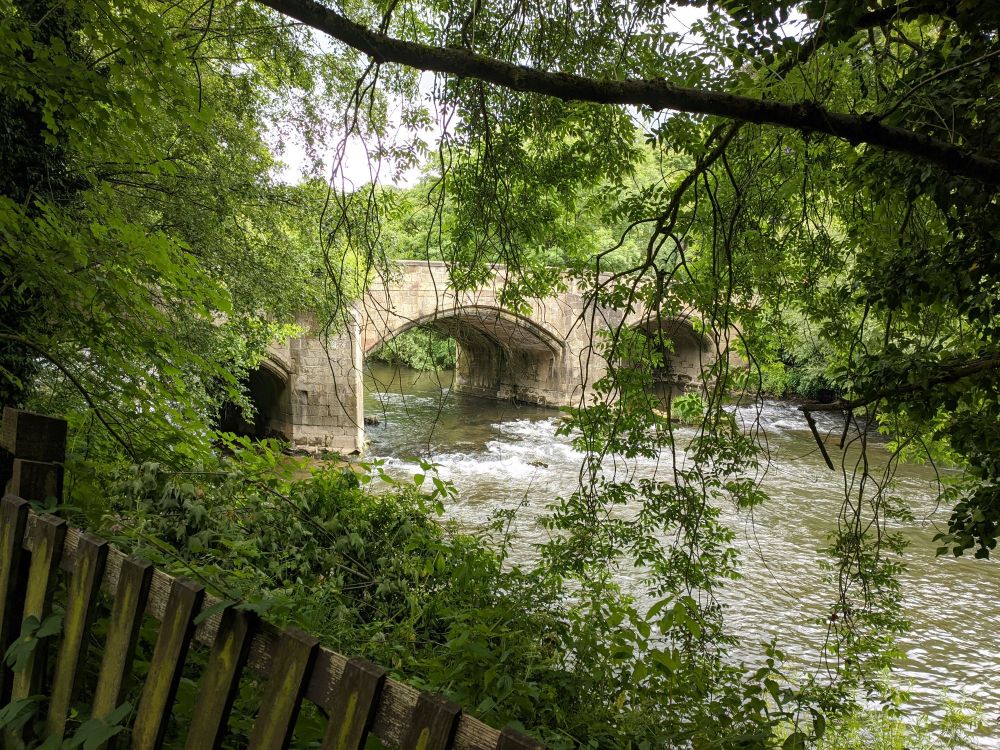
We didn’t stay long after church because Keith had a cricket match to umpire, and we needed an early lunch before we were on our way. This is the bridge over the River Derwent when we walked to church.

img_20240707_1835336861125332002696701

Debbie drove us into Derby where we caught a big comfortable coach bus that drove us for 4+1/2 hours through Leicester and Loughbridge and then down to London. I admire the way the coach drivers negotiate the small, narrow roads and tight turns in the villages and towns! Most of the drive was down the multi-laned highway between green fields and high green trees.
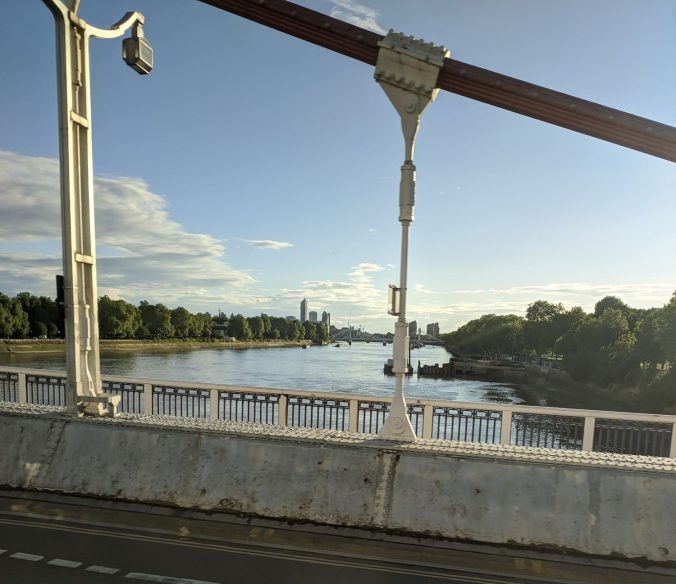
We had a two-hour layover at the Victoria bus station in a posh part of London (I think) – Belgravia. This is the only photo of London I took as we crossed the Thames near Battersea Park.

My idea of a holiday in England is to avoid London. Which says far more about me than about London. We ate our picnic dinner in the bus station while we people-watched – hundreds of different nationalities and languages.

Then onto another coach and a one-hour drive south-west to Guildford where we stayed overnight with Gill and Peter. Gill is Philip’s fourth-or-maybe-fifth cousin and a most hospitable couple.

After a short night and early start to the day, Peter drove Philip and I to the local bus station for a 1+1/2 hour bus ride to Heathrow. We were momentarily startled when Scandanavian Airlines told us that they couldn’t initially allocate a seat because the plane was overbooked. It’s the way they run airlines these days apparently. But she assured us that we’d get on the plane eventually. And we did! An interesting sidelight was that everything on the plane ride cost money except tea or coffee – neither of which we drink. Water cost money and so did the wi-fi. So we read our books.

Landing in Oslo we went straight onto a train which Philip estimated travelled about 160kmh – it was very smooth and quiet. Straight away we knew we were in a different country. Even apart from the Norwegian language which sounds to me very lilting and sing-songy. The trees are mainly firs and birches – thin trees and many of them. Long tunnels through mountains. Lots of the houses are made of timber and often coloured a blood-red. I’m making it up that they’re painted red so the houses can be found when there’s severe snow-storms.

Google makes travelling these days so easy. Philip gets concerned about the details of a trip – especially in another language. (Most people can speak English and Norwegian.) I’m sure we’ll figure it out eventually. Just about any problem is figureoutable! Especially with easily available internet. I don’t think it’s quite as adventurous though. There are parts of me that miss that, but not worth causing Philip unnecessary stress.

img_20240708_2158509153353742512564202

And now we’ve arrived in Drammen, Norway – a town of about 100,000 people south-west of Oslo. We walked to our hotel from the station when we got here. Never been to Norway before – how exciting – and we’re here to see Philip’s “Auntie Mollie”.

Auntie Mollie’s son, Peter called in before dinner to check with us that everything was all right and start making plans tomorrow to see Auntie Mollie and do some tourist things.

Breakfast and dinner are included in our hotel fare. Plus “frit” – not sure how it’s spelled – but it’s like afternoon tea. We got here in time for “frit” – so Philip enjoyed that!

I’m feeling quite weary. I’m not sure why, but travelling, whether by plane, coach, or train, I find wearisome. Maybe it’s the constant noise and vibrations. It’s going to be an early night tonight! But exciting to be in Norway. We’ve had sunshine and a heavy downpour of rain with thunder. The sun is still high in the sky, everything feels and smells fresh after the rain …. and I’m ready for bed! Goodnight!

Half-way…

Philip has sore shins today. Possibly because of the hill walks we’ve loved doing here in Derbyshire. We don’t have steep hills in Perth and the legs are unaccustomed to it. So a slower day today and a change of pace.

We walked from “West Winds” over the little stone bridge of the Derwent River to catch a local bus into the main city of Derby.

img_20240706_2113484289999847605805564

I noticed some of the bus stops have little “gardens” on the rooves, looking a little weedy, but probably part of the rewilding of England. Philip is checking his phone map for our directions. We wanted to see just a few local sights today.

img_20240706_1703496622149125785692705

Debbie and Keith recommended the big Cathedral and then the (free) Museum of Making.

img_20240706_1711338429789824639589775

The Cathedral is a more recent rebuild from 1700s – a medieval church was here earlier – and a wonderfully uplifting, light and inspiring space. We planned to just have a quick look in there, but we ended up staying much longer.

img_20240706_1715207319739064508314688

I sat in one of the pews for quite a while, listening to someone practising the organ and quietly thinking and praying as the music played. Even the carvings at the ends of the pews are different and done with great detail.

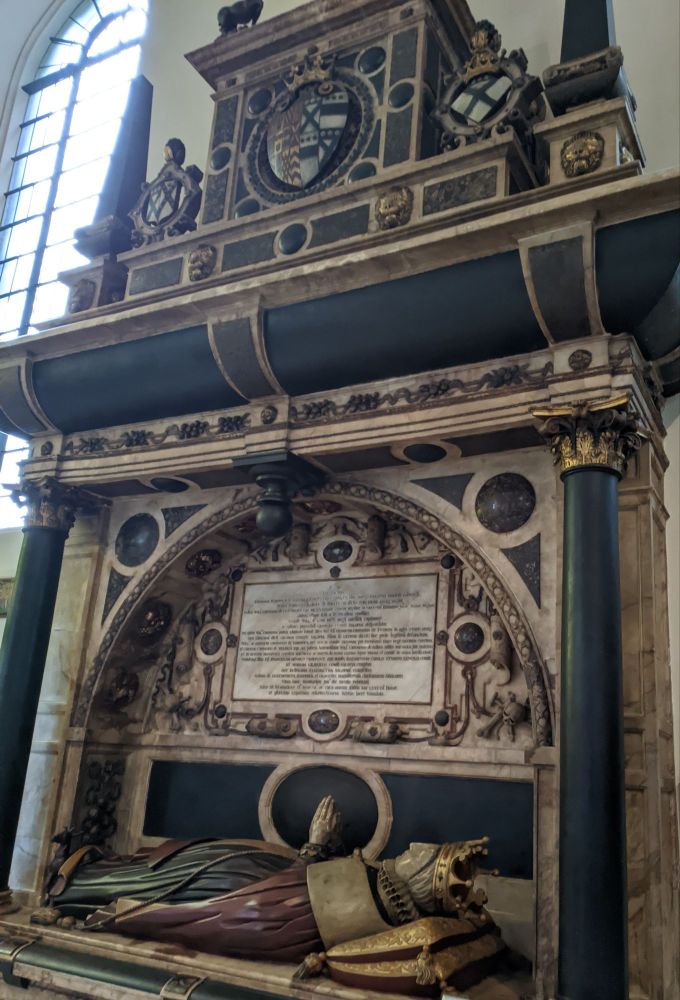
We can’t get away from Bess Hardwick! Here is her final resting place – her memorial nearly as large in death as in life. Lots of her family (the Cavendishes) are also buried here, especially those who went on to become famous or notorious.

img_20240706_1745295310152924429924343

The carved effigy in the photo below is about 500 years old and was in the original medieval church on this site. They’re not sure who it is but probably a church dignitary. You can’t see it in this photo, but he has a little carved dog near his feet. The carvings of little men on the side may have been some of the poor of the parish who might have received payment in return for their prayers for him after he died. The carving below them is probably an effigy of a corpse in its shroud to remind us all of the end of life.

img_20240706_1748401372819206863140567

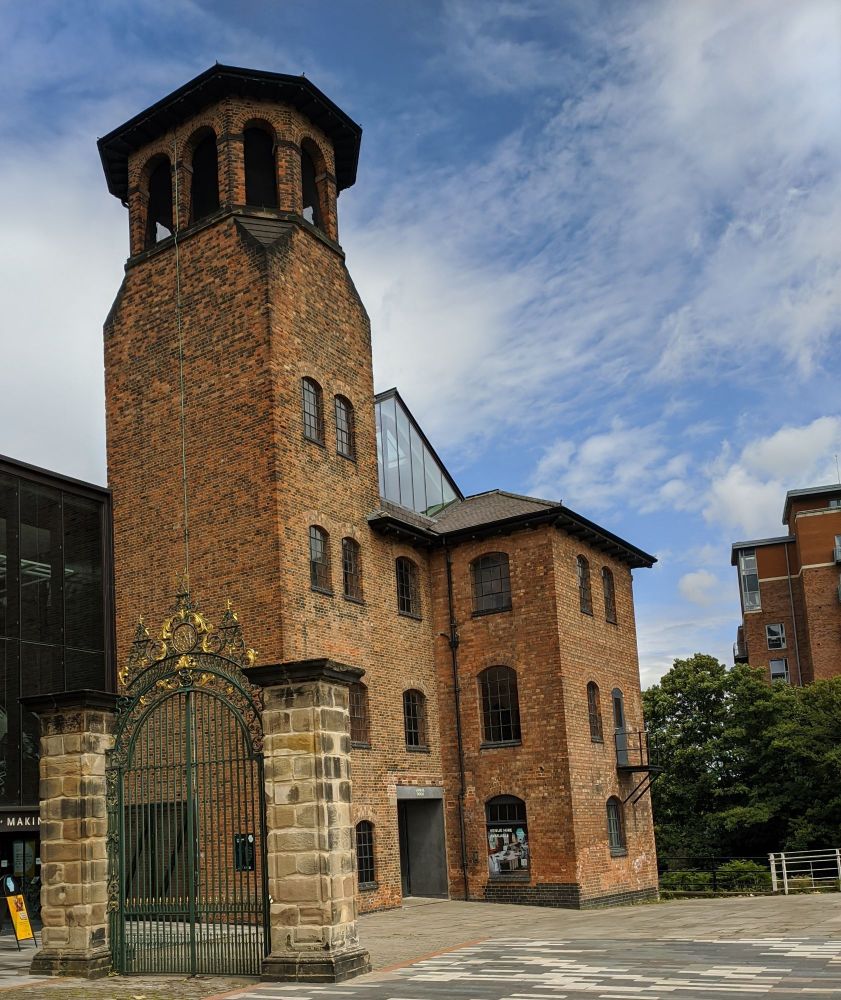
Nearby is the new Museum of Making – free entrance. A very different type of Museum. Lots of eclectic, random things relating to the life of Derbyshire – all the way from Palaeolithic times – a hollowed-out canoe and axehead – to recent times, with the emphasis on encouraging people to look around and repurpose or create things from objects that are obsolete or old or different. A great place to bring children or grandchildren as it’s very interactive. It’s in the old Silk Factory, on the Derwent River – the first factory in the world and build 50 years before the famous Cromford cotton mills and other famous mills in the area.

Looking out of the window of the old Silk Mill to the Derwent River below

By the way, here’s a picture of the Cromford cotton mill that Philip visited with Keith and Debbie the other day – he forgot to take a picture. I discovered this on one of the museum walls.

img_20240706_1943154485370423404351601

There used to be lots of industry around the railways and railway paraphernalia. Model railways being run and lots and lots of parts of trains and train stuff. Here are a couple of the cast-iron signs I noticed – there were hundreds there. From polite signs…

img_20240706_1823064411475390953565814

… to direct commands!
img_20240706_1828238585536678924890162

Old mining carts used in the mining tunnels..

img_20240706_1907454945198172705873618

Here’s an eclectic assortment from just one display – a pub sign, a Victorian post-box, an ancient celestial atlas of the skies, an autobiography of an inventor in the 1700s, two one-off custom-built motorbikes from the 2020s. But all with Derbyshire connections.

img_20240706_1938034135319418333639692

These are the gates the workers walked through to get to their work in the Silk Mills in the 1700s.

img_20240706_202140280348216021135611

It’s been a very cold day again, vaguely threatening rain and a cold, biting wind blowing strongly. A day to be glad to wear a jumper and a coat! Philip and I found a corner at the back of the old Silk Mill, next to the Derwent River to have our picnic lunch.
img_20240706_1954444352466522794671195

Back to Duffield mid-afternoon by bus for a quiet afternoon. Philip walked down with Keith and watched the local cricket team lose to a nearby competitor. He enjoyed that. I wrote postcards to grandchildren, read and chatted to Debbie. They are the most hospitable and companionable hosts and we’ve had a wonderful time here.

Hard to believe, but we’re half-way through our holidays! Already….
We’ve got sunshine…

Who says that England doesn’t have summer?? For most of today it’s been sunshiney!

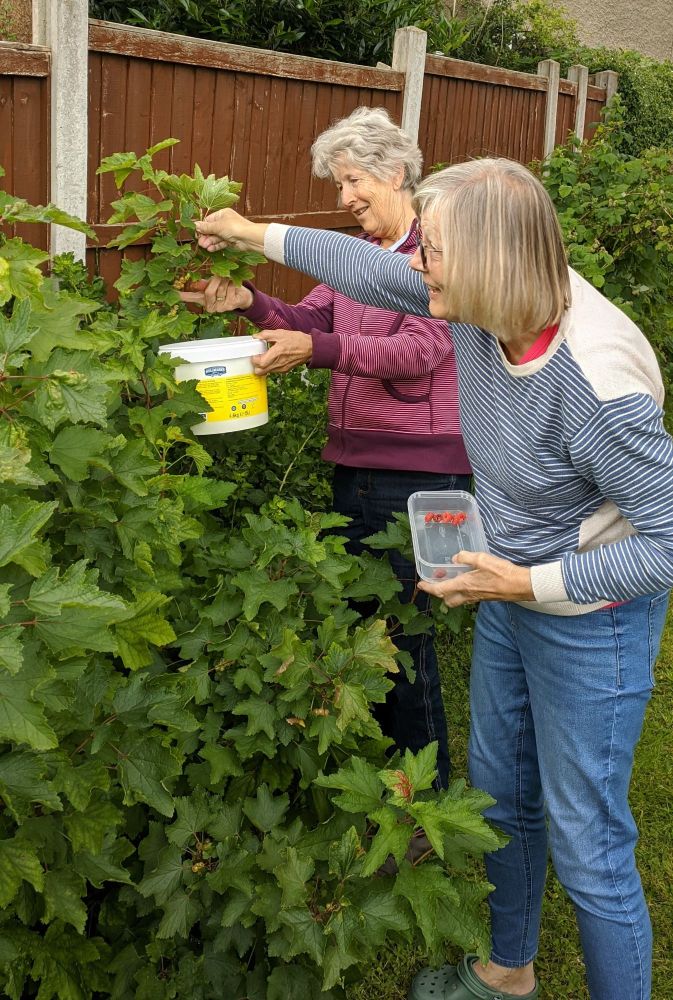
First thing this morning I helped Debbie pick redcurrants, white currants, black currants and raspberries in their very extensive garden. That’s a new experience for me – never done it before! Such a delight.

img_20240705_1557095433979117879625982

Quite a lot found their way into my mouth as well as the bucket. The different coloured currants have different flavours and the raspberry flavour is amazing. I’d eat them three times a day if I could!!

img_20240705_1623276345133411049686729

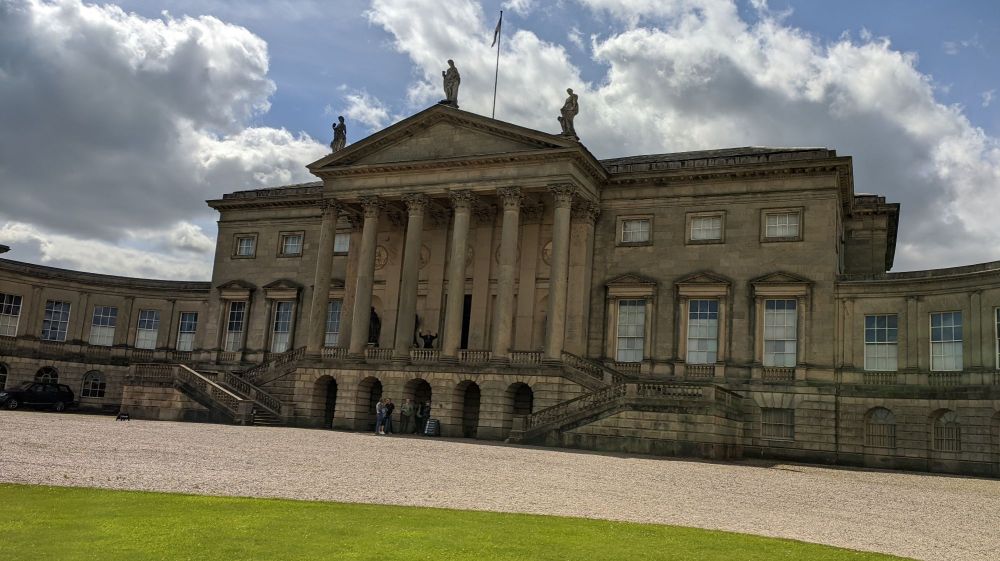
After breakfast, Debbie drove Philip and I are to nearby Keddleston Hall.

img_20240705_1927177622709436759781659

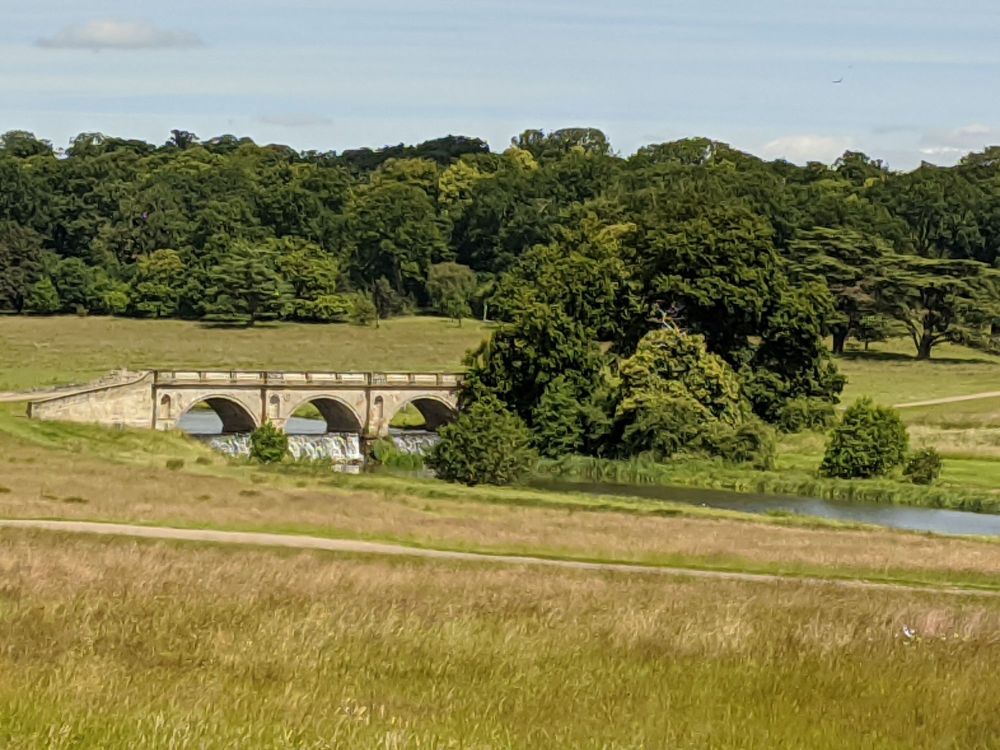
We first walked for an hour in the beautiful woodlands around the Hall that was built in the mid 1700s.

img_20240705_1714393077312723173308774

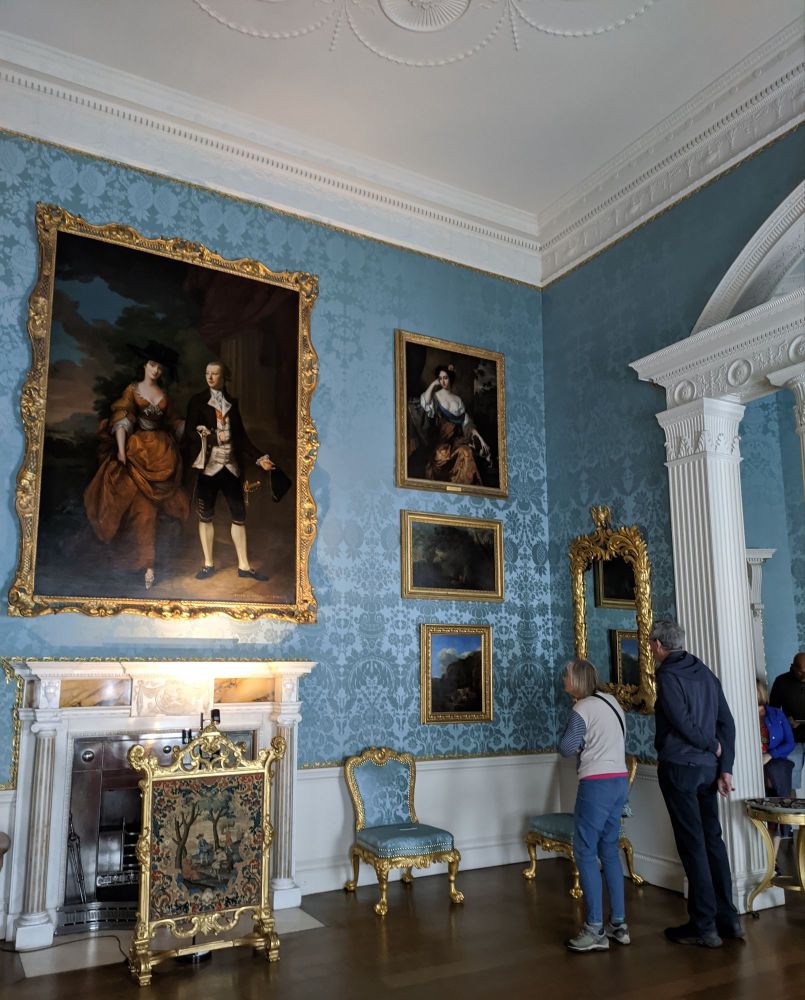
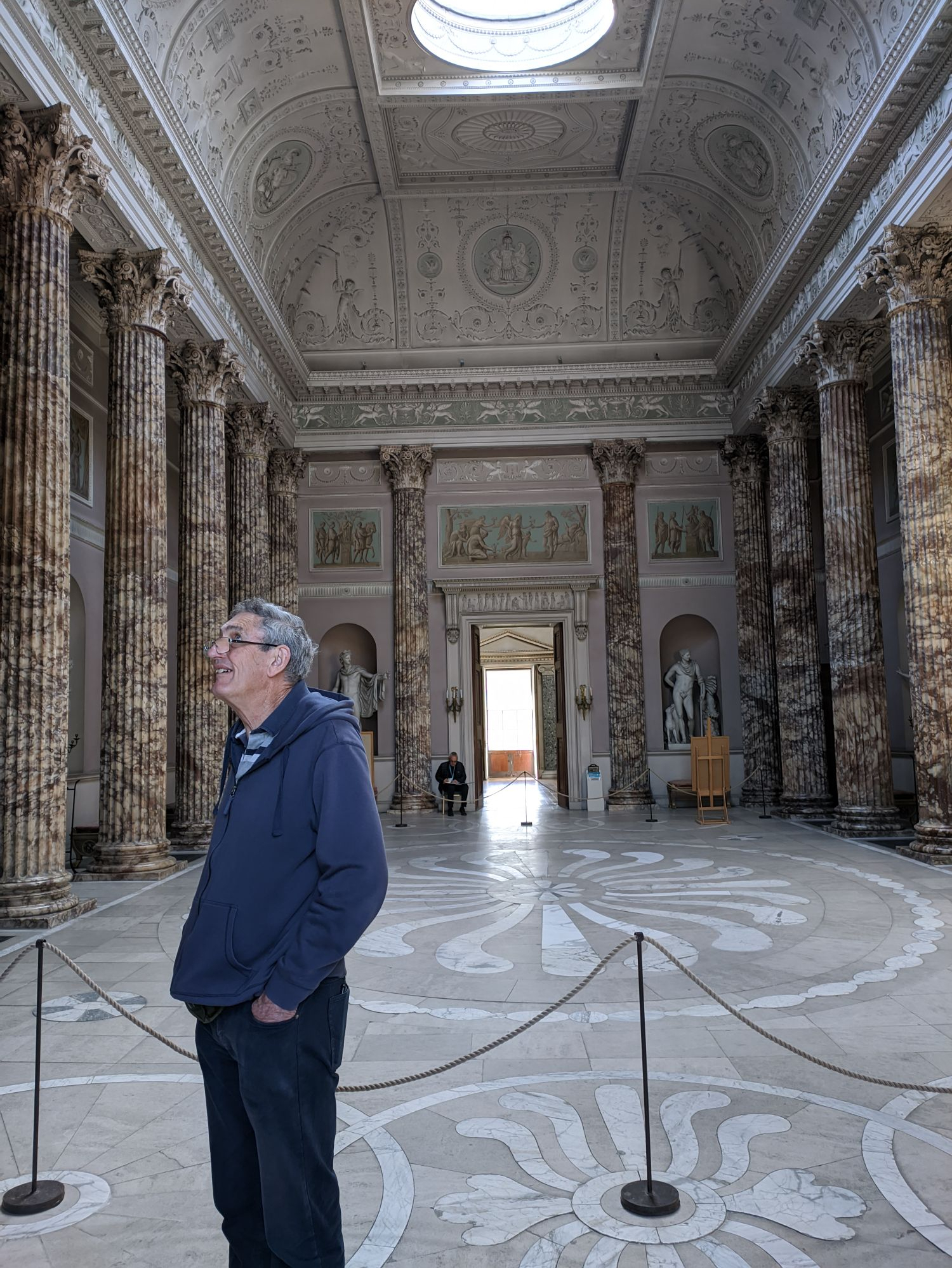
Nathaniel Curzon wanted to show off Nathaniel Curzon, who he was as a person and who he wanted to become. He was landed gentry, but he really wanted a peerage, have a seat in the House of Lords and have political clout and influence. The way to get it was to build a magnificent house that would be impressive as a Temple of the Arts and to rival Chatsworth House.

img_20240705_1806024900900206518552432

You’ll have to look hard, but Philip is waving from the balcony.

There’s a theme running through these places and times. Bess Hardwick yesterday and Nathaniel Curzon today. They both wanted to look and be impressive to their peers and people. To wow people with lavish details and luxurious “bling”.

img_20240705_1824475090238177171287250

Funny how some things in life never change. That’s still a major theme for current lives and our cultures. To be noticed and impressive. “Look at me! Look at me!” A constant temptation.

Ostrich feathers on top of the four corners of this bed!

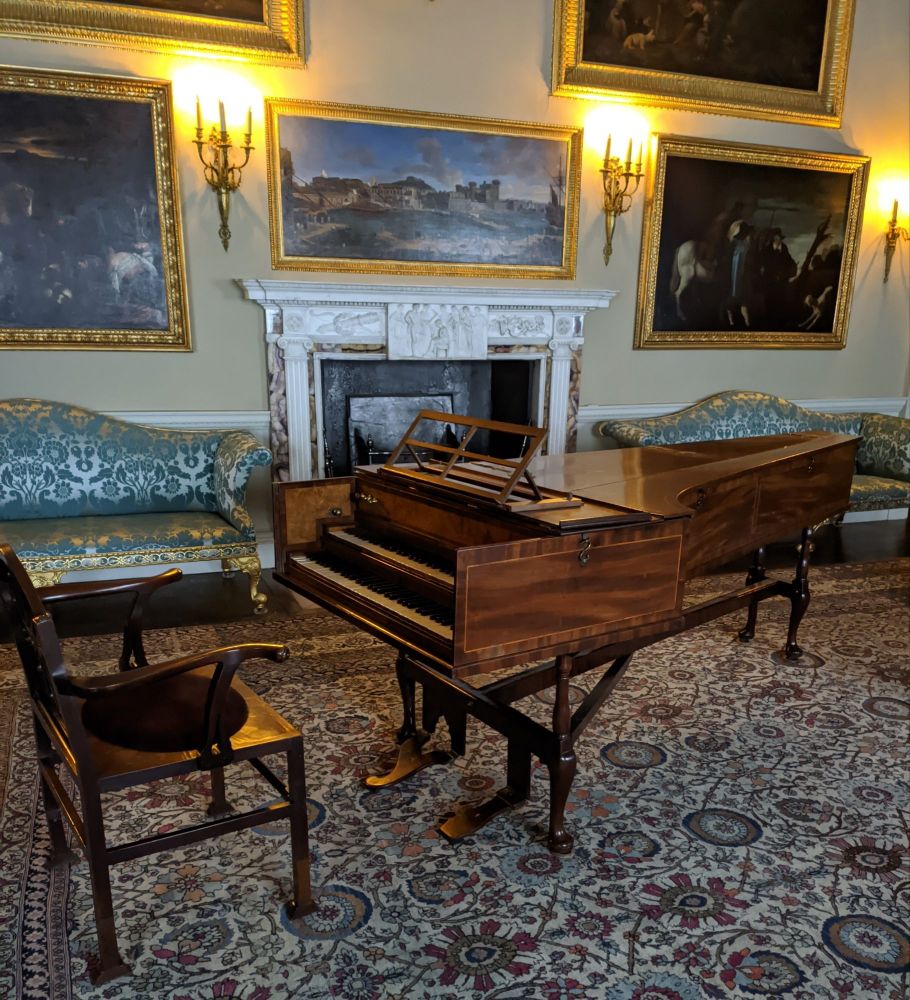
Most of the house is not to be lived in. There’s an east wing for the family to live in. Most of the house is built to “show off” and it’s by famous architects (like Robert Adam) and craftsmen to produce only the finest and best. Lots of restoration work is being done.

How much bling is enough? It was undoubtedly a triumph of a show-palace and parkland. And Nathaniel Curzon got his peerage. So.. job accomplished!!

img_20240705_1841098413105797459117230

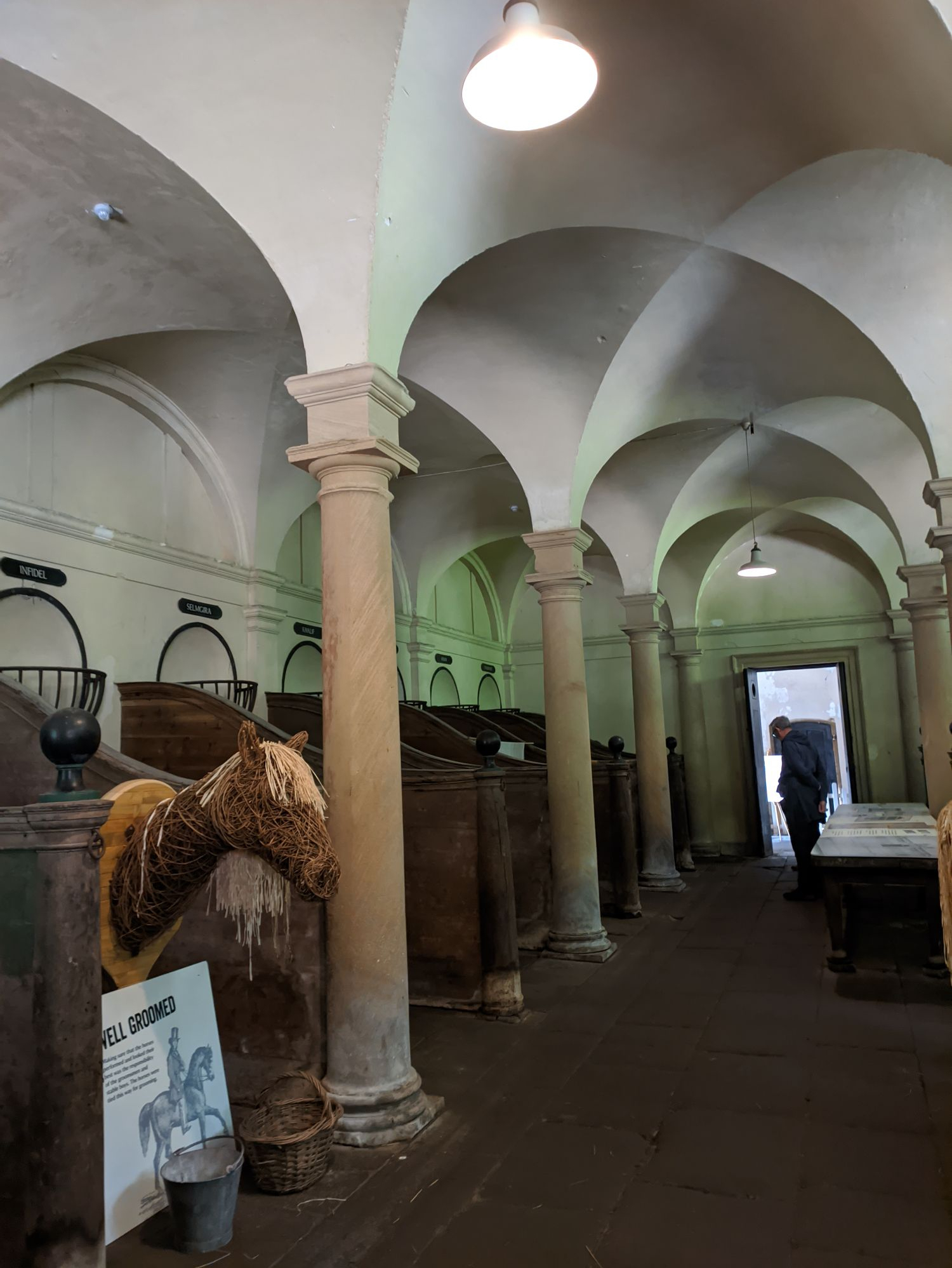
Here’s the stables for the stud horses. Twenty-one servants and grooms for 48 horses – on call 24 hours a day. I hope the horses appreciated their vaulted ceilings and magnificent housing. The ordinary horses were housed in very ordinary stables.

I always find old churches interesting. Here’s Keddleston’s church with burials going back to 1200s.

img_20240705_1925208641504018483836458

The oldest part of the church is Norman – not long after William the Conqueror’s invasion of England.

These are the family’s oak box seats. They could easily go to sleep and no-one would know what they were doing! They could be doing anything!

After lunch at their house, Keith and Debby drove us out to the famous Derbyshire Dales. (A dale is a valley.)

img_20240705_2246485465232006823452384

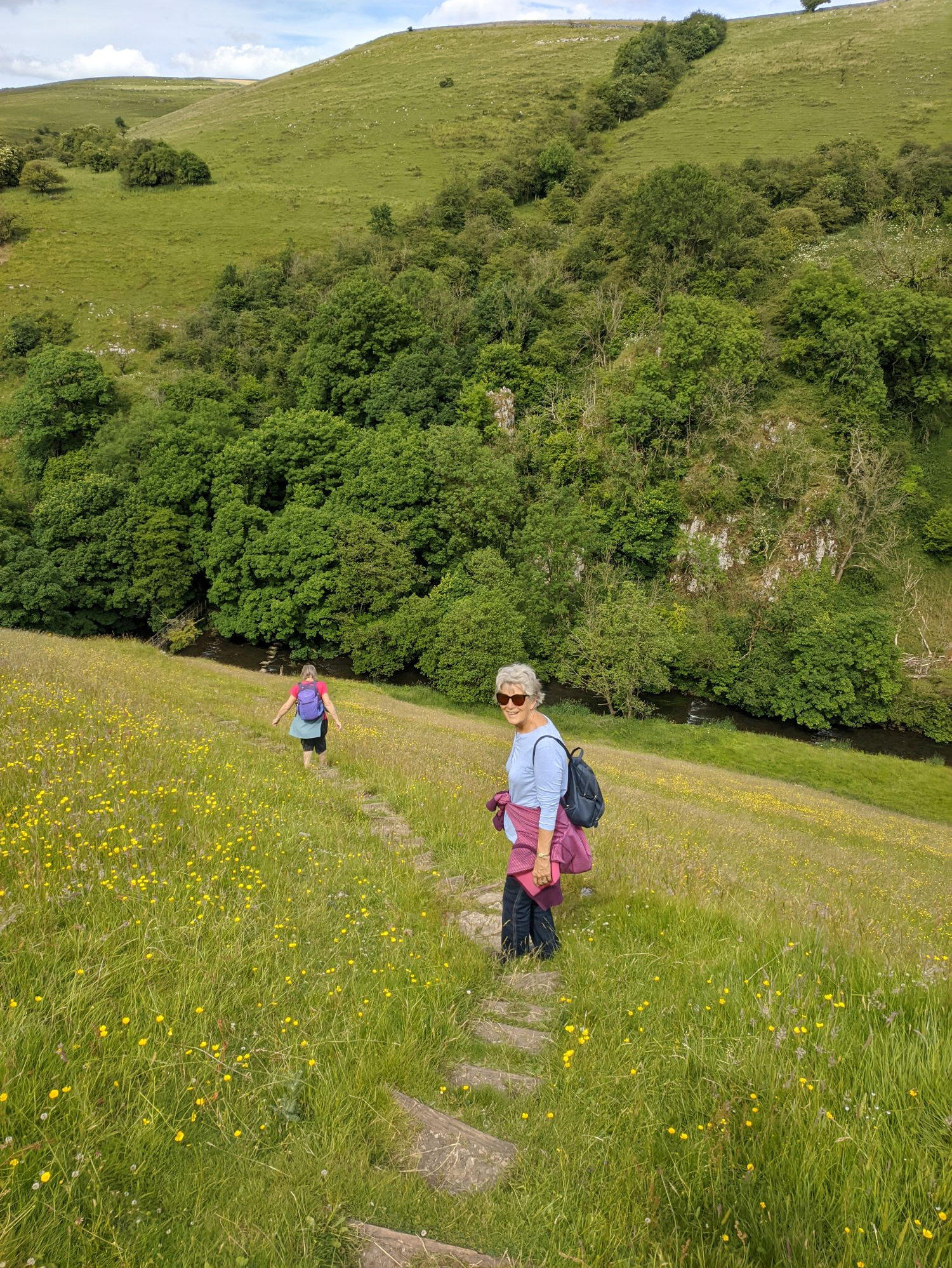
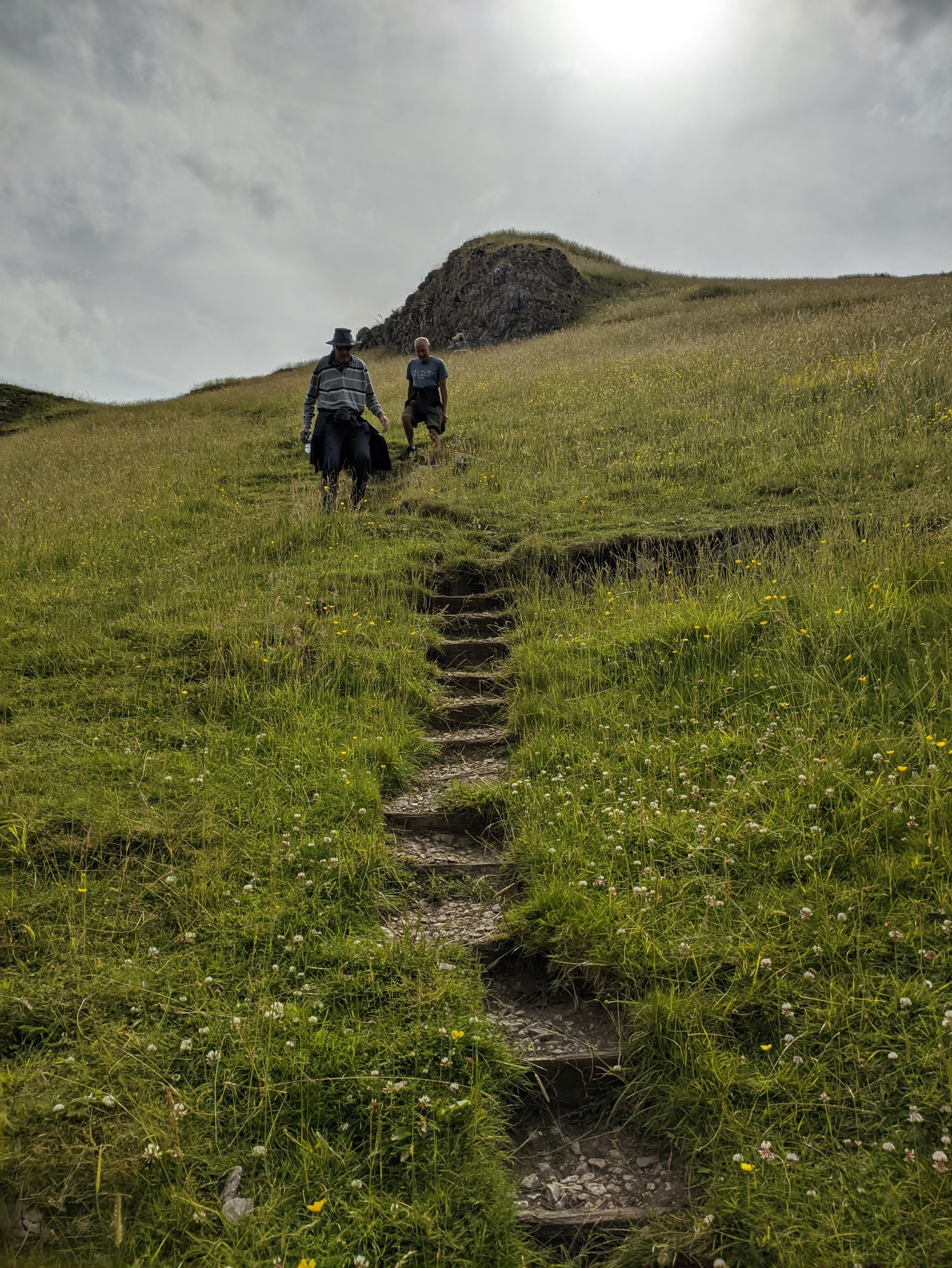
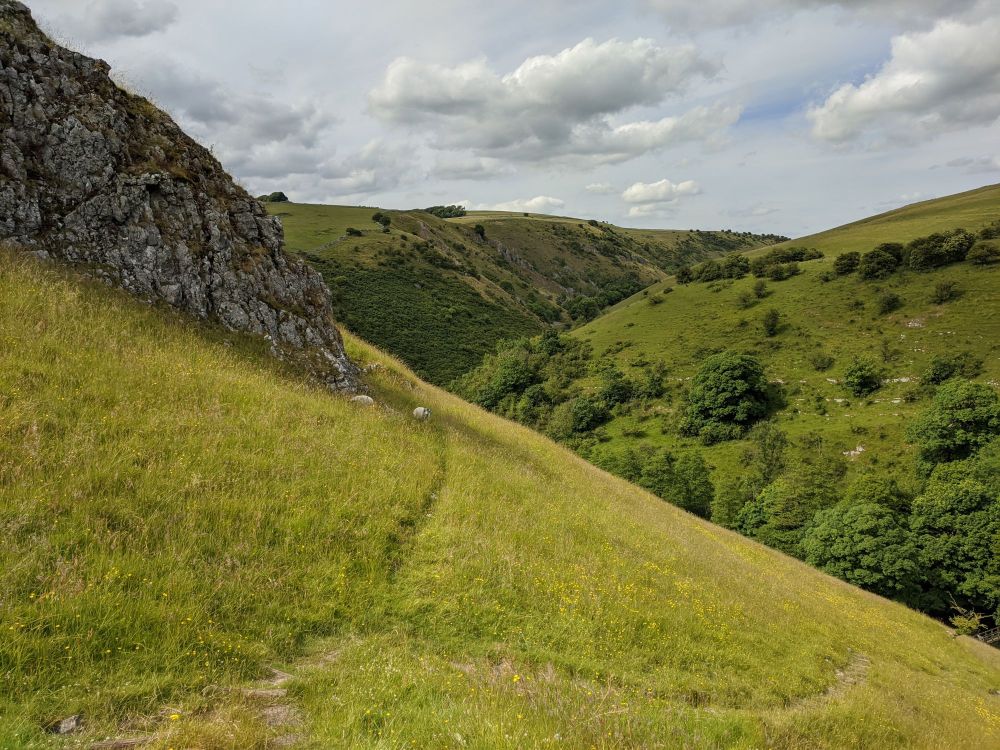
Through not only farmlands, but farmyards where the dogs don’t even bother to bark at you. Glorious countryside with steep, steep descents. Sheep everywhere and the Dove River happily gurgling alongside us.

Keith who’s an engineer thinks the steepest descent we did was 1:3!

Lots of sheep and their lambs easily climbing the steep hills.

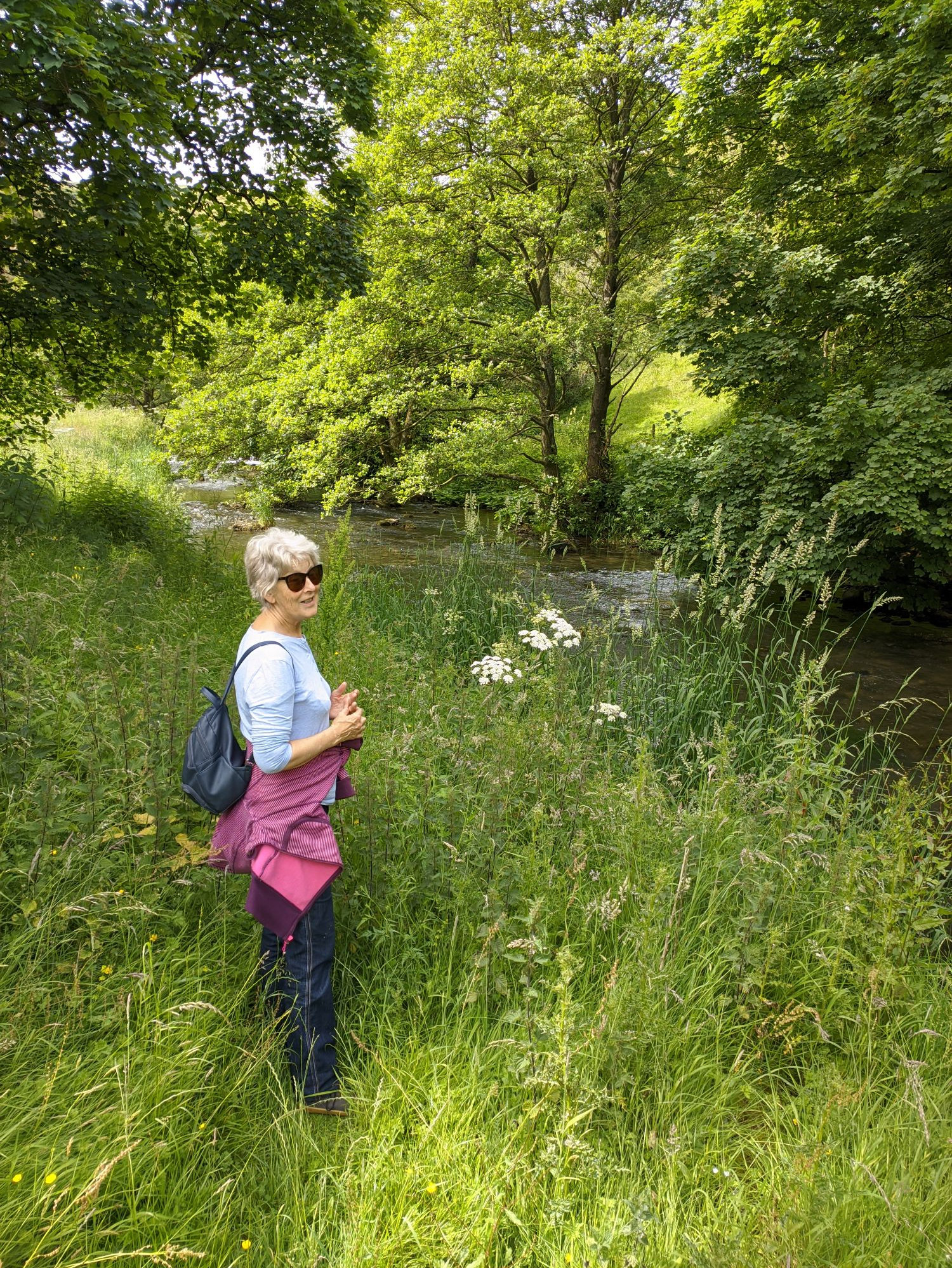
Lots of birdsong and we disturbed a long-legged grey heron fishing in the river.

We walked along the valley beside the Dove River – but didn’t see any doves!

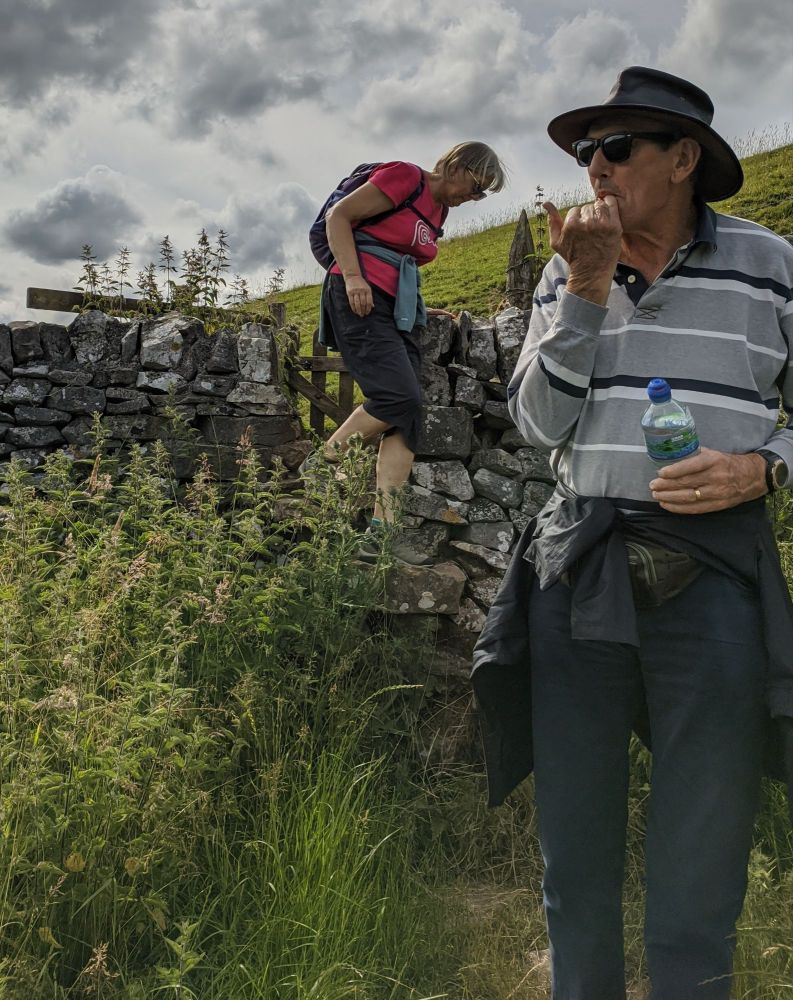
Philip got stung by nettles on his hand. That was his new experience!

img_20240705_2253442044266099573099651

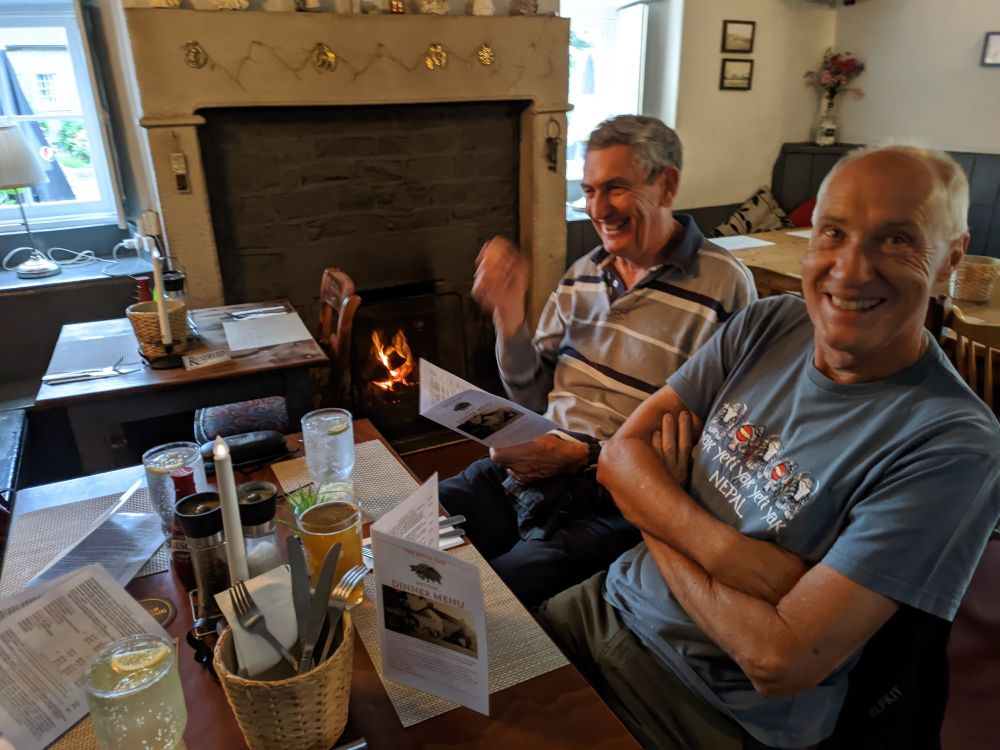
Then a slow ascent to the village of Wetton to the Royal Oak pub in time for dinner beside an open fire.

img_20240706_0107021467860459601523691

When we came out of the pub it was cloudy and very cool in the evening. Another walk back to the car and home. I think we walked about 4 1/2 hours today – but maybe I’m exaggerating! It was probably my favourite walk so far in Derbyshire.

img_20240705_230013768011435192267937

It’s forecast to rain again tomorrow, but for today there was sunshine!

Blue, grey, blue…

It’s been blue skies, then dark grey clouds for most of the day, then a bit of blue skies in the late afternoon. But with a bitterly cold strong wind blowing like a gale. It’s felt more like a Perth winter’s day than an English summer’s day. But we had a very full and exciting day today nevertheless!

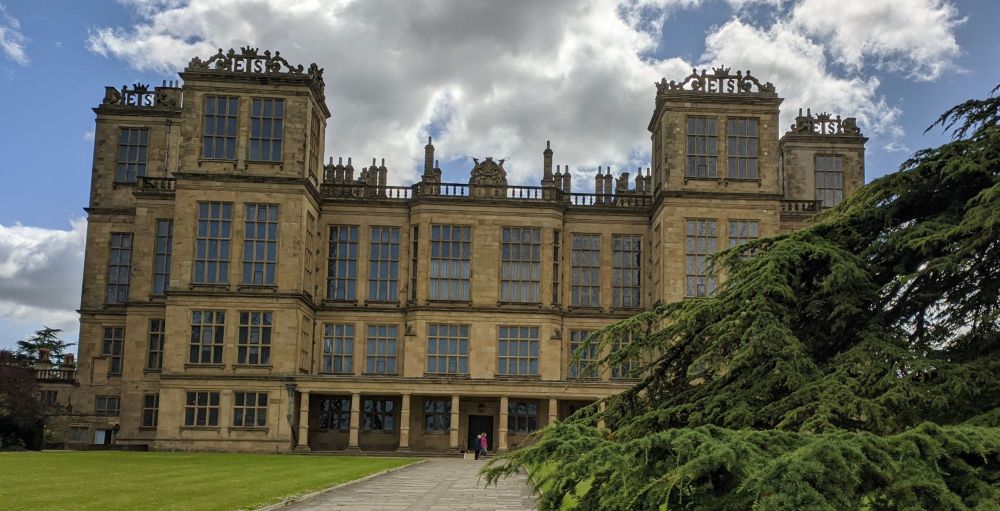
Keith loves to organise an expedition, so we sallied forth straight after breakfast, driving north in the Derwent Valley to Hardwick Hall built by a truly remarkable woman known as Bess of Hardwick who lived in the 1500s and early 1600s during the reign of Queen Elizabeth 1. She started life in a farming-gentry family. She was a very shrewd businesswoman plus after a series of four marriages (her husbands kept dying) she rose to the highest levels of English nobility – being on best terms with Queen Elizabeth and Mary Queen of Scots and was the wealthiest woman in England (after the Queen) by the time she died aged 87. A very powerful, wealthy woman.

img_20240704_1710403586494194982942560

Bess first rebuilt old Hardwick Hall – but which now, after several centuries, has fallen into ruins. But you can still climb up the inner stairs to the roof and see glimpses of the grandeur there.

But Bess was out to impress everyone and she spent seven years building the new Hardwick Hall next door to the old one and lavishly spent money on it. The front of the house is mostly glass – an unheard-of innovation at the time – she bought the glassworks and the lead mine for the leadwork in the glass panes – so she could have the windows more cheaply. But she wanted lots of light inside her house. Most houses of this era are mostly bricks with windows.

img_20240704_1723577839790418148405950

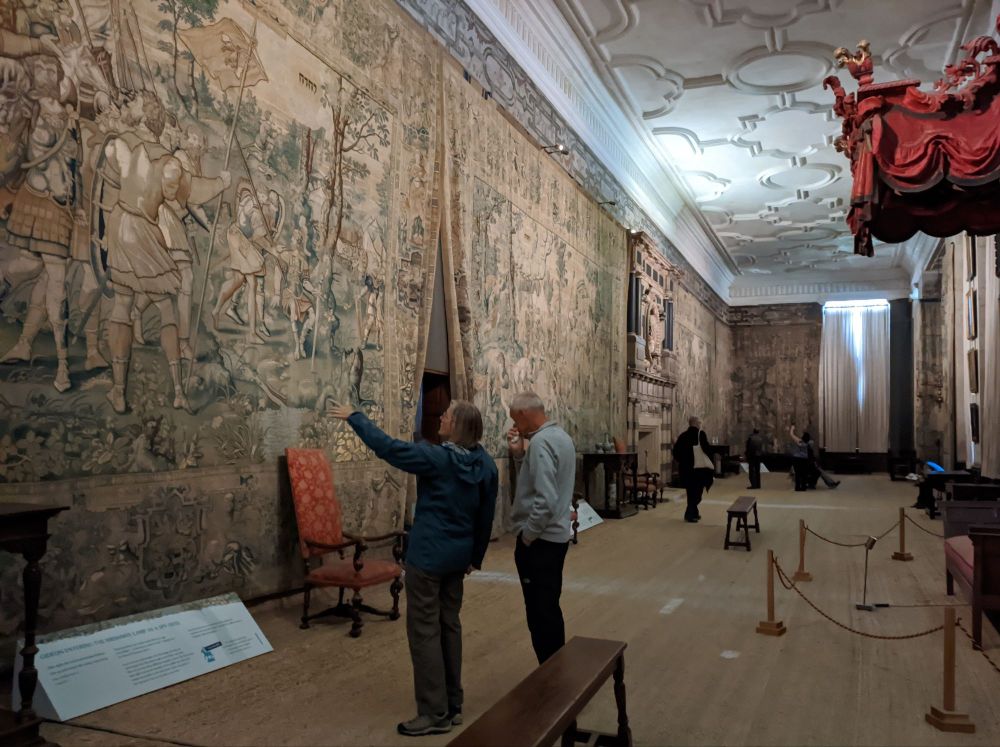
Inside the National Trust have spent 25 years restoring the richly coloured tapestries that hang on all the walls – room after room after room hung with tapestries of both Biblical and classical stories. The tapestries not only helped to keep the rooms warmer, but through the pictures on the tapestries made powerful statements about how Bess wanted to be perceived.

img_20240704_1944295350955276790148028

Here’s Deb and Keith deciphering the story of Gideon in the tapestry

I peered closely at the tapestry work – all done by men at the time – and the tapestries are huge – and they are exquisitely done. After a while, my brain reached saturation point in this magnificent Elizabeth manor.

img_20240704_1938167640185553021776729

Above the tapestries are richly painted plaster friezes of scenes. Very colourful rooms!

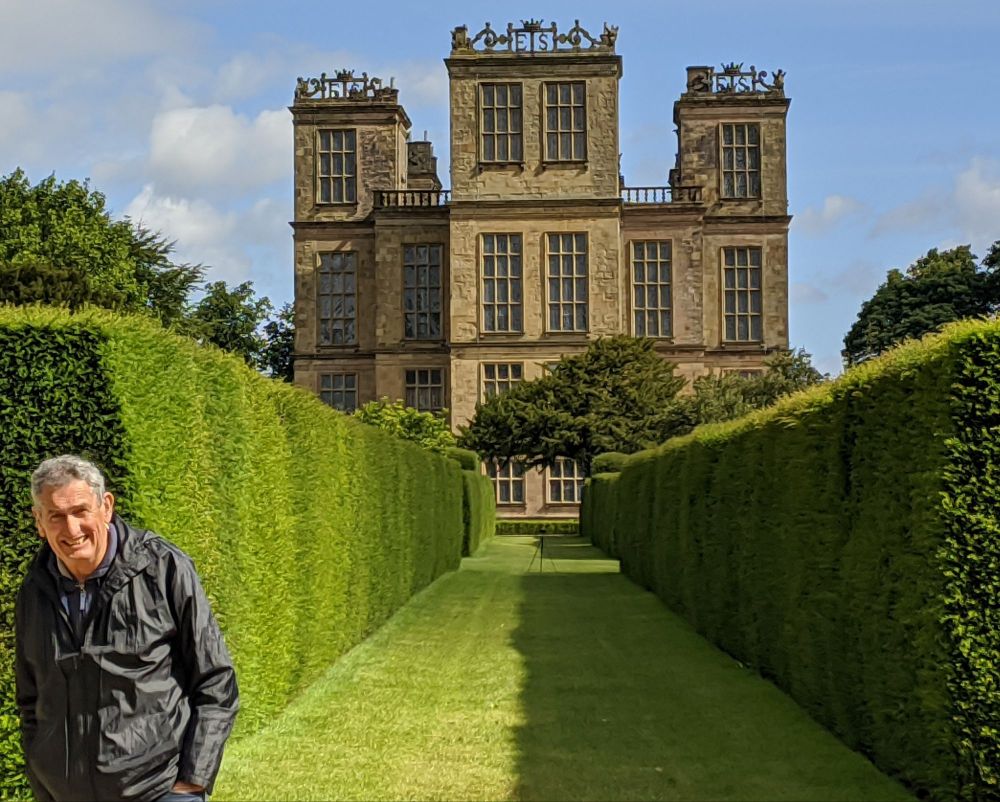
An interesting sidenote is that Bess had lots of pictures and tapestries done showing strong and virtuous women. But she and her last husband, the Earl of Shrewsbury ended up hating each other and living apart. She also built Chatsworth House – she was one of the biggest and most innovative builders of her times. If you look closely at the top of Hardwick Hall, you can see where she’s carved out her initials E.S. (Elizabeth of Shrewbury) on all sides. She liked to make big statements about her power and wealth!

img_20240704_1710456693031018483939827

We had lunch there, but we brought our own picnic lunch. Keith objects to paying good money for sub-standard food at a cafe!

img_20240704_1751356803031275849146467

Here’s a little bat lying on the stone floor step in the old Hardwick Hall. I think it’s too cold, so somebody picked it up and put it on a warmer ledge.

img_20240704_1826423684591857786424132

Last photo of tapestries – these are all tapestries along the stone staircase!

img_20240704_1912211968025920995616999

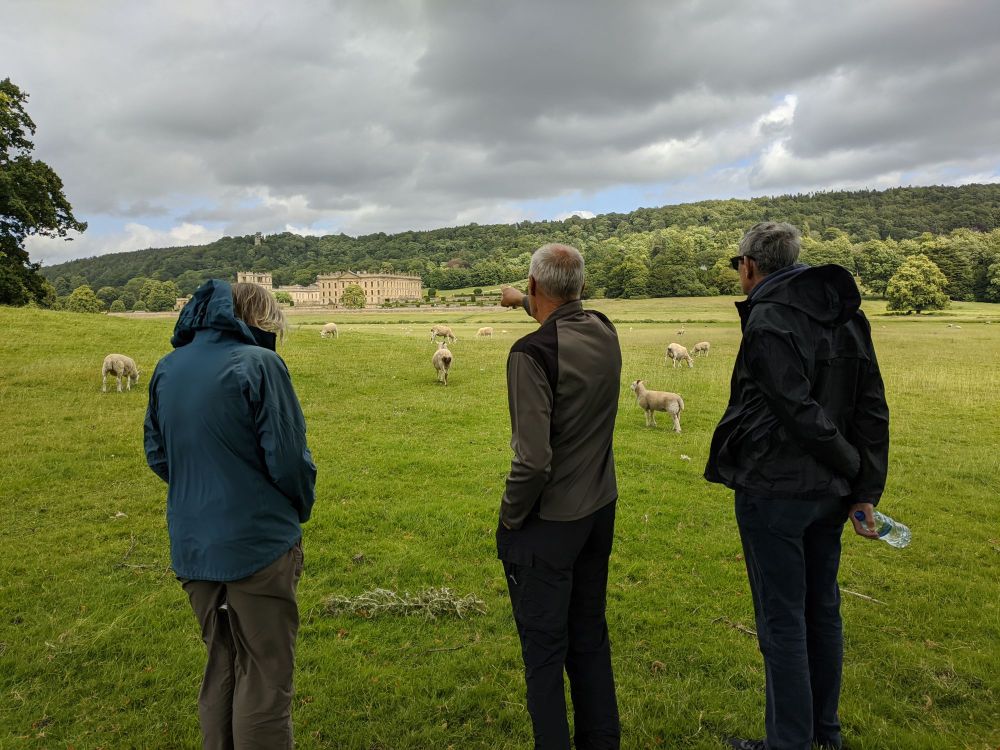
Then we did a long, brisk walk through the grounds of Chatsworth House, strolling through green fields studded with huge English trees and many sheep with their lambs ambling around and focussed on keeping the grass shorter. Keith’s father used to be a tenant farmer for the Dukes of Devonshire (their surname is Cavendish) who own Chatsworth Park, and Keith grew up on the farm nearby, so he knows the grounds very well. Up some steep hill slopes, looking out over the green valleys and hills.

img_20240704_2236148983932700122238145

We had a nice dinner at a nearby pub, the Cavendish club and finished off with visiting the nearby parish church. Here’s a bit of trivia for you. This white stone in the foreground of the photo below is in memory of John F. Kennedy, the American President who visited the grave in front of the stone where his sister, Kathleen was buried. Kathleen had married into the Cavendish family.

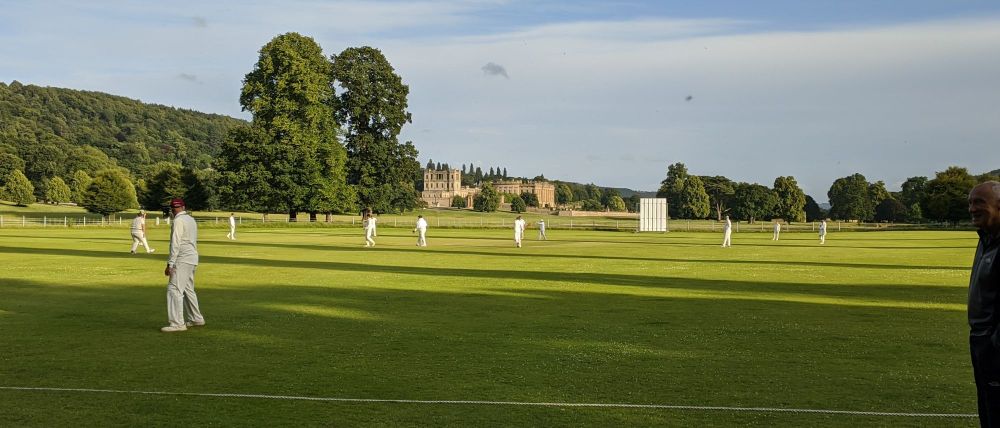
Another bit of trivia for you. The Cavendish banana is named after them too. Here’s some cricketers playing a match on an English “summer” evening in the Chatsworth grounds. The club room behind me has a little thatched roof!

img_20240705_022920911661180070697173

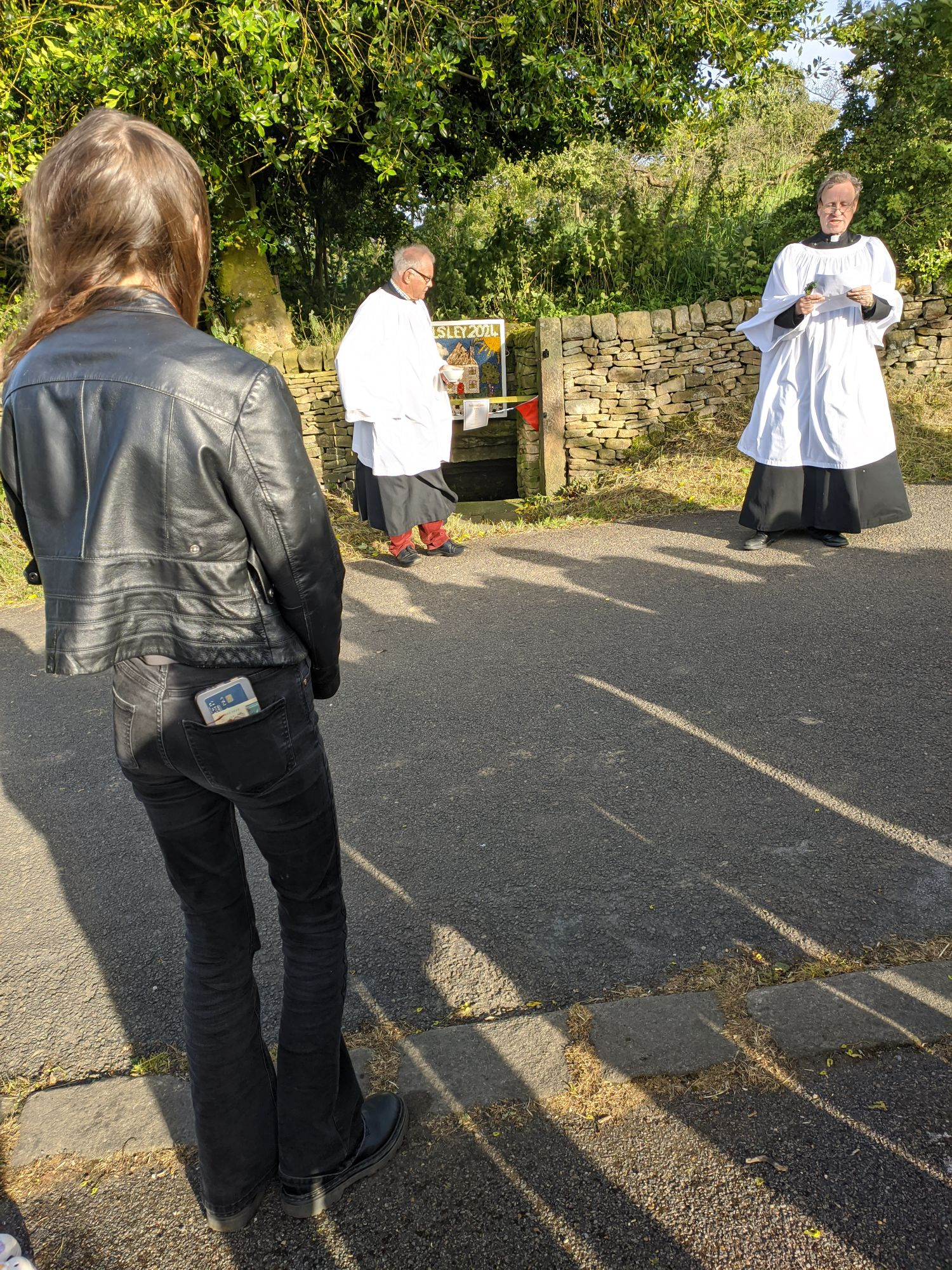
Lastly, Keith saw a notice that the Dressing of the Wells Blessing was happening nearby. So we drove a few minutes to another little village where the Vicar blessed the local well. We got there just in time. It’s an ancient custom going back many hundreds and hundreds of years. Local villages would “dress” their wells with beautiful pictures made of flowers and the local priest would ask God to bless their wells and water supply, knowing that they needed the protection of God to for their water supply. Keith said the villagers used to do elaborate and beautiful Biblical scenes, but now it’s much scrappier, usually done by children and not always on theme. But the words the vicar said and prayed, I found, are still meaningful and a good reminder that we are not autonomous and powerful, but we are reliant on God who is our Creator and Good Father.

And to finish off, here’s a photo of the remarkable Bess of Hardwick!

Dallying in Derbyshire.

After breakfast, Philip and I split up for the day. Philip went with our hosts Keith and Deb to explore nearby Cromford where in 1771 Richard Arkwright built the world’s first successful water-powered cotton spinning mill. Richard Arkwright developed warehouses, workshops and built Cromford Village and other housing for the workers for the mills. Lots of history for Philip to absorb and appreciate. They went for a 6 mile (10km) walk around the Cromford industrial site, the workers’ cottages, alms-houses and the canal for transport.

They had a steep hill walk – “steeper than Mt Vesuvius in some parts,” said Philip – a picnic lunch at the top of Mt Masson where they felt the earth move under their feet when a blast went off in a nearby quarry.

Philip forgets to take photos but here’s one he did take of the distant Cromford Mills complex. It’s all a part of UNESCO Derwent Valley Mills World Heritage site.

I went off with good-friend Mandy who’d driven down from Hull. Mandy moved from Perth back home to Hull in January and it was so good to catch up with her again. We drove out – the long way – to Carsington Water, a huge reservoir lake in the Derbyshire hills.

img_20240703_183616646120425973335676

We fuelled ourselves up with a great lunch at the cafe and walked 7.5miles (12km) all the way around the reservoir.

img_20240703_2102073887976600469305918

Through wildflower meadows…

… looking out at the wide waters where sailboats and canoes zig-zagged around.

img_20240703_2243122102260979960099944
img_20240703_210017342400227711296250

…. woodlands that reminded me of Narnia or Tolkien landscapes…

We stopped off at bird hides to look at the hundreds of birds. I asked questions about the birds’ identities, but I’ve forgotten them already! They certainly left lots of “markers” wherever they’d been on the land!

img_20240703_2009567180108172964732703

Below is the bombing tower – a relic from World War 2 when it was used as a lookout for bombing practice for the planes. This was just a valley then as it was before the reservoir was built in the 1980s. The sad thing we also saw was a memorial for four workers who tragically died when part of the dam wall collapsed before it was finished.

This chair is carved so realistically from a single huge log so that it looked like a huge comfy armchair – beautifully done.

img_20240703_2131193271517780939338056

We finished the day at an Indian restaurant all together, having a wonderful meal. Sometime ask Philip about the special steak he had there! Thank you Keith and Deb. And “Bye” to Mandy who returns home to Hull.

img_20240704_0123243222432771231726292

What a wonderful dallying day. Lots of clouds and occasional very light showers, but a perfect day for walking, talking and connecting with wonderful friends.

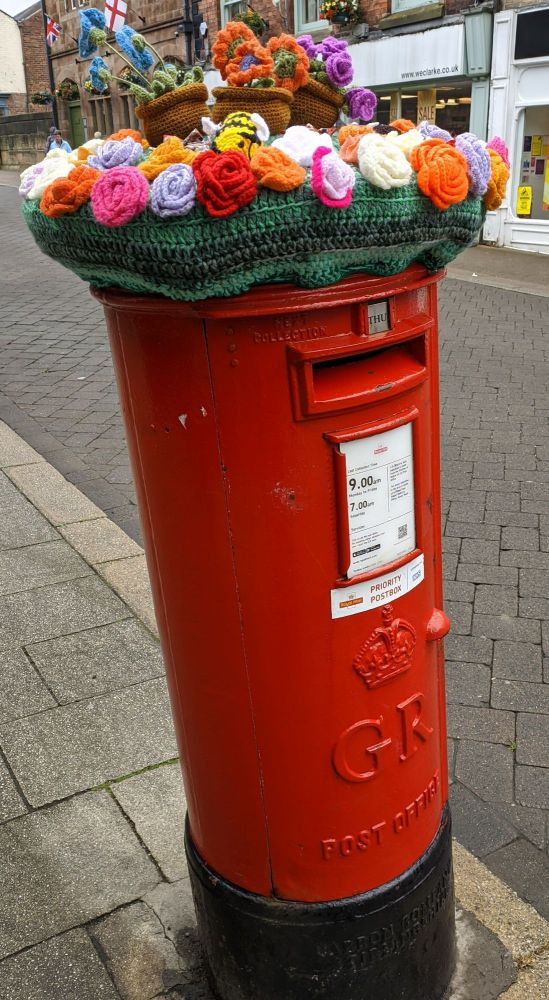
And to finish off, here’s a photo that took my fancy – of a mailbox I saw today in the town of Belper that we passed through on our way to Carsington Waters. What a fabulous creation!

img_20240703_1752256512098947917222747

A Traveller’s Tales…

But there won’t be many traveller’s tales in this blog today. We’ve been travelling all day – from Ewen (near Cirencester) in the Cotswolds to get to Duffield (near Derby) in the middle(ish) of England. But with not a great deal happening on our travels today! Which can be a good thing… a very good thing!

It’s taken quite a lot of research and planning to get here in Derby. On the map, it looks like it’d be just a hop, step and a jump! But it took a bit more than that!

After our hearty breakfast at the BnB this morning, we took a taxi to Oxford. A taxi was cheaper and much easier than hiring a car or public transport! Our Albanian driver who’s lived in England for 25 years was great company with lots of lively discussion and laughter.

We thought we had plenty of time to wait for our bus in Oxford. (I’d never been there before, but Philip came here for a visit years ago.) My plan was to walk around the streets near the bus station, taking in the atmosphere and the architecture and “vibe” of the place.

img_20240702_1733249011801116172005511

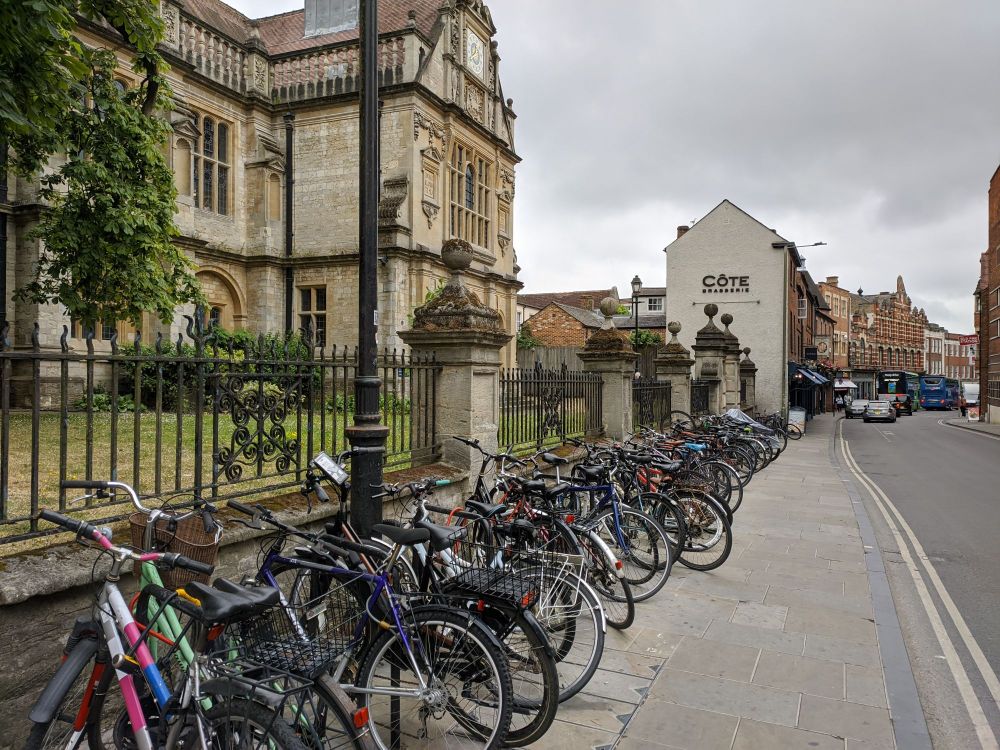
This is the History faculty – with Oxford bicycles.

But I’d just started out on my explorations, when Philip realised that the ticket vendor (from last week) had given us tickets to Derby for the wrong day. So that needed a bit of discussion with the ticket clerk – and some more money for the changes! So these are the only photos I took.

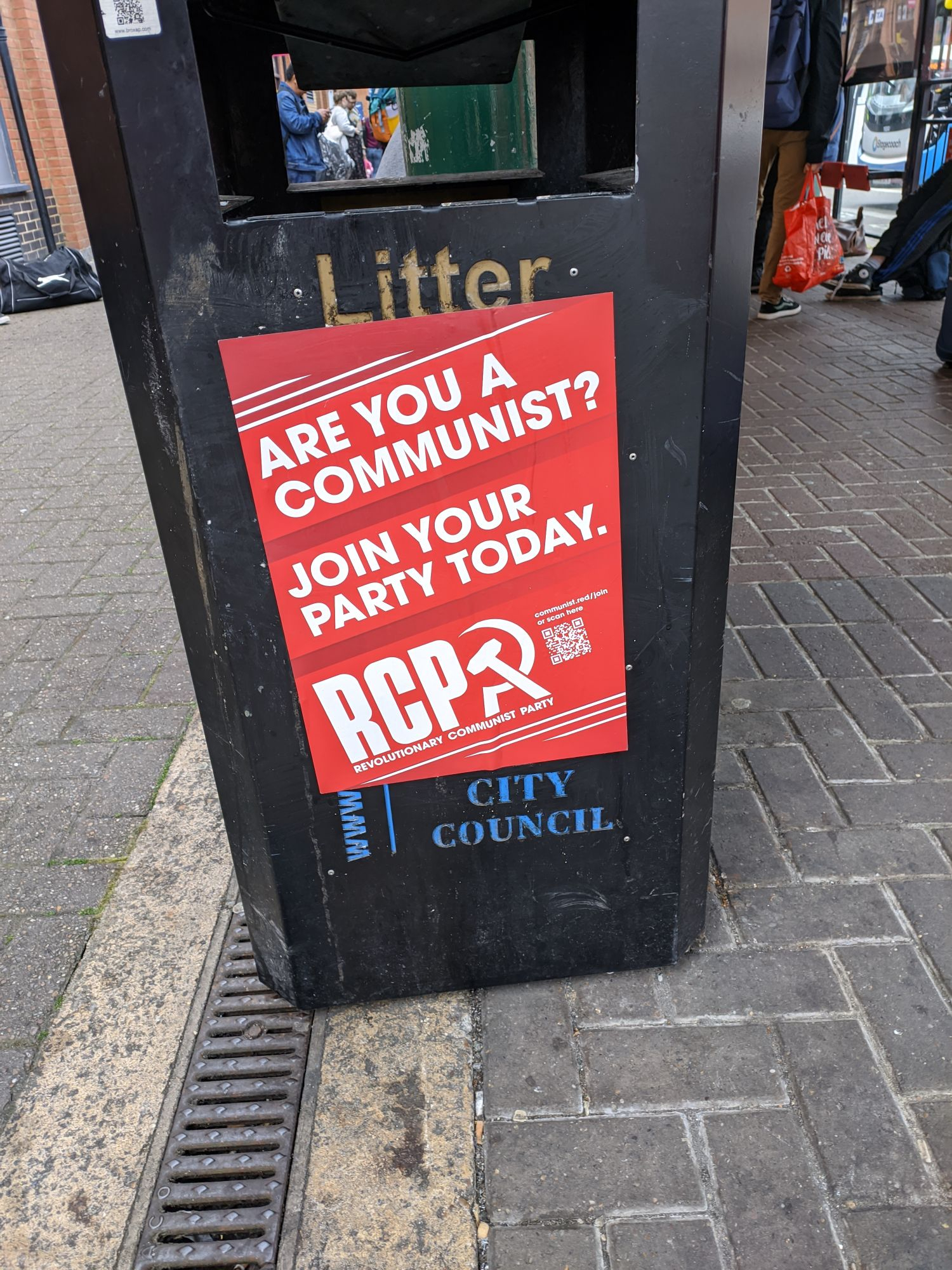
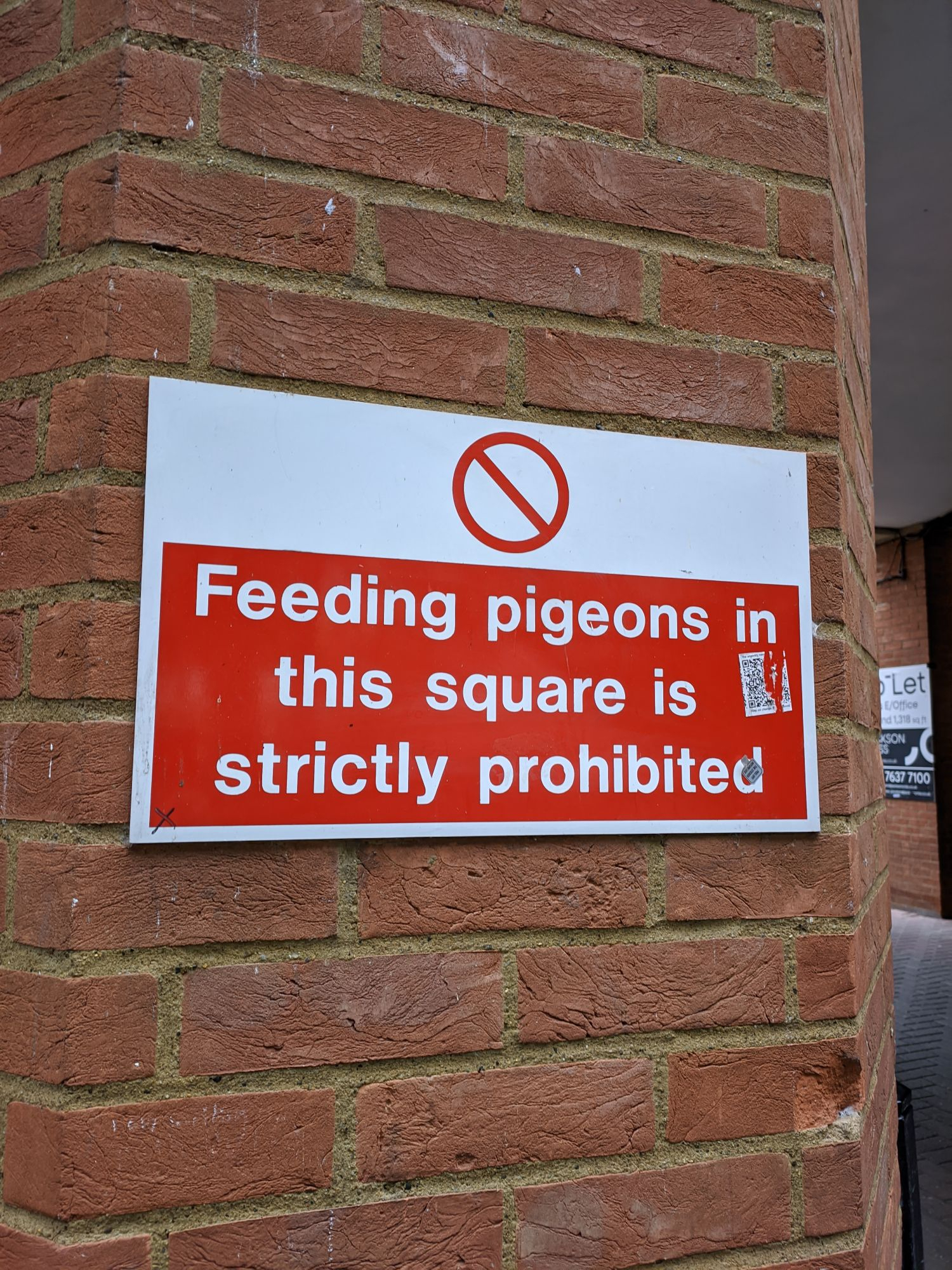
I don’t think pigeons have learned to read!

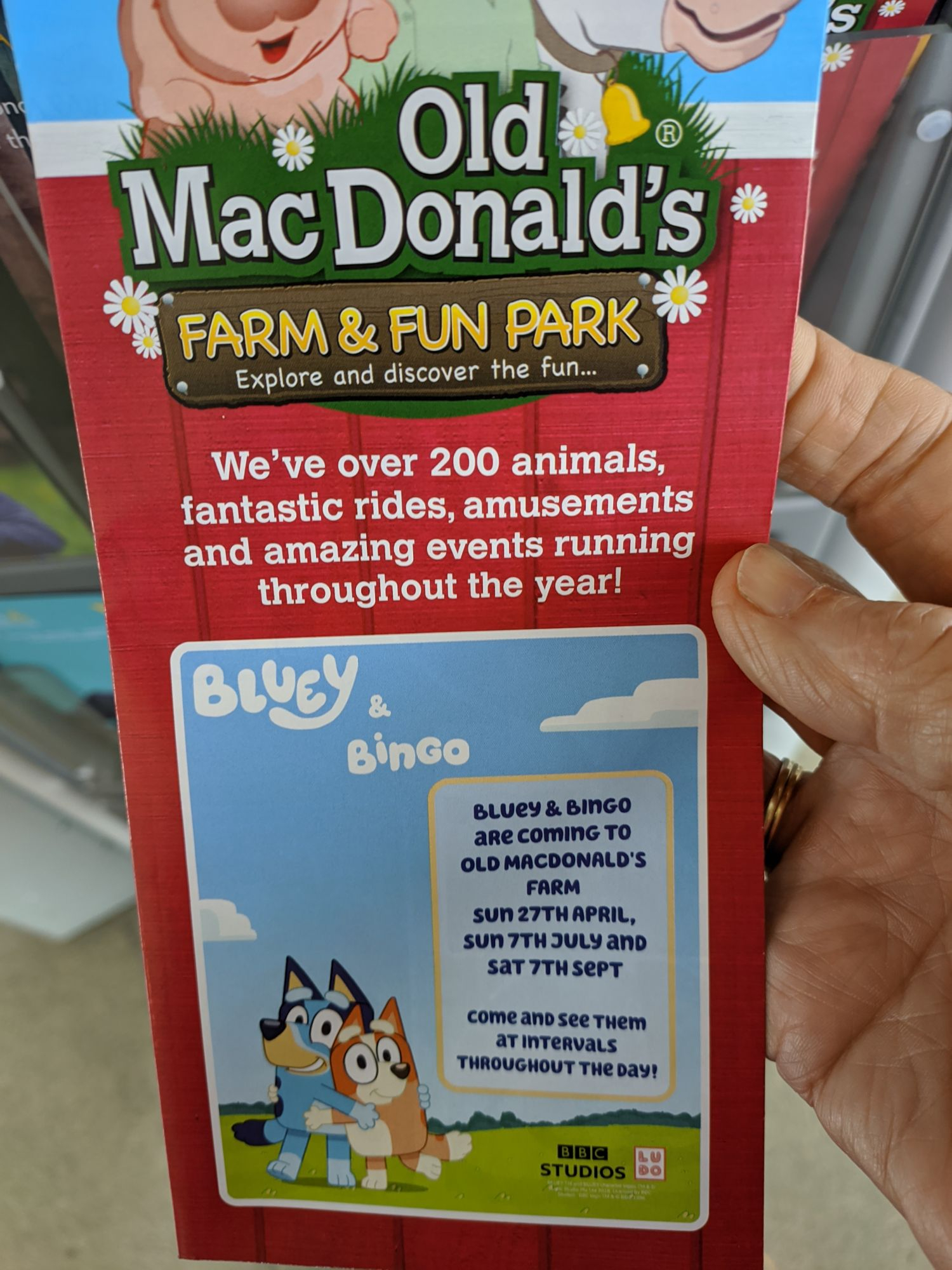
A very basic bus ride through the countryside to Milton Keynes which is like a city development hub away from London. We ate our lunch at the bus station there while waiting for the next bus. Nothing of interest there and nowhere interesting to walk to. But I did notice amongst the tourist brochures that Bluey and Bingo are visiting several tourist attractions in the area during this month! That’s a long way from Brisbane!

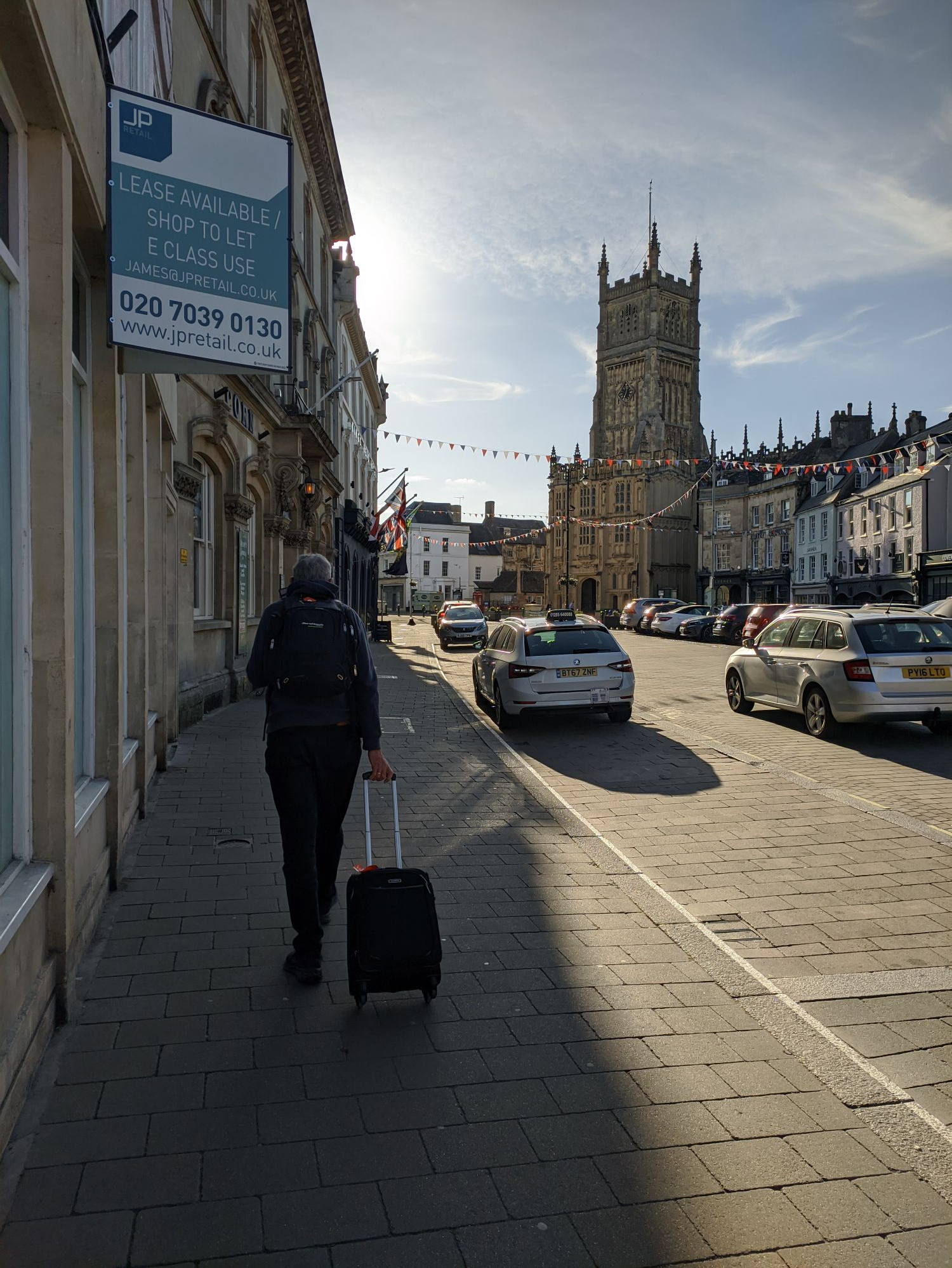
The next bus was slightly more comfortable, but very narrow seats as we rolled through more green countryside and made detours for passengers into towns like Leicester, Loughborough and Nottingham. Nottingham impressed me as I drove through with some beautiful buildings both old and modern and lots of green parks. Most of the passengers got off at Nottingham. But this is the only photo I was quick enough to take in Nottingham!

img_20240703_0011073906004938023557414

Philip and I were the only people left on the bus from Nottingham to Derby – so we could finally spread out a bit more. Keith met us at the bus station in Derby and we got straight on a smaller and crowded suburban bus to take us to their home in Duffield (outside of Derby). The most interesting part of the trip was when a couple of adults boarded the bus with about a dozen “Beavers” – little kids dressed in blue and yellow uniforms – they’re like cubs for little kids. They were very excited because they were going to an outdoor park to make “dens”.

It is wonderful to be at Deb and Keith’s restful house in Duffield, overlooking the Derwent valley – the birthplace of the Industrial Revolution (late 1700s to mid 1800s). A wonderful dinner with them. As I’m typing to you I’ve opened the windows because I can hear the church bells ringing. I think they’re practising because they’re ringing proper tunes – the liquid notes carolling and rolling up and up the valley. I love it!

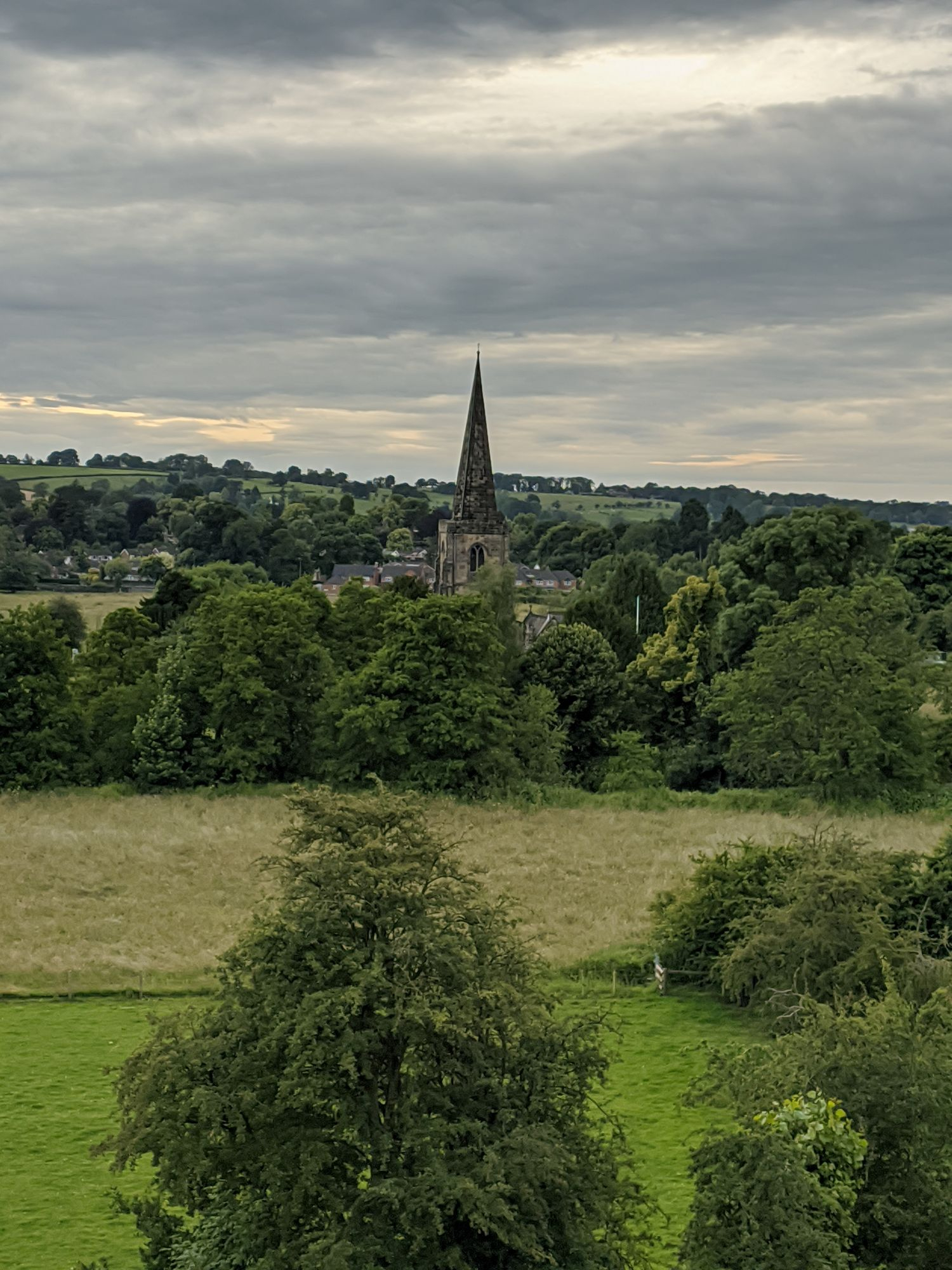
The view from our bedroom window

Weary travellers…

… so this one will be short and sweet!

After early breakfast this morning, we left Vico Equense by bus with our Oak Hall group, saying farewell to Mt Vesuvius, the Mediterranean Sea and the frenetic, frazzled and dilapidated anthill that is Vico Equense and the Amalfi Coast, driving north to the Naples airport. Long disorderly lines, slow-moving queues, navigating our way through the bustle and energy of scurrying people who are all in a hurry to get to wherever they need to go. In Naples, it’s still the old-fashioned way of walking on the tarmac and walking up the gangways to get into the plane. Sitting in narrow planes on tarmacs, waiting for air space to take off and then a smooth ride over white clouds for a bit over two hours, over the English Channel and green countryside, gliding over London to Heathrow. I had a window seat and appreciated being able to look out the plane window. Goodbye to all the new and treasured friends we’ve made this past week.

Navigating our way through customs – Philip had difficulty getting the automatic machine to accept his passport – then through the different Heathrow Terminals to the Central bus station where we waited several hours for our two and a half hours comfortable bus ride to Cirencester in the Cotswolds – our next destination. After leaving Heathrow on the bus, we were almost straight away driving out in the green, green countryside and didn’t drive through any suburbs.

I was surprised at how immediately there’s a different “vibe” – hard to explain – going from Naples to Heathrow – but I could definitely feel it. Nobody checked our bus tickets – we could have got on and off without paying!

The bus dropped us off at the edge of Cirencester – a town of about 20,000 people with lovely old English buildings. Philip had to pay 40p to use the toilet at the bus stop! There was a map of the town nearby so we worked out how to walk to the town centre so we could find some food to eat. We’re so glad on days like today that we travel lightly with luggage! It’d be awkward to lug big suitcases around.

We stopped at the first pub we found – the Bear – and had a great dinner. It was an old building with low ceilings and dark overhead beams – and a huge screen showing the Switzerland vs Italy Euro cup soccer match very loudly. Switzerland won with great rejoicing.

Because we’ve decided to not hire a car, and because our B&B is 6.4 kms from Cirencester, we’ve decided to stay very local and so we needed to find a supermarket to stock up on food for a couple of days while we’re here. We bumped and dragged our belongings over the cobble footpaths, and with help from willing locals found a Waitrose supermarket and bought a few basic foodstuffs to see us through the next two days. Then dragged our stuff back to the town centre to get a taxi to take us to our B&B called Well Cottage in the little nearby village of Ewan.

img_20240630_0113454874299206052122743

It is enchanting. The “Well” (of Well Cottage) has been filled in and is no more. Our hosts Bridgid and Neil are helpful and friendly we’ve already had great chats with them. The front “half” of the building belongs to their daughter and her family. We’re in the back half.

img_20240630_0327451277328906619957351

The quiet is blissful. There’s fields, farms, a few farmhouses and huge trees and all I can hear are birds. Do you know your ears almost “ring” when there’s quiet after endless noise and chaos?

img_20240630_0355378774662561242850512

We did a very short walk down the road to where the Thames River starts. We’ll explore more tomorrow. We’ve decided to do very little tomorrow, apart from around here. The past week on the Amalfi Coast was amazing but it was very busy with lots of “overload” experiences! So this is the perfect antidote. I’m going to revel in it.