Home again

Whenever Philip and the grandchildren are nearly home, they chorus together, “Home again, home again, jiggety jog”.


image

What’s the best thing about a wonderful holiday? It’s being able to come home again!

Arriving safely at your home destination.

Having suitcases to pick up from the airport carousel. No matter how long it takes to come through!

Having family to pick you up from the airport.

Having family to cook your dinner and share it with you, as you catch up on everyone’s news.

Having a warm, comfortable bed to fall into, after 24 hours non-stop travelling.

Having a home to come home to!

Having a thousand reasons for gratefulness

Having Someone to express my gratefulness to!


A Scottish Summer Day!

Last day of our holidays! And this Scottish summer day is cloudy and a bit cooler. Back to wearing jeans and a jumper.

Despite being in Scotland and England for a month, I would never have known the Commonwealth Games were on in Glasgow until the last day or so. We haven’t been anywhere near a TV or newspaper. In the last couple of days a couple of Scottish people, once they know we are Australians try to give us an update on where Australia is on the medal board. But I still don’t know. 

The other thing I’ve noticed is that most Scots, when they know we’re Australians tell us about their relatives or friends who have migrated to Australia. Sometimes I’m surprised there’s any people left in Scotland!

John, our wonderful host in Edinburgh went to the Commonwealth Games last evening after work. He told us this morning that it far surpassed his expectations. He said it was wonderful. The blue ribbon event was the 100 metres grand final sprint at the end of the evening. He said that there was a competitive spirit there, but there was also such fun and warmth. Integrating the para-sports with the able-bodied sports, he thought, was a good part of contributing to the fun atmosphere. He loved it.

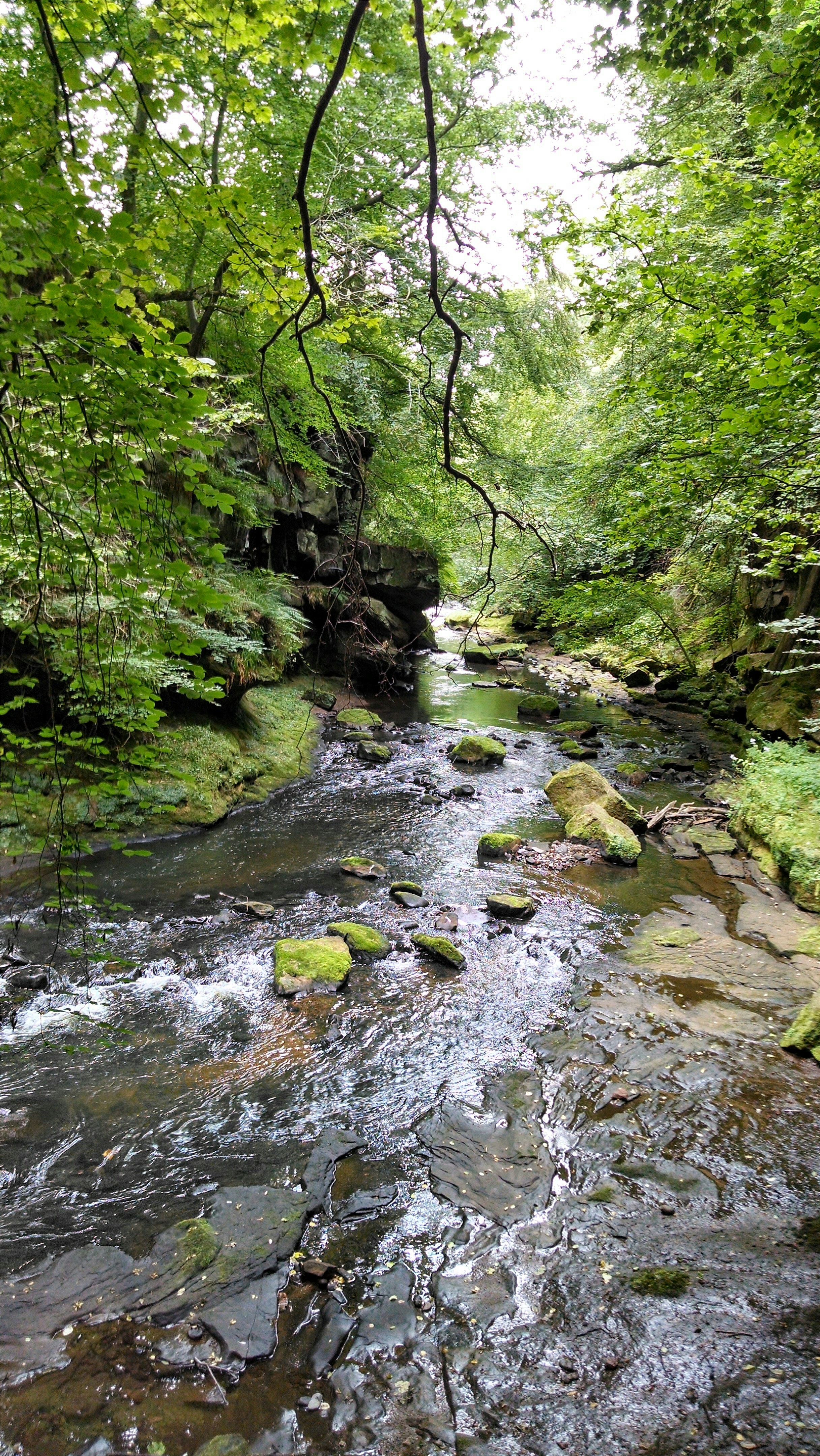
So, for out last day today, Philip and I drove about 20 minutes south of Edinburgh to Roslin Glen. Steep wooded hills with the River Esk running through it. It’s more of a brook than a river. But it once powered Gunpowder Mills here for the gunpowder used in mining and in wars from the Napoleonic wars to World War 2. 

There were meandering paths all through this woodland and forest, and I tried to follow the map to find the remnants of the Gunpowder Mills. But they proved too elusive. Or I did my map-reading my usual way. And ended up in a completely different place to where I thought I would or should be!

But the walk was absolutely magnificent. One of the most beautiful places I have ever been in. The pictures don’t even begin to show the grandeur and the magic of it.

Last day of our holidays! And this Scottish summer day is cloudy and a bit cooler. Back to wearing jeans and a jumper.

Despite being in Scotland and England for a month, I would never have known the Commonwealth Games were on in Glasgow until the last day or so. We haven’t been anywhere near a TV or newspaper. In the last couple of days a couple of Scottish people, once they know we are Australians try to give us an update on where Australia is on the medal board. But I still don’t know. 

The other thing I’ve noticed is that most Scots, when they know we’re Australians tell us about their relatives or friends who have migrated to Australia. Sometimes I’m surprised there’s any people left in Scotland!

John, our wonderful host in Edinburgh went to the Commonwealth Games last evening after work. He told us this morning that it far surpassed his expectations. He said it was wonderful. The blue ribbon event was the 100 metres grand final sprint at the end of the evening. He said that there was a competitive spirit there, but there was also such fun and warmth. Integrating the para-sports with the able-bodied sports, he thought, was a good part of contributing to the fun atmosphere. He loved it.

So, for out last day today, Philip and I drove about 20 minutes south of Edinburgh to Roslin Glen. Steep wooded hills with the River Esk running through it. It’s more of a brook than a river. But it once powered Gunpowder Mills here for the gunpowder used in mining and in wars from the Napoleonic wars to World War 2. 

There were meandering paths all through this woodland and forest, and I tried to follow the map to find the remnants of the Gunpowder Mills. But they proved too elusive. Or I did my map-reading my usual way And ended up in a completely different place to where I thought I would or should be!

But the walk was absolutely magnificent. One of the most beautiful places I have ever been in. The pictures don’t even begin to show the grandeur and the magic of it.

 wpid-img_20140730_020153.jpg

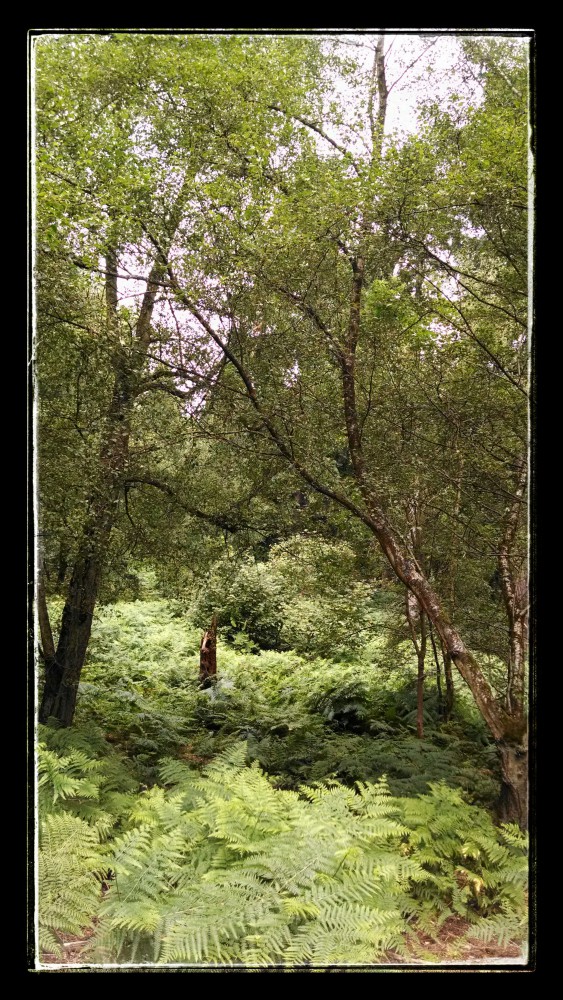
Deeply wooded with dark green tall spreading trees. High dramatic towering cliffs covered in trees, shrubs, ferns and moss falling down to the stream. 

There have been fierce battles in this Glen in the past, including the Scottish wars of Independence against the English with characters like William Wallace and Robert the Bruce.

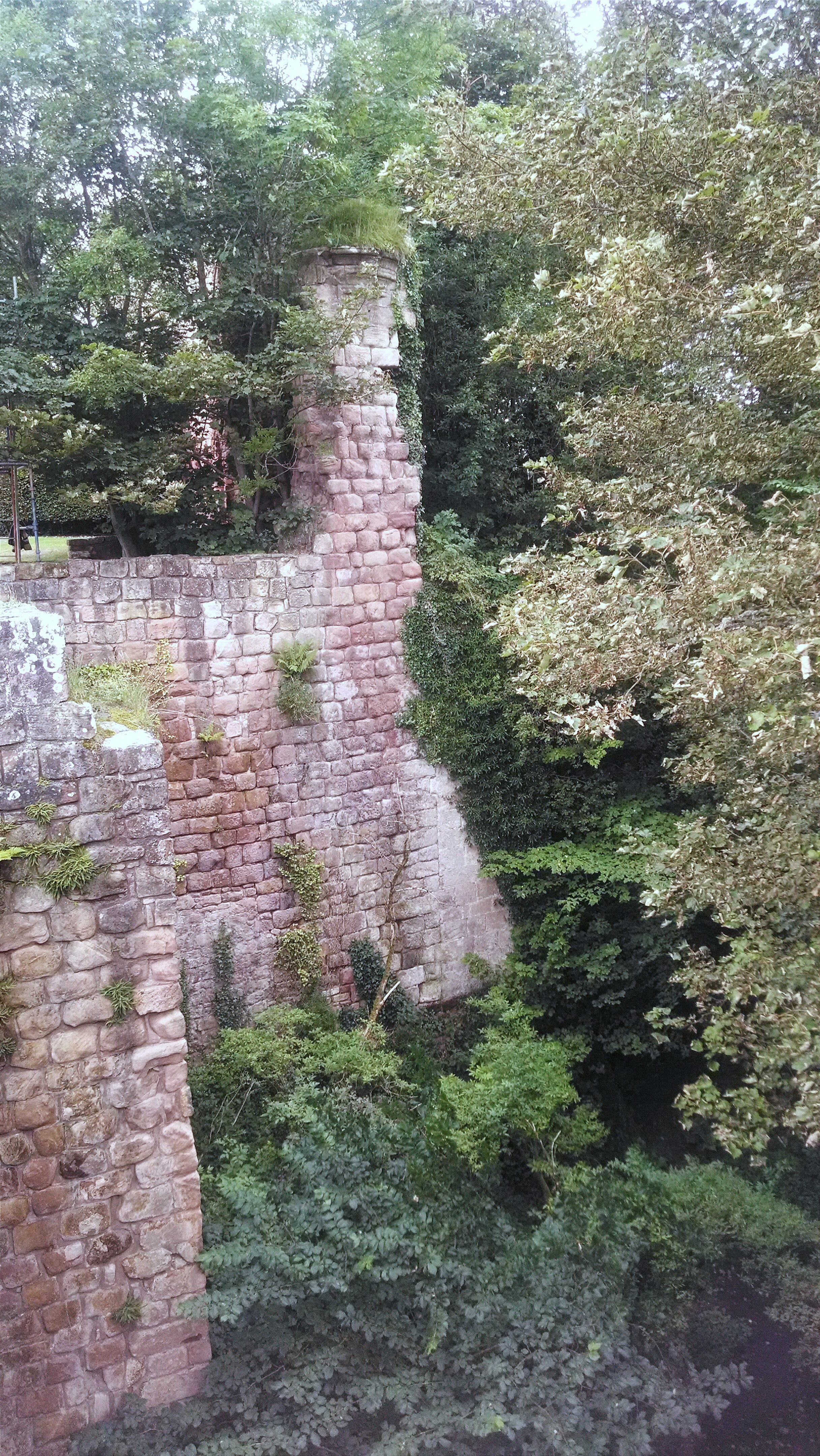
The Earls of Rosslin had a huge castle here but there’s not much left of it now.

This is all that seems to be left of the castle

This is all that seems to be left of the castle

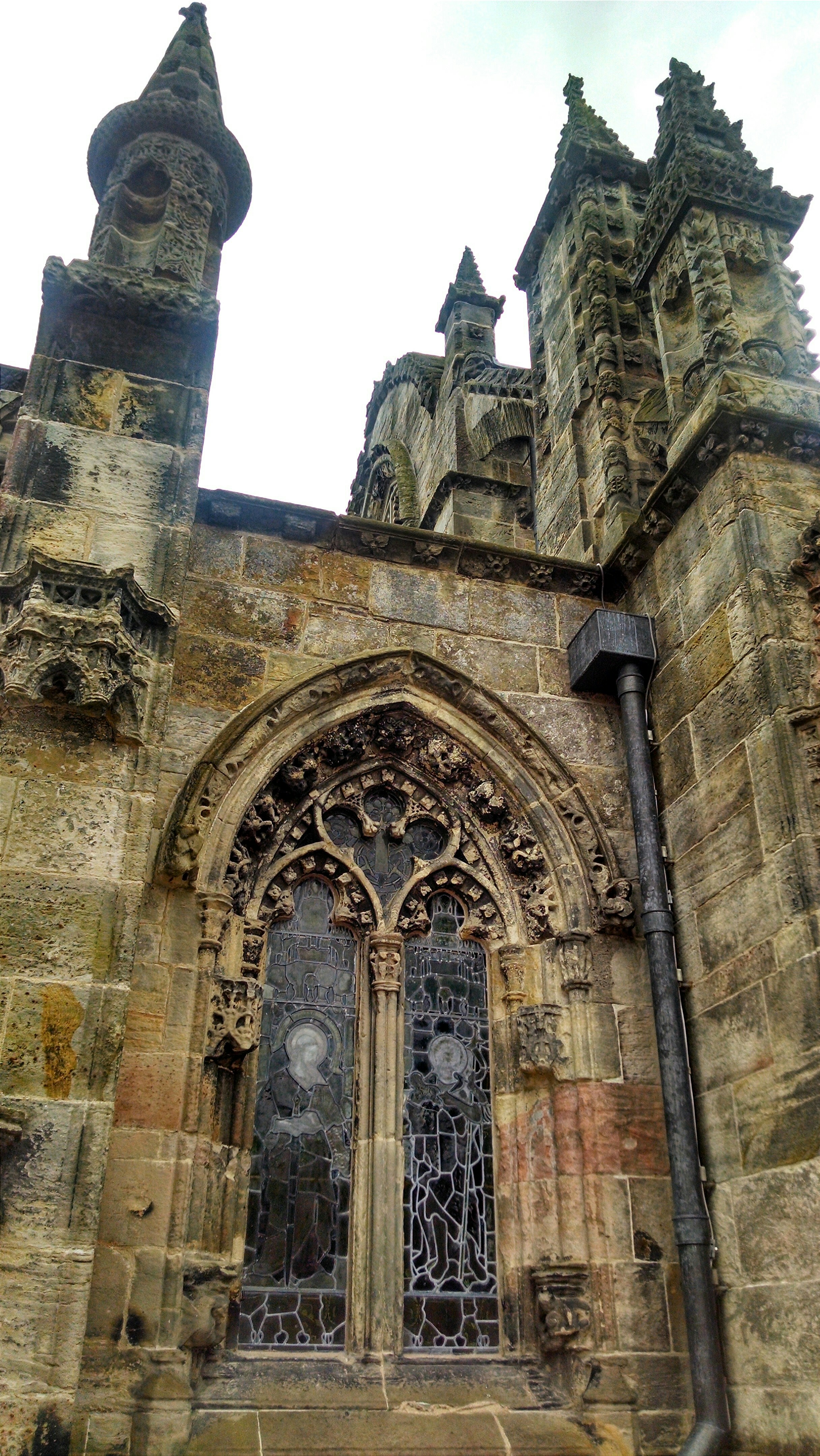
The most renowned part of this park is the Rosslyn Chapel. Originally started in the 1440s by a wealthy man wanting insurance for his permanent place in heaven with God. Not only was it well built, it is beautifully and intricately carved inside and out. But it was never finished. He died before it was finished. Later, after the Reformation it fell into disrepair. And only restored and repaired properly in the last few years.

But when I first walked into the Chapel, which is still a regular place of Christian worship, I was taken aback by the sheer throng of visitors all gawking around it. It’s not a big building and it was packed with people wandering around, pointing and looking. It’s the first time I’ve been in a church where it felt just like a tourist place, and nothing like a worship place.

Rosslyn Chapel is a major plot point of the blockbuster Da Vinci Code. I haven’t read the book or seen the movie. It seems like it was a double-edged sword. After its success, numbers to the Chapel have increased six-fold! So it gives them more money for its restoration. But the throng of people does also bring a tourist tackiness to it too.

 wpid-img_20140730_013729.jpg

But it was fun walking around and searching out the special carvings done back in the 1440s. Of Bible characters and Christian stories and virtues. They’ve found the stonemasons made their special marks next to the carvings they’d done. They were proud of their work, and also to ensure that they got paid. They were very gifted.

But for me it was easier to experience God down in the green cathedral of the Glen outside! I found some ripe wild raspberries too. Such a find! I’ve now eaten wild blueberries, wild blackberries and wild raspberries on my treks around the U.K.

And now it’s time to head for home tomorrow. I think it’s a sign of a great holiday when you’ve had a fantastic time on your break, but at the end of it, you’re ready for home. That’s me. I’ve had the most wonderful holiday. But I’m looking forward to home now. Just the 24 hour flight to do first!


An English Summer Day!

After breakfast, Philip went with our host Keith to inspect the cricket pitch to be used for the local cricket match later in the day. Then they met with other men in the church yard to re-erect a newly painted old flagpole. It’s a bit harder than first appears. But it soon was vertical using their brawn, ideas and brains.

Raising the flagpole!

Raising the flagpole!

After an early lunch, our hosts Keith and Deb took Philip and I off to explore further their corner of the world. First to Winkworth Church in a nearby village. The earliest church on the site was probably in the 800s, but the present church was built in the 1200s. And it’s a fascinating church because on the inside face of the church stone walls they used fragments from earlier buildings. Some decorated details like flowers. A stone carving of Adam, the apple and the serpentl. A picture of a miner. The first illustration of a miner anywhere in the world.

A stone coffin lid from 800. Probably from the grave of an early priest who builtthe church when the ancient kingdom of Mercia was being converted to Christianity. It’s the life of Christ carved on stone and was found under the church on a stone coffink, with a big skeleton inside.

An alabaster tomb of the 1500s to remind us of our mortality. The carved knight on top of the tomb has his feet resting on a skull.

We saw some Well Dressings. Back in the pagan days, the villagers would put flowers around their wells in summer for their nature gods so the well wouldn’t dry up. Then when they became Christians, they changed it to making pictures from the Bible out of flowers, seeds, grasses and bark to put beside their wells and make it a festival. 

Well Dressing

Well Dressing

It’s a painstakingly meticulous process. Putting a base of wet clay into a big frame. Pricking out the desired picutre onto the clay. Then pressing in the individual flower petals, seeds, bark and grasses with their different colours and textures to make the picture. Very vibrant when they’re first done. Then placed near the well where people leave donations for charity when they come to view them. It’s a particular Derbyshire custom. The ones we saw were a bit faded after the week of hot sunshine, but still amazingly vibrant and colourful.

We went to Eyam village. A remarkable story of a selfless village. In the 1660s with plague and fear spreaking throughout the country, the vicar of Eyam, Rev Mompresson called for a public meeting of his village where the plague had struck.

In a bold attempt to control the disease from spreading further, he proposed several measures. Including imposing a boundary and quarantine on the whole village to keep it confined.

Church window telling the Eyam story

Church window telling the Eyam story

It is estimated two-thirds of the villagers died of the plague, including the vicar’s wife. Surrounding villagers brought food to the boundary for the Eyam people. They were self-quarantined for over a year. An amazing true story. Whole families died.

Elizabeth Mompesson's tomb

Elizabeth Mompesson’s tomb

Nearby was Eyam Hall which was built soon after the plague finished. Not a grand country mansion, but a big house for one of the more prosperous farmers. It’s been in the same family for 9 generations since. But the present family live in a smaller house in the village and lease it to the National Trust. It has a lived-in charm and feels like a family from a by-gone era has just stepped out for the moment. It was fun to wander around and chat to the guides and learn more about the quirks of the house and garden.

One of the guides, an older lady with a very cultured voice said to Philip, “I’ve never seen anyone as tall as you. May I touch you please?”

We drove to Monsal Head. A tall hill looking over the valley. In Victorian times, the remarkable engineers of the times and their navvies blasted their way through the hill to form a railway tunnel nearly 500 metres long. The railway has been discontinued and ripped up, but the path can be walked on. When you walk through the tunnel, you can see the high domed arch ceiling of the tunnel carefully bricked and the blackened ceiling from the many steam trains that once went through. Then out on to the long aqueduct that once carried the steam trains. There was once a famous poster of this valley and  steam train railway aqueduct advertising for people to visit the Peak District.

Monsall Head & The Peak District

Monsall Head & The Peak District

We walked up the steep hill to the top and looked out over the magnificent Monsal Dale. The wooded steep hillsides, the green meadows flanking the River Wye way down below. We had a great meal together at the pub at the top of Monsal Head.

Back at their house, we sat outside on their patio that overlooks the green meadow below their house while we talked and watched the day gradually get darker and darker. And pushing up through the dense dark green trees is the spire of their church and beside it, the white flagpole! 

We sat on the patio chatting till dark

We sat on the patio chatting till dark

A wonderful summer day!


Not the Dead Relatives

Philip’s oriiginal plan for the day was to drive from where we’re staying in Duffield to Birmingham and look at the houses his Bryant grandparents lived in before they migrated to Australia in 1923. Our host, Keith showed him on Google map search how to get there and where the houses were. Typical small terrace houses of the times. They don’t look like they’re changed much since then either.

But Philip is tired. And he decided that looking at the houses on the internet was all he really wanted to do. What was the point of driving all that way to take a photo of a house that he’s already seen on the internet? I think the physical experience of being there does have impact. And that it’s not the same as just looking at a photo. But he didn’t think so.

So we crossed Birmingham off the list. And just drove straight to Newcastle-under-Lyme. In the Midlands. The pottery towns. Near Stoke-on-Trent. It looks on the map to me that Newcastle-under-Lyne is an outer suburb of Stoke. But that is not to understand the area at all. They are fiercely independent and would never want to be included. According to David who’s lived in the area all his life.

We visited Alison and David. Fourth of fifth cousins of Philip’s living there. In a very English terrace house with the long narrow garden out the back. Philip had never met them before. And apparently we were quite a surprise to them. They were expecting an elderly Baptist minister couple!

We sat outside in the sunshine in their backyard as we got to know each other. David is a retired chemistry teacher, and Alison works as a library assistant. And then a wonderful lunch in their house. Connecting with them, not only by blood, but by interests and foci in life.

wpid-img_20140725_210755810.jpg

After lunch, Alison took Philip and I to a nearby Aged Care to see her father Harold. Philip has met him before. But Harold who is 96 and has slight dementia didn’t really know Philip. There was a short church service for the residents while we were there, and we enjoyed being part of that. Old hymns that they knew. Music is very powerful for touching the deep places and recesses of the mind, memory and personality.

On the recommendation of our host Keith, we took a detour back to Duffield to see Dovedale. But we didn’t really know what Dovedale was. A park, a river, a walk, a valley? It turns out its all those things. GPS got very confused and sent us off. And we ended up in a farmyard with big sheds of farm machinery and hay bales. On top of the green rolling hills of the Derbyshire Dales. It smelt very much like a working farm! But not what we were looking for!

 wpid-img_20140725_232342879_hdr.jpg

So we came up with Plan B. Turned off confused GPS, and followed some signposts instead. Down narrow country roads and small villages. Up and down green hills and valleys. To a little brook running through a very narrow valley between high, steep hills.

wpid-img_20140726_185138.jpg

A carpark where you had to pay to get in. A caravan selling ice-creams. Holidaymakers and their big dogs walking and gamboling around. Children splashing and playing in the cold, shallow stream. Trees sometimes overhanging the brook. Sheep nearby feeding and climbing up the steep, steep hills.

wpid-img_20140726_185341.jpg

We went for a short stroll along the river bank. Over on the stepping stones. A beautiful spot in the Derbyshire Dales.

wpid-wp-1406372056127.jpeg

After another great meal on the patio wtih Keith and Deb, Philip went with Keith to one of the cricket pitches he prepares for all the summer matches. Philip came back amazed. This fantastic cricket pitch is in the middle of “nowhere”. On top of a hill, in the middle of the countryside with spectacular views all around. This is wonderful England!


Church Bells and Saddle Sores

standingonahill's avatarkathleenjbryant

It’s a warm summer English evening and the golden sun is filtering through the trees in the garden. I can hear the bell ringers practicing on the nearby church bells as I write this. I love the sound of the chiming bells but our host is a bit dismissive of their skill level. Philip has gone with our host to the local cricket ground of which he is the curator to watch the end of the local cricket match. How much more English could our experience be?

But I’ll first backtrack to my last post. When we were staying in a Cornish farmhouse bed and breakfast. We woke to the sound of cows mooing and the birds’ chorus. I walked down the field through the dew-drenched grass to the pond at the bottom of the field. And watched some waterbirds going about their business while I did some reflecting and…

View original post 907 more words

Adventuring South

A sunny summer’s day. And time to hit the road for more ancestor-hunting and more adventures.

Leaving Guildford, we headed south-west.Skirted around Southmapton and Bournemouith.  Mainly on motorways which are boring roads but good for getting to places quickly. And we needed to cover ground quickly today. To fit everything in.

Drove past a signpost to the town of Tolpuddle. Does anyone these days even know about the Tolpuddle Martyrs? And what they went through. They marched to London. We had no idea how far that was until now. Amazing story, and amazing people.

And so into Dorset. Three cheers for GPS – when it’s working. The roads got narrower. Lots of undulating green fields and hills, and ripening fields of wheat. Finally to the village of Almer. Which consists of two houses and a old stone church. But it’s where my mother’s side of the family, the Lithgows moved to after they left Scotland in the late 1770s.

wpid-img_20140722_173958176.jpg

In one of the houses nearby, I talked to a young man in his garden. Being sunny, it’s much easier to find people. They migrate out of their houses into the sunshine. He said the church still had regular services. But only a handful for a congregation. But it’s “owned” by the local gentry, the Drakes. But he pronounced Drack-ee. Who have owned everything around for millenia and so still provide for the upkeep of the church. We got to chatting about all sorts of other things, including his brother who is in the throes of migrating to Sydney.

wpid-img_20140722_174042909_hdr.jpg

We asked about Sherford Farm which is the farm of the Lithgows. I think they were probably tenant farmers. I thought by this time it would probably have been absorbed into a big farm, like most of them are these days. But he was certain it was still around. And he pointed out these roads to go down. They were really more like paved cart tracks. Just wide enough to fit one car through.

We set off, but soon found ourselves in a maze of different tracks. So stopped outside another farm house where a man and his wife were sitting on a seat, enjoying the sun and their cup of tea. He had the rich country Dorset accent when I asked the way to Sherford Farm. He said he had a daughter who now lived in New Zealand. So I asked when did he visit her in New Zealand. “Oh I never visit her. She knows where I am when she wants to come to see me,” he proudly said.

wpid-img_20140722_180938441.jpg

So on we went. And found Sherford Farm. Still being farmed. I knocked on the door. And the lady who answered hesitantly said the owners were out harvesting, but she was sure it would be all right if I took a few photos. So I did. Also picked an apple from the old apple tree. But it was far too early and was very tart.

wpid-img_20140722_181003819_hdr.jpg

Then drove on to the village of Morden where more Lithgows came from Just a handful of houses and a pub. A photo to take, and then we moved on!

wpid-img_20140722_180421520_hdr.jpg

Then on to another branch of the family. My father’s side, the Gibbs. To another village called Powerstock. Probably one of the prettiest villages we’ve seen. Very remote and hidden. Its claim to fame is that the actor Martin Clunes lived here until recently when he bought elsewhere for more room for his horses. According to my source – an older retired lady I chatted to in her garden.

wpid-img_20140722_192455285.jpg

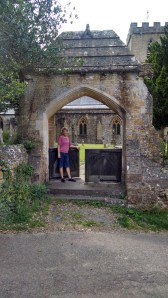
Powerstock is set in the deep fold of several very steep green hills. The cottages made of honey coloured stone. The church on top of one of the hills is where my great-grandmother Ann Darryman married Thomas Gibbs. The lady told us that the church is always open, and the clock still strikes every quarter-hour. So we went in and explored the church.
wpid-img_20140722_194219375_hdr.jpg

The ropes hanging from the belltower. With the charts on a nearby sill to ring the bells.

wpid-img_20140722_193533527.jpg

The deeply worn grooves in the stone flags in the floor.

wpid-img_20140722_193600852.jpg

Was this the baptismal font where any of my ancestors were baptised?

wpid-img_20140722_193907101.jpg

A place full of rich and deep memories, both good and bad. Of faith nurtured or neglected. Centuries of the rhythm of life and faith.  This was one of my favourite places.

wpid-img_20140722_194003060.jpg

Then we drove on a little further north to the small town of Beamister. Only they pronounce it Bemster.

Trying to get directions from the signpost behind. The nettles won this battle!

Trying to get directions from the signpost behind. The nettles won this battle!

A little town centered around a cobblestone square. Nothing noteworthy or particularly photogenic. But I took my obligatory tourist photo.

 wpid-wp-1406210726895.jpeg

And stopped to talk to an older lady there.After the polite preliminaries, I told her of our ancestor quest. “Oh,” she said, “There are Gibbs everywhere around here. They are such a big family. I know lots of them.” I have no idea if, or how, they may or may not be related. But I told her to pass on to them the regards from their Australian relatives when next she saw them!

We were given directions by them for a picnic spot on the hill. But we have discovered that local’s directions never get you to your required destination! So we gave up after a few miles. Pulled over to the side of the road at a farmgate and ate our picnic in a wheat field near the hedgerows.

Then it was a long haul of several hours. Got a bit saddlesore. Driving down Dorset, Devon, Somerset to Cornwall. Over the top of the Bodmin Moors. To a small town called Hayle on the coast. Where Philip’s great-grandfather Bryant came from. He was a fitter and turner in mid-1800s. He was also a lay reader in the Methodist Chapel.

wpid-wp-1406210752959.jpeg

We didn’t have any addresses for this town either. But one of the exciting discoveries I’m finding is that we often find ourselves in these places next to a family reference. Coincidence? Maybe.

It’s hard to find your way round these little towns. Tiny narrow roads, crowded with parked cars down one side of the road. Drivers right on your bumper. And you have to make quick decisions which road to turn down. We did this at Hayle. Finally pulled over to the curb of the little road. And looked up to see “Foundry” on the building we were parked next to. Philip’s ancestor may, or may not have worked in a foundry. Maybe even this particular foundry. Which is no longer a foundry of course. But used for lots of other purposes. But still exciting to see anyway.

wpid-wp-1406210783706.jpeg

When I looked at the paper map, I thought it would be fun to make a mad dash down to Lands End. The most southerly part of England. I convinced Philip it would be worth it. And with the long summer evenings, it shouldn’t be too hard.

So off we took again. Heading for the end of the world. Well, the end of England anyway. And we got there before the sun set. It was still high on the horizon. Very commercialised with white buildings and you have to pay to get into the carpark.All the shops shut because it was so late.  I helped a little girl distraught at losing her mother. Quite sure her mother had driven off and left her. I tried to tell her, between her sobs that her mother wouldn’t do that and that we’d find her. And we did!

wpid-wp-1406210828008.jpeg

Took lots of photos of us at Lands End. Including one of me, because I realised I’d done the John o’ Groats to Lands End tourist thing this holiday. Completely unexpectedly, but I got a warm glow of accomplishment!

wpid-wp-1406210859399.jpeg

In the distance we passed St Michael’s Mount. Where you walk to a little monastery on an island at low tide only. I did see it in the distance. But Philip wasn’t interested in stopping to get any closer. he said if I wanted a closer photo, to look it up on the internet and photograph that! And I didn’t press the point. I’d already stretched the limit by going to Lands End.

We hadn’t booked any accommodation that night because we weren’t sure where we’d be. Now it was getting late and later. So we tore back up the motorway. GPS was proving difficult. The mobile phone wouldn’t let us ring out on it, to try to book something.

We called in at a Travelodge near Bodmin right on the motorway, but fully booked. The receptionist not very helpful. Thought another motel down the motorway might have room. But couldn’t ring to check for us.

So we drove there.But no, they were fully booked too. This receptionist was far more helpful. Tried a few other motels nearby. But everything booked. The English summer holidays have officially started.

By now, it was 8.15pm and we were very tired, very saddlesore and very hungry. So I asked her if she was open to a bribe. If she could books us in somewhere nearby I would give her my last bar of Australian chocolate. (I had been keeping it as a present for our next host.) She laughed and said she would do it without any incentive. And she did. And she got the chocolate anyway. I was so grateful.

 wpid-wp-1406212073665.jpeg

I thought she’d booked us into a motel. But took her instructions and we followed them down narrow, isolated country roads to a Cornish farmhouse bed and breakfast.  A comfortable bed with an en-suite. A view through the windows looking out at their South Devon black cattle contentedly chewing thei green grass in their field. And the only other sound was the birds. We walked round their farmyard. The farmer is retired and now just keeps hobby cattle and Dutch sheep. And Philip had a long yarn with him comparing farming conditions in Australia.

wpid-img_20140723_144212813_hdr.jpg

One of the best things about unplanned adventures is the wonderful surprises that turn up unexpectedly. We fell into the soft bed very happy. And as contented as the South Devon cows outside in the field!

I’ll finish with my favourite sign today. Hanging outside a 1585 pub in the middle of nowhere. Looking for directions. Why would anyone want to eat nettles? Let the nettles win everytime I say!

wpid-img_20140722_205335474.jpg


Take It Easy!

We thought it was time to take it easy today!

wpid-img_20140722_033444.jpg

After breakfast we drove just 10 minutes to a place called Newlands Corner. A picnic spot on top of a hill that overlooks the North Downs.

wpid-img_20140722_031952.jpg

It seems that every place in Britain lays claim to something in its past to make it famous. Newland Corner’s claim to fame is that it is the place that Agatha Christie (the crime writer) ditched her car, and then went missing for a while in the 1930s. And was later found at a seaside town, having had some sort of emotional breakdown.

wpid-img_20140722_032944.jpg

We were going for a “ramble”. But I always find it hard to find the start of a walk. Despite maps and signposts. There’s always lots of different paths, most of them criss-crossing and going in different directions. And none of them bearing any resemblance to the map or instructions I have. Fortunately through a combination of asking other people, and Philip finally figuring out what the map really says, we took off.

wpid-img_20140722_032107.jpg

A cloudy day, and a little bit warm. We first walked across the top of the hills, looking over the rolling hills of the Downs. With summer marching on, some of the taller grasses are starting to go to seed and turn yellow and brown. But the dark bands of trees are still green, green, green.

The Keeper's Cottage

The Keeper’s Cottage

Lots of wildflowers. The only ones I regularly recognise are dandelions! Some of them are smaller versions of flowers I carefully cultivated while living in Melbourne. But far too dainty to cope in Perth. So I’ll bore you with a couple of photos I’ve taken of them.

Some sort of hover flies on the cow parsley

Some sort of hover flies on the cow parsley

 wpid-img_20140722_033621.jpg

wpid-img_20140722_033553.jpg

wpid-img_20140722_033522.jpg

We walked on paths through dark woodlands. And woodlands with lots more light. Came across a square cement bunker-looking building in the woods with small holes. We decided it was a remnant leftover from World War 2. Later saw another one in a distant field.

Concrete bunker in the middle of the field

Concrete bunker in the middle of the field

Kept walking till we got to our destination. A church on top of a tall hill called St Martha On The Hill. With lop-sided gravestones all around it. And clear views across the distant hills.

wpid-img_20140722_044401.jpg

wpid-img_20140722_033203.jpg

Farmlands around. Some of the fields yellow with wheat or oats, either harvested or close to harvest. We sat up there to catch our breath and drink our water and eat our nuts.

 wpid-img_20140722_032231.jpg

To get back to Newlands Corner we had to walk through a farmyard and then the path took us through his fields.

wpid-img_20140722_032200.jpg

Wheat on one side and oats on the other.

wpid-img_20140722_032030.jpg

Two hours later we were back at Newlands Corner and bought a very ordinary lunch at the cafe there and ate it sitting in the shade of a huge old lichened oak tree.  We appreciated the gentle breeze blowing. Watched family groups and their dogs playing and laughing nearby. (The children not the dogs were laughting!)  

Philip having lunch in his borrowed yellow cap

Philip having lunch in his borrowed yellow cap

And that was the most strenuous thing we did all day! We googled some nearby op shops to buy some summer clothes for Philip. Drove there to get him a short sleeved shirt and found some jeans that fitted him. And I’ve cut the legs of the jeans shorter, to turn them into shorts for him.

We ate our tea tonight, sitting at the table out in the garden.  Isn’t that what you do when you’re in England on a summer’s evening? Eat your tea out in the garden in the evening?

wpid-img_20140722_031717.jpg

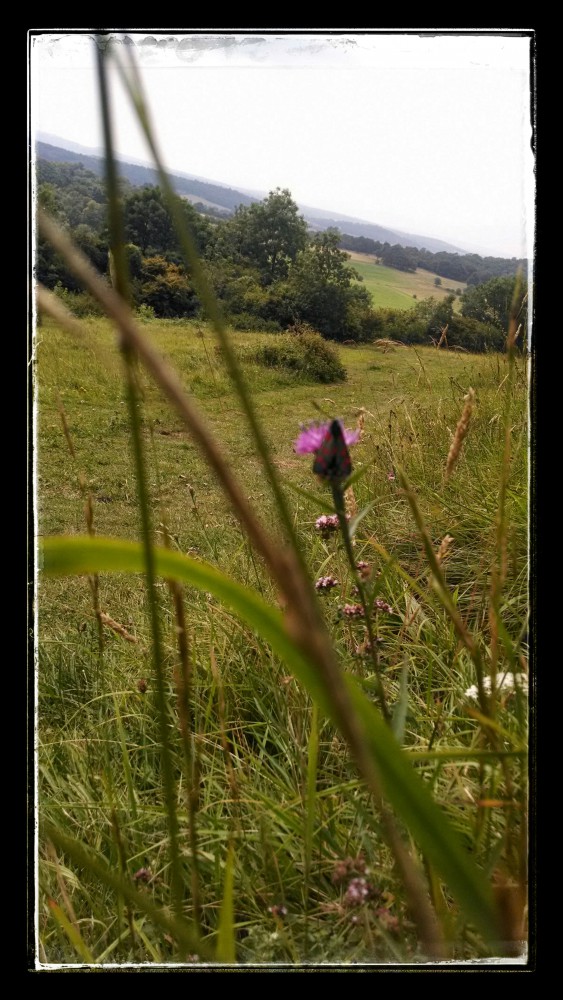
I later took my book out to read in the garden too. The sweet scent of the buddleia heavy in the air. Listening to the pigeons.  I’ve never seen such big fat pigeons. Hearing the distant roar of traffic. And the planes flying high overhead.

wpid-img_20140722_031552.jpg

Tomorrow we hit the road again! Tracing the Ancestors. We’re aiming to drive through Dorset, Somerset and Cornwall in the next two days. And end up in Derby on Wednesday night. Phew! Just as well we took it easy today.
Buddleia

Buddleia

Beautiful butterfly in the garden

Beautiful butterfly in the garden


End of the Heatwave!

Cloudy skies. Slight misty rain. Wearing jumpers again. End of the heatwave!

Philip and I went to the little local Anglican Church around the corner this morning for our Sunday worship. Very welcoming to us.

wpid-img_20140721_041321.jpg

Then we hit the road again. Heading east for the village of Cranbrook on the Weald of Kent for a bit over an hour. I asked what “Weald” means, but in the end I had to google it. It means an area of woodland. Kent is another beautiful county. I’ve noticed that the English are very parochial about their own particular county.

Kent is green, green, green. Much more than forty shades of green. Interspersed with fields of golden wheat and oats. Some of them have been harvested. Once you get off the motorways, the narrow country roads go through tiny, old villages with the iconic round high oast houses. Which used to be used with something to do with the hops. Sometimes you drive through long tunnels of dark greenery with the trees forming a green tunnel to drive through.

Cranbrook is a village of 7,000 people. With its old houses and cottages lining its narrow winding streets. We’ve been to Cranbrook before as Philip has got lots of detailed knowledge of his ancestor connections here.  We got there a bit early, so wandered up the High Street looking at the different shops and buildings.

Cranbrook

Cranbrook

Then went round to visit Keith (Philip’s fourth or fifth cousin) who is in his mid-80s, and a very sprightly gentleman. And his wife, Val. They live in a very English bungalow, and had cooked us a wonderful lunch. We didn’t really know them, and really enjoyed getting to know them better and hear their life stories.

We drove with them through misty rain and narrow roads with very high hedges pressed up against the sides of the road. Firstly to the tiny nearby village of Biddendon.

Biddendon

Biddendon

Where lots of Philip’s ancestors were connected.  If you look at the sign in the picture, it’s a sign of conjoined twins who were famously known as the Maids of Biddendonl. Nothing to do with Philip’s family. Just part of the local legend.

Philip's great-great-grandfather Charles Smith's house

Philip’s great-great-grandfather Charles Smith’s house

Then on to a hamlet of 3 or 4 houses and the Church of Sain Nicholas at Boughton Malherbe. But you pronounce it “Bawton Malfree”. 

There, during the summer, the farmers’ wives and other ladies of the area, every Sunday afternoon put on Cream Teas. The epitome of English culture and life. It’s to raise much-needed funds for their church, and they’ve been doing it for years. The scones, the strawberry jam and the cream are all home-made.

The Church of Saint Nicolas of Boughton Malherbe

The Church of Saint Nicolas of Boughton Malherbe

Normally it’s held out in the church yard, amongst the tilting tombstones and you look out through the trees on the top of the hill over to the Weald of Kent. On a fine day you can apparently see all the way to the sea. 

But not today. Misty, drizzly English rain. So they set up the little tables in the aisles of the church. I had such a lovely afternoon there. Such an English cultural experience. I decided to go with the flow and be culturally relevant And I had TWO cups of tea and two scones with jam and cream.

English Cream Tea! The figures in the back of the picture are possibly Lord Wotton and his lady-found in the graveyard

English Cream Tea!
The figures in the back of the picture are possibly Lord Wotton and his lady-found in the graveyard

Old stone flag floors. High, soaring, old oak beam trusses. Intricate carvings on some of the pew ends. Old, very old memorial stones. 

wpid-img_20140721_040307.jpg

The ladies serving the teas were so warm and friendly. Told us a bit about the history of the church. Seems to have been there since Saxon or Norman times. A chaplain of Queen Elizabeth 1 is buried there. And there’s a fence-protected yew tree in the yard that was planted by her.

And another coincidence. The early members of the nearby manor and farm, and the patrons of the church were called Wotton. Back in the 1600s. A family name on my mother’s side. We don’t have anybody that grand in the family, but an interesting coincidence.

Sir James Wotton of Worthy Memory Knight. Brother to Edward, late Lord Wotton. Leaving his Dust heere. Entred ........the twentieth of October 1628.

Sir James Wotton of Worthy Memory Knight. Brother to Edward, late Lord Wotton. Leaving his Dust heere. Entred ……..the twentieth of October 1628.

I talked to one of the tea ladies. And she insisted on sending her husband home to get a history of the church for me to buy. So I’ve bought it. And I’ll let you know if I ever find out we’ve got gentry in my bloodline! 

One of the Wottons. It's hard to read their inscriptions!

One of the Wottons. It’s hard to read their inscriptions!

When we went back to Cranbrook, Keith and Val took us to the graveyard of St Dunstan’s Church.  And inside the old church too. Many of Philip’s ancestors here were Strict Baptists, but got buried in the Anglican graveyard. Philip’s Ancestors were known to be the bakers in the town in the 1800s.

Grave of Charles Smith (Philip's great-great-grandfather) & John Smith (Philip's great-great-great-grandfather)!

Grave of Charles Smith (Philip’s great-great-grandfather) & John Smith (Philip’s great-great-great-grandfather)!

Wonder if the English summer will come back?

A Psychotic Paranoid Bully

When we originally planned this holiday, Philip had wanted to go up to London for a couple of days and feast on all its history. But he has realised that he’s just too tired to do that. So instead of that, we spent today at Hampton Court Palace which is only about 20 minutes drive away. Neither of us have ever seen it.

 wpid-img_20140720_041257.jpg

Faithful GPS got us there again. How did tourists driving hire-cars ever manage before they were invented?

Hampton Court Palace is on the Thames River which is about as wide as the Yarra River. And the palace is huge. More than anything else, its whole purpose from the beginning of its history is to impress. Really impress. Overwhelm and overawe whoever goes there. Back in its heyday. And still today in its tourist days.

wpid-img_20140720_035130.jpg

Did I mention it’s huge? Masses of tourists wandering around, but it’s so big it never seems crowded. Many of them with audio guide phones clamped to their ears. Philip and I started off with the audio phones but we found there was an avalanche of information on them, and didn’t use them much.

Not my idea of a garden, but the Tudors loved it.

Not my idea of a garden, but the Tudors loved it.

Wandered around. Looking and gawping. Reading the notes attached to the rooms and the items.

wpid-img_20140720_035226.jpg

Much of the Palace was used by Henry 8th for his machinations in the 1500s.


Orders from the Kings Council about important matters!

Orders from the Kings Council about important matters!

Philip bought a book in the shop there called “How Fat was Henry th and 101 Other Questions on Royal History?” This book called Henry a “psychotic, paranoid bully”.  I couldn’t have put it better myself.

The Tudor kitchen. The spit roast behind Philip,

The Tudor kitchen. The spit roast behind Philip,

There’s another huge section of the Palace that was used by the Hanoverians in the 1700s – the Georges and their squabbling and power plays. Pathetic manouvereings to prove a point and pursue power and wealth.  

The "Royal" Throne! Well, it was used by the King.

The “Royal” Throne! Well, it was used by the King.

Politics never changes. The pursuit of power, whether personal national or global always corrupts the pursuer.

I love the worn down steps

I love the worn down steps

It’s so sad the way the Church was at the heart and seat of the power plays too.  Especially when you know what Jesus really said about power!

I spent about half of our time there out in the gardens, while Philip continued taking in the rest of the Palace. Lots of interesting things there. The gardens have changed over the centuries, so there’s lots of different styles.

wpid-img_20140720_035004.jpg

A huge grapevine planted in 1789 and still producing great crops of grapes. I got lost in the famous Maze and took the easy exit. Or I’d probably still be in there! Terraces and the Royal Tennis Court (which is different to Lawn Tennis) where there was a match being played.

They had actors dressed in period costume from both the Tudor and Hanoverian periods interacting with each other and the crowd.

My feet gave out before I could see it all. But it was an interesting day!

I have no idea what this statue was about, but thought I'd join him.

I have no idea what this statue was about, but thought I’d join him.

Heatwave!

A day for being a tourist! Our hosts insisted on loaning us their National Trust tickets and we drove to nearby Polesden Lacey. A country “house” as the aristocracy or monied people called it. The Queen Mother had her honeymoon there. But it’s really a mansion.

I feel quite ambivalent about the whole thing.  On the one hand I can appreciate the magnificence of the building and grounds. But I also abhor the human cost it took to build and maintain such a structure and lifestyle.

It’s a yellow mansion with wonderful views across the rolling Surrey Hills and acres of countryside around it.  Its most famous owner was at the turn of the twnetieth century and was a lady called Mrs Greville who was the illegitimate daughter of a distillery owner. She inherited great wealth, married into the right circles, and was a shrewd business woman who increased her wealth. She entertained royalty and celebrities and maharajahs on a grand scale. The thought occurred to me that she was working very, very hard to prove something to herself and her world. To be admired and accepted by the upper echelons.

Philip at the front door of Polesden Lacey

Philip at the front door of Polesden Lacey

I looked through a bit of the house. All to display wealth and thereby receive power. But it’s too much for me. And I went on a walk outside for a few hours. Looked through the rose garden that wasn’t very good. And then walked through the nearby woodlands and paddocks of the nearby tenanted farms. While I was doing that, Philip continued to look through the house and feast on all the history there. There’s never too much history for Philip to abosrb! So we both had a happy time.

wpid-wp-1405714038047.jpeg

Had a nice lunch in the cafe there.  Philip had his favourite of scones, jam and clotted cream.

Believe it or not, Philip is happy with his scones, jam and cream.

Believe it or not, Philip is happy with his scones, jam and cream.

Then we drove off to spend the afternoon at Wisley Gardens that’s run by the Royal Horticultural Scoeity since the late 1800s.

Photos are very inadequate!

Photos are very inadequate!

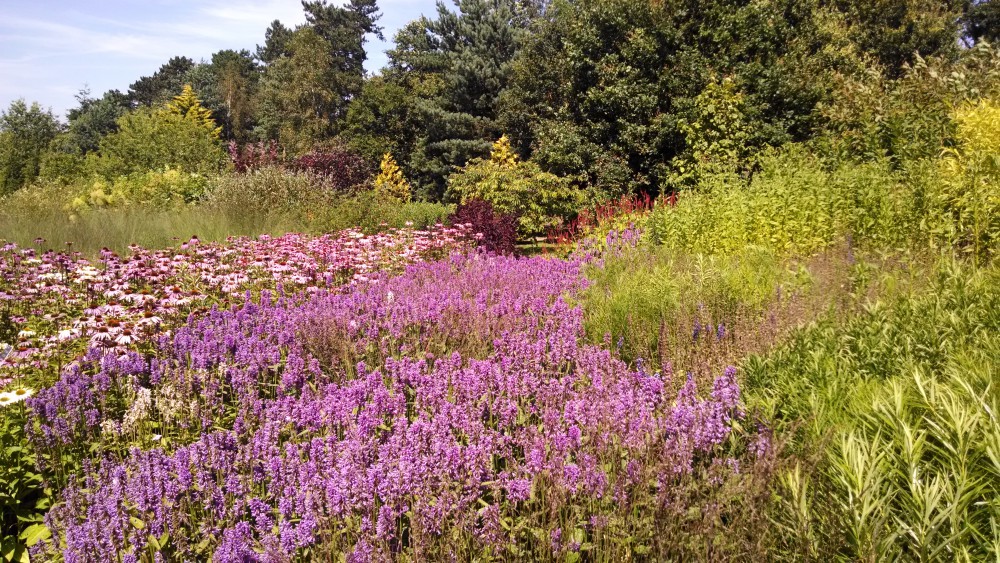
The biggest, most magnificent gardens I have ever seen. Or could even imagine! I could bore you silly with descriptions and photos! I didn’t get to see it all despite wandering around it for nearly two hours. All sorts of gardens. The most magnificent borders. Great swathes of colours, some of which I would never put together.Other drifts of flower colour palettes were highly original and inspiring.

wpid-wp-1405714120924.jpeg


Huge orchards of old and new fruit of all sorts.

An old Granny Smith apple tree

An old Granny Smith apple tree

Apples, pears,cherries,plums, soft fruits. Even found an old lichened mulberry tree that was dropping its fruit on the ground. So I helped to lighten its load.

wpid-wp-1405714248634.jpeg

Philip’s idea of fun in a garden was this! 

wpid-img_20140719_041227.jpg

But I did manage to persuade him to look at the rose garden which was fabulous. 

wpid-wp-1405714179308.jpeg

I loved it all. It was so inspiring. A big majority of the plants I’ve never seen before. Most of this plantings would never work in Perth. So I just enjoyed it all, knowing there was not much I could practically use. Art for art’s sake!

When it was time to come home, GPS got sulky and refussed to work. Philip freaked out and thought we’d be stuck there at the gardens for ever. But I found in the car a 15 year old paper map that a friend had loaned me. And guess what? We found our way back to the house without mishap!

When we got back to the house, our hosts were quite concerned at the Heatwave that England has been having and were we utterly exhausted? England has been on Amber Alert. Well, it did get to 27 degrees today. And I wore my hat so I wouldn’t get sunburnt. Philip got a little warmer than me because he’s wearing thick jeans. He forgot to bring anything lighter. But it wasn’t exactly what I would call a Proper Heatwave!

In gratitude we took our hosts out for dinner that evening. To a wonderful old pub they knew and that we reached through narrow winding country lanes. Called The Drummond Arms. We sat outside in the garden and at the bottom of the garden was a little stream flowing by. We had another great meal.

wpid-wp-1405714211856.jpeg

But sitting there, I thought to myself, as I looked out at the huge overhanging trees and the little stream gurgling by, “It’s almost like a memory. That I’ve been here before.”  And I’m sure that it’s all those English books I’ve read down through the years. From Enid Blyton to Jane Austen.

wpid-wp-1405714147934.jpeg