Yellow Bicycles and More

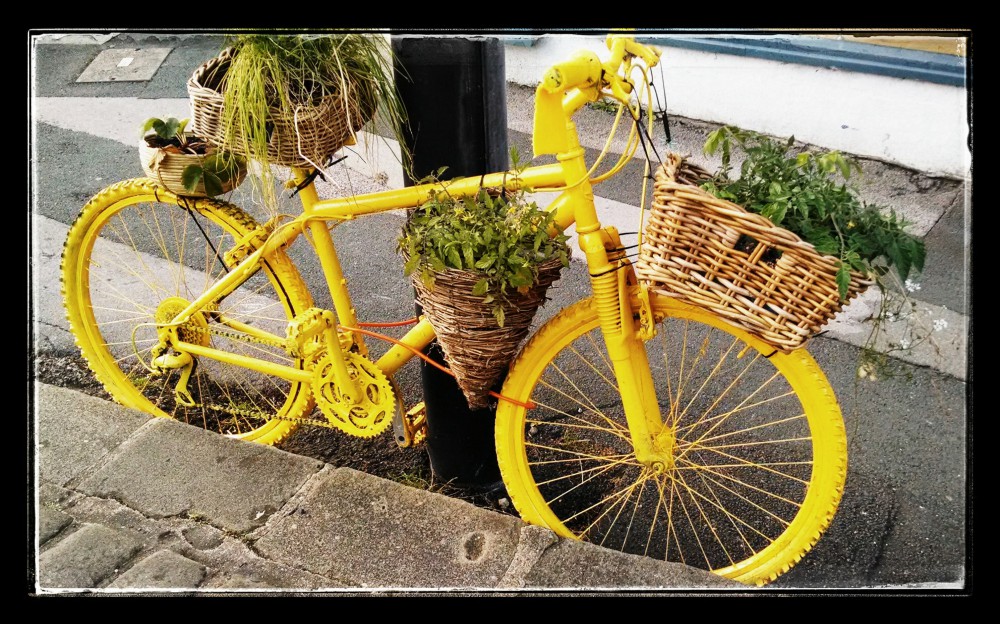
I promised you more about the yellow bicycle. Whilst we were driving all around the Yorkshire Moors, no matter how far or remote, we would frequently come across old bright yellow bicycles in the most random of places. On top of stone walls, hung up on trees, tied to house walls. Often with lots of yellow bunting strung around. Sometimes the yellow bunting would be mixed with white and red polka dots bunting. I began to think it must be a Yorkshire thing. Or a Yorkshire festival. And then on our last day driving out of Ilkley, I found a forgotten newspaper header at the service station where we filled up.

And the mystery was solved! A fortnight or so ago, the Tour de France this year started in Yorkshire before finishing up in France.
wpid-img_20140718_162308.jpg

It’s been hard to get to a computer over the last few days, so a compressed version of the last few days!

Philip and I left Ilkley in Yorkshire on Wednesday morning and headed south. We were grateful for GPS when getting through city of Leeds. Then it was on to the M1 which is like a major mechanised artery of England. Three lanes of traffic going both ways. Lots and lots of trucks. Sometimes more trucks than cars. Very boring to drive on, but best to take when you’ve got a long drive!

Came to a complete standstill on the M1 in one section. For quite a while. Not moving at all. So GPS came to the rescue and offered to take us on a detour when we finally inched our way to the next off-ramp. So we took it. And took country lanes and roads round and round in circles. Or so it seemed. And eventually back on to the M1 and flowing traffic again.

Lunch was a packed lunch, standing up in a carpark just off the M1. They are called “Welcome Breaks”. And they have them frequently. Petrol and lots of fast food, ATMs, book shops, cafes. It was so good to stand. And in a nearby parked car I saw some more wildlife. Sort of. They were in cages. One looked like a ferret. The other like a skunk.

More than five hours later we finally arrived at Philip’s very distant relatives’ house in a suburb of Guildford. A town on the southwest side outside of London. A 1960s detached little house like you often see in TV programmes. Fairly small rooms and a wonderful long garden out the back.

These relatives of Philip’s are fourth or fifth cousins, and we barely know them. They had lunch with us once when they visited Perth a few years ago. But we were so warmly welcomed. Philip and I walked around the local streets. Nothing special to look at it. We just needed to stretched our tired and cramped muscles.

I find driving so tiring. I found this drive much more tiring than any of the strenuous hill climbs I’ve done. Which is ridiculous!

The next day our hosts took us on a tour of their area. Surrey is very beautiful. Lots of huge old trees, woodlands and meadows and little towns and villages that run into each other.

We went first into Guildford, the big town of this area. Their High Street a mixture of old buildings going all the way back to Tudor times. Saw the remnants of an old Norman castle with lovely gardens around it. Nearby was a house that Lewis Carroll (of Alice in Wonderland fame) lived in. Had morning tea in a cafe in an old livery stable from the old Posting Houses of the 1700s. When coaches and their horses would trundle around the countryside and up to London.
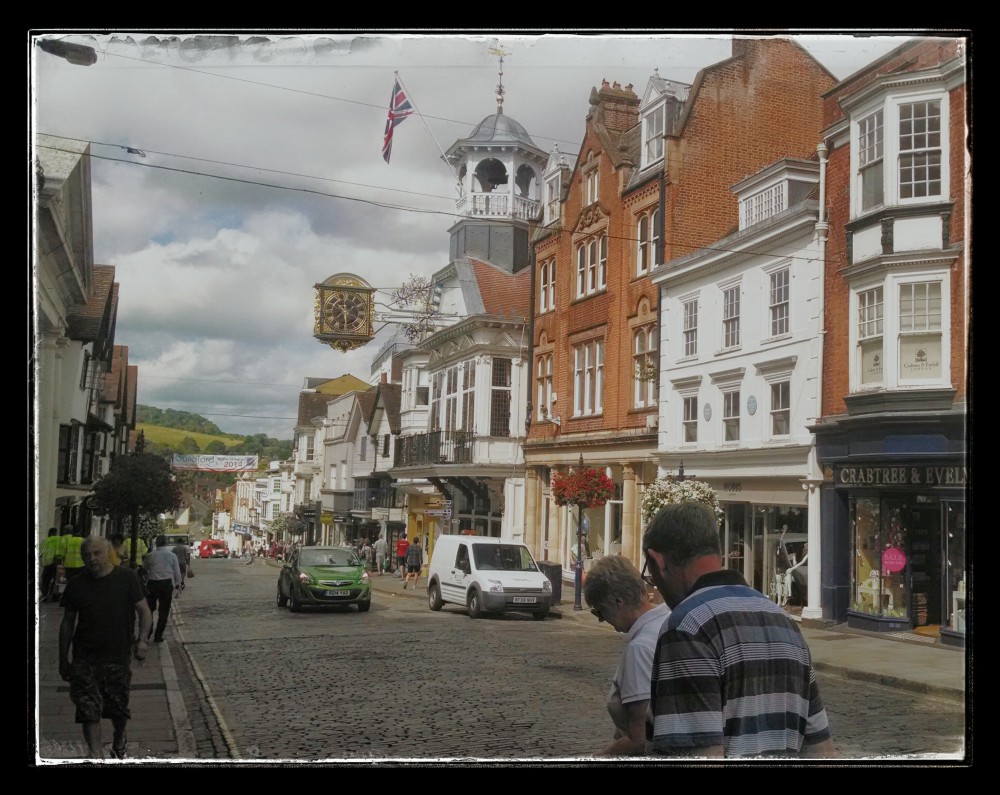
High Street, Guildford

Our hosts don’t do much walking. So it was mostly a sitting day. Either in the car, or a cafe or a seat.

Drove through North Surrey Downs to a tiny little hamlet of Fridey Street. About four or five houses in the most isolated little secluded valley next to an old mill pond. Had lunch there in an old pub called the Stephen Langton. Who was an archbishop of Canterbury and (according to the stories) an enemy of King John (of Robin Hood fame). Eventually the archbishop was on the winning side because his was the next name under King John when he was made to sign the Magna Carta. It was a nice lunch in a beautiful setting.

While driving around the countryside we drove through the hamlet of Wotten. Which is a family name on my mother’s side. So we stopped at a big mansion called the Wotten Estate. It’s now a conference and wedding venue, but the buildings looked Elizabethan, according to our hostess who know lots about this sort of thing. It was very impressive. Probably has nothing to do with our family history whatsoever. But it was fun to look at!

We went to their son’s house and met the son, his wife and three gorgeous kids. Had a lovely afternoon with them, getting to know these distant relatives. And sat outside and had a take away Chinese meal together.

So another very full day.
 

A Cupful of Gratefulness

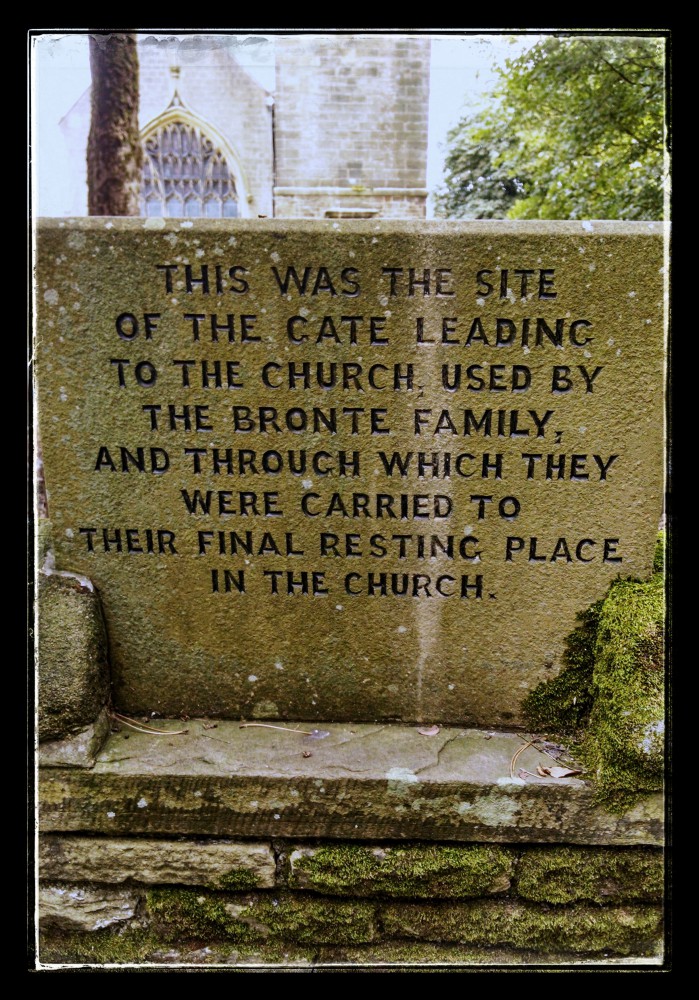
After breakfast, we headed out of Ilkley, with the help of GPS to Haworth. About 30 minutes drive away. Lots of narrow country roads to wind around again. Haworth has grown to be much bigger than I had been expecting. And the Brontes are huge business for the town. Their old parsonage that they lived in now has houses all around it.  The church that the father Patrick was the rector for has been demolished and replaced in the late 1800s. (For the benefit of James, the Brontes are famous writers – Charlotte wrote Jane Eyre, Emily wrote Wuthering Heights, Anne wrote The Tenant of Wildfell Hall.)

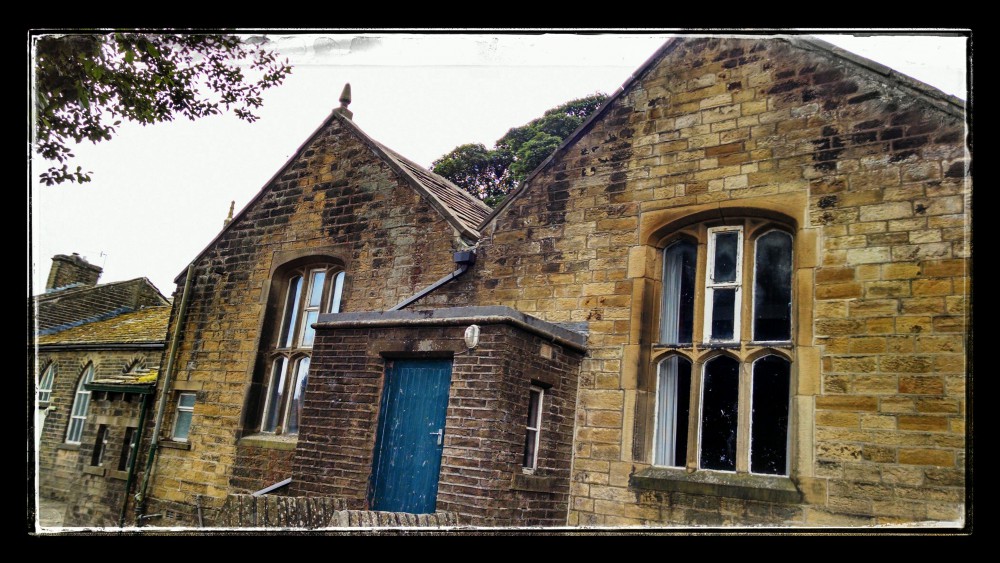
Charlotte Bronte taught for a little while in this school built by her father, next to their church

Charlotte Bronte taught for a little while in this school built by her father, next to their church

But despite the tourism that it drips in, the exhibition is very well done. They have furnished the house with authentic furnishings of the Brontes and explained it well.  I enjoyed it.  I do wonder these days how many people actually read authors like the Brontes anymore. Or do they just watch the movies and TV adaptions?

wpid-img_20140717_051147.jpg

I hadn’t realised what an unhealthy and unsanitary place Haworth was to live in those times. Patrick worked hard to get conditions improved, but usually to little avail. In those days, in Haworth 41% of people died before the age of 6 years old. The average age to live to was 25 years. It was one of the unhealthiest places to live in, at that time in Britain.

But I did appreciate that even though it was a grim and bleak time, it also showed the happy and emotionally rich and fulfilling life of the family.

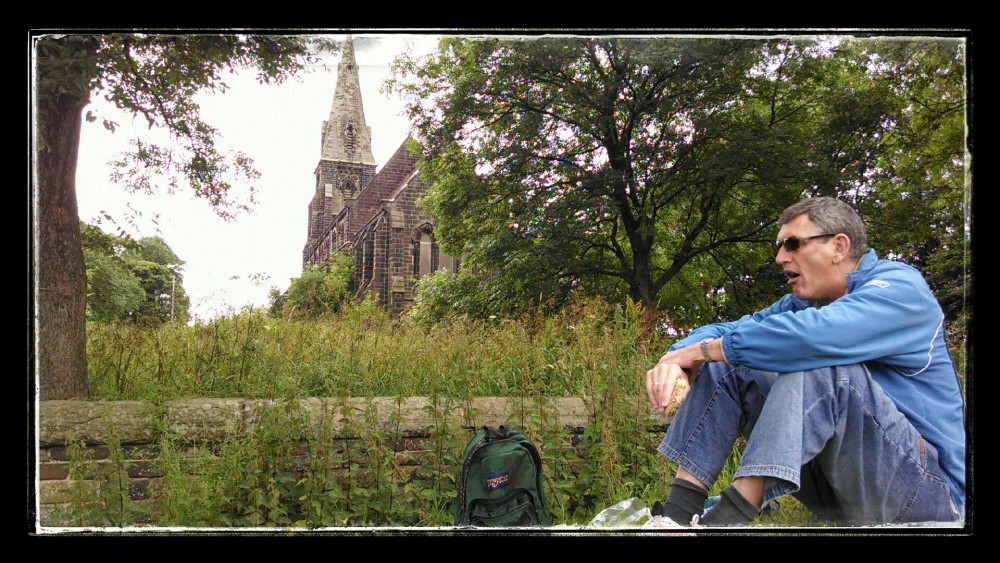
We drove on south and had packed a picnic lunch, and ate it by an abandoned church and very overgrown cemetery. And I wondered, What do you do with an old church and cemetery that no-one wants anymore?

Lunch by an unwanted church

Lunch by an unwanted church

We drove around the outskirts of Bradford and Leeds which are towns that have grown together. Very grateful for GPS. And finally ended up at the National Coal Mining Museum.  The reason i picked this to do was because we are having internet issues here in Ilkley. I went on the internet to find something free or cheap to do, saw this museum mentioned briefly before the computer froze up again. So I didn’t know much about it, and was hoping that we hadn’t had a long drive for nothing!  Especially as Philip hates driving on the narrow, winding English roads in a manual car!

We all got a disc, to go down the mine shaft - just like the miners did - and still do today.

We all got a disc, to go down the mine shaft – just like the miners did – and still do today.

And it was fantastic! With a small group of other people, including children, we went on an underground pit tour Our guide was an ex-miner in his 70s with such a broad Yorkshire accent that I understood about one word in three.  At first he kept talking about “coil”. I didn’t have a clue what he was talking about. Until it dawned on me he was actually saying “coal”.

We had to put on hard hats with the headlights, got in a cage and descended 140 feet down a real mine shaft. He told stories and explained the life of a miner from the 1700s to the present day.
In the 1700s, the whole family worked in the mine. In a tunnel about a metre high. Candles were expensive, so the father would work at the coal face of the funnel with the candle. The mother would be on her hands and knees hauling the coal along the tunnels.  And their children from the ages of five, would be working there too. Usually having to sit in total blackness for 12 hours a day. Because they had little trapdoors to open and close along the tunnel to manage things like the gases and fumes. Many of the kids went blind. They rarely saw daylight.

Then on to when the kids would be hauling the coal along. Fined if they didn’t meet their quotas.  The death rate was appalling. From explostions, fires, accidents, health risks of mining.  
They had tableaux of the miners in the mines. Pit ponies were used too. And some of the machinery they later used. The tour guide was a Yorkshireman wit such a wry sense of humour and had the tour children eagerly following him crawling up and down the tunnels and shafts.

This is outside the mine. But i am disappointedI wasn't able to take any photos of the experience to show it all. But Occ health and safety won't allow cameras.

This is outside the mine. But i am disappointedI wasn’t able to take any photos of the experience to show it all. But Occ health and safety won’t allow cameras.

Philip has got ancestors of several generations who were miners. He really appreciated the tour and hearing how they would have lived and worked. 

And made us both doubly grateful for the times we’re living now. Both Haworth and the mines was a very tough life. But the miners also, even though their lives could be dour and grim, they showed that they also made times for comraderie, friendships and sports to create emotionally rich times for themselves and their families. It wasn’t all gloom and doom.

It took us quite a while to drive back to Ilkley. Hit peak time traffic driving around Bradford. And it seemed like we turned a corner of the road of the city, and the next thing we’re out in the countryside, high in the Dales again. With the green rolling hills and the sheepl. Such a quick tranisition.

After a quick dinner back at the house, Philip and I went for a walk around the town of Ilkley in the late summer evening.

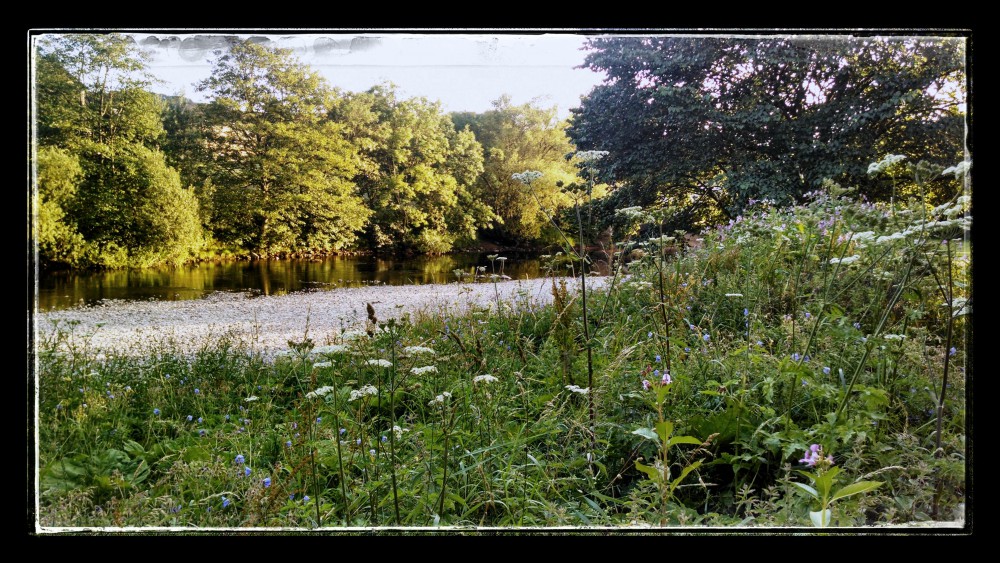
River Wharfe running at bottom of Ilkley

River Wharfe running at bottom of Ilkley


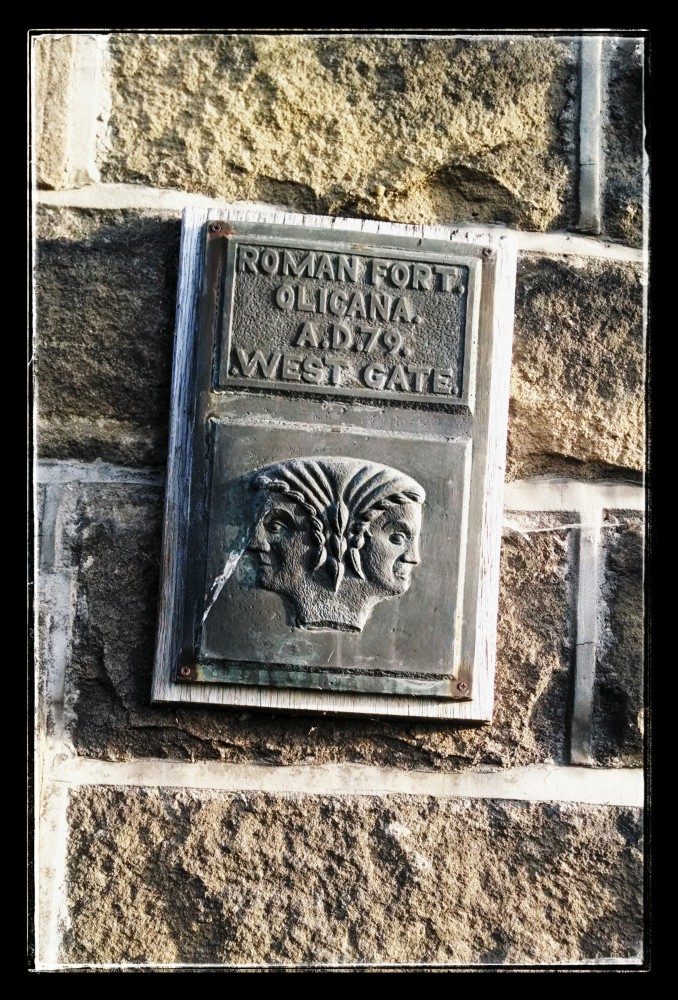
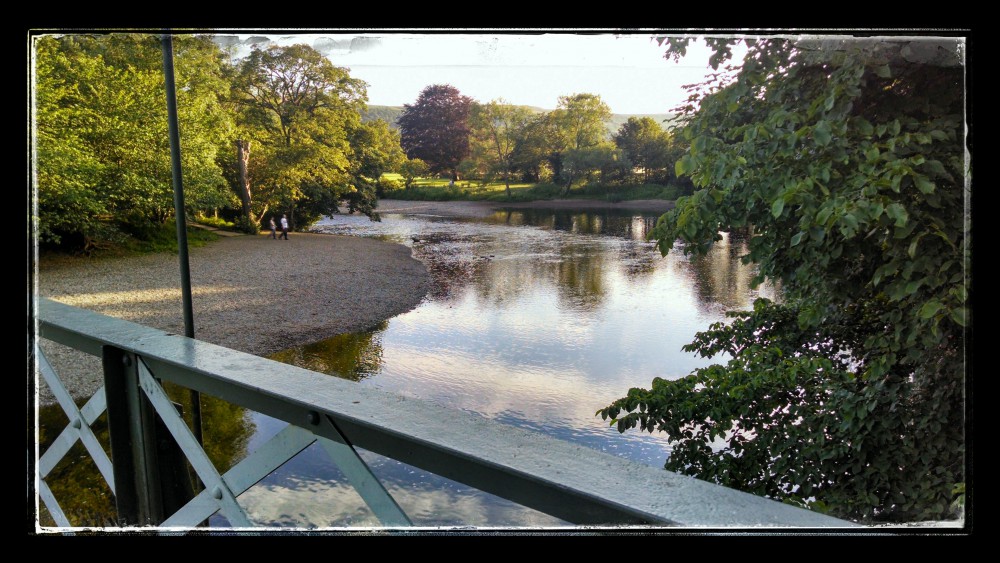
Down the hill, through the Main Streets of shops, past an old Manor House with its roots going back to a Roman Fort. Right down to the River Wharfe flowing at the bottom of the valley and the town. A lovely evening. A beautiful walk beside a very pretty river.

The manor house in Ilkley is built on the site of a Roman fort

The manor house in Ilkley is built on the site of a Roman fort

And both of us full of gratitude for the innumerable blessings we both experience continually!

River Wharfe in Ilkley

River Wharfe in Ilkley

On Ilkley Moor Baht’at – on Monday

Wheer wer’ta bahn w’en Aw saw thee,

Oh Ilka Moor bah ‘at?

Wheer wer’ta bahn w’en

Aw saw thee,

On Ilka Moor bah ‘at?


Foreign language? Depends what you mean by “foreign”? Philip and I are in Yorkshire in a little town on the Yorkshire Dales called Ilkley. And it has lots of claims to fame, including being a world-famous health spa resort in the 1800s. But apparently it has also been immortalised by the world famous folk song “On Ilka Moor Baht’at” sung around many a camp fire! I can’t say I’ve ever heard it sung, so it must be before my era!

wpid-img_20140717_043741.jpg

Philip and I left Rosie to spend her last holiday week in Edinburgh before she flies home, and we’ve rented a car and are staying at a friend’s welcoming house at Ilkley in Yorkshire for a few days.  We’ve had lots of chats to catch up on all the news, and now they’ve left us in an empty house because they’ve had to go away for their son’s university graduation for a few days. 
So a quick blog because I’m having internet issues!

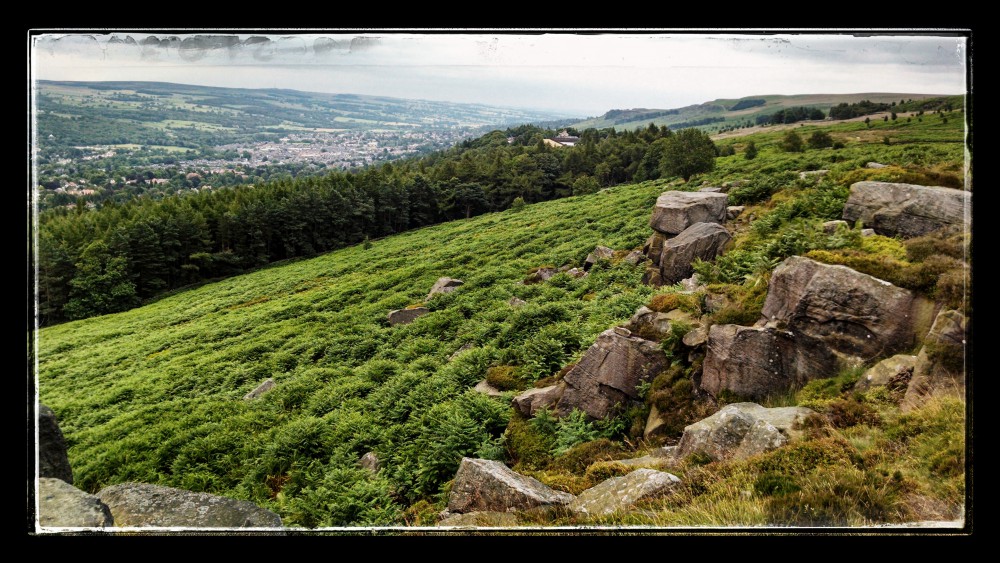
On Ilkley Moors, with town of Ilkley in valley below

On Ilkley Moors, with town of Ilkley in valley below

After a late breakfast, Philip and I drove out to Bolton Abbey today. I went there with Rosie about 5 years ago in the wintertime. It’s a beautiful, inspiring, peaceful spot.  Much more touristy in the summertime than the bleak winter. But each season brings its own special slant.
wpid-img_20140717_042410.jpg

When you walk through the doorway in the high wall by the road, before you opens up a wide green river valley with a river running through and over on the left, on the banks of the river is the ruins of the once very busy and propserous Bolton Priory.
wpid-img_20140717_042839.jpg

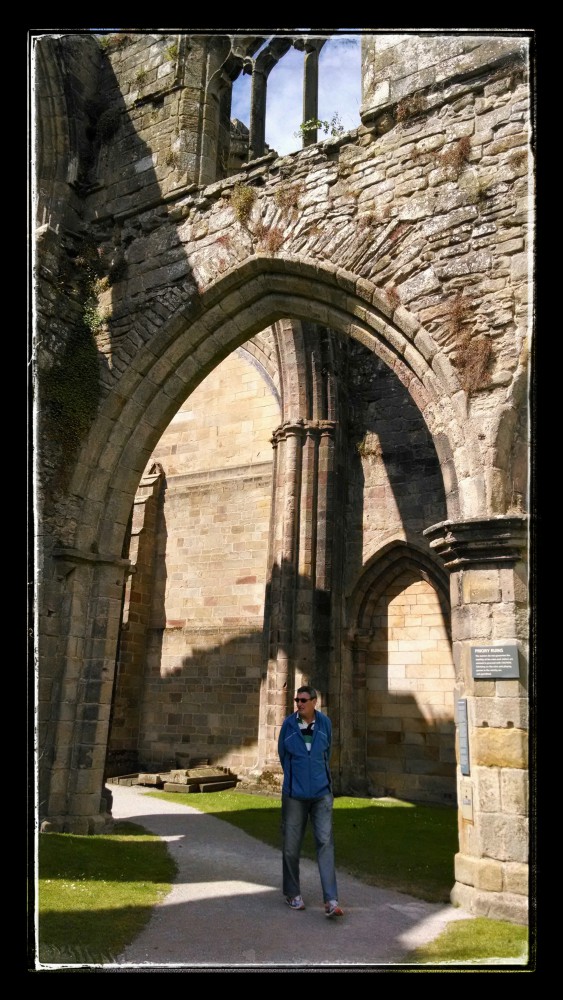
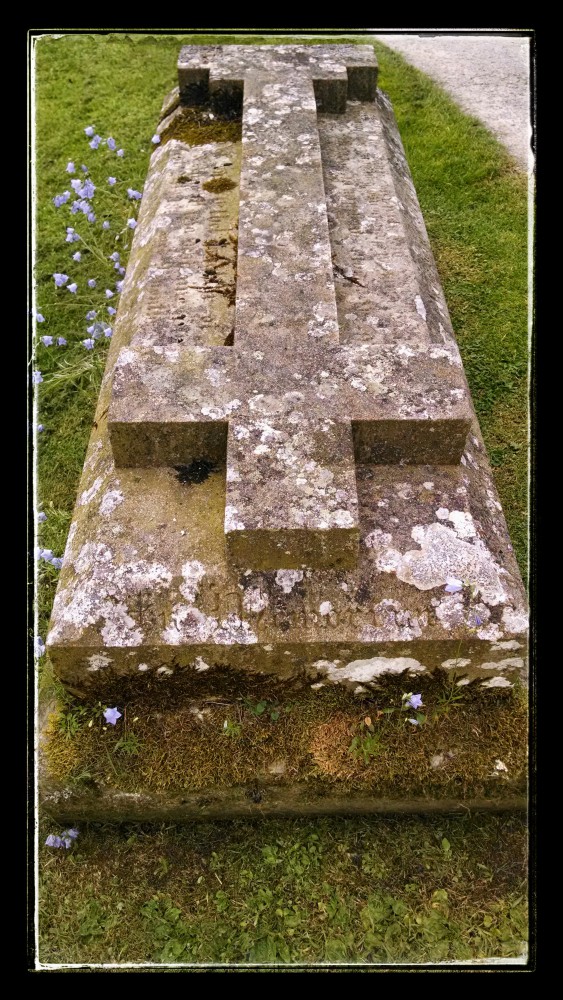
Bolton Priory was built in the 1100s on the banks of the River Wharfe and lasted until the 1500s when Henry 8th got cranky and busy to destroy the churches. The entrance part of the Priory, called the Nave, was spared the total destruction and has been continually used for worship since. Now the ruined stone tracery gives glimpses of the giftedness and craftsmanship used for God’s glory so long ago. There are scattered, fallen tombstones lying around on the green grass.
Because of Christ, out of death comes life. Blue flowers growing out from grave.

Because of Christ, out of death comes life. Blue flowers growing out from grave.

 
In the Nave, which is set up as an ongoing worshipping community, I knelt and sat there in prayer while Philip went round and read all the interesting history snippets. I love being in a place where thousands of people for hundreds of years have continually been worshipping God. As we were getting ready to leave, the Warden asked me if I would like to ring the bells for Angelus. Which is a midday reminder to pray. So he showed me how to do it. Just had to tug on a rope in a certain sequence that he told me. And I felt enormously privileged and very excited. A real highlight for me.

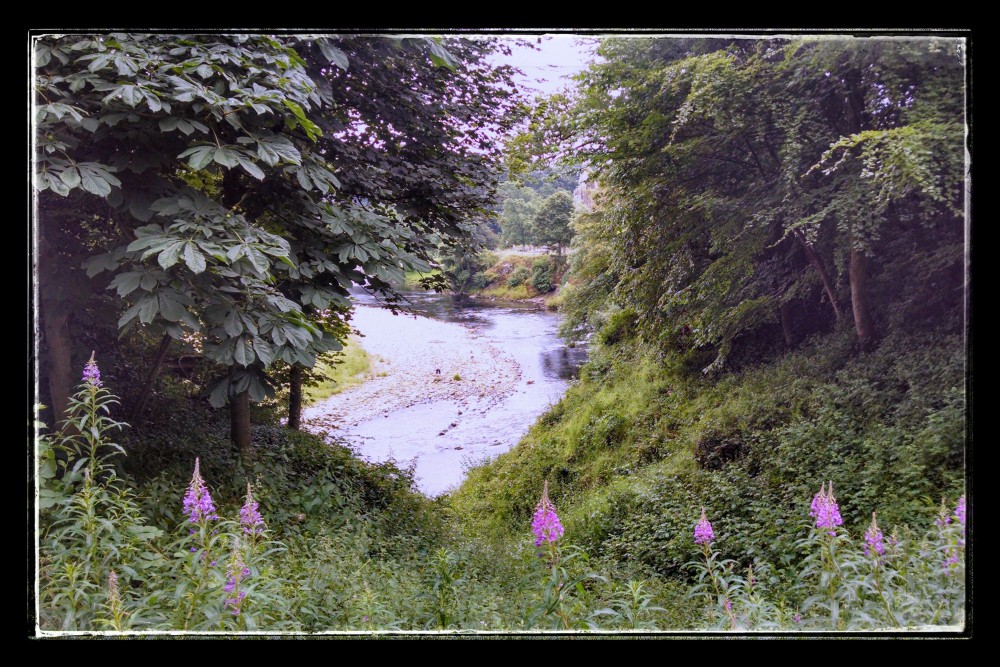
River Wharfe with Bolton Priory between the trees

River Wharfe with Bolton Priory between the trees

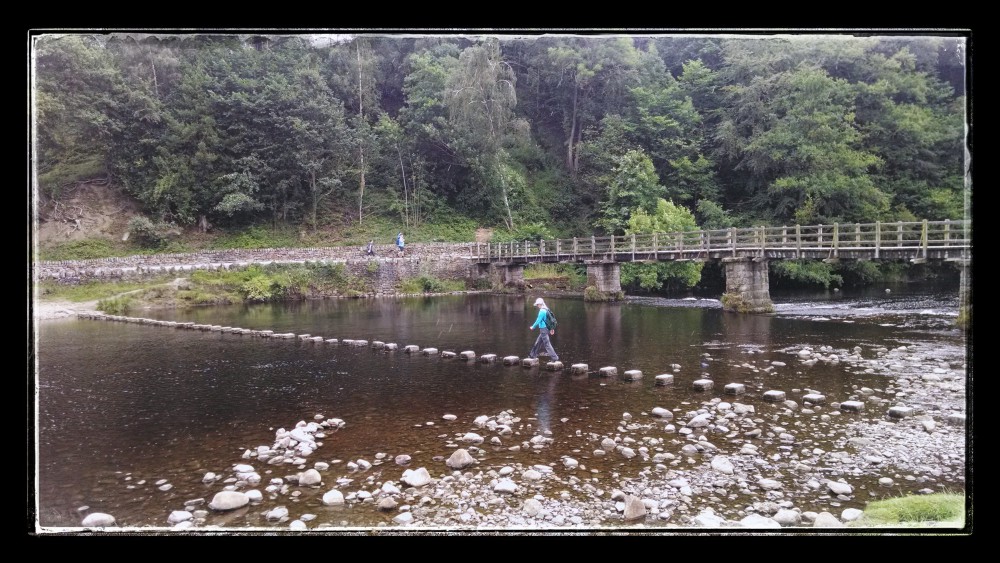
Philip walked across the little bridge and I stepped on the stepping stones that have been used since medieval times, to cross the River Wharfe and we walked along its banks, amongst the huge trees, and then across another bridge to complete the circle back to the Priory.

wpid-img_20140717_042627.jpg

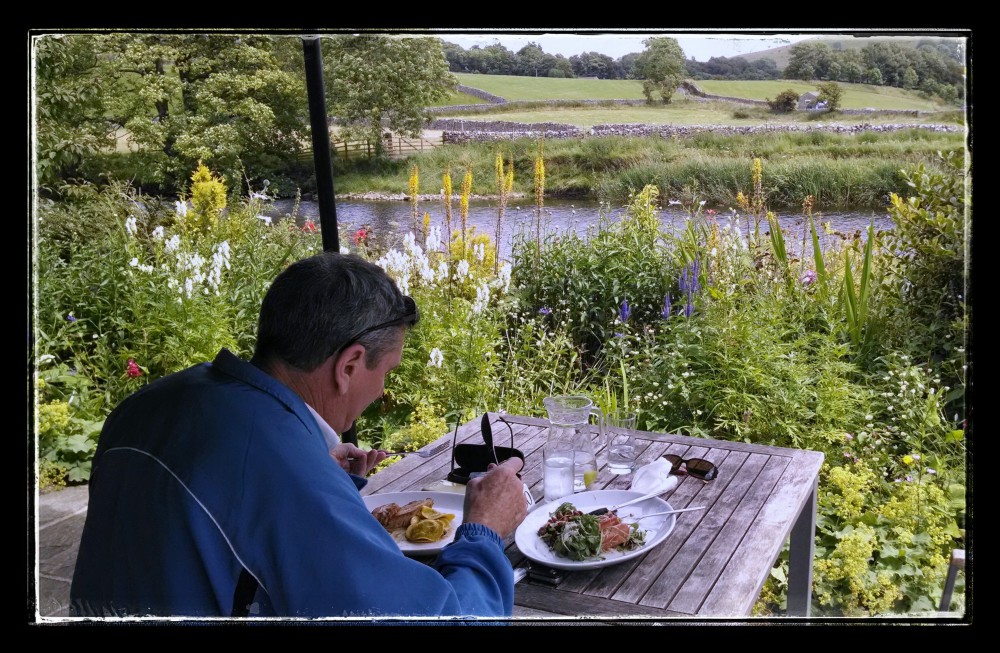
Our host had suggested to us that the nearby little village of Burnsall had a great pub to have lunch. So we took him up on his suggestion and ate it in the pub’s backyard, overlooking the River Wharfe.

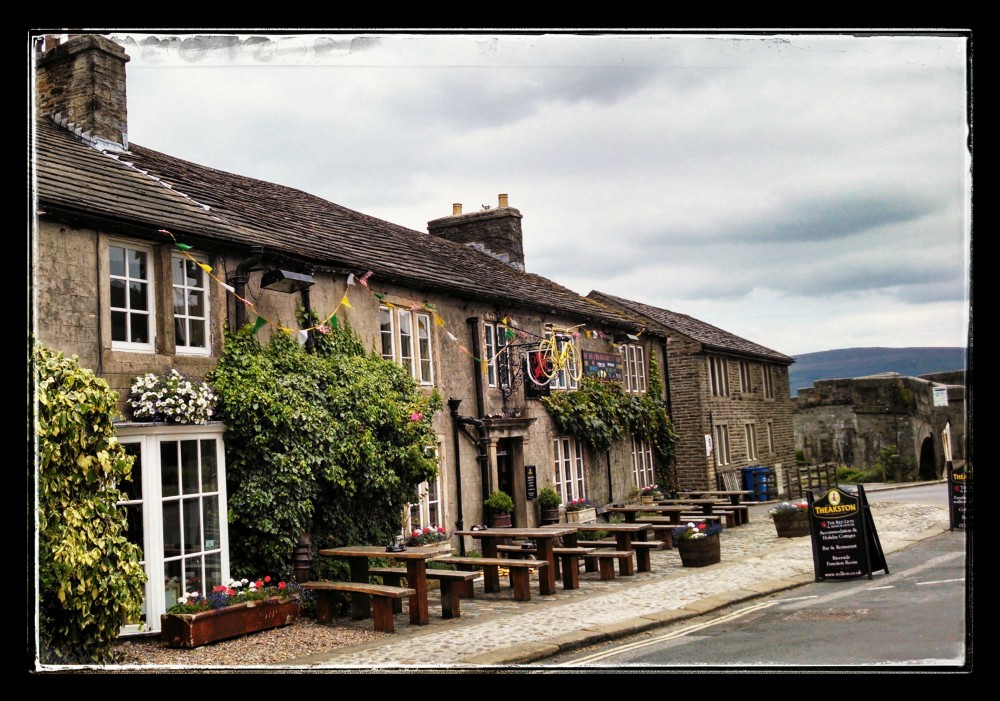
Red Lion pub. Notice yellow bicycle on walls of Red Lion. (More about that yellow bicycle later!)

Red Lion pub. Notice yellow bicycle on walls of Red Lion. (More about that yellow bicycle later!)

The pub has been there since the 1600s. Originally for the ferrymen of the river. A fancier meal than we normally have. I had pigeon breast and enjoyed it too.

wpid-img_20140717_043107.jpg

White geese on River Wharfe at Burnsall

White geese on River Wharfe at Burnsall

We thought we’d keep exploring. So drove on to the village of Grassington. Cobbled, winding streets on a steep hill with old, grey stone misshapen houses leaning onto the street.

Grassington

Grassington


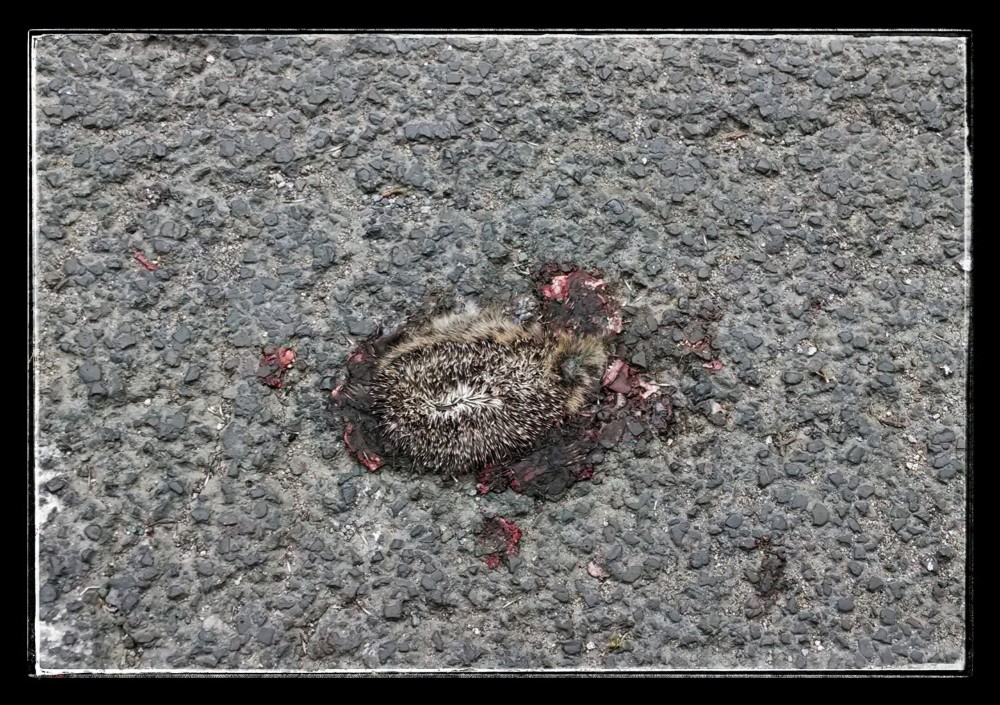
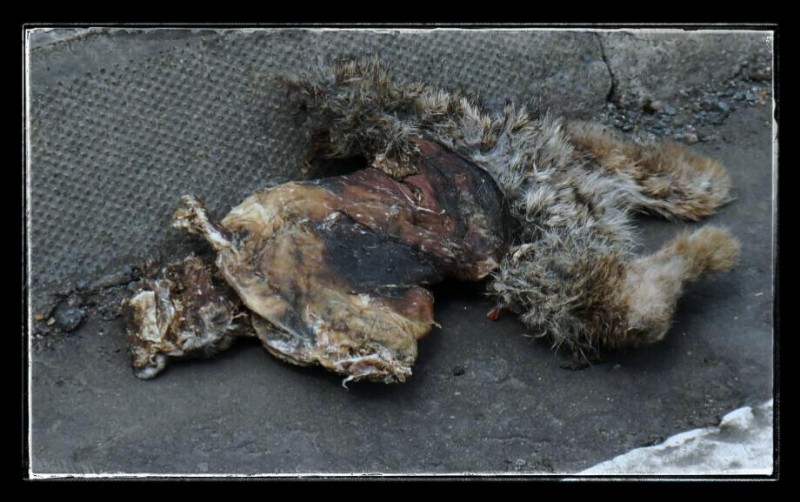
Lots of interesting little shops to poke around and explore. Beautiful, riotiously colourful baskets of flowers everywhere, and tiny front gardens full of vivid flowers. And the wildlife I saw today was a pancake hedgehog on the road in Grassington.  Poor little thing.

Wildlife - pancake hedgehog.

Wildlife – pancake hedgehog.

We thought we’d just keep driving through the Dales. Very narrow roads bordered on both sides by drystone walls. If an oncoming car came, it was very hard to get past. Some of the places would have been impossible. But fortunately we didn’t meet any cars when we were in those places!  
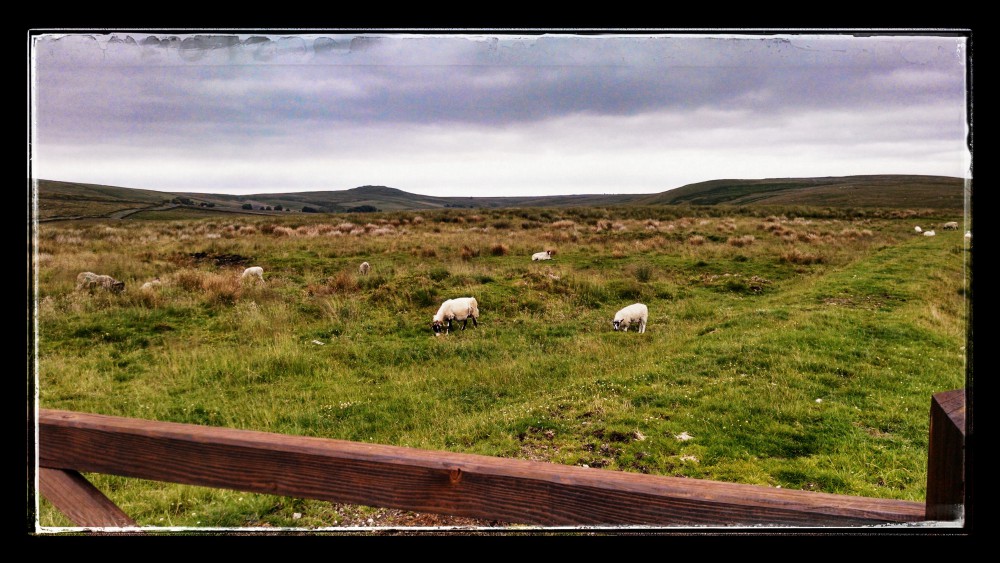
The green, wide dales were dotted with white sheep and grey stone cottages. The centuries old walled fences snaked up and down the hills in jigsaw patterns. Hardly any straight lines. The high hills folded into themselves and the valleys had little villages and dark green woods. Interesting village names like Appletreewick.

Shaun the sheep up on the High Moors

Shaun the sheep up on the High Moors

When we got back to the house In Ilkley, I walked up to the moor behind the house and along one of the many paths to a big stone where a 5,000 year old grafitti in stone is preserved.

5,000 year old grafitti. Don't ask me how they age it!

5,000 year old grafitti. Don’t ask me how they age it!

 
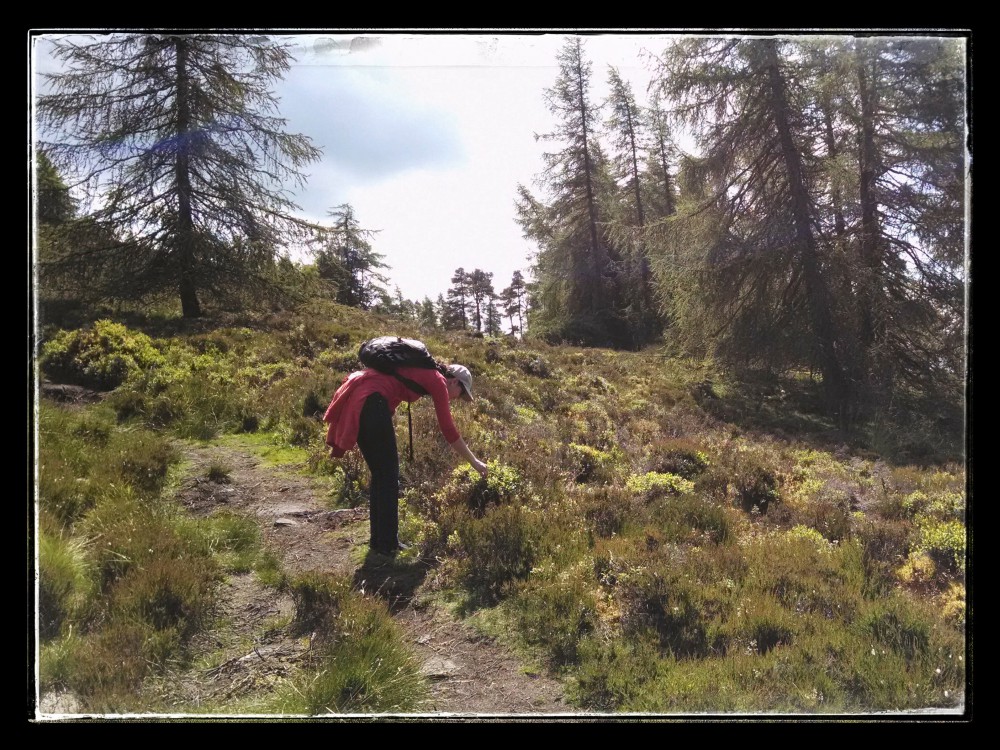
And I found wild blueberry bushes again up on that moor. Helped myself again to a feast of the tart sweetness.

While I was doing that, Philip walked down into Ilkley Village. He went into the church where he found a plethora of history, going back to Roman times. So he had a happy time too!

Not quite the Commonwealth Games – but more fun!

In case you didn’t know the Commonwealth Games are on in Glasgow at the end of this month. There’s lots of publicity about it here now.. understandably.

Had a leisurely start to the day. Just did some food shopping and cleaned the place we’re staying at in Edinburgh as the owner is away for the moment. A friend had recommended to try to get to a local Highland Games if we could. They are held all over Scotland in different regions all through the summer (such as it is). The most famous and biggest one are the Braemar Games. Apparently the Queen goes to that one. But the smaller, more local Highland Games give more local colour and are not so touristy. So I looked it up on the internet and found a Highland games on today at a town called Alva which is only an hour’s drive away. What luck!

So after lunch, with Philip driving and Rosie navigating, we set off, driving north west to the county of Clackmannanshire (don’t you love that name?) to the little town of Alva. We left behind the motorways and highways crossed a wide bridge over the River Forth where it’s much narrower than its mouth near Edinburgh, and drove down some country roads to get there.

wpid-img_20140713_033935.jpg

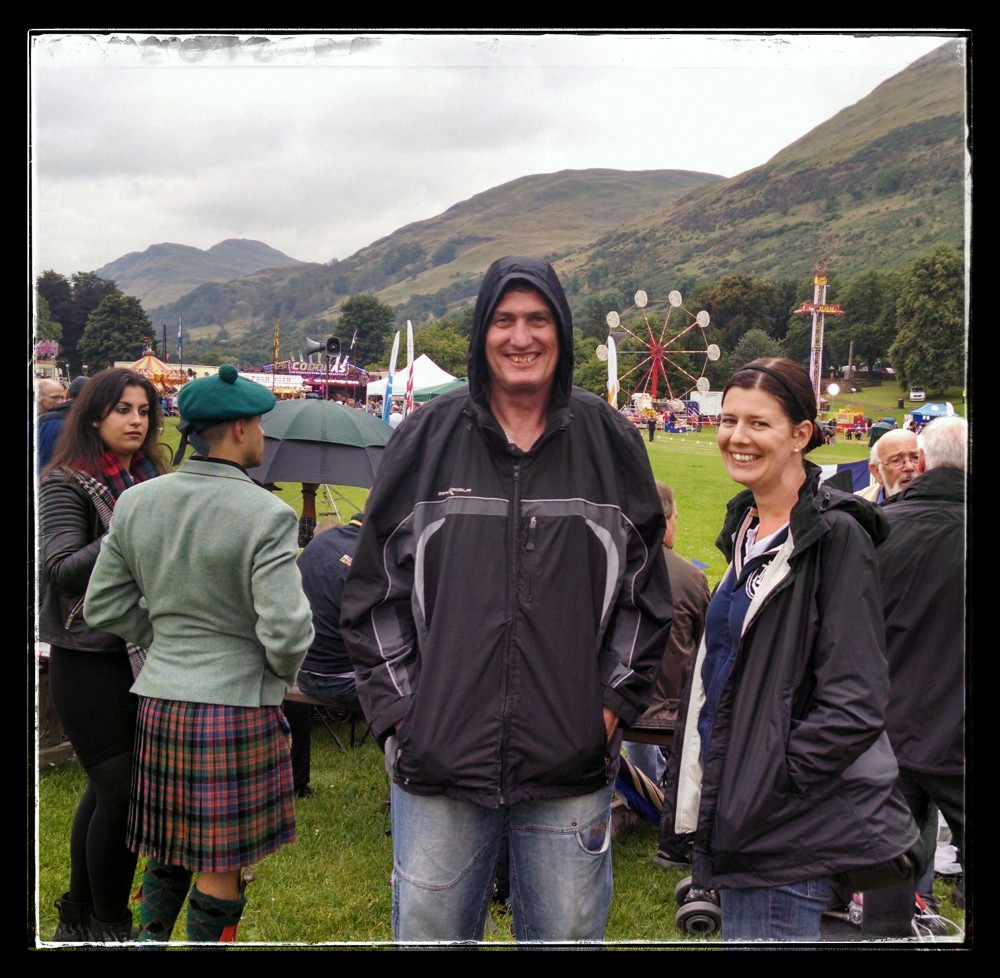
Alva is a little town of about 4,000 people and it’s right against the foot of the Ochil Hills. Which to my eyes look more like mountains than hills! The dark clouds lowered and we were glad we’d brought our rain jackets.

wpid-img_20140713_020233.jpg

These Highland games have been going for 158 years and are the last ones in their county of Clackmannanshire It’s held on the green town oval and backs straight onto the steep back of the “hill”. All around the oval are three rows of benches so you can watch the events. And behind the benches are the showgrounds. Rides with their blaring music, fairy floss and all the associated fairground events.

It wasn’t long before it started raining! But it didn’t seem to deter the Scots. I guess if they stopped their events everytime it rained they’d never get anything done in Scotland.

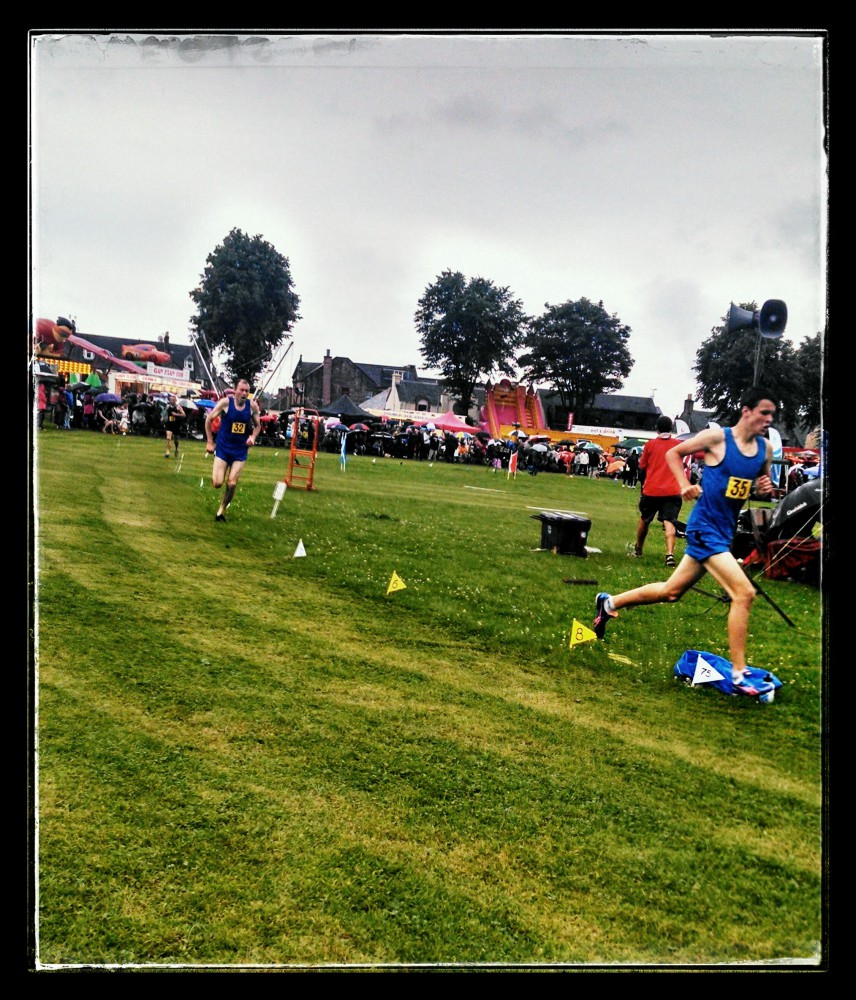
There were all sorts of races. Starting from races for girls under five years old. They didn’t have many takers for that one. In most of these races, the competitors just raced in their everyday clothes and shoes. It wasn’t until later that they competitors got serious and raced in racing clothes and shoes.

wpid-img_20140713_020552.jpg

They also had a couple of races for “foreigners” visiting for the day. And they were won by people from places like Yorkshire and Sheffield! Rosie said I should have gone in it and I would have beaten the girl who did win! I doubt it.

They also had bike racing. Tearing around the oval in their bright bike colours and helmets. They were serious competitors too.

We didn’t get that many good photos with the rain coming down. And you really need very good cameras to get good sports photos. But we did our best!

wpid-img_20140713_020923.jpg

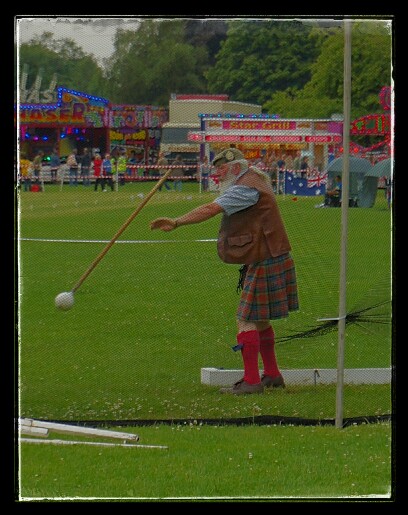
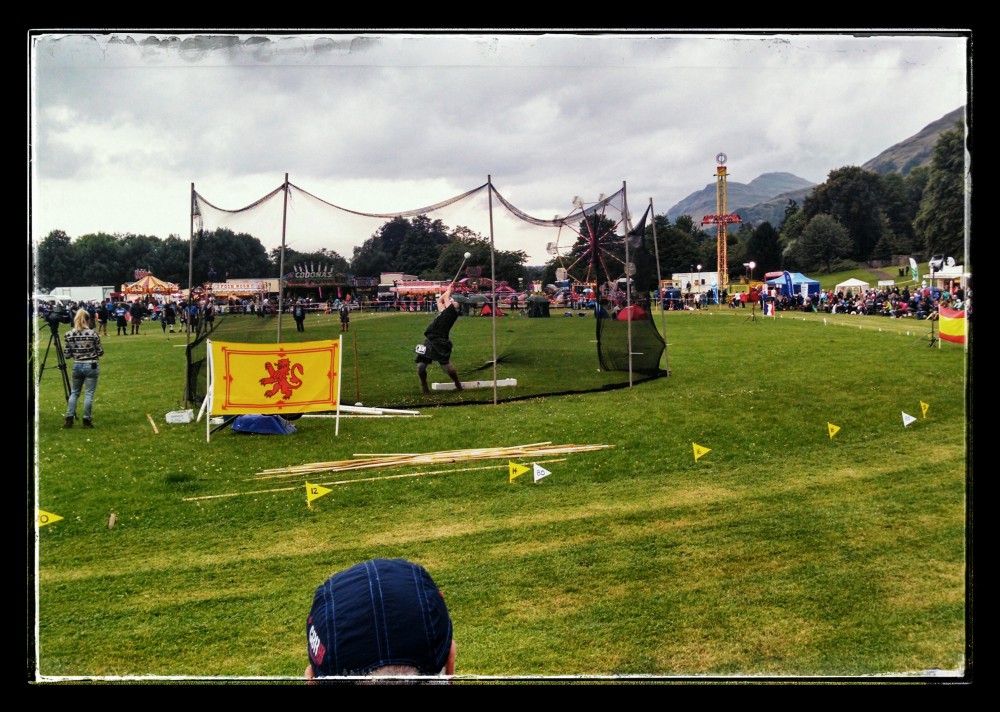
In the middle of the oval, while the races were tearing round the oval were the “weights” events. Throwing the hammer. Their “hammer” is not on a rope like in the Olympics. It’s on a straight stick.

wpid-img_20140713_032502.jpg

There was tossing the caber. Holding one end of a huge log and trying to toss it in the air. The rules are more complicated than I knew. To win the caber toss, you have to be able to flip the whole log end to end, and then have it land in a straight line! None of the competitors could flip it today. It was too slippery. So no winner! There was an American guy there competing in the weights events. From North Carolina. He was wearing a black kilt and a baseball cap. He was also about half the width of the Scottish men. But he didn’t fare well in the end results.

wpid-img_20140713_032004.jpg

Another competition was tossing the Bell. This looked a very potentially dangerous competition! The men pick up a huge heavy white weight with a handle, shaped a little bit like a bell. They then get up a swing on it by bending over and swinging it between their legs. And then they heave it up and over backwards over their shoulders, and they have to heave it over a high beam before it lands. And hopefully it never lands on anybody’s head!

wpid-img_20140713_020428.jpg

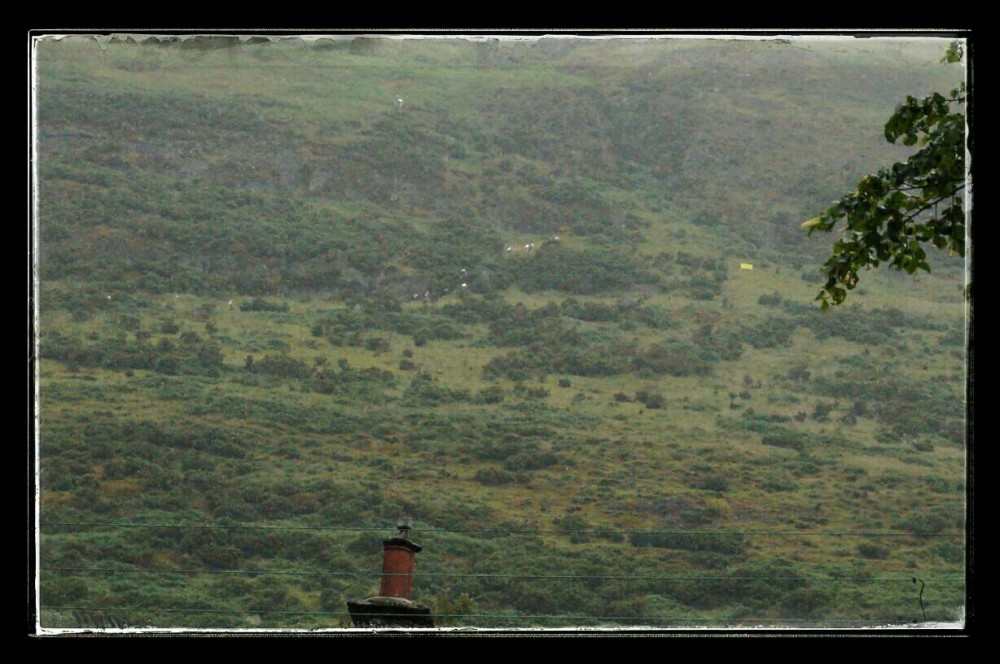
But the most amazing event was what the called the Hill Race. When I first read it I thought they’d be running over a few little hills nearby. But no. They ran around the oval and straight up the almost vertical hill that backed onto the oval. They had an Under 17s race for it first and they ran about three-quarters up the hill to a yellow marker on the hill. There was one girl competiting with the males.

If you look very, very,very closely you may be able to see the white human "ants" running up the hill. If you click on the photo to enlarge it, you may be able to see it better.

If you look very, very,very closely you may be able to see the white human “ants” running up the hill. If you click on the photo to enlarge it, you may be able to see it better.

Then the adults had their turn and they ran to the top of the hill. Which should really be called a mountain. Let alone that it looks just about vertical! There were about 10 girls running with about 25 men in this race. Our jaws dropped as we saw them heading up higher and higher onto the hill. The winner of the adult race did it in 20 minutes. You have no idea how amazing it was. When they run back onto the oval, their faces are grimacing and they are covered in mud and water. I still can’t get over it. The hill would have to be about 500 metres. And have I mentioned that it’s nearly vertical?!

wpid-img_20140713_020805.jpg

They had a big Highland Pipe Band playing too. of course! There was supposed to be a Highland Dancing competition tool. But we didn’t see that. Not sure if they’d had it before we came, or whether we just missed it. We left before the end of the programme.

But it was raining harder. And we are soft Australians. Not sure why, but we did see an Australian flag displayed on one of the fences. We really enjoyed the afternoon. It was great to see such strong community spirit. And it felt like it had been a true Scottish cultural experience.


Bonnie banks

Well, the Scottish gentleman from yesterday was wrong. Summer has decided to stay around for another day for us in Scotland!

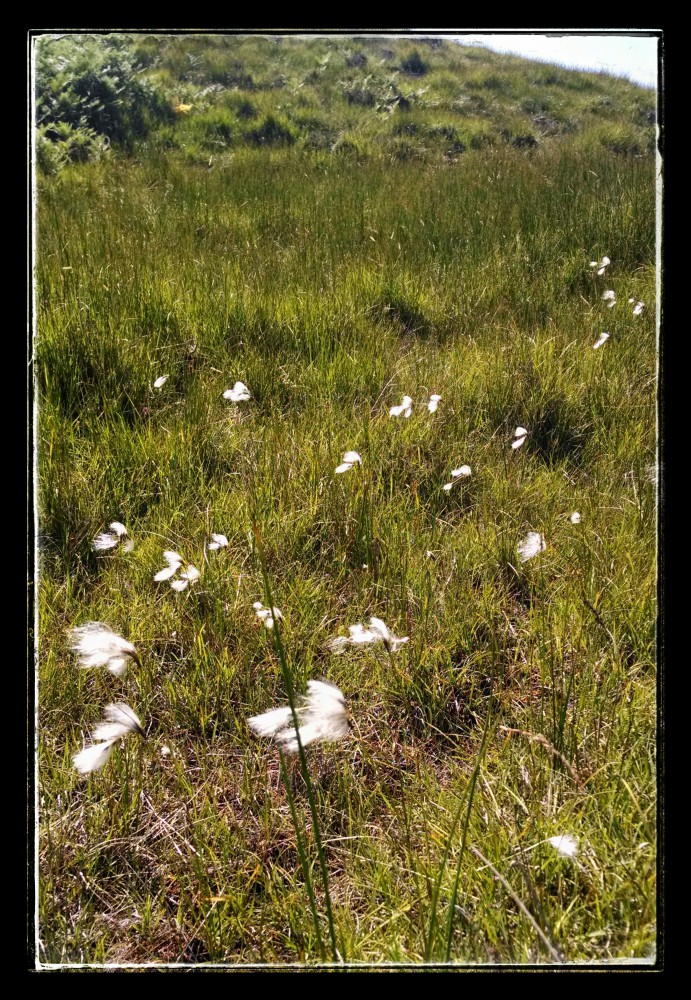
Some Scottish "wildflowers". Not sure what they are.

Some Scottish “wildflowers”. Not sure what they are.

We drove north west for nearly 2 hours, through Glasgow and then north to Loch Lomond and the Trossachs. Glasgow is only an hour away from Edinburgh and apparently there is huge rivalry between the two cities. Glasgow is bigger and from the drive-through I did today, seemed a little “grungier”. They’ve got much more high rise buildings and a lot of their buildings are made of red sandstone.

This is what tourists do when they’re stuck in a traffic stoppage because of roadworks when they’re out in the country. Rosie and I leaned out of our car window and tried to decide what the roadkill by the car was. We couldn’t decide whether it was a rabbit or squirrel. We plumped for a rabbit in the end.

wpid-wp-1405112572154.jpeg

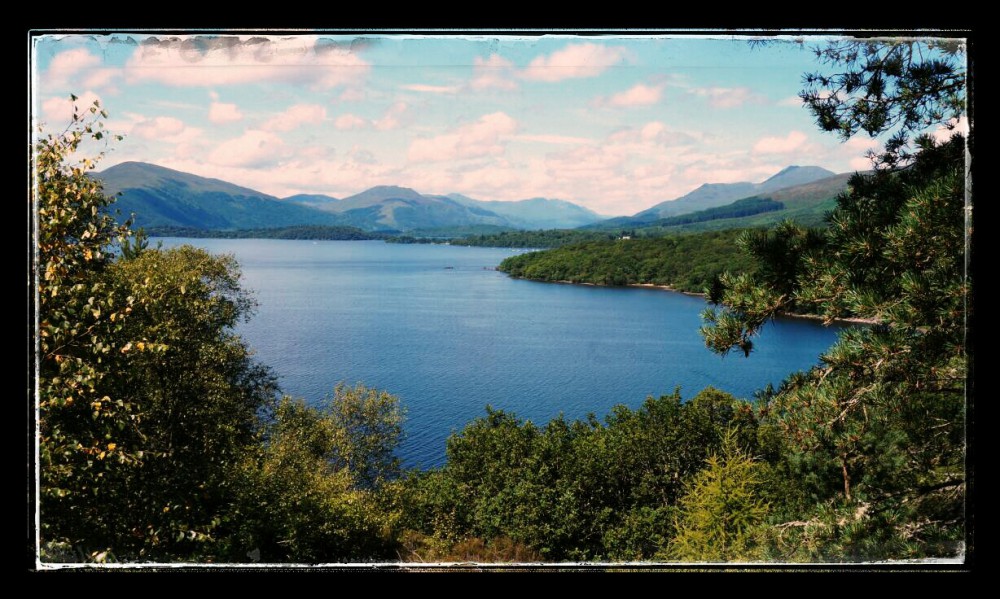
We decided to head for the east shore of Loch Lomond to a little village called Balmaha. The east shore is supposed to be quieter than the west shore.  It’s very different towhat I had imagined it to be. Much bigger, for starters. 39km or 24miles long and very wide. You can’t drive all the way round it. We wouldn’t have had time anyway. The heavily wooded hills reach down to the shorelines. The Loch lies in a long valley with high hills rising around it.

wpid-img_20140712_031441.jpgZ


Where we ate our picnic by the bonnie banks of Loch Lomond

Where we ate our picnic by the bonnie banks of Loch Lomond

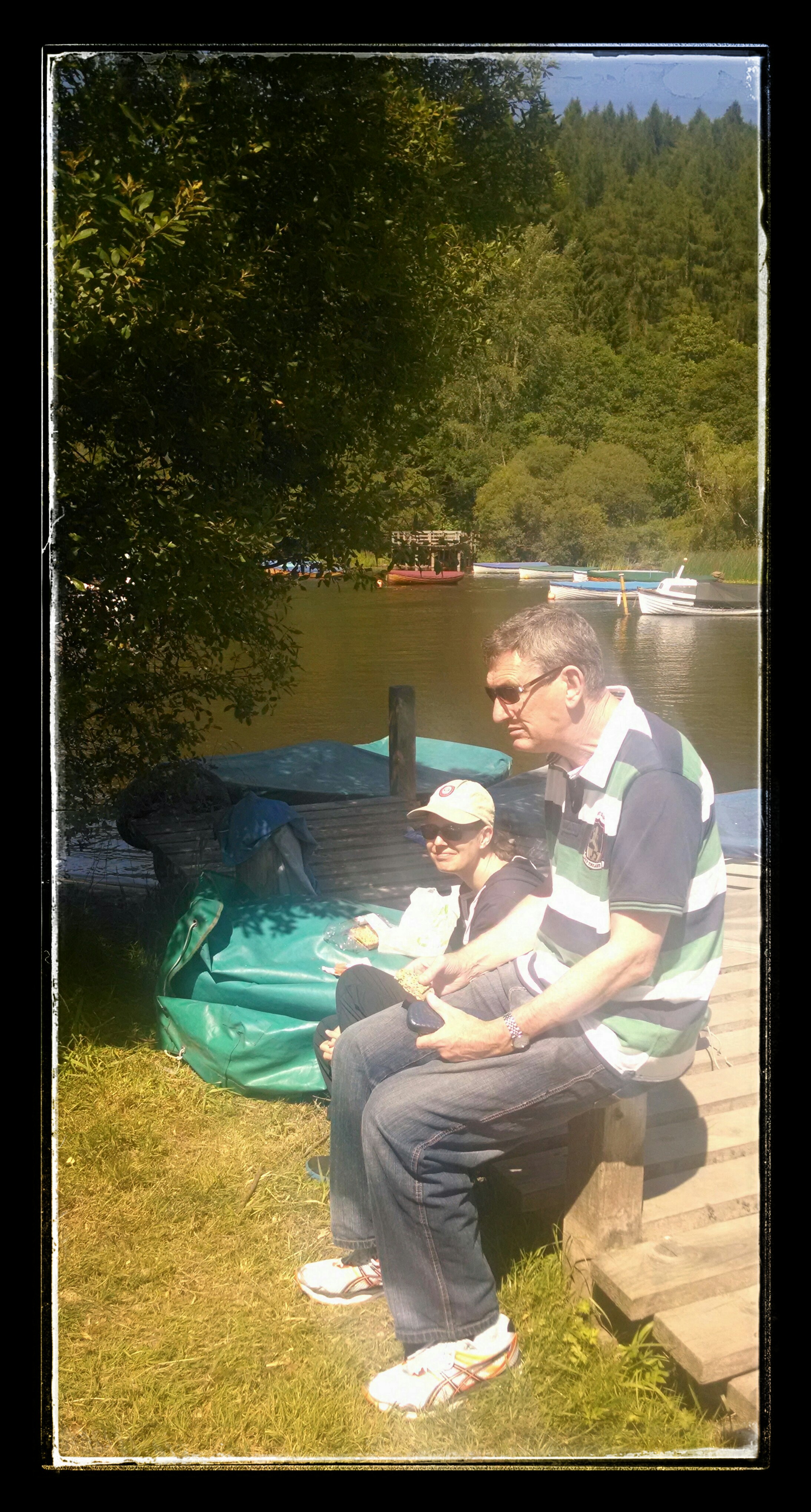
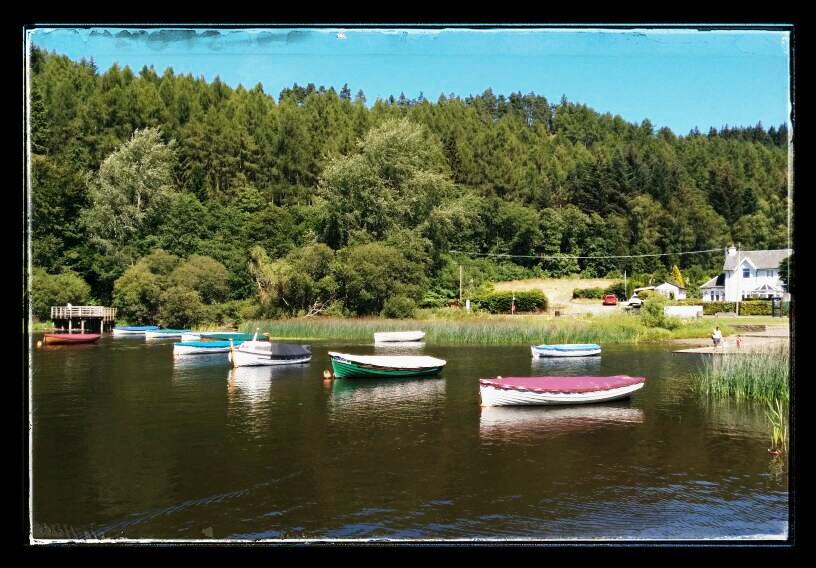
We’d brought a picnic lunch and decided to eat it down by the Loch. There was a boat shed there, and covered dinghys moored by the shore. We sat on the jetty and ate our picnic in the sunshine and watched the antics of the ducks and their ducklings. You can’t really walk by the Loch where we were. Despite what the song says!

wpid-wp-1405112521391.jpeg

There was a woodland walk for 45 minutes that went along the side of the nearby hills with views over the Loch and then along the road next to the Loch. Rosie and Philip went on this and really enjoyed it and this is one of their views they came across.

wpid-wp-1405112377888.jpeg

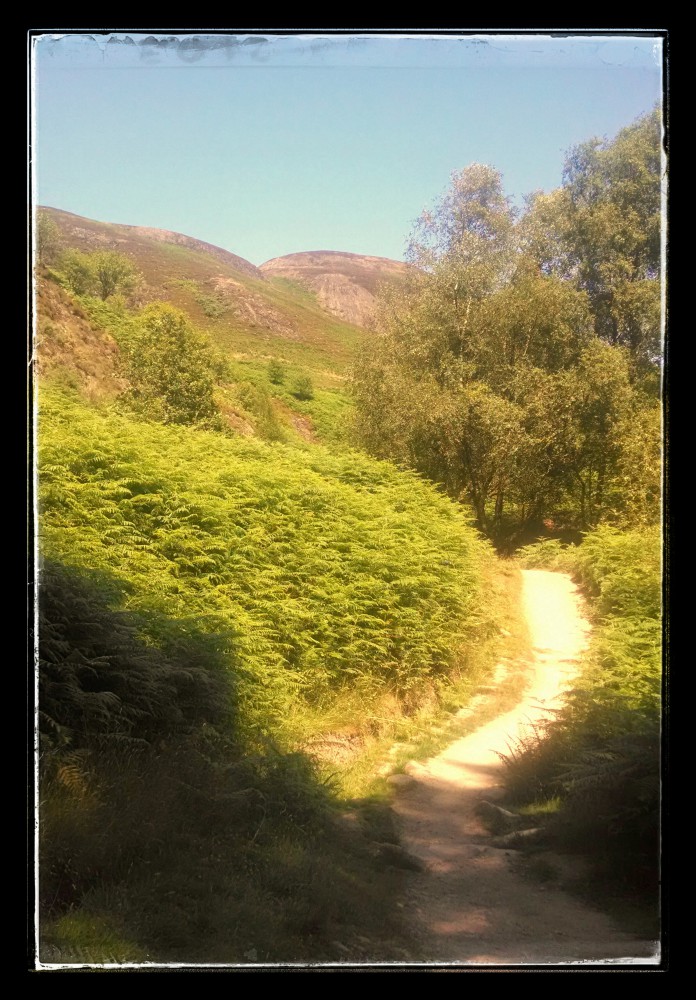
I wanted to do a more challenging walk. This will probably be the last chance I get to do one for a while. So I set off to climb nearby Conic Hill (358 feet). Through woodlands at first, then it changed to the open rolling hills covered with short grass and getting steeper and steeper all the time. As I said to one lady who was resting and admiring the view, “The views are breath-taking…. literally!!” And we both laughed as we huffed away.

The peak in the centre is where I'm headed!

The peak in the centre is where I’m headed!

And I don’t know why on all these hills the steepest and most difficult parts are right near the summit, when you’re already puffed out! At the top, there was a great breeze to help cool the sweat dripping off me! There was no-one else up on top of the hill.

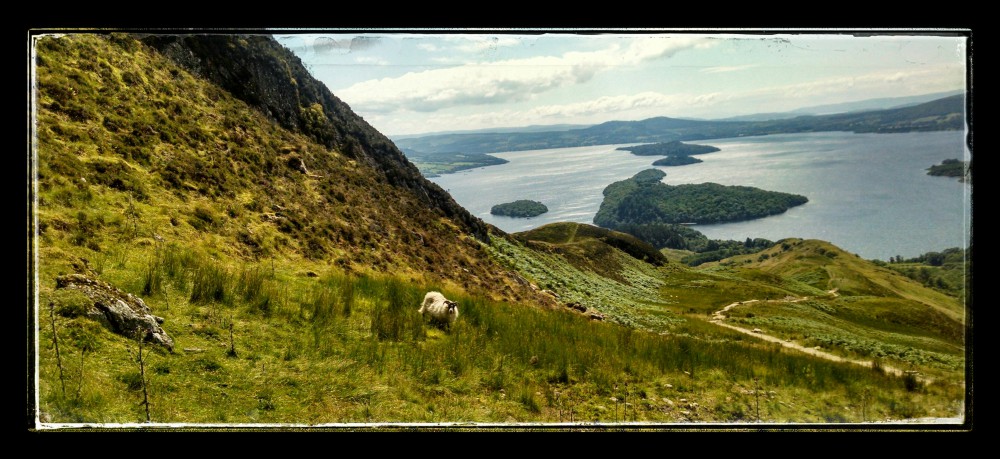
Shaun the sheep is checking out the view of Loch Lomond

Shaun the sheep is checking out the view of Loch Lomond

And the magnificent blue Loch Lomond spread out below, reflecting the blue sky, and sprinkled with islands studded thickly with green trees. You could see the white wakes trailing behind a few boats far, far below.  Sheep had obviously been up there a lot as they’d left behind lots of their “belongings”.  As you looked out over the other direction, you could see the rolling hills going on and on into the distance.

View from the top. This is Loch Lomond!

View from the top. This is Loch Lomond!


The photo above is the full panorma of the Loch. But it's a small photo, and this one shows you another view of the Loch from e top of Conic Hill

The photo above is the full panorma of the Loch. But it’s a small photo, and this one shows you another view of the Loch from e top of Conic Hill

It was a stiff, challenging walk. But I get such a feeling of exhileration as I bounded back down the hill.

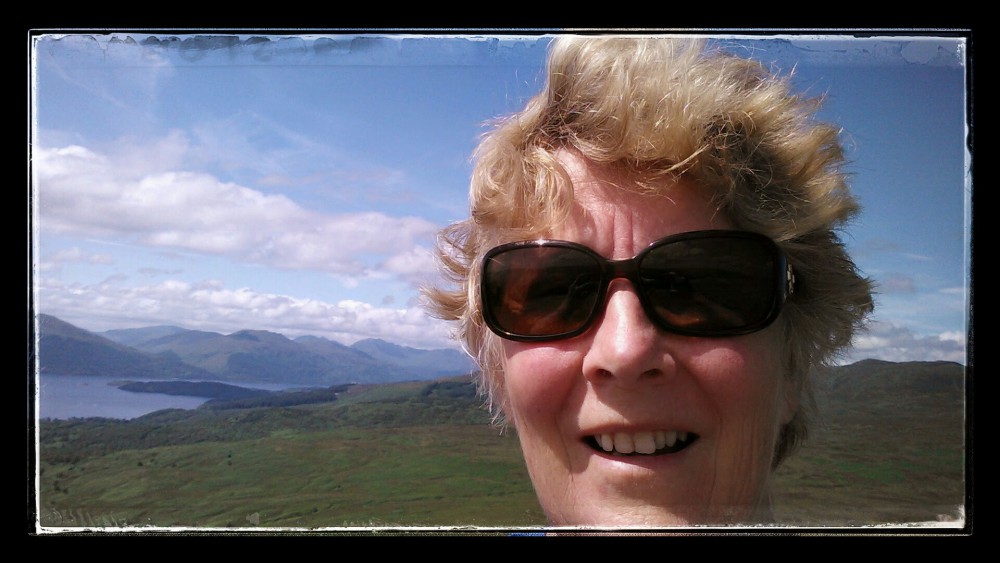
So yesterday's wasn't my lst selfie after all!This is me at the top of Conic Hill. You can seethe Loch and the hills behind me.

So yesterday’s wasn’t my lst selfie after all!This is me at the top of Conic Hill. You can seethe Loch and the hills behind me.


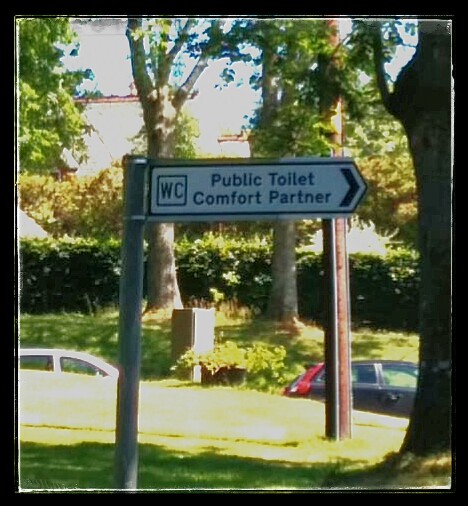
We love Scottish signs! Does anyone know what a "Comfort Partner" is?

We love Scottish signs! Does anyone know what a “Comfort Partner” is?

We drove back to John’s place in Edburgh a different way. Through Stirling instead of Glasgow. Lots of hay being harvested in the fields, and I saw some proper haystacks instead of the huge round bales. In some of the wheat fields, the crop was ripe and ready for harvest.

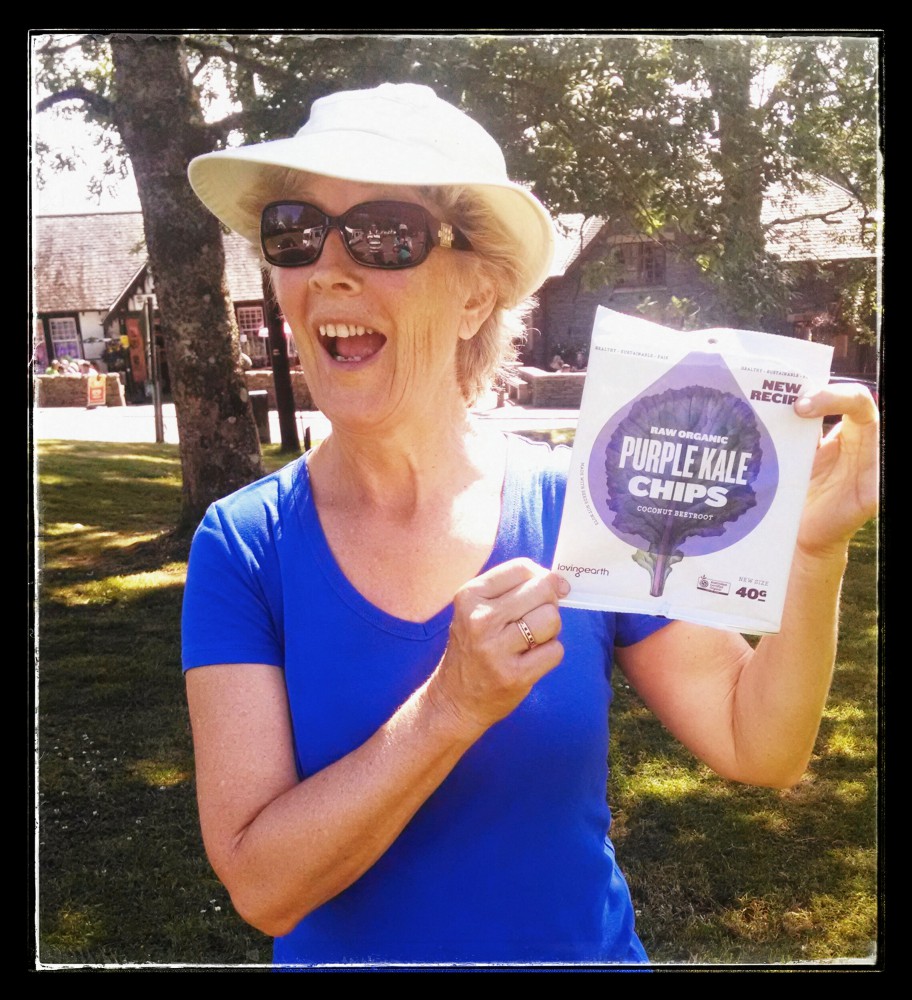
I ate these kale chips from Jackie, while on the top of the hill. To recharge the batteries!

I ate these kale chips from Jackie, while on the top of the hill. To recharge the batteries!

It was good to get back to the house and have a shower. I needed it! A lot!

This is the famous song about Loch Lomond. (In case you haven’t heard it before!)

“O ye’ll tak’the high road, and I’ll tak’ the low road

And I’ll get to Scotland afore ye;

Fir me and my true love will never meet agin

On the bonnie, bonnie banks of Loch Lomond.”

The song is supposed to be about the Jacobite rebellion of the 1700s and a soldier who is sentenced to die.

I forgot to post this one yesterday. It's me at the top of Turnabout hill. But I've added it because I actually look like I'm having fun doing these hill walks!

I forgot to post this one yesterday. It’s me at the top of Turnabout hill. But I’ve added it because I actually look like I’m having fun doing these hill walks!

Meet the Ancestors.

Another sunny day! I chatted to an older Scottish gentlemen today who remarked on the sunny weather and told me, “Enjoy it while you can. This will probably be our summer.” So I did! Enjoy it, that is.

This morning, Philip and I walked to a nearby discount shop to get him a couple of summer things to wear because he didn’t bring any with him, and it has been too warm these last two days for the ehavy winter clothes he brought..

Mid-morning Philip, Rosie and I set off. To Meet the Ancestors. Philip’s hobby is family tree – both his side and mine. In fact, he knows mine far better than I do. I get them all muddled in my head. The names go spinning round in my head, especially when they keep repeating their Christian names. And then it all comes out jumbled to me. So it’s not quite “Meet the Ancestors. Rather, it is Meet the Places that the Ancestors come from – in Scotland and England.”

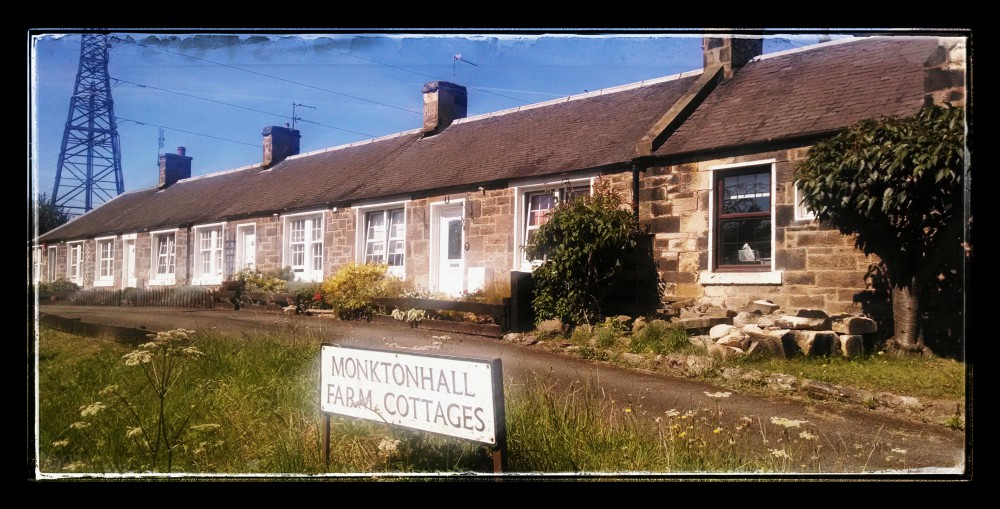
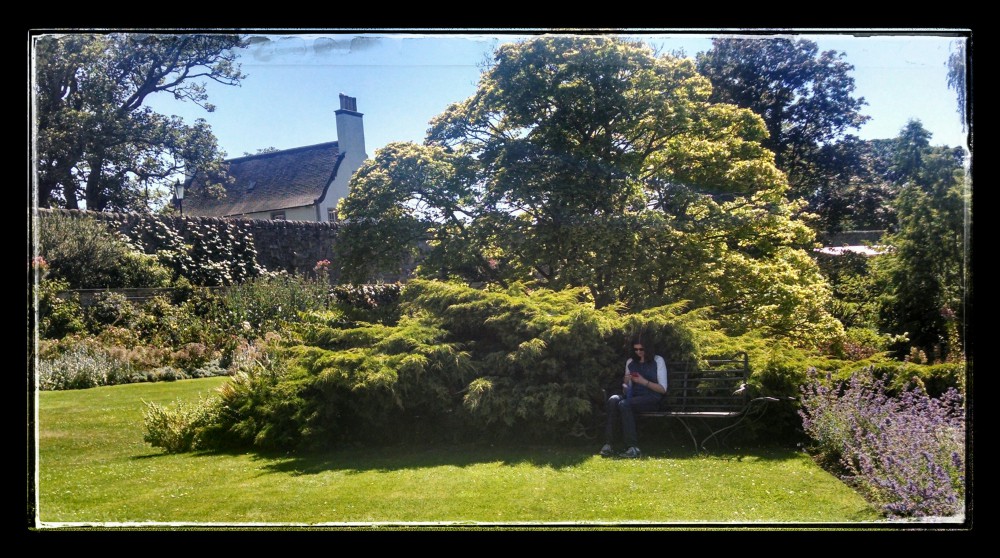
First stop was looking for Lithgow (my mother’s side) ancestor links. We drove to the nearby village of Monktonhall. It’s really an outlying village of Edinburgh now, just separated by a bit of countryside. We don’t have any exact addresses of the Ancestors. Just village names. So we drove around little Monktonhall. Mostly semi-detached bungalows. But we did find this row of very old stone cottages called “Farm Cottages.” My Ancestor Alexander Lithgow was a gardenerer at Monktonhall in the early 1700s. So it’s within the realms of possibility that perhaps he possibly walked past these cottages when he lived here in this village. Clutching at straws I know! It’s a possibility, if not exactly a probability.

Monkton Farm Cottages

Monkton Farm Cottages

Next stop was the slightly larger village of Inveresk, very close by. This village as well as the usual cottages and bungalows has a few old, very grand looking houses.  

Inveresk village

Inveresk village

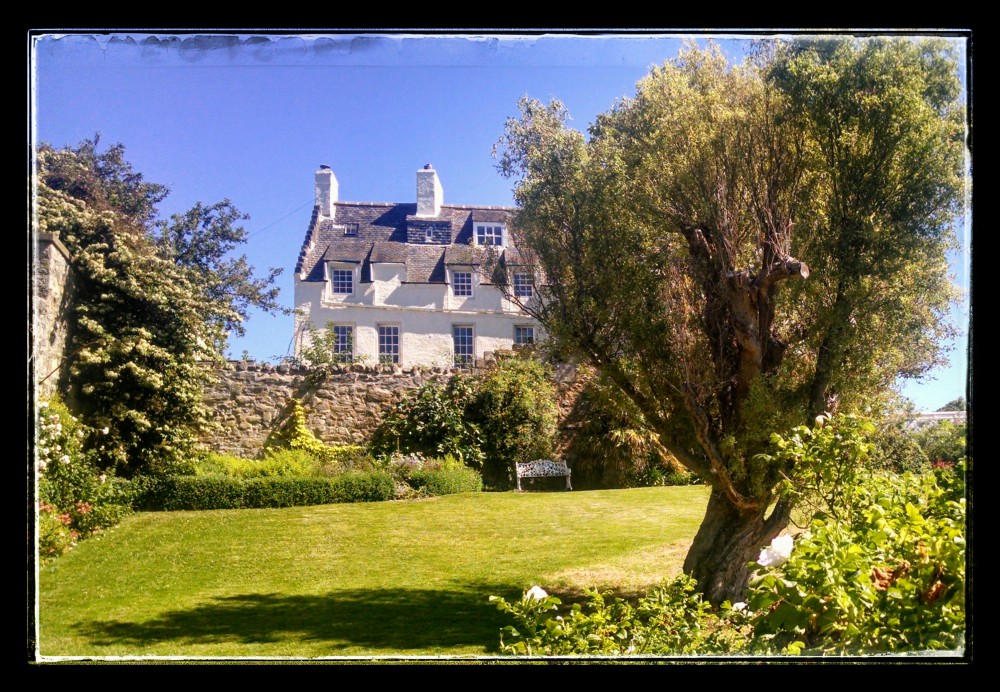
We stopped at this interesting old house, called Inveresk Garden Lodge because it had an Open Garden. The house was built in the 1680s and was a Jacobite stronghold of its times. (Jacobites had a particular political stance of the times. Lots of wars, intrigues and double-dealing done by all sides of the conflict.) 

Inveresk Garden Lodge

Inveresk Garden Lodge

The garden wasn’t big, but beautifully done. Philip stopped and talked for a long time with a gardener there. My ancestor, John Lithgow, born in 1748 lived in Inveresk and worked in a nursery, and he later moved to Dorset in England where he seems to ahve started his own nursery. The gardener told Philip that “nurseries” in those days meant that you sold produce from the nearby farms which were very productive. Philip also noticed while talking to the gardener that with the Scottish accent, “Lithgow” comes out sounding like “Lethgow”.

Rosie sitting on garden bench of Inveresk garden Lodge

Rosie sitting on garden bench of Inveresk garden Lodge

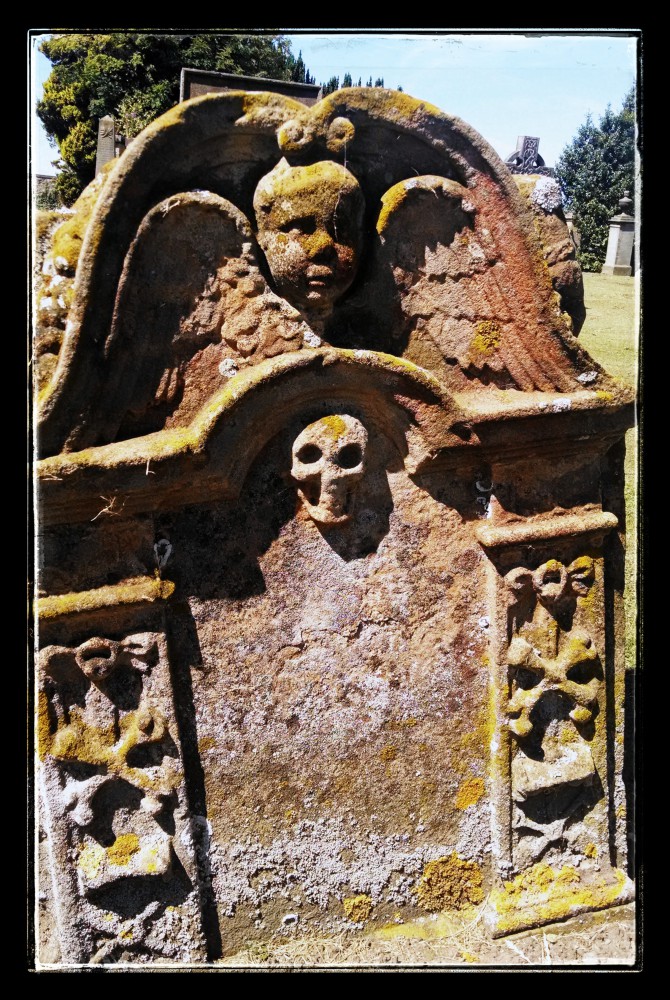
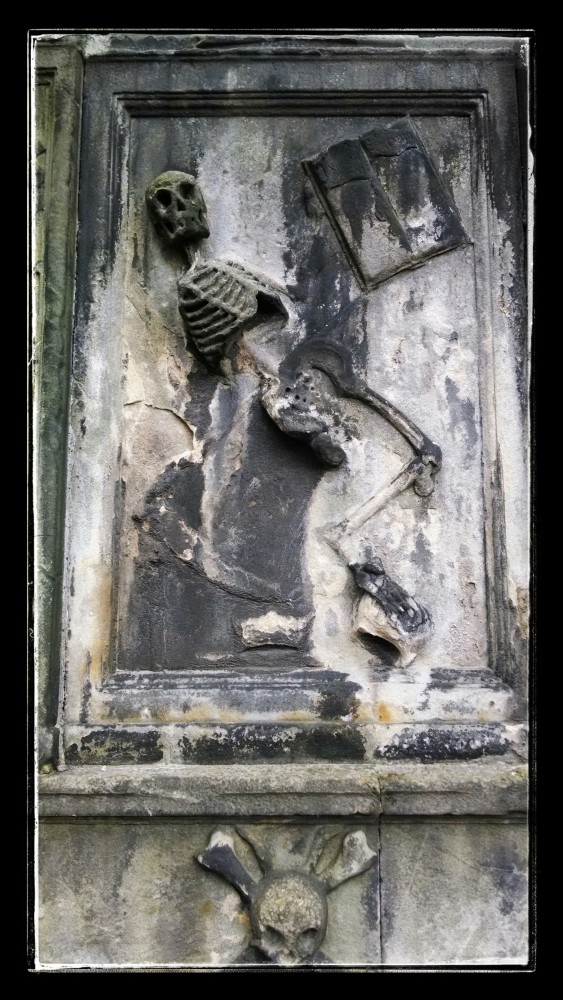
We looked at graves in the nearby church of St Michaels, but couldn’t find any old enough. The really old gravestones seemed to have crumbled and disintegrated. But I found this interesting tombstone. To our eyes it looks macbre. A cherub with a skull, and bones down the side. It was to remind passersby of their mortality. I would have thought with the death rate of those times, that they wouldn’t have needed a lot of reminding!

wpid-img_20140711_012710.jpg

Then it was time for a late lunch. So we drove a little bit further south to the Pentland Hills which are only 30 minutes south of Edinburgh. Had a wonderful lunch at the old stone Flotterstone Inn. (I love the names of some of the places here!) We sat outside in the back garden under a shady tree with a little burn (stream) running on the other side of the fence to eat. I had delicious pheasant.

wpid-img_20140711_013321.jpg

Flotterstone is right on the edge of the Pentland Hills, with the Pentland Way walks running through it, over the tops of the hills. So Philip, Rosie and I set off on a short walk outside the Inn, through some woodlands and then farmlands. Until we came to a barred fence saying, “Danger. Do Not Enter”. Bit disappointing, so we had to turn back.

wpid-img_20140711_013430.jpg

Philip decided to go back to the Inn. He has had a painful back since his long flight here. And Rosie and I took another pathway. (There’s always another pathway if you go looking for it!)

Rosie and I climbed up and up to the top of Turnabout Hill. It had been a steep climb, and when I stopped to catch my breath, I could hear the blood thumping in my ears. Another one of those walks when I wonder about whether it’s going to be worth it to reach the summit. It always helps to remind myself that, Yes it will be worth to reach the top. It always is.

Rosie at top of Turnabout Hill

Rosie at top of Turnabout Hill

We sat down on the green grass under a thick shady tree and looked out at the landscape spread out far below us. Patchwork fields of green and corn-yellow stitched together by narrow dark green bands of trees. From far away we could hear the lowing of cattle and the distant bleating of sheep. (Shaun the sheep had lots of friends here too!) The hills here are rounded and smooth, and not quite as high. But steep enough to climb for all that!

Rosie decided she’d done enough hill climbing for the day, so she decided to go back to wait at the Inn too. But I wanted to see if I could climb the next two hills. I knew I didn’t have enough time to do more than that. And I made it.  All the way to the top of Carnethy Hill. It’s 573 metres high, if you care or are interested!

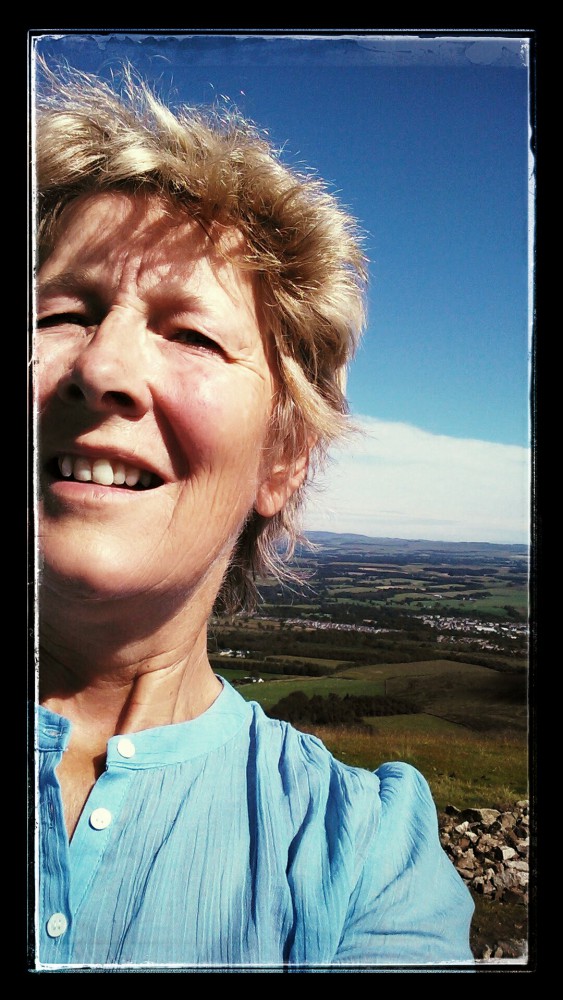
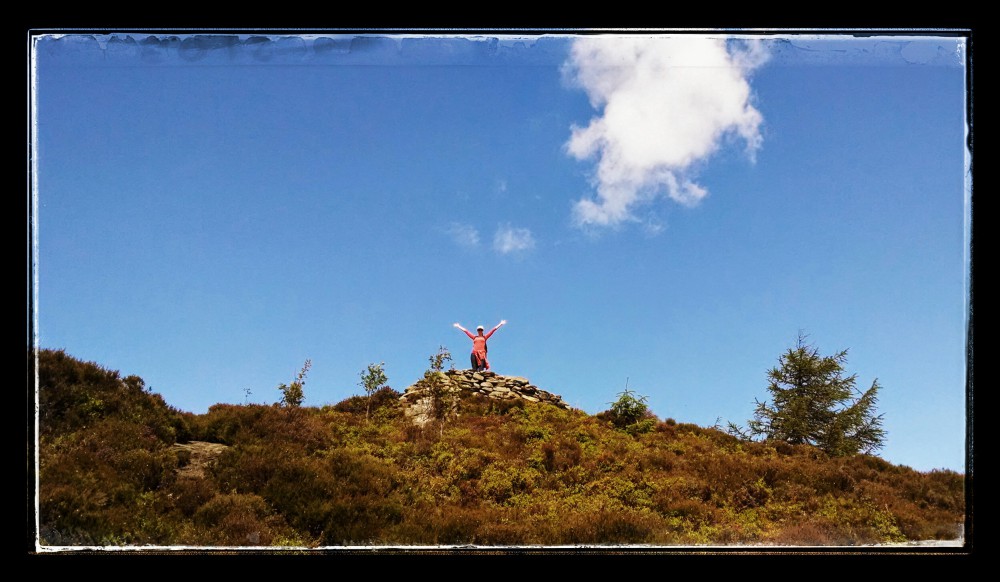
And I took my first selfie. (A photo of yourself.) But I was proud of my achievement. It was an exhilerating walk and I enjoyed being able to look all around in every direction from the top of the Hill. More Pentland hills rolling on in one direction. The sea in the far distance. And the farmlands and villages and towns down below.  You can see some of the landscape behind my shoulder.  You can also see that I didn’t have my glasses on when I took this photo!!

My first selfie. And possibly my last!

My first selfie. And possibly my last!

I enjoyed the walk back down again too. Much easier and quicker and it always gives you another perspective because you’re seeing the landscape from another angle. I saw some sheep pens on 45 degree hill slopes. Wonder who rounds the sheep up to put them in? I’ve noticed too, that they don’t dock the sheeps’ or lambs’ tails here. The other wonderful thing about walking in Britain is that you don’t have flies buzzing around your face and pestering you as you walk along. Even when you walk through farmlands, and you can see swarms of flies around the cattle or sheep, they never come near you! I love that!

Sunburnt in Scotland!

Yes, it’s true! After yesterday’s rain for most of the day, today was very warm sunshine. in our unsuitable clothing, we even got a little warm!

It was such a sunny day, that I couldn’t bear the thought of being cooped up inside. It was an “outside” day today. Besides I was a bit “historied” out after yesterday. But Philip still had more history to imbibe. So after the three of us took the train into Edinburgh again, Philip went to Holyrood Palace and then the new Scottish Parliament buildings.

He thoroughly enjoyed it and enthusiastically relayed to us all the interesting things he saw. Mary Queen of Scots’s bedroom and the room where her secretary was murdered by her husband. Lots of interesting stuff like that. He also said that the new Parliament Building inside is amazing. Architectural and engineering marvels.

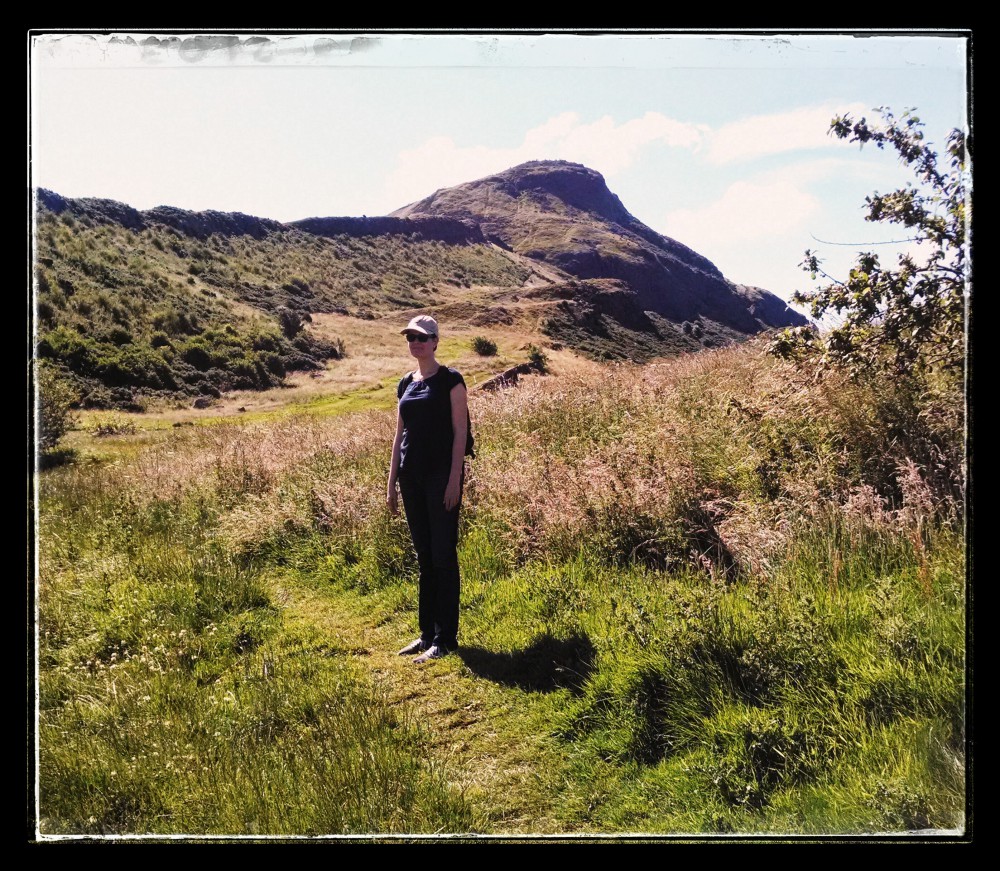
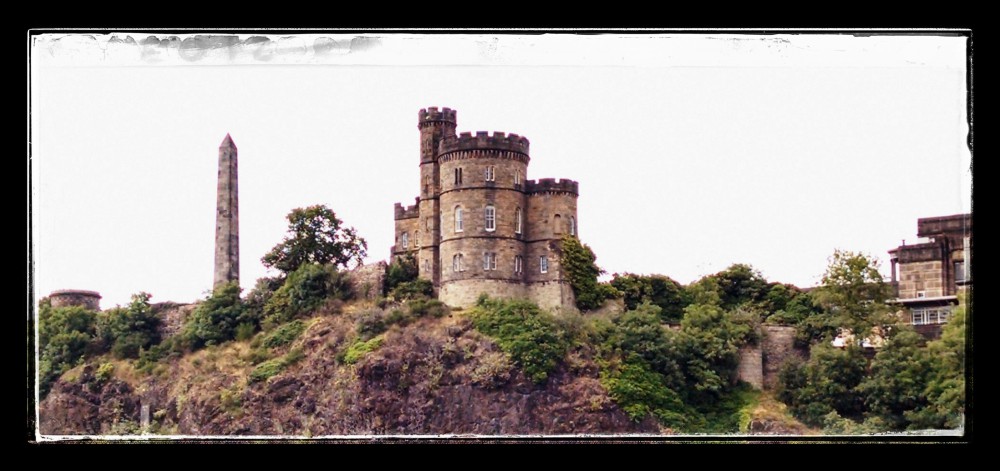
So Rosie and I decided to climb Arthur’s Seat instead.The remnants of a very ancient volcano that is now a 250 metre green hill at the bottom of the Royal Mile and near Holyrood Palace. But a very big hill really with some steep parts to it. A perfect day for a walk. We had a great time too. Lots of other tourists doing it too, but it’s so big that you don’t feel crowded. lots of different pathways meandering all over it.

I’ll let the pictures tell the story.

The start of the walk up Arthur's seat. Our destination is the high point in the distance.

The start of the walk up Arthur’s seat. Our destination is the high point in the distance.


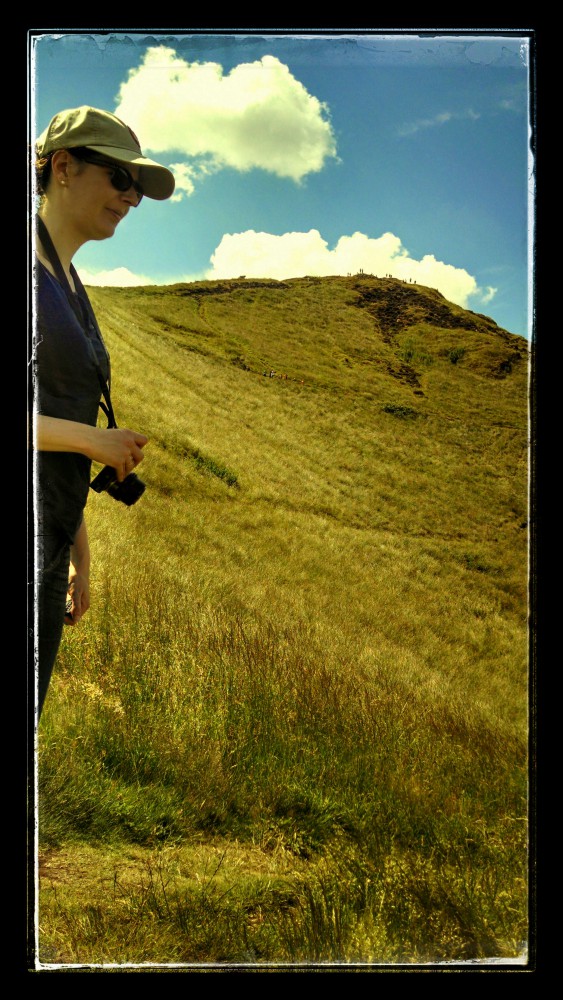
If you look very closely, you can see the "human ants" on the top of the hill!

If you look very closely, you can see the “human ants” on the top of the hill!


This is it! The roof of Edinburgh

This is it! The roof of Edinburgh


A flat area near the top. We  sat down for a while, snacked, enjoyed the view and the cool breeze!

A flat area near the top. We sat down for a while, snacked, enjoyed the view and the cool breeze!


Behind us you can see that it is a bit more than a doddle!

Behind us you can see that it is a bit more than a doddle!


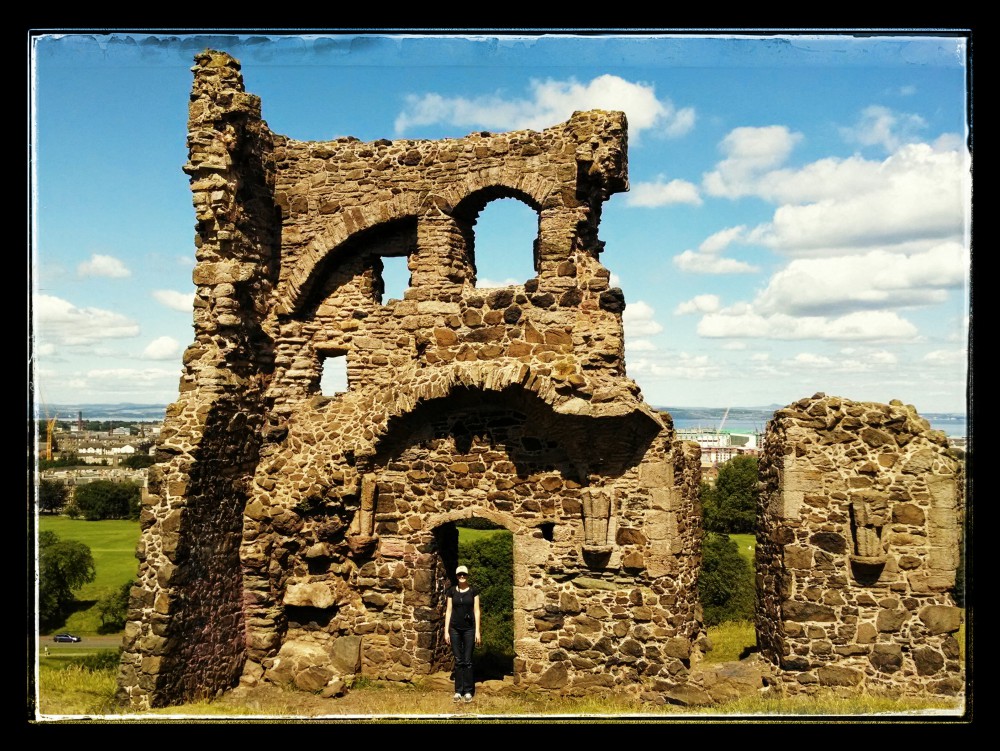
The ruin of St Anthony's chapel. On the way back down again.

The ruin of St Anthony’s chapel. On the way back down again.

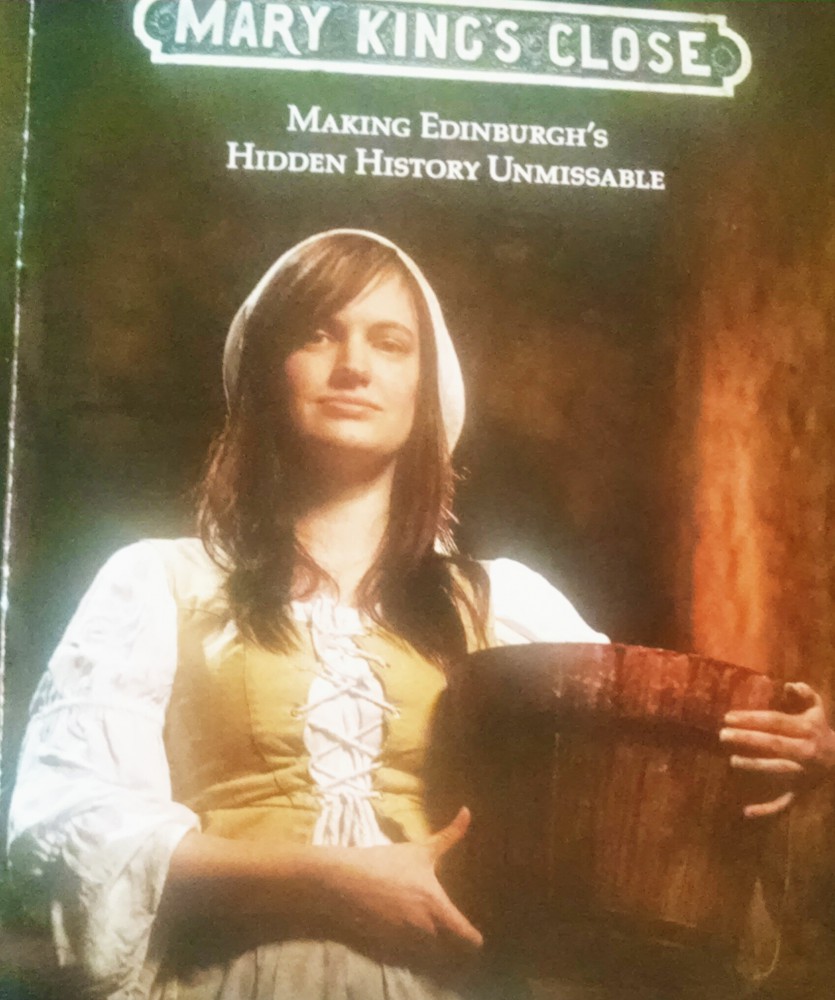
After a great lunch together in a little, dark pub we headeed back up the Royal Mile for more tourism! Called “Real Mary King’s Close”. Close means a little street.

wpid-img_20140710_044525.jpg

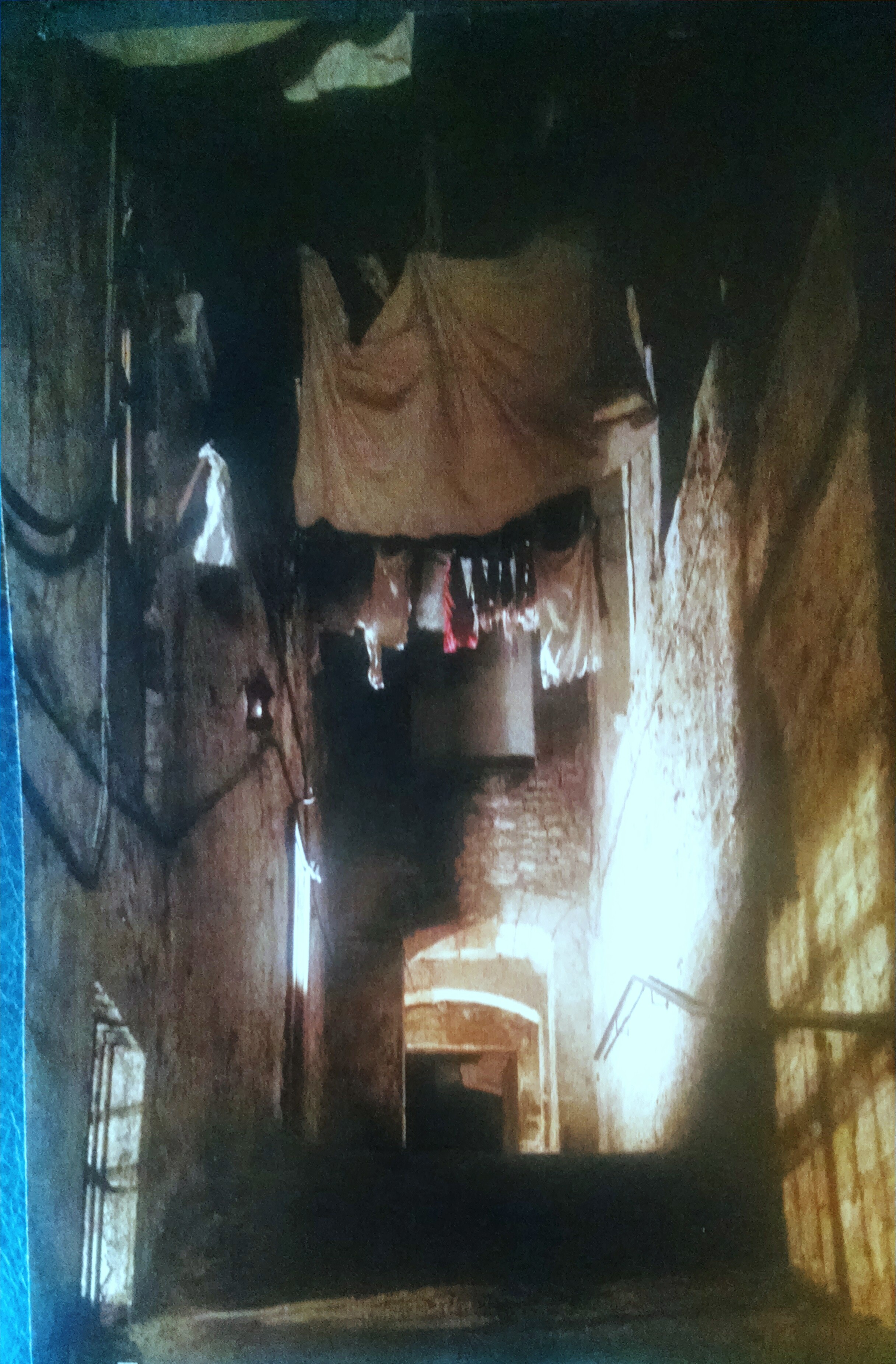
The lower levels of an old medieval Edinburgh alley which is built on a very steep hill have survived almost unchanged in the foundations for 250 years. Now this dark, subterranean warren of streets, corridors and poky little stone rooms ave been uncovered and are host to a reenactment of past times of the 1500s and 1600s with costumed players. Life really was miserable then. Really hard times. All of the stories we heard had really happened there. Murder, plagues, everyday life of the poor and wealthy. Rosie, Philip and I all agreed we are so very grateful for living now, and not then! It was a great afternoon. Nothing like a hard dose of reality to induce gratitude!

I know this is an unclear picture, but it's of the little streets with washing hanging above.

I know this is an unclear picture, but it’s of the little streets with washing hanging above.

So to finish off a great day, I had to buy some sunscreen. In case we get another sunny day like today. I didn’t bring any with me! And some moisturiser to rub into my sunburn. And another pair of reading glasses because somewhere in the excitement of it all, I lost mine!

Being an Ultimate Tourist

Philip arrived here in Edinburgh very wearily yesterday afternoon Ready to start his holidays.

This morning when we got up it was a right “braw” day. Which means a lovely day. Well, it was a Scottish summer day. Which means it was steadily dripping with rain!

We decided to be Ultimate Tourists today and take the train into Edinburgh city to explore. It’s only one station away. Edinburgh just drips with history. And it looks very old too. Tall, narrow buildings of rough stone. Narrow, twisting streets on a steep hill. Lots of turns and corners and little nooks and crannys.

wpid-img_20140709_035204.jpg

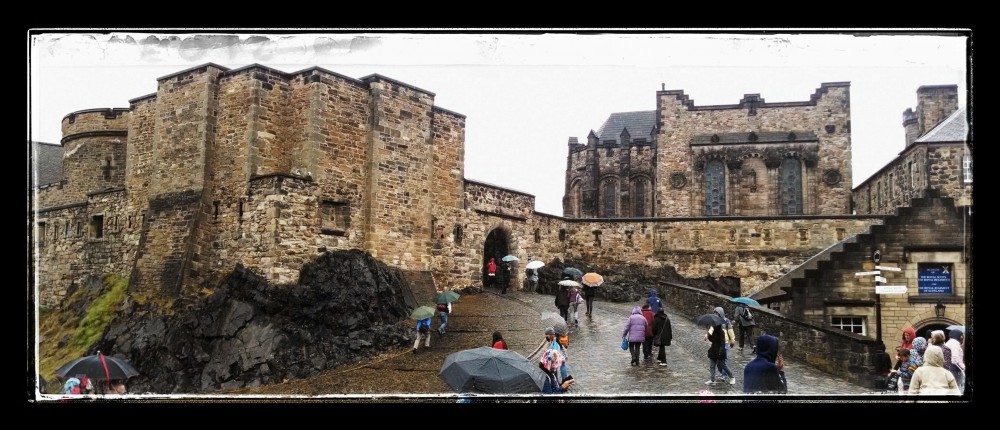
We walked up the old main street over the cobbled stones that led up to Edinburgh Castle.

wpid-img_20140709_040017.jpg

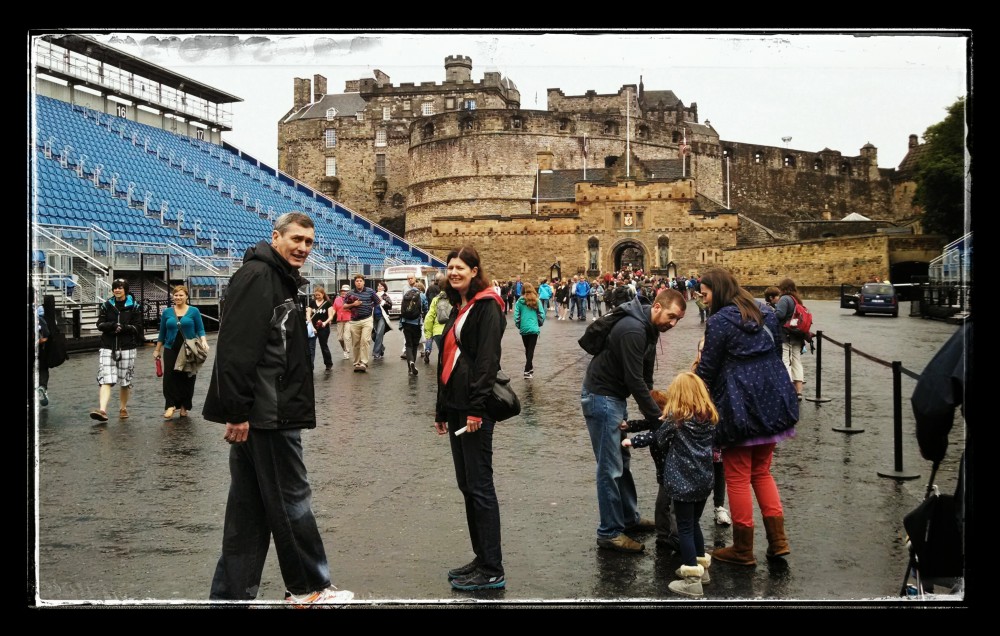
Throngs of tourists everywhere. We were some of them! Lots of umbrellas with sharp points that threatened us at every turn. Lots of queues to get into the interesting parts of the castle.

The blue seats are for the Edinburgh Tattoo in August - just outside the front of Edinburgh Castle

The blue seats are for the Edinburgh Tattoo in August – just outside the front of Edinburgh Castle

So much history it was overwhelming. So many futile endless wars bickering over trivialities. But challenging to hear the stories of people who died for their faith and convictions.

wpid-img_20140712_185052.jpg


Being Ultimate Tourists

Being Ultimate Tourists

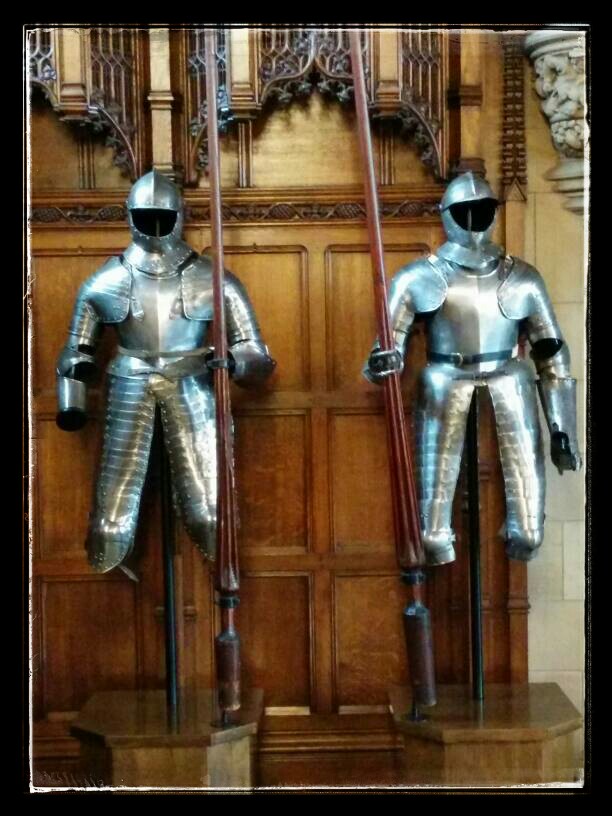
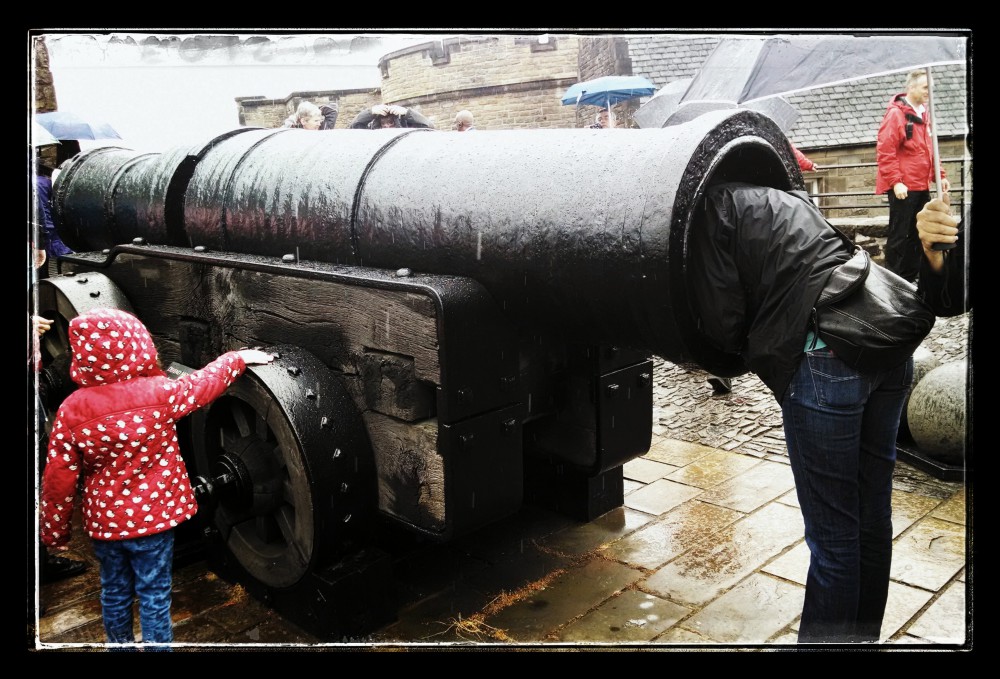
A great exhibition was The Honours of Scotland – the crown, sceptre and sword of the Scots nation, first used for Mary Queen of Scots in 1543. They are the oldest crown jewels in Europe. Tiny chapels, and huge cannons, dungeons and tunnels.

Rosie looking for the cannon balls of Mons Meg (Big cannon)!

Rosie looking for the cannon balls of Mons Meg (Big cannon)!

The Cannon Balls

The Cannon Balls

After looking through Edinburgh Castle for several hours, we had a great lunch of Yorkshire pudding and sausages in a nearby pub. Then wandered down the Royal Mile, the long, steep main street of the Old Town. We walked through a couple of big churches – St Giles and Greyfriars which is famous for the story of Greyfriars Bobby (the dog). Wandered round the church cemetery which had a few macabre signs. Saw one church doing a creative tour to engage the public with the Christian past, but we wern’t there at the right time for it.

wpid-img_20140709_035437.jpg

wpid-img_20140709_035251.jpg

Being an Ultimate Tourist is exhausting! I found today far more tiring than the much more physically challenging hill climbs that Rosie and I did last week. To build up my strength I cooked apple and rhubarb for our tea with the rhubarb that is growing in John’s backyard, with sheer abundance through benign neglect.  It was delicious!


Final Fling!

Sunday. Bliss. We didn’t wake up at 4am! Last night before going to bed, Rosie discovered the windows in this host house in Clunie, Perthshire has inside wooden shutters. So she shut up the windows with them. And we didn’t properly wake up till after 8am with a darkened room. Instead of a room flooded with light, there were just cracks of light poking through and around the shutters.

Reminds me of a favourite quote from Leonard Cohen. “There’s a crack in everything. That’s how the light gets in.”

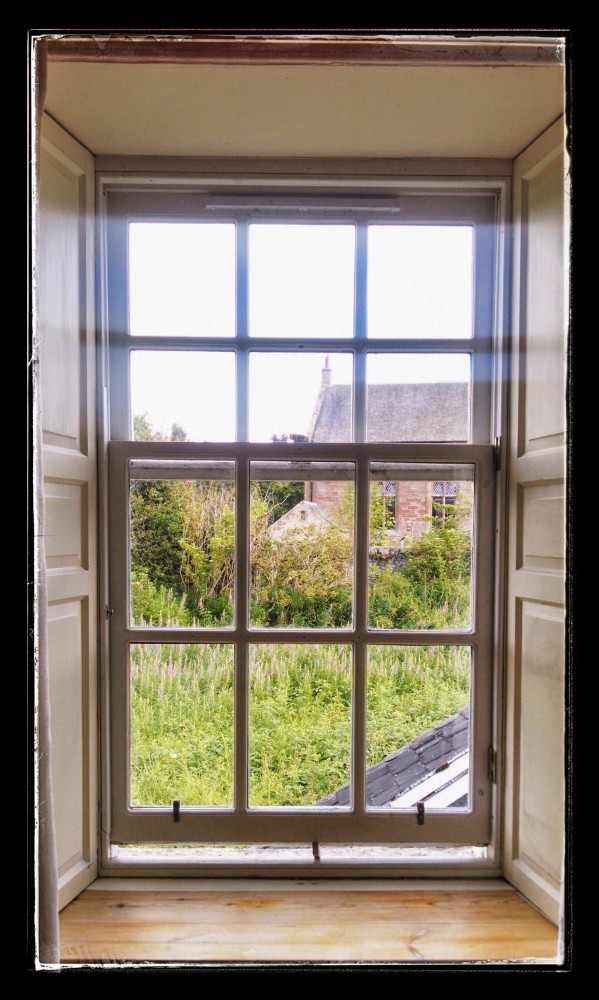
We love the long summer evenings, but are finding the early, early sunny starts to the morning tiring. Hardly anyone has proper curtains on their windows! So we wake when the room gets light. Every big Georgian window in this house looks out on to a bucolic scene. Like a framed picture. A meadow, or paddocks with trees. Cows contently chewing away. Meadowflowers.

The view from our bedroom window.

The view from our bedroom window.

We helped ourselves to the German breakfast of meat and cheese and chatted for quite a while with Alex and Esther. Interesting to hear how they’ve adapted to the Scottish culture. Their young children have broad Scottish accents. Enjoyed too, their perspective on the upcoming Scottish independence referendum. It’s interesting to hear how so many different viewpoints of it all.  I have no opinion either way. And I’m not emotionally attached to the decision either. So I can just listen. Many of them say it’s such an emotional issue that they don’t discuss it with their friends because it’s too disruptive and eruptive.

Rosie and I had been planning to going to the church service in the church next door. Alex and Esther don’t go, but we thought we’d like to. This huge old church building only has services once a month. They have to have services once a month or it gets closed down. I have no idea how many people go to it. But the service didn’t even start till 11.15am, so we had to let that idea go. In John’s car is a CDplayer and a glove box full of CDs. Going through the Highlands and over the Grampians we had listened to U2, Enya and Frank Sinatra. An eclectic bunch. But today we listened to Hymns. And loved it. Sang along sometimes. Rosie knows lots of them too. Faint memories from her childhood. And great jumping off points for interesting conversations.

We drove to the nearby village of Birnham and Dunkeld, where we’d had tea last night. We had discovered last evening that Beatrix Potter had spent her childhood holidays there and it had highly coloured and influenced her books. There was a very small commerative garden opposite the pub and we explored that.

We thought we’d do another walk. And the walk to the top of Birnham Hill sounded interesting. It always takes us ages to find the starting points of these walks. Once you know where to go, they’re easy to find!

wpid-img_20140708_045651.jpg

Rosie and I decided that there are definite phases in these walks of ours.  As we start off we think, “This is pleasant. I’m enjoying this. A very pleasant stroll.”

A bit later on, and the thought crosses our mind. “Actually this is turning out to be a little bit more strenuous and difficult that I’d imagined it to be.”

Further on, and I’m thinking, “What one earth possessed me to even do this walk? I should be sitting back in the cafe in the High Street, or wheverever normal people sit and be drinking a hot chocolate. Maybe this is far enough. I don’t really need to reach the summit.”

We finally make it to the top. And it’s always exhilerating! And I think to myself, “This is fantastic! I am so glad I’m here. I wouldn’t have missed this for worlds. Completely worth all the effort and struggle.”

The top of Mt Everest - or Birnham Hill!

The top of Mt Everest – or Birnham Hill!

Then as I’m descending I think, “I don’t know why you made such a fuss in your head. It wasn’t really that bad. I don’t know why you have these debates going on in your head!”

The view on the top of the hill was 360 degrees, looking out over hills and more hills and green trees everywhere. Over on one set of hills was a huge wind farm, their giant white whirling arms a blot on the scenic landscape. I’ve heard lots of different opinions about them too!

wpid-img_20140708_045946.jpg

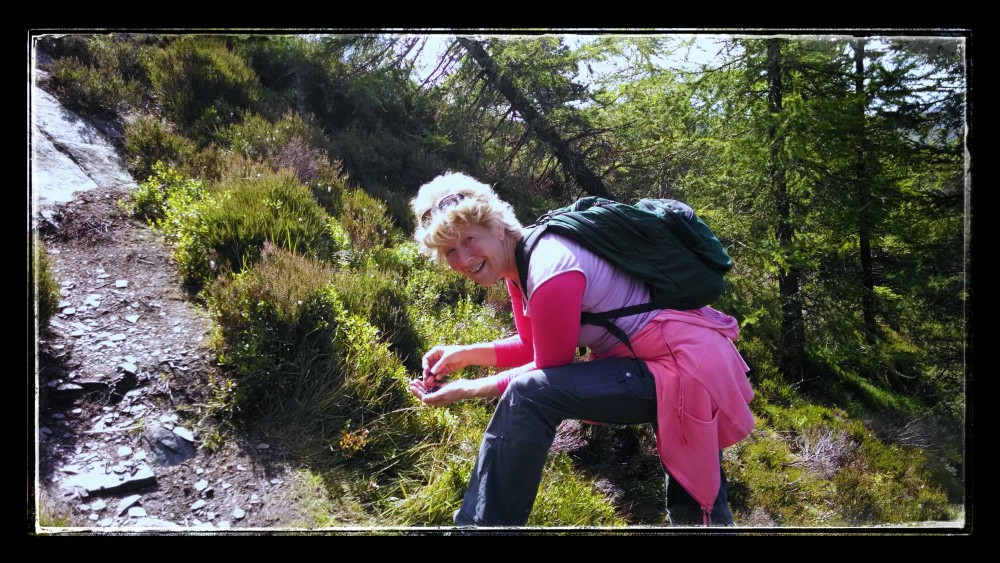
Just as we got to the top of Birnham Hill, I noticed some little dark berries on a low growing bush. And they looked interesting, and probably edible.  So I tried a few. A bit tart, but delicious too. So I had a few more. Offered them to Rosie who also liked them and thought that maybe they were like the wild blueberries she had had found and tasted on her Romanian trek last year. But I thought I had probably better not eat too many. Just in case it wasn’t an edible proposition. But then a man and his son went by on their mountain bikes and he confirmed that they were blueberries indeed. So then we had a feast. Blue stained fingers and lips. Best tasting blueberries I’ve ever eaten. (And yes, crazy people go mountain bike riding up very steep hills, although sometimes they have to carry their bikes some of the way!)


More blueberries!

More blueberries!

Doing downhill was very steep too. “Interesting” on the knees!

We spent a bit of time in a little “Beatrix Potter” cafe and exhibition in the village where we rewarded ourselves with a hot chocolate drink, after such a strenuous climb.

We had planned to eat our picnic lunch down by the beautiful Tay River. But a big stormcloud came over and it bucketed with rain. So we had to eat it in the car.

We were fairly close to Edinborough, but once again, we went a much longer scenic route. Motorways are very boring to drive on. So we detoured on country roads, driving through St Andrews which apparently has the most famous golf course in the world. It’s a very pretty university town. Lots of grey stone old buildings. We were trying to find the beach there because we’d been told that they also have a wonderful beach there. But we couldn’t find it. And anyway, we haadn’t seen anything in the remotest way anywhere in Scotland that could be called a wonderful beach.  They might have them. I just didn’t see any.

We were also getting tired too, so we kept on turning our heads towards Edinburgh Rosie navigated us all the way back. Only twice did we need to do a little “adjusting” in our navigated trip back. Filled up the car with diesel. And don’t tell my family, but we bought – and ate – prepared micro-wave meals for our tea that night. John who is away at the moment, is renovating his kitchen, and the microwave is the only appliance working. And it even tasted half-good enough!


Highland Fling

Saturday. Our last day in the “proper” Highlands! Packed up and left Tain mid-morning and headed back south. We took back roads. They are far more sceneic and interesting than the motorways. Drove past Inverness and on narrow country roads through the Caringorms National Park and the famous Grampian Mountains.

Spectacular mountains. Some of them had huge basins of snow near their summits. Their bald, round domes rose high in the sky and swooped down low into deep valleys or glens. Rolling on and on. Their patchwork colours of green, brown and bronze everchanging as sunlight and the shadows of the clouds chased each other over the landscape. I’ve never seen any other landscape like it anywhere else that I’ve been. (Not that I’m a widely travelled person!) Sometimes we would have to stop to let the sheep grazing by the side of the road wander across.  Drove past a couple of snow ski lifts that obviously would get a lot of use in the winter time.  There’s hardly any traffic.

Snow on the far mountains, heather in foreground!

Snow on the far mountains, heather in foreground!

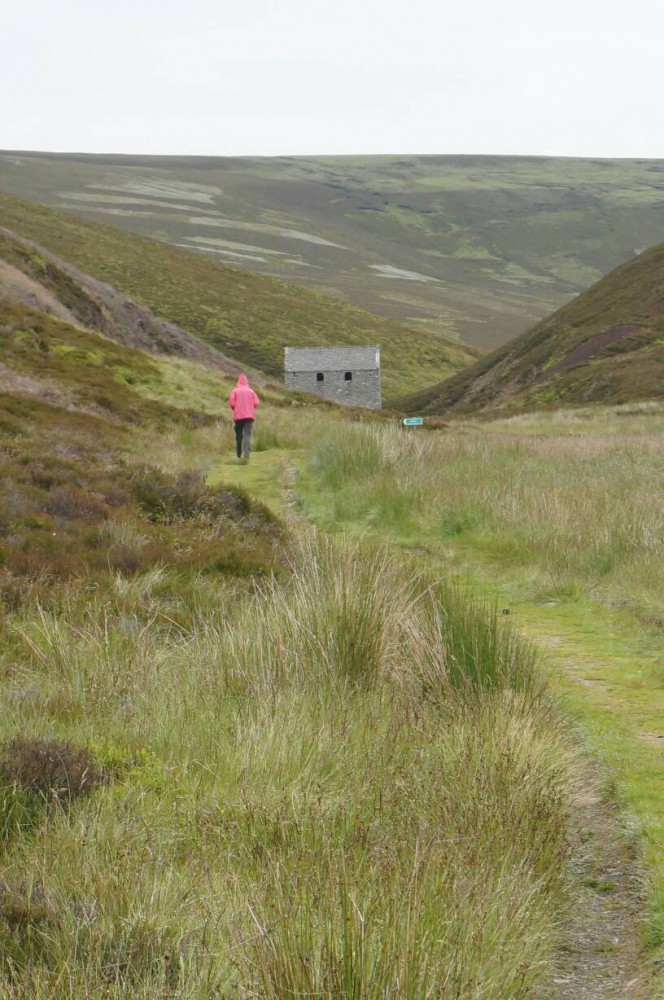
Screeched to a stop and pulled over when we spied an interesting old, grey, stone building away along in the glen floor, between the mountains. We walked along a sheep’s track beside a burbling burn (stream) to explore it further. It was the remains of an old manganese mine from the 1800s.

wpid-wp-1404680368790.jpeg

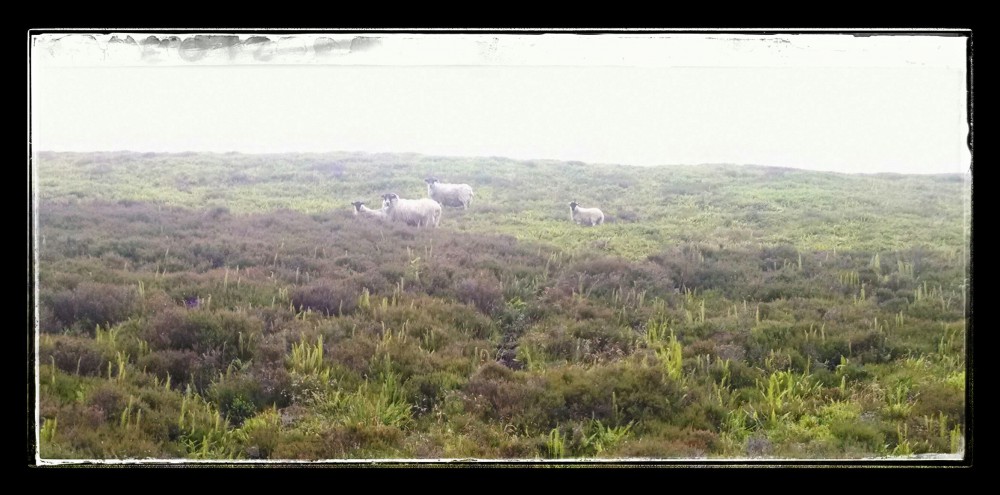
Before that, iron had been mined in these mountains in the 1700s. Now the building is a summer house for sheep. They skedaddled protesingly out of the building as we walked up to it. (Sheep here, by the way, look just like Shaun the Sheep!)

Shaun the sheep and friends

Shaun the sheep and friends

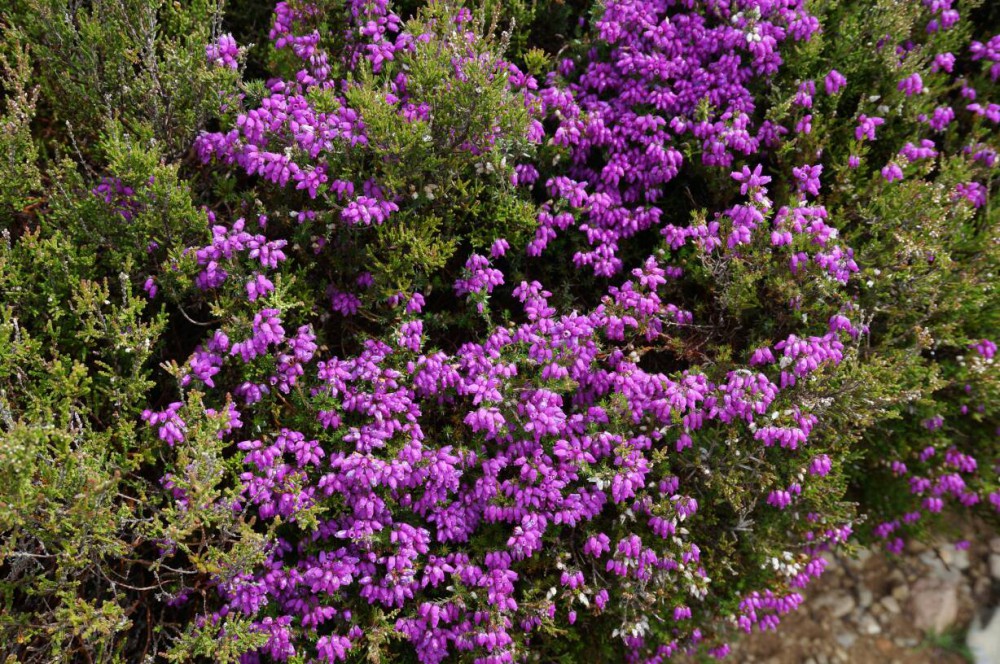
In the 1700s, this glen was also one of the smuggling routes for the illicit whisky trade that was rife. But now it’s such a peaceful, quiet, remote place with nothing to disturb it but the sounds of sheep bleating and the burn endlessly running along. The purple heather is starting to bloom, and in a couple of weeks, the hills will be purple covered.


Heather!

Heather!

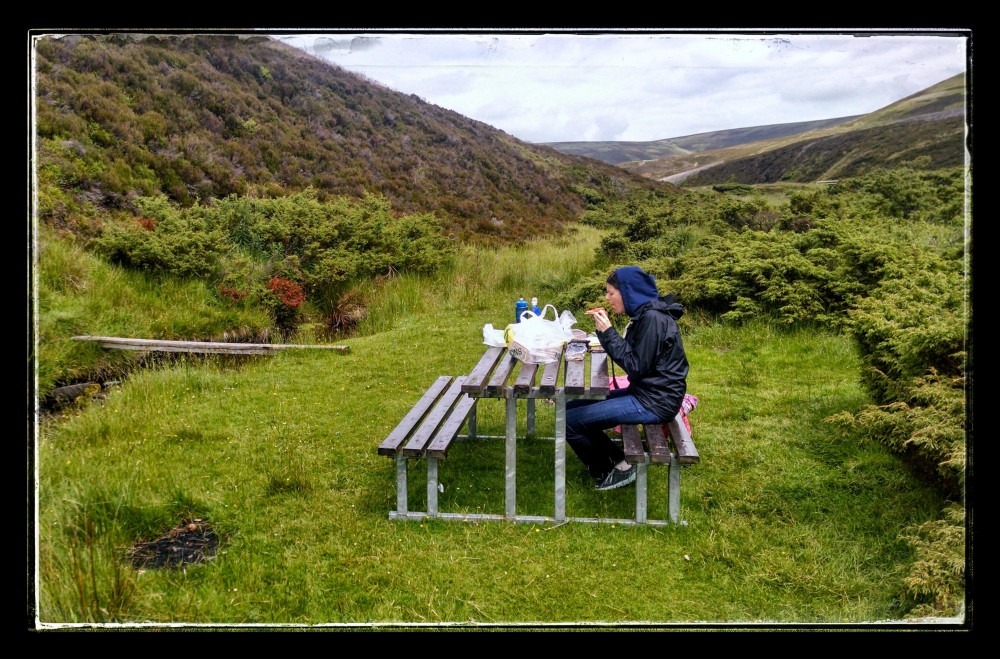
We found a picnic table there and ate our picnic lunch. A perfect picnic. No flies or ants. Just tranquility!

wpid-wp-1404676164853.jpeg

As we drove into Perthshire, the country changed and become more sedate and calm. Rolling green hills covered with trees, interspersed with green fields of wheat or potatoes. GPS sent us up the garden path to the wrong house again. I have to say that I am quite sure it was GPS’s fault again! But fortunately no one was home. And it didn’t look “right”, so we got back in the car and looked further. And round the corner we found it.

wpid-img_20140707_044304.jpg

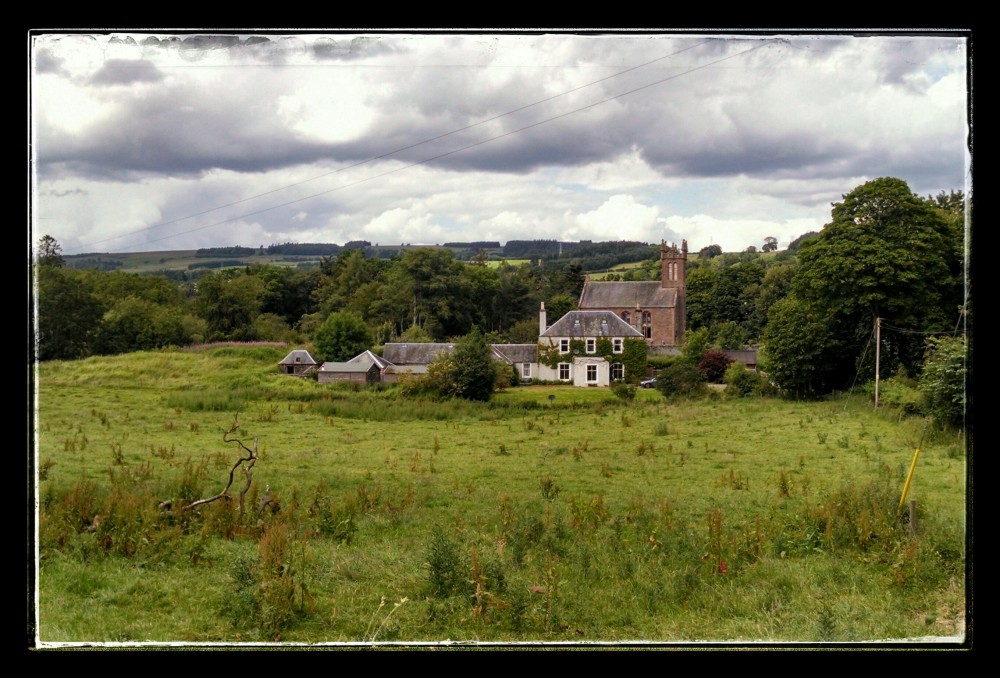
In the middle of fields, no other houses around it. An old Georgian house next to a huge old grey stone church building surrounded by graves. The house is called The Old Manse. Alex and Esther and their two children are German, but living in Scotland for nearly 20 years. So welcoming and showed us to our double room, looking out onto the church.

We needed to stretch our legs after several hours in the car, so walked outside and on the other side of the church was a path leading down to the Loch of Cluny. Three teenagers there fishing but hadn’t caught anything. Small yellow waterlilies on the loch. And out in the middle a very tiny island, and (apparently) behind all the trees on the island, the ruins of a tiny, tiny house or castle. We tried to walk round the Loch, but the shoulder-high nettles defeated us.  Nettles really sting! So ended up just walking along the country roads nearby.

River Tay on a summer's evening

River Tay on a summer’s evening

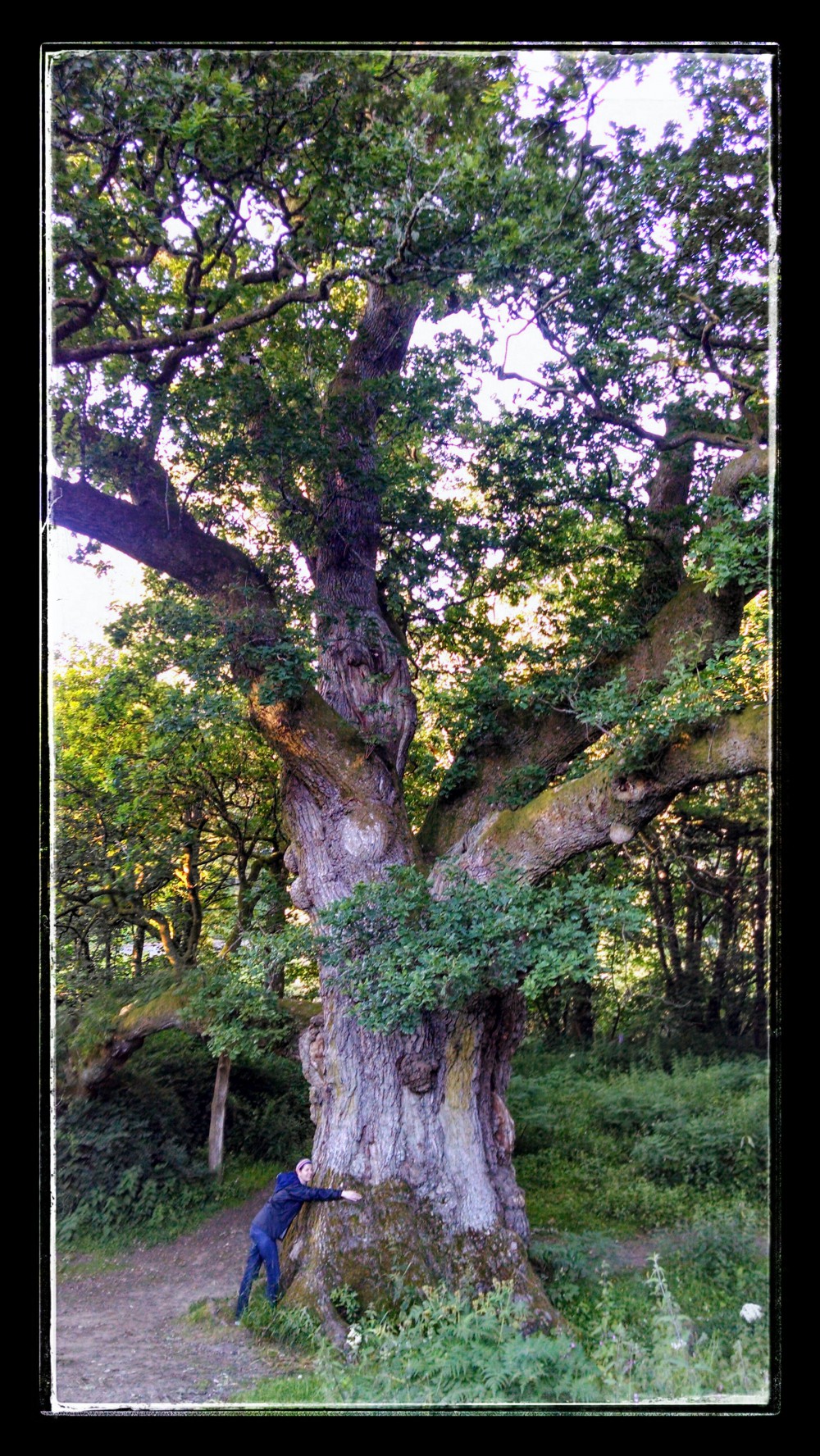
We drove over narrow, winding country roads to the nearby village of Dunkeld and Birnam and had a nice pub tea at the Birnam Inn there. The sun was shining brightly, so we walked down  and along the banks of the River Tay. The sunshine sparkled on the water running over the rocks. Huge old trees all along the River. Perthshire is famous for its big trees. And Birnam Wood is also famous because it is a key element in the plot of Shakespeare’s Macbeth. In the witch’s prophecy. Here is Rosie tree-hugging a very old oak. possibly from the time of Shakespeare.

wpid-img_20140707_043543.jpg