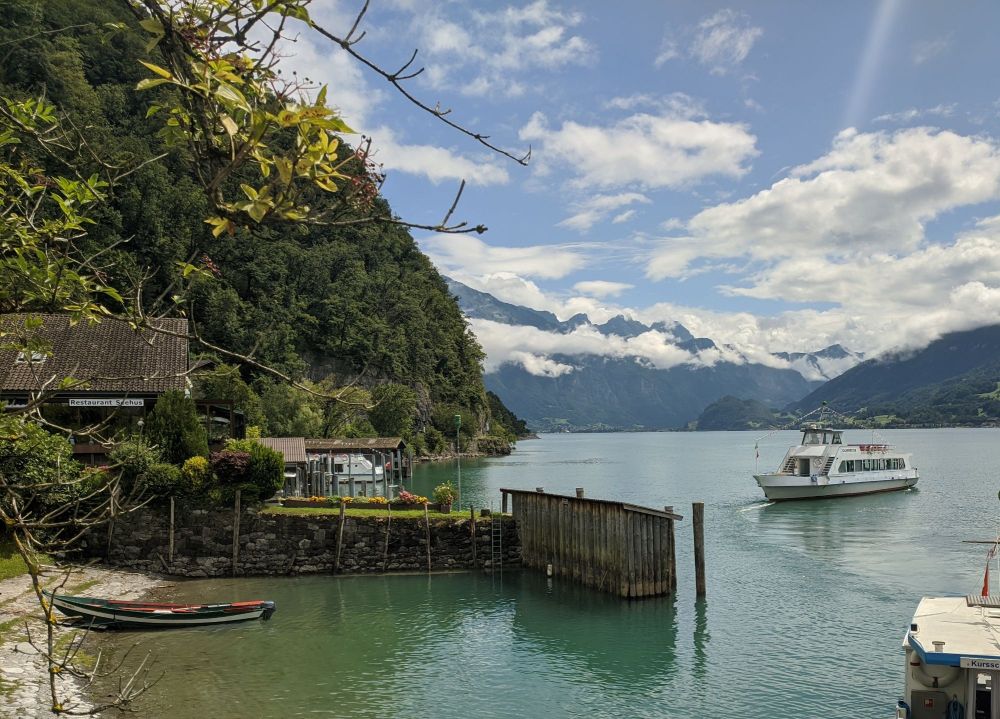
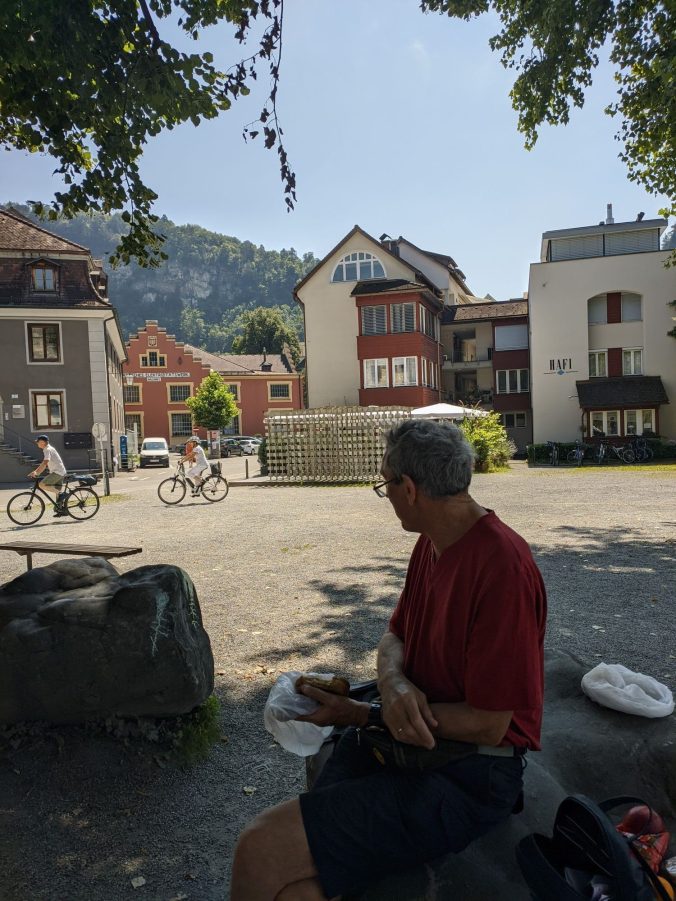
And … finally!

Philip and I arrived home in Perth on Saturday afternoon, and I had grand visions of doing one final blog holiday post. But the best laid plans … ! We both picked up a “holiday cold/flu” bug at the very end, Philip one day ahead of me. So that’s why this is written long after the last one.

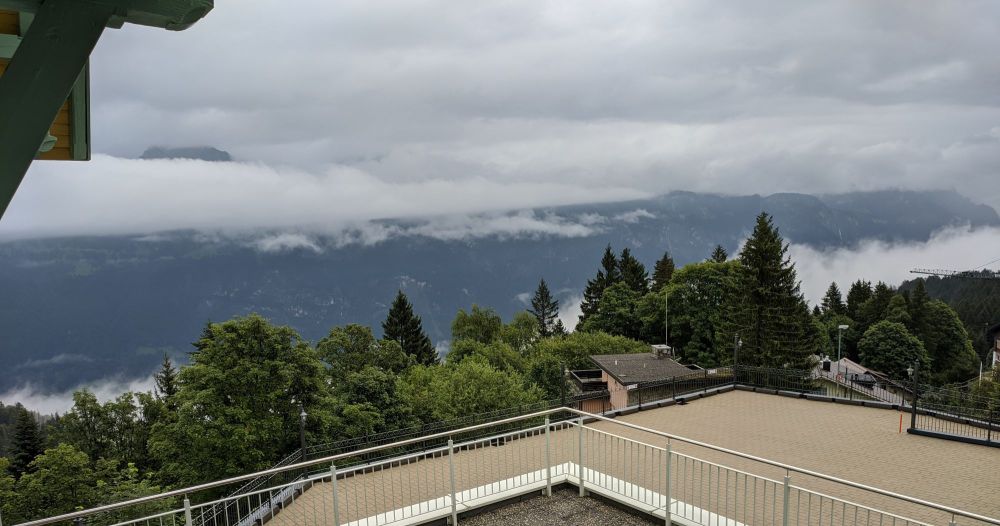
On our last Swiss day last Wednesday , everyone got up a bit earlier and after a quick breakfast, we all helped in cleaning and tidying the chalet. With everyone helping it was soon finished. Then off our Oak Hall coach, driving down the mountain for the last time. But instead of sunshine and blue skies, it was thick cloud, mist and drizzly rain blotting out anything more than a few metres in front of the bus. The fog, cloud and wispy mist swirled all around us.

Back along the roads on the valley floor, we could again see for miles around us. But the clouds hung low and covered the mountain tops above. Now the clouds were above us, not around and below us. We drove three hours to Basle on the north-western borders of Switzerland where we had a couple of hours to wait for our flight to London.

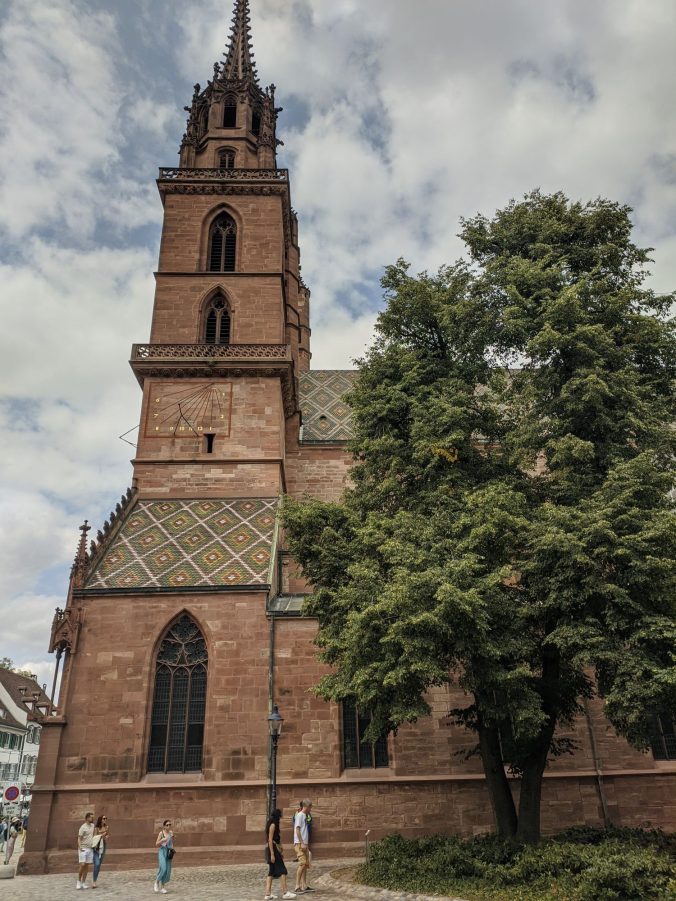
For some reason, in Switzerland our internet access only worked inside the chalet when we logged in. Everywhere else was blocked. It was back to using old-fashioned paper maps as we decided what looked interesting and easy to do in Basel. Preferably with green spaces. It was good for our brain! We navigated and walked to where the fast-flowing River Rhine flows through Basel and nearby was the huge old Basel Munster – like a Cathedral.

We ate our packed picnic lunches in the grounds of the Munster, looking down and over the Rhine.

We wandered through the Munster a beautiful, old, red sandstone building.
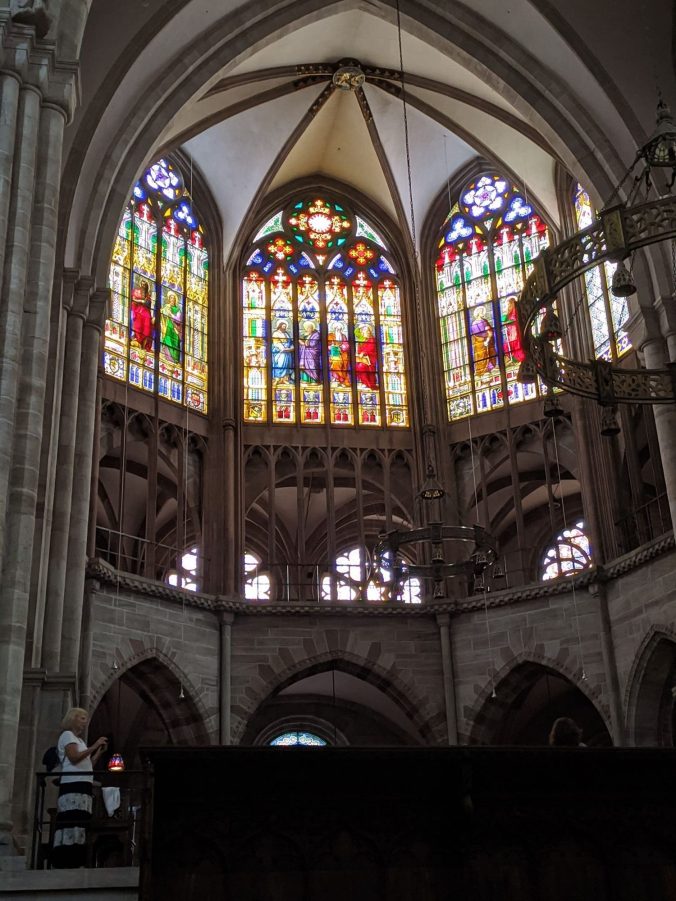
We descended to the Munster’s crypt.
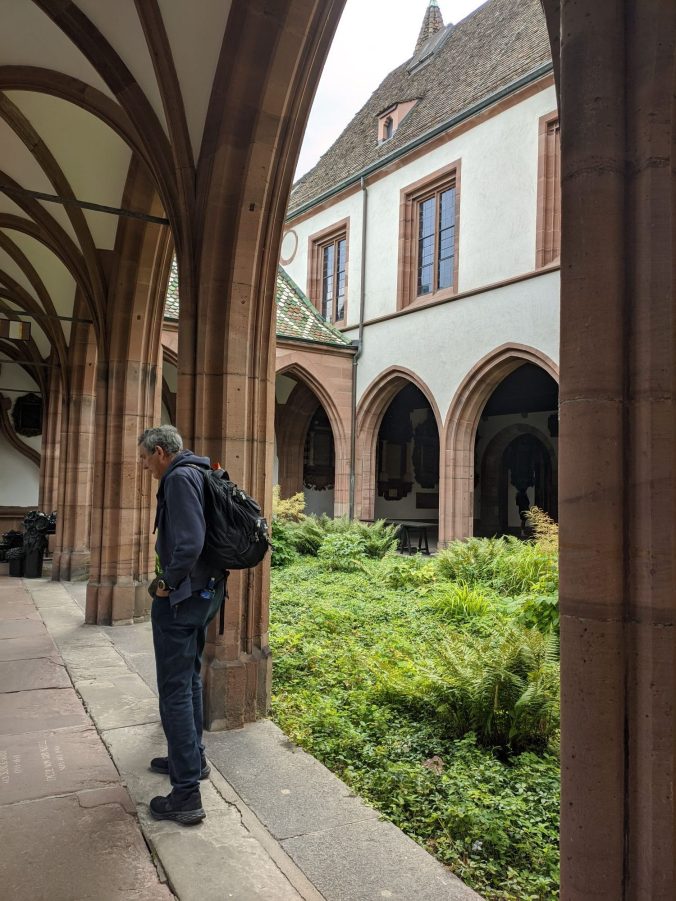
Looking through some windows down at the Rhine River

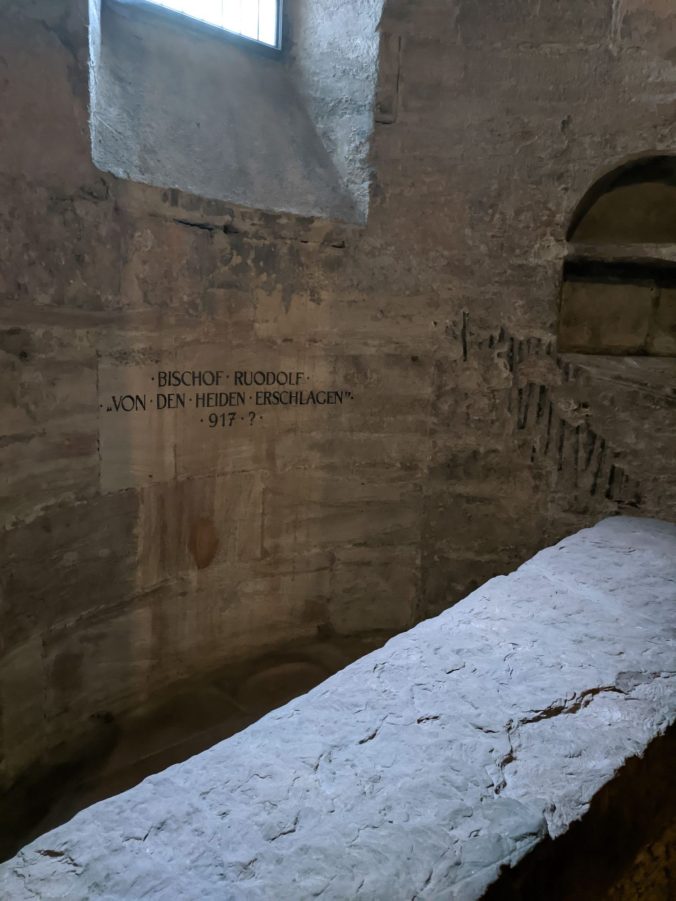
When they did some renovations (I can’t remember when) they found building foundations of the Church and burial remains going back to the early 800s of Christian leaders and bishops in the church. It was too dark to get decent photos of this space.
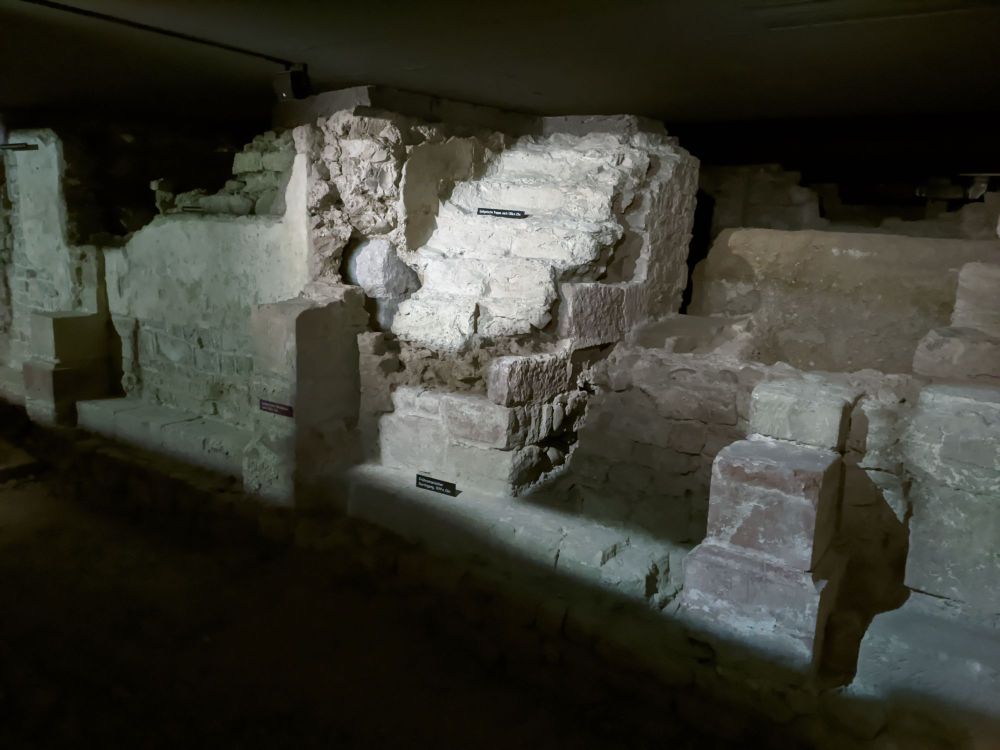
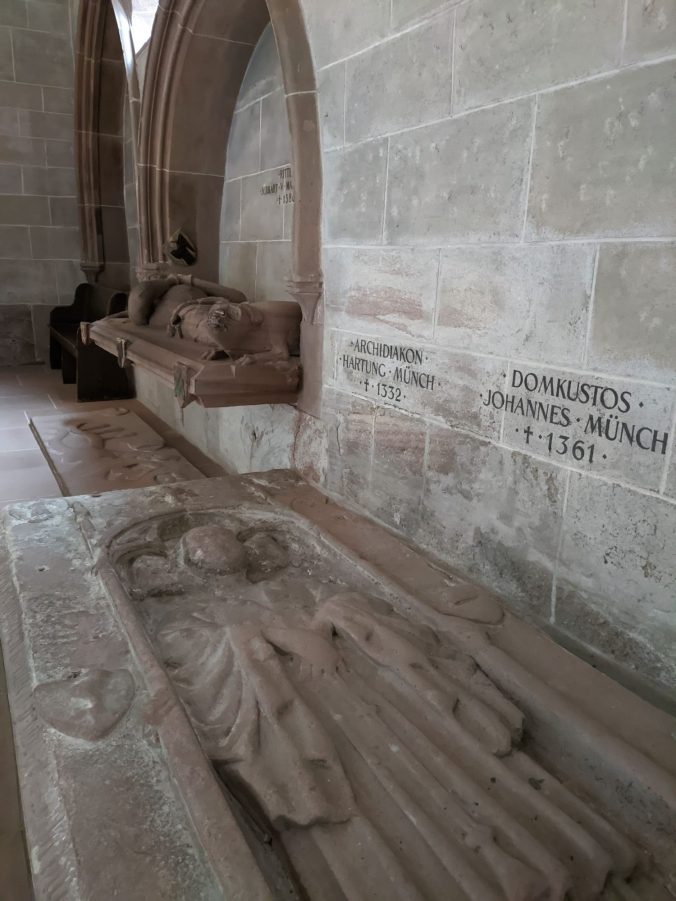
img_20240724_2000078037282842919863344

A fascinating place to wander round and decipher what was there, but we only had time to see a little bit of what’s on offer, as it was time to get a tram and a bus to Basel airport. And then the one-hour … one hour … flight to Heathrow London! I still have to get my head around how small the European space is.
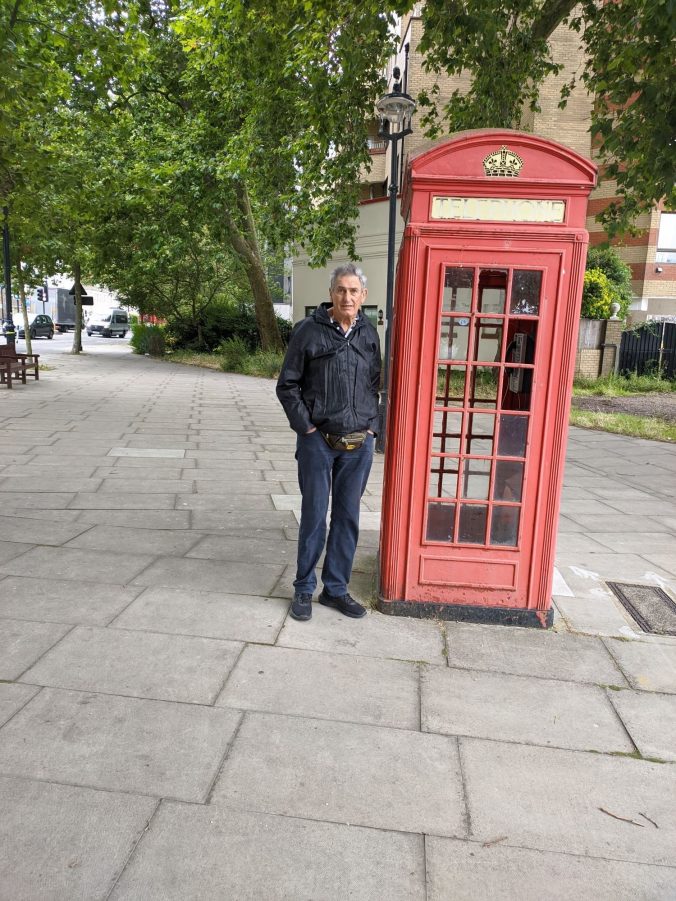
A quick flight to Heathrow, a train ride, a bus ride then a walk to our hotel in Pimlico (a London suburb). So glad we are able to travel lightly. Although I must admit that by now we still had enough clean clothes to change our underwear, but not our outer clothes. They’d seen a few days’ wear. But we didn’t smell and they didn’t look dirty, and if we don’t care, who else needs to? It made life easier for us, not trying to get our limited wardrobe laundry dry in time.
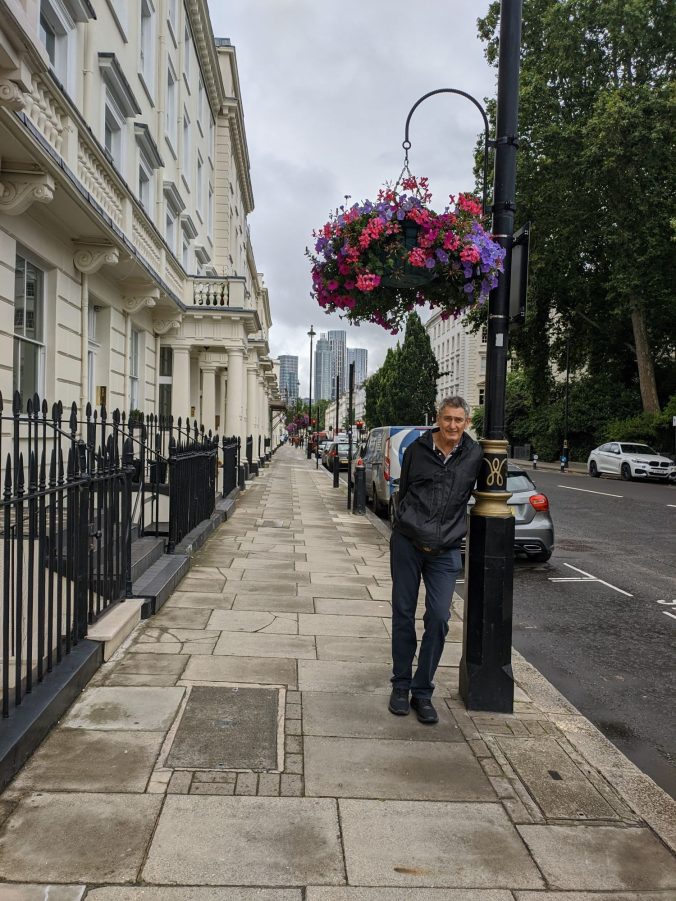
Pimlico has street after street full of grand-looking Georgian terraces. Our hotel room – which was on the cheap side – was on the third floor of a very grand Georgian building. Unless you looked closely and could see it needed a fresh coat of paint.

No lift inside – just 65 steps up and down to our room! Philip counted them. Another very good reason to be glad we can travel lightly. We didn’t need to drag lots of luggage up and down the narrow, steep steps. But once upon a time – back in the “olden days”, the staff for these grand homes would have been up and down them multiple times a day. An adequate, small room for our needs. It had a working shower and toilet and the bed was comfortable. But a glass wardrobe had been smashed and duct-taped together and not all the lights worked. Fortunately they did come and remove the broken glass wardrobe door. It wasn’t replaced, but at least it was removed. They didn’t seem interested in replacing broken or missing light bulbs! We were very glad we could open the window as the room was small and stuffy. The TV didn’t work, so Philip couldn’t start watching any Olympics.
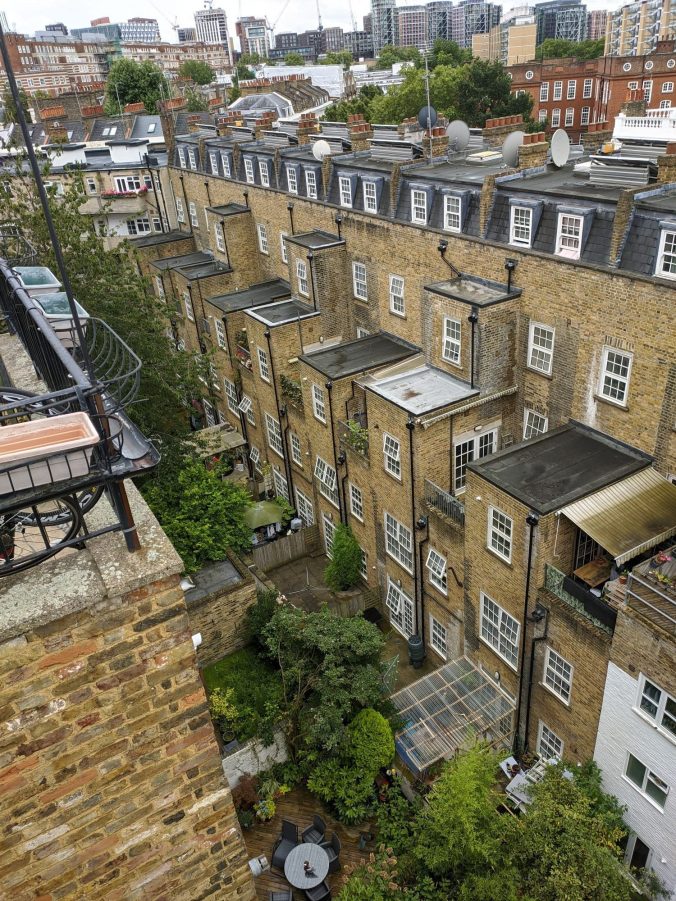
We thought maybe we’d do a quick hop-on-hop-off bus tour of the centre of London.But for some reason, it wasn’t running that day. We didn’t really mind as we were very tired. So we just walked around local streets for a bit, found a cafe to eat at, looked at the nearby Thames brown water river.

img_20240725_1654597314327597292613587

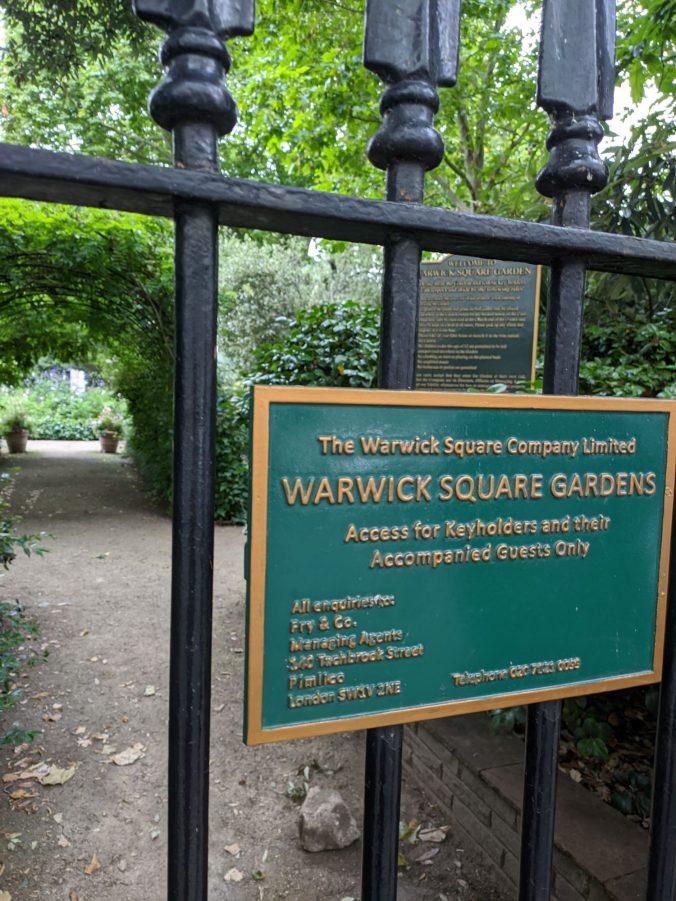
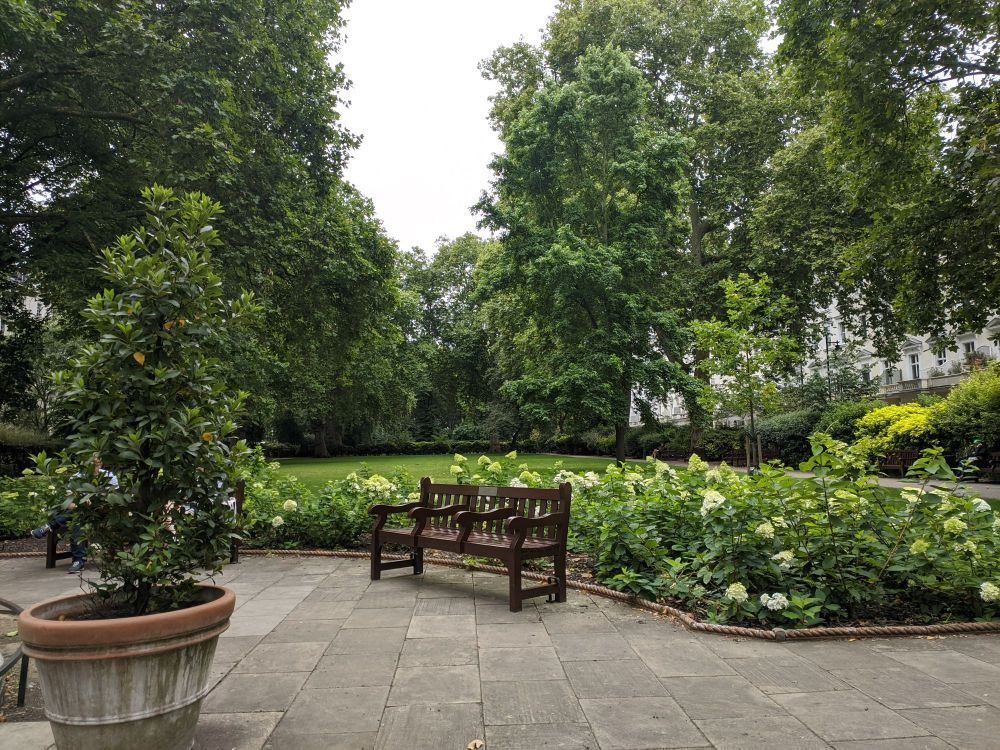
I remember in the movie “Notting Hill”, Julia Roberts and Hugh Grant climbed a wall to get into a private London garden. There were a few of these gardens near where we stayed. Lovely, smallish, square spaces full of greenery, shrubs, trees and flowers. But I hadn’t realised that sometimes it’s a “private” garden square and the gates are locked all the time and you only go in, if you have the “key” to it. Not every square garden was private, and we discovered a public one to go into, sit for a while and enjoy the green space.
img_20240725_1709355110869144123428489
img_20240726_1555297834412219347661151

I took this photo on the bus on the way to Heathrowit reminded me of Thomas the Tank Engine’s yards!

We were very glad we were able to travel back to Perth on the direct plane flight – Heathrow to Perth. Seventeen hours as opposed to about 30 hours. By this time, both of us were not feeling the best, so the quickest way home was the best way home!

Where Rosie met us in sunshine! Perth is also having lots of welcome rain showers between the sunshine. While we were away, she had had a wonderful holiday in the south island of New Zealand and has been back at work for a while. Lisa with Mikan and Cody had a fabulous time in California and Oregon for a family reunion. Alan came back from productive work trips to Kuala Lumpur and Vietnam. James stayed home and beavered away at his job, and if he got lonely he had Mikan and Cody’s guinea pigs for company! He said they weren’t good conversationalists!
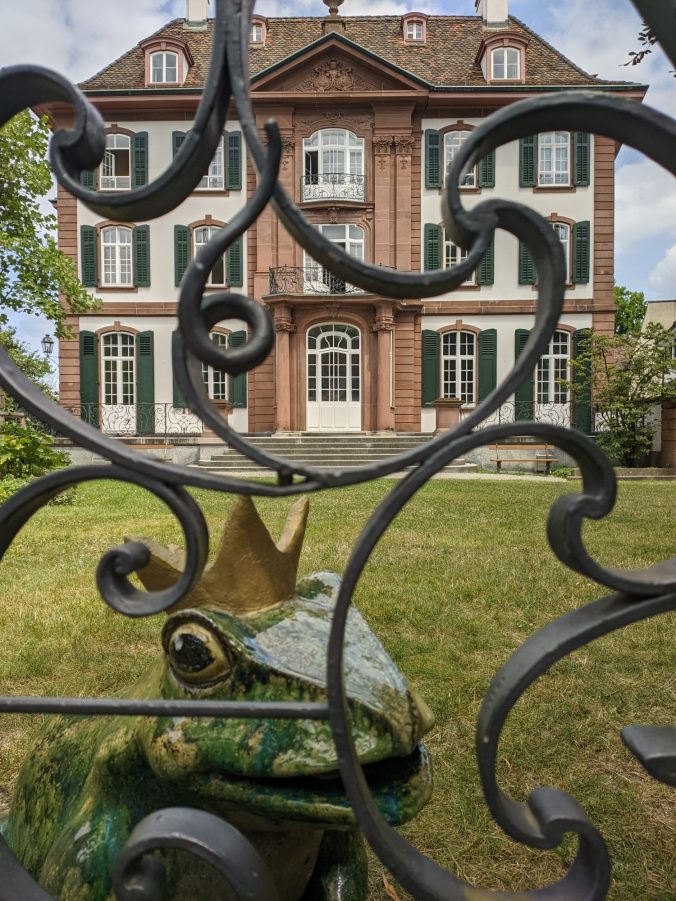
Here’s a last holiday photo. It’s from Basel. Maybe if you can kiss the frog, you get the castle with a prince or princess inside. We couldn’t test it out – the frog wasn’t close enough to reach through the gate!

It was a wonderful holiday, chock-a-block full of beautiful, different (to us), amazing, eye-popping places with warm, kind and helpful people to create a rich tapestry of heart-warming memories. What a wonderful experience and blessing.

We found Heidi!

Our last full day in Tannenboden in the Swiss Alps today!

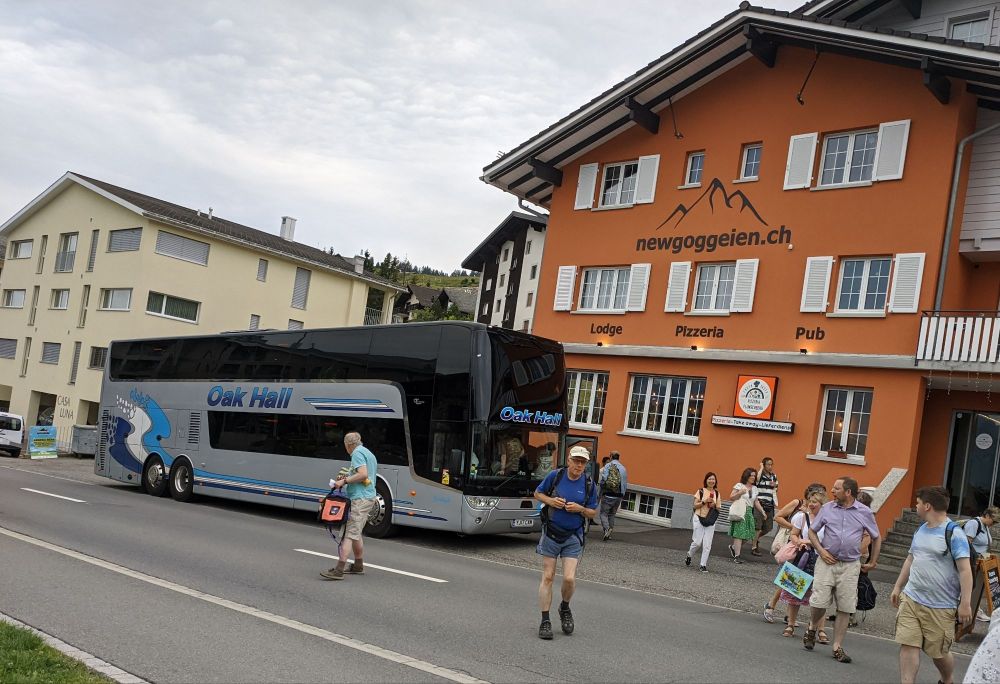
A few clouds draped around the tops of mountains as we trooped off in our Oak Hall coach, back down the mountain to the valley far below. We’ve noticed a big temperature change from the mountains to the valley floor.

Ritchie our driver, drove us to the little town of Bad Ragaz on the east side of Switzerland. (It doesn’t take long to get to different places.) Here, we had several options to fill our day. Bad Ragaz is renowned as a spa town because nearby (an hour’s walk) there are spring waters – 36.5 degrees warm thermal waters pumping out 8,000 litres a minute. Which interested me, but first I wanted to see Heidi Dorf a village, based on the children’s book Heidi by Johanna Spyri, set in the 1880s in this part of Switzerland. I’ve always loved this book.

Wooden carving of Johanna Spyri

Getting our train tickets from an automatic machine at the station was “interesting”! It’s good practice to navigate a system in another country and language without a clue of what you’re meant to be doing! Fortunately, one of the young men in the group knew German and helped us get our tickets out of the machine in time for the next train. The interesting part of that is that no-one then checked our tickets and there were no machines to endorse them.

We travelled by a fast smooth train to the little town of Maienfeld.

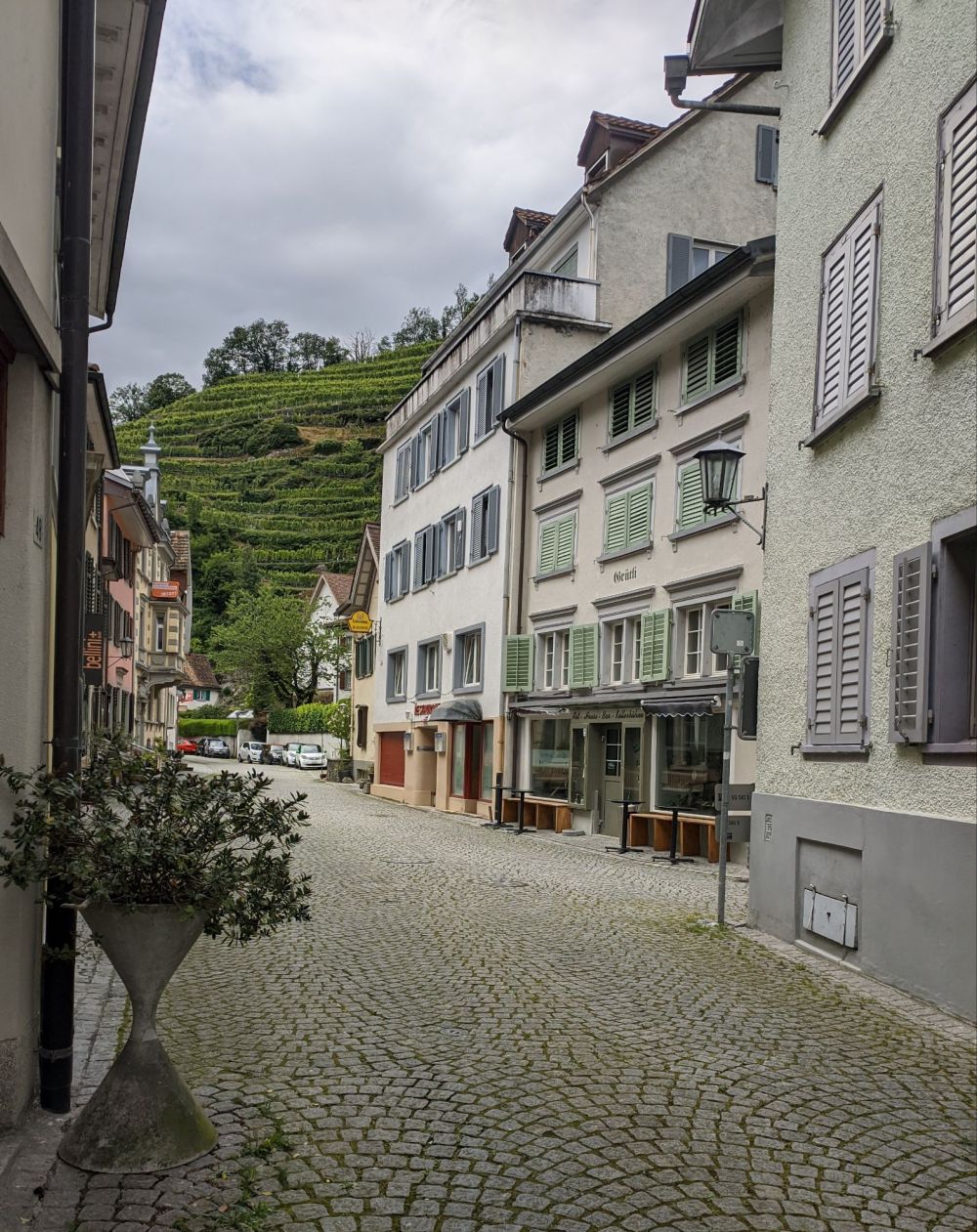
Full of fascinating old buildings, with ripening vineyards pocketed in wherever they could find space.

img_20240723_1656173619451275169449358

A steady uphill walk for an hour to Heidi Dorf. I still haven’t seen a gentle or easy hill walk in Switzerland!

img_20240723_1709105536869479159030717

I went with low expectations, thinking it would be “tourist tat”. Very hypocritical of me, when I’m the tourist looking for this tourist tat!

img_20240723_1714314871480802191314627

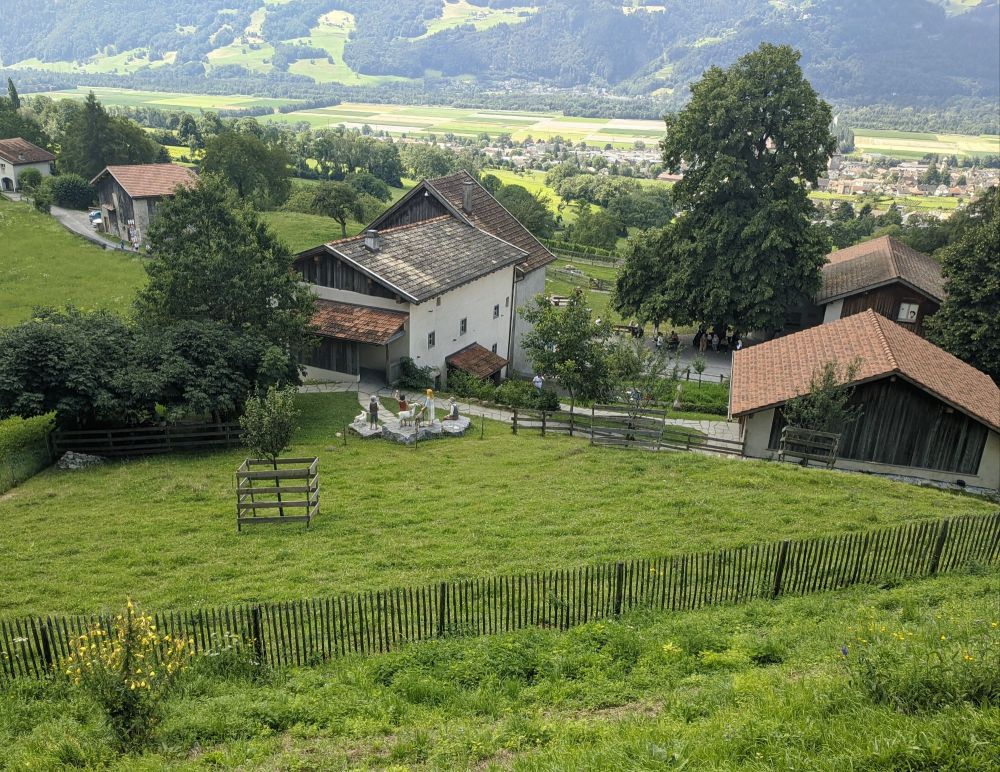
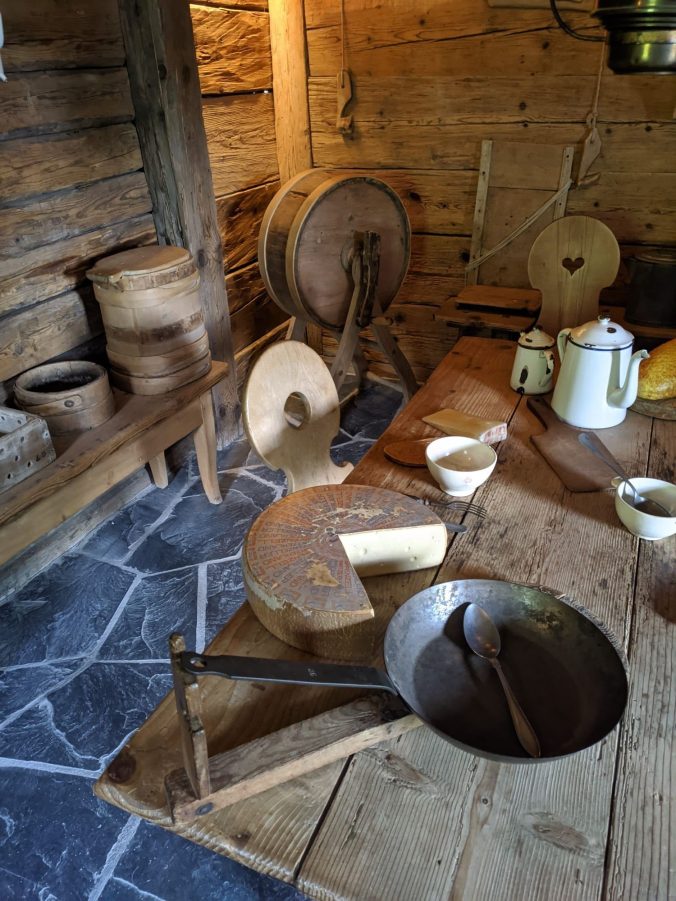
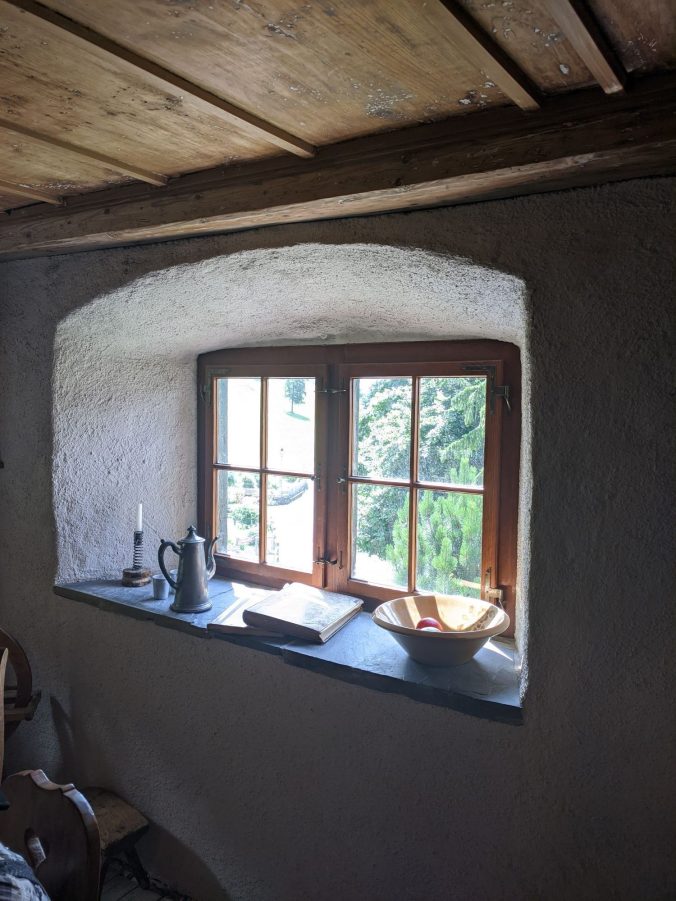
But it was like an historical museum. There were half a dozen houses set up to show what life was like in the 1800s in the Swiss Alps.

img_20240723_1834503898326108058686116

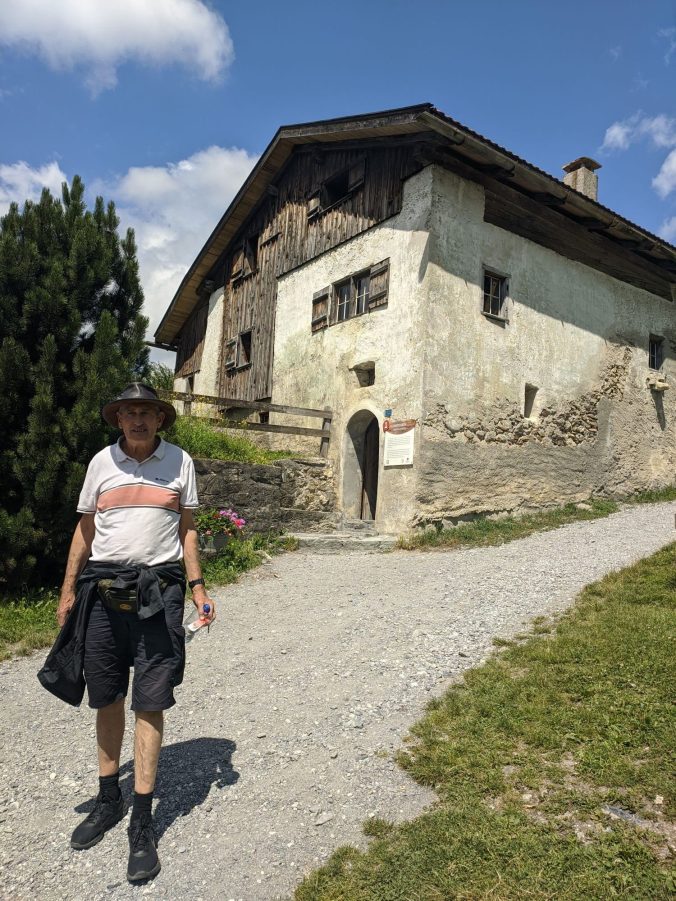
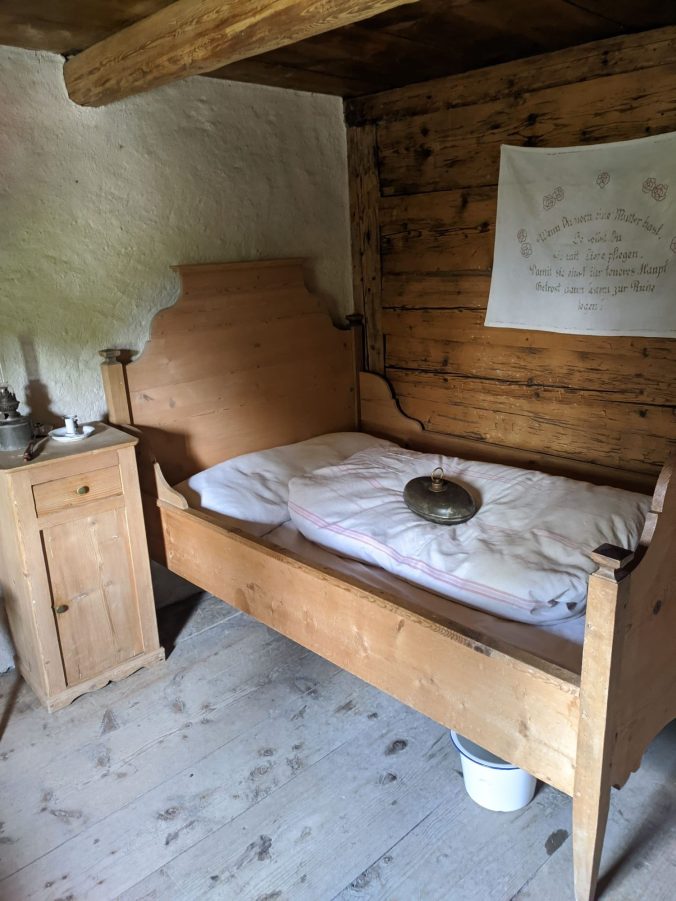
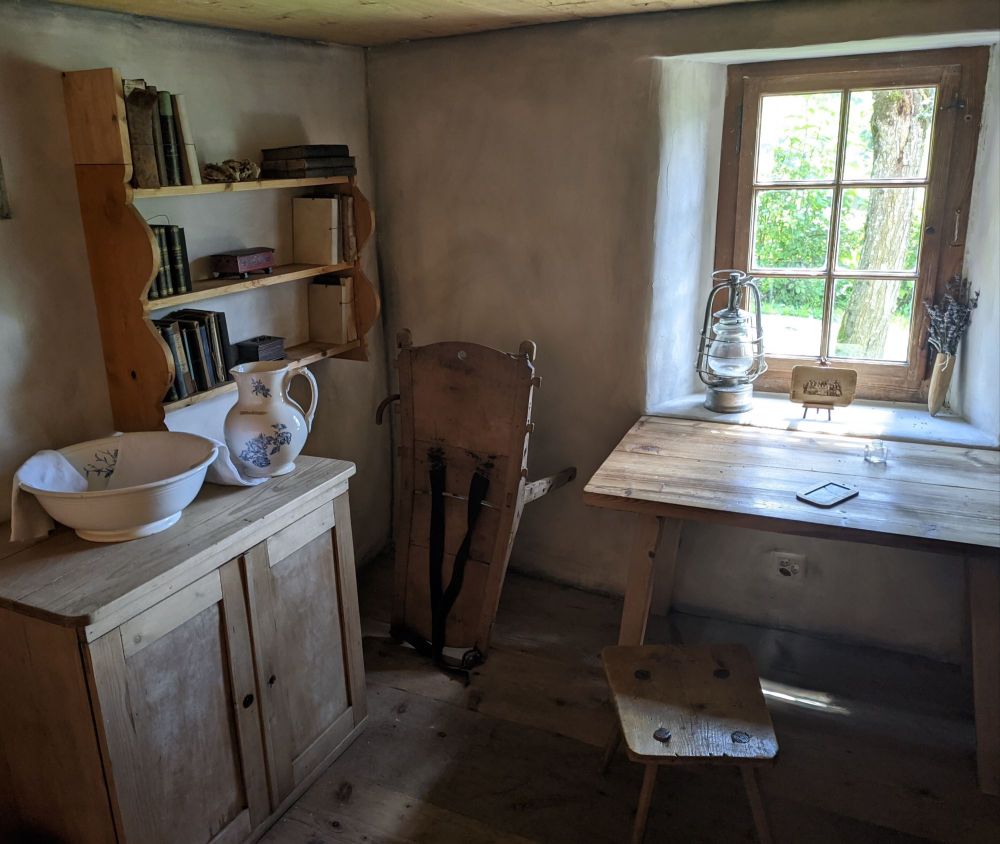
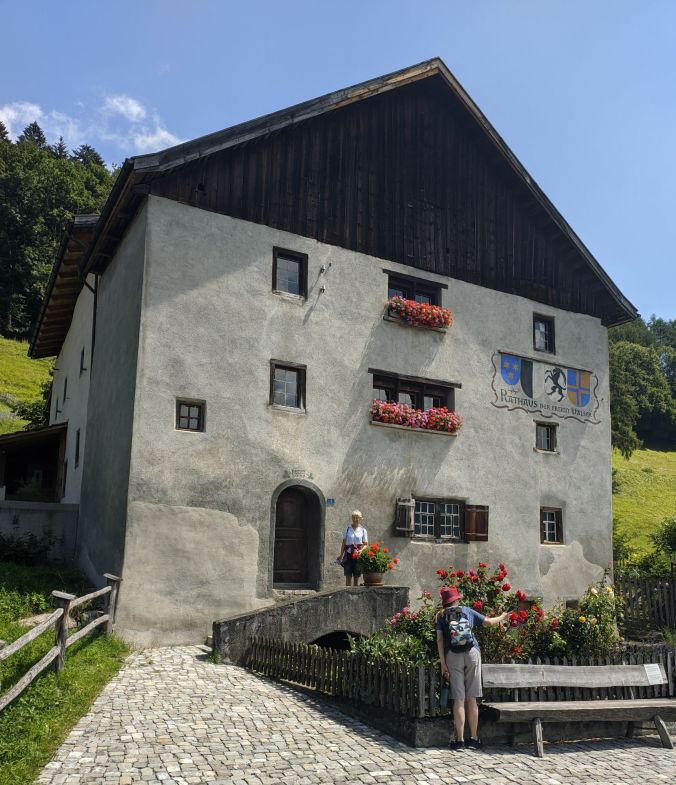
This house (below) is 300 years old and inside it’s furnished according to the 1800s period.

This would have been like the house that Heidi and her grandfather lived in the village in the winter season, when they brought their goats down from the mountain and Heidi went to school.

A snow sled

The kitchen

A bedroom, with a bed warmer on the bed, and a chamber pot under the bed

img_20240723_1848242806753540571815861

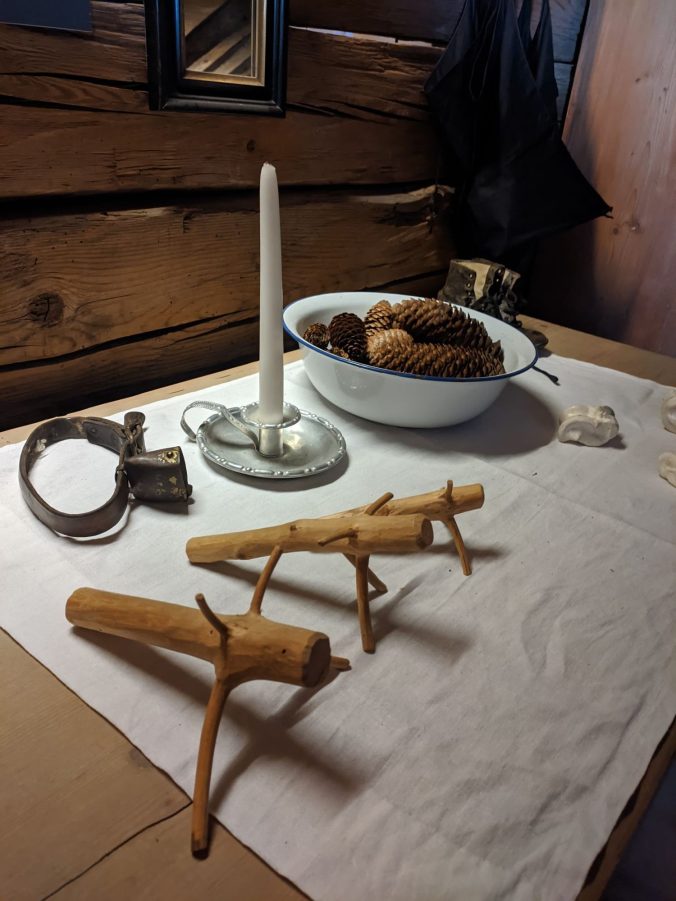
Toy cows carved for the children to play with

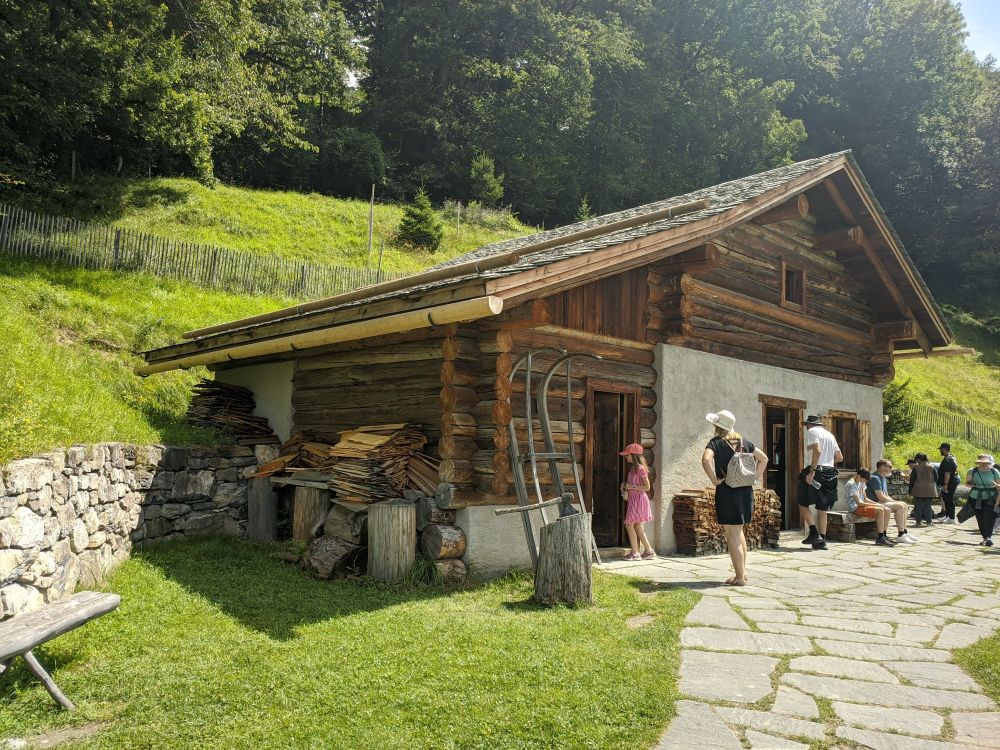
This house (below) is like the mountain or Alpine house they lived in during the summer season up in the mountains, looking after the goats in the meadows and fields. The goats lived in the right side of the house at night.

img_20240723_1832081689652854374396998

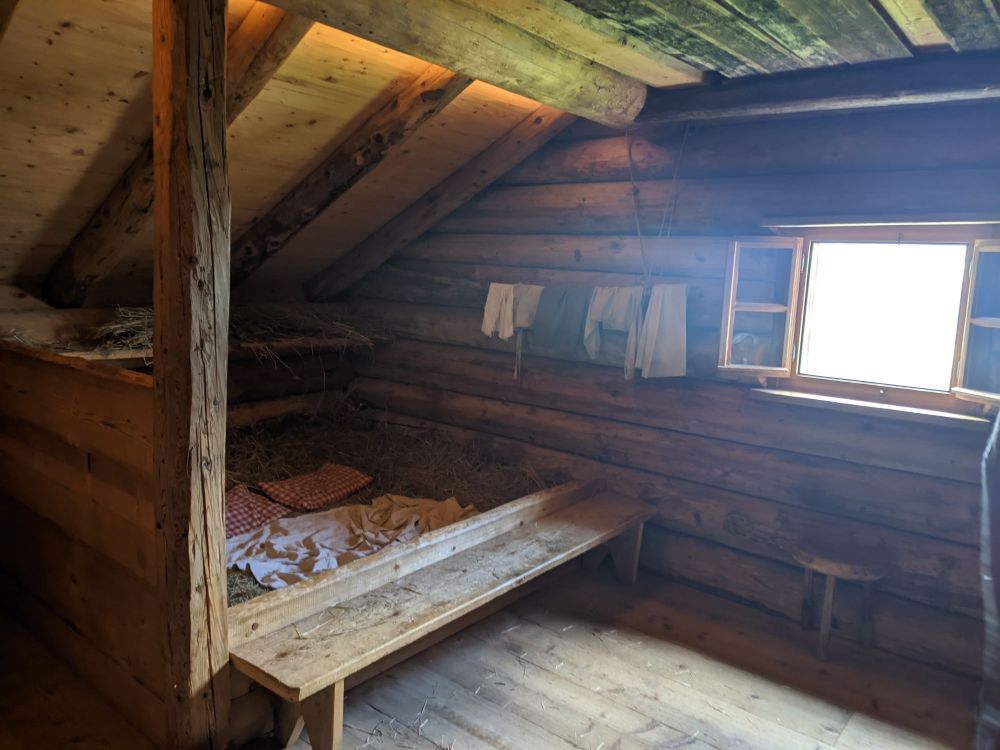
Sleeping quarters in the hay loft

img_20240723_1833454396785456098545965

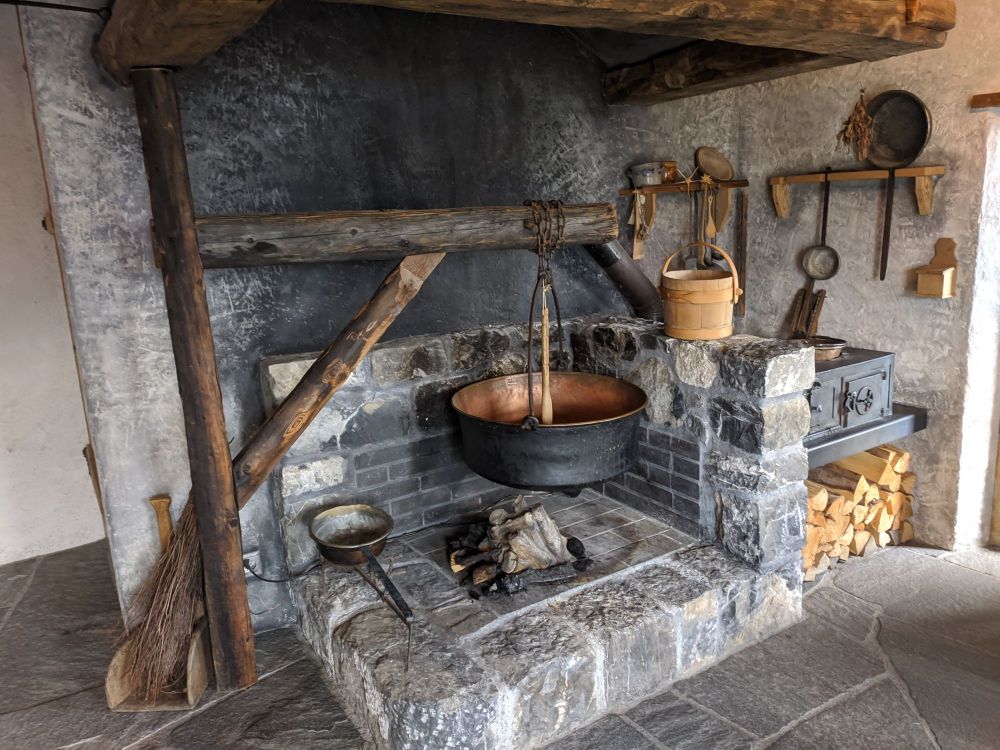
A big pot in the kitchen to curdle the milk to make cheeses from the goats’ milk

img_20240723_1836242848591047280671944
img_20240723_1838503930539179570046097

(Above) Carpenter’s tools for Grandfather they needed to be self-sufficient

A big building in the village, called the town hall, incorporated the school and the schoolmaster’s living quarters in the town hall. The village school is at the back of the building. I’m standing on the steps of the town hall.
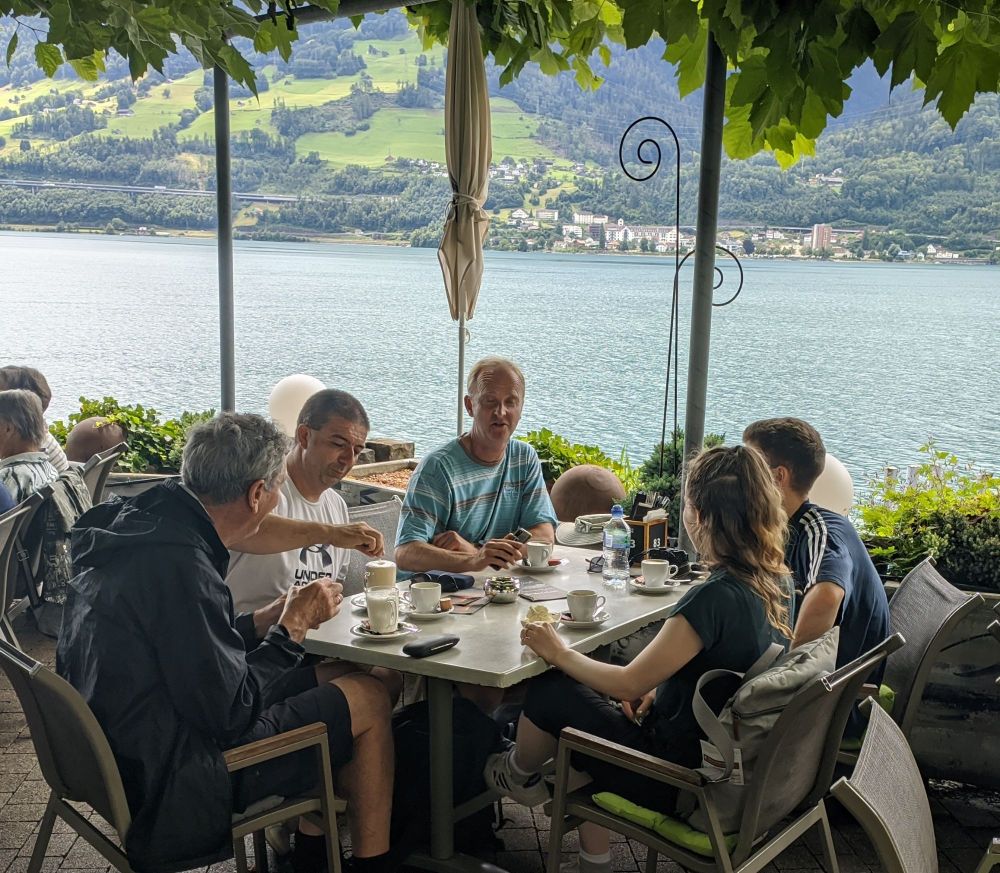
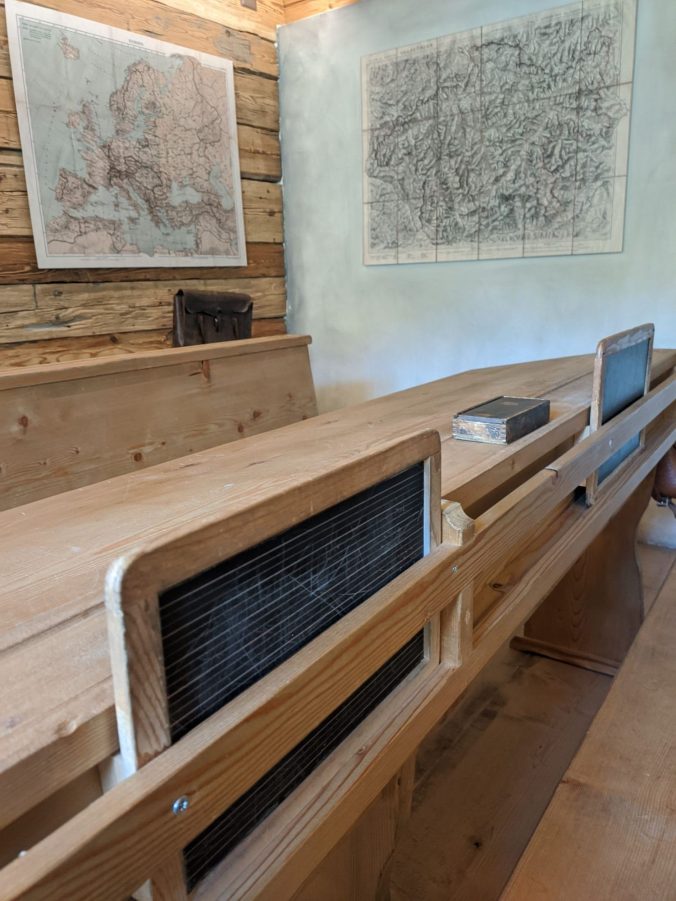
I couldn’t get a photo in the schoolroom – too many tourist children figuring out how to use slates. So, I photographed this picture on the wall, showing what the crowded village schools were like in this period.

img_20240723_1847067172766793725739294

I’m definitely a museum relic – when I went to school, we used slates in the younger grades!

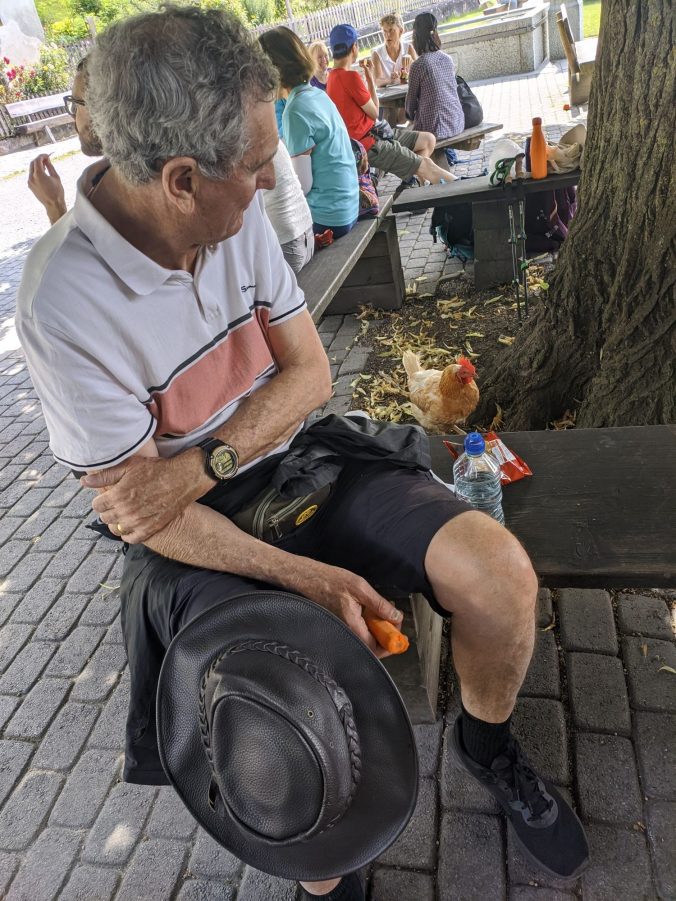
We ate our picnic lunch under a big oak tree with a chook for company.

I said Hello to the goats.

Storing the food in the barn.

img_20240723_1851556570266426922477670

It was fascinating and we spent longer than we’d originally planned – but very glad we did.

By the time we walked back and took the train from Maienfeld to Bad Ragaz, it was too late to walk to the thermal springs in time. Philip went looking in vain for a good hot chocolate cafe. I sat on a seat and people watched and cloud-watched on the high, nearby mountains till it was time to get back on the coach and head back up the mountain to our chalet at Tannenboden for our last dinner together and our evening meeting.

img_20240723_2054254051882619178695786

We’ve had a wonderful time, but we’re both feeling a bit travel weary. Tomorrow morning the coach takes us back to Basel where we have a few hours to explore the city before flying back to Heathrow London to get in late tomorrow night.

img_20240723_2238222469404665346010448

This Oak Hall trip of Switzerland has been enriching to us in so many ways. The incredible beauty, majesty and delight of the place, the scenery – the joy of the people we’ve been with – the richness and wide scope of the cultural, spiritual and fun experiences. A huge blessing!

And what a blessing to be glad to be going home again. A lot of people don’t have that either.

We are sailing …

After steadily raining all evening and night, we woke to a misty morning with thick clouds shape-shifting and swirling round the mountains. It’s just as fascinating to watch the clouds dance as it is to watch the sun and the shadows on the mountains when the sun is shining. The constant cloud swirling movement and dance in different layers. The tops of the mountains would be hidden behind thick dense grey clouds. Then a gap showing the green mountain layer – like showing your midriff! Then lower down, dense thick clouds sometimes moving in the opposite direction to the top layer of cloud. I found it fascinating watching the intricate cloud-dance.
img_20240722_1421373260770206708036517

A boat day today. We are going on a boat ride on the Lake. After breakfast, we all piled on to the big comfy Oak Hall bus travelling down the sharp switchback mountain road to the valley and then along to the little town of Unterterzen, at the end of Lake Walensee. This is the lake we can see glimpses of from our chalet up the mountain. This lake is nearly 25 square kilometres or nine and a half square miles.

img_20240722_1715455256019154106415149

There are little villages and stops dotted around the Lake, some of them inaccessible by car or foot. The only way in is by boat. We were given lots of options to hop on and off the boat during the day.

img_20240722_1816493447751848409548529

Or you could stay on the boat till it reached the other end of the Lake to the little town of Weesee and get off there for drinks or an explore. That’s what Philip did.

img_20240722_2106475176608441957884816

First stop was the little village of Au – pronounced “Ow”. I didn’t expect to see donkeys!

img_20240722_2225264000674871261154434

Next stop was Quinten.

img_20240722_1815098981151468879744919

I got off the boat there for an exploration of the town.

img_20240722_1820056968069577309997800

Philip got off for a hot chocolate drink at a cafe overlooking the lake. A big disappointment for Philip has been the Swiss hot chocolate drinks. They give you a mug of hot milk with a sachet of chocolate powder to add yourself and stir in. Very lacklustre, according to Philip – and others who’ve had it.

img_20240722_1831534799018327744486601

It is a tiny village on a steep rocky mountainside. Some of the steep cliffs rising vertically, straight up out of the lake go up as high as 1000 metres. Quinten is famous locally because of its almost Mediterranean climate. It’s well protected from the cold north winds, and they grow grapes, kiwi fruit, figs and bananas.

img_20240722_1825417399289807008961324

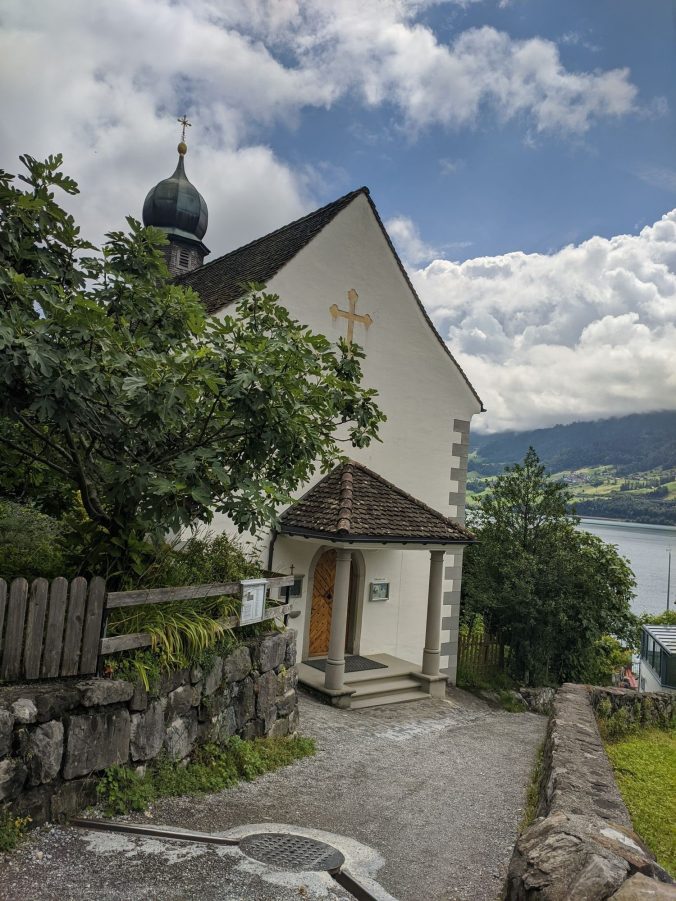
A little Catholic church that was open.

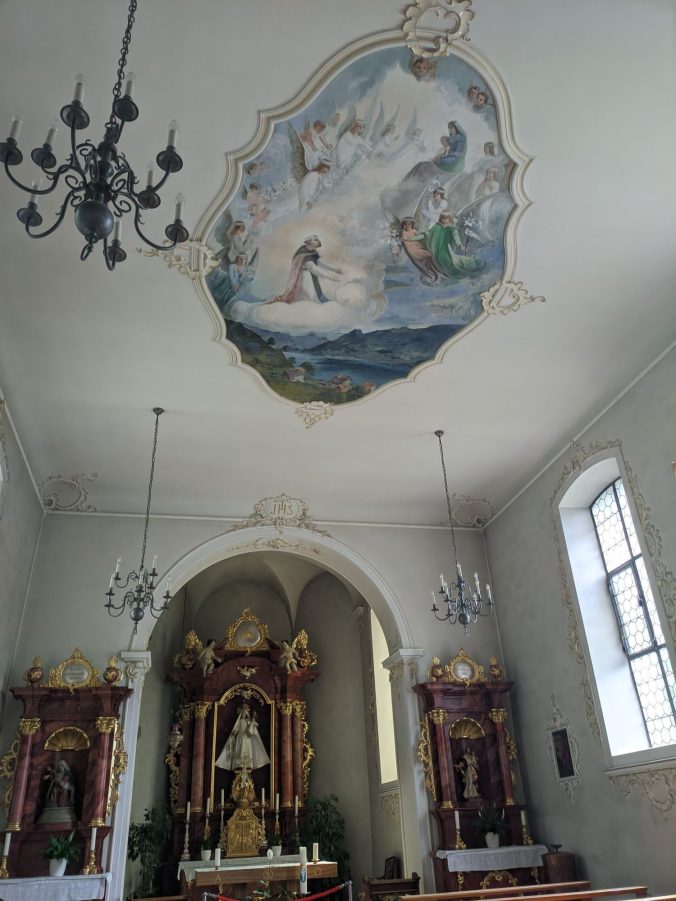
Inside the church – painting on the ceiling

And their Fire Station. It doesn’t look well used!

img_20240722_1823036702887984821792576

I appreciated the carvings of this house, its ripe pears in the garden and ruby bottles of wine or cordial sunning on the windowsill.

img_20240722_182625809528732948614542

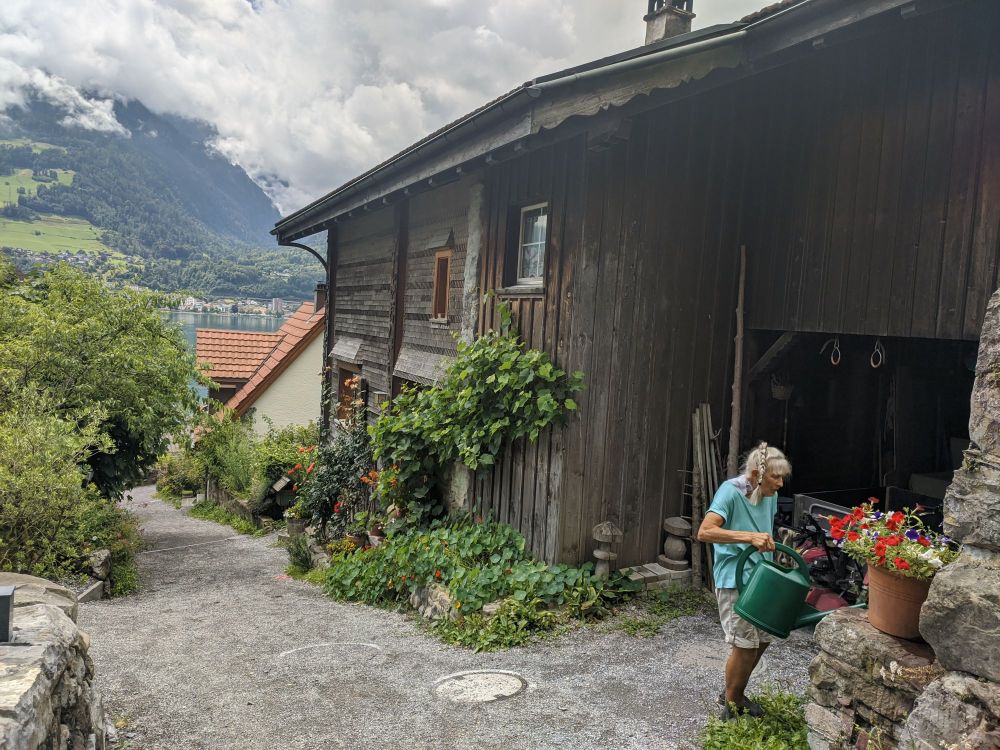
The lady watering her petunias.

img_20240722_1821147383805132215597951

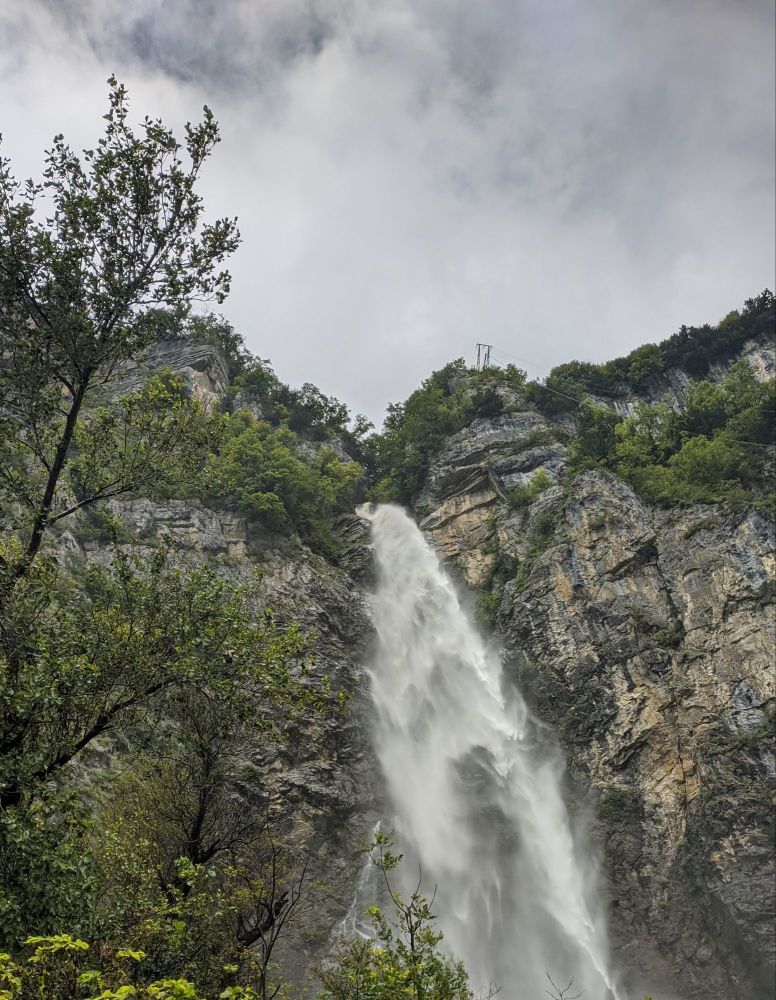
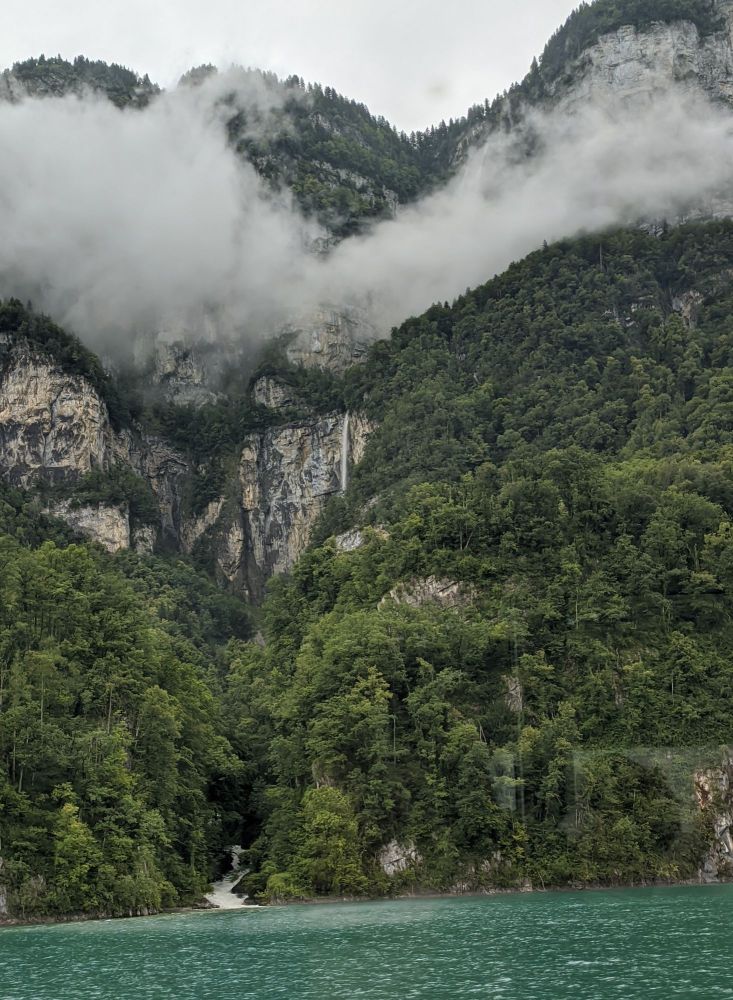
Back on the boat to the next stop at Betlis. On the way to Betlis we saw more and more narrow waterfalls cascading down the sheer mountain sides.

One of them is Switzerland’s highest waterfall (below). I can’t remember its name. You can see it in three parts between the bushes.

img_20240722_2200388557344791819940554

No houses at Betlis – just a boat stop, like a “bus stop”. I opted to get off here and walk for an hour alongside the lake to the last town at the end of the lake, Weesen. Philip stayed on the boat.

img_20240722_1940286278249076740269628

Ripe Swiss blackberries to fuel the walk! Yummy!

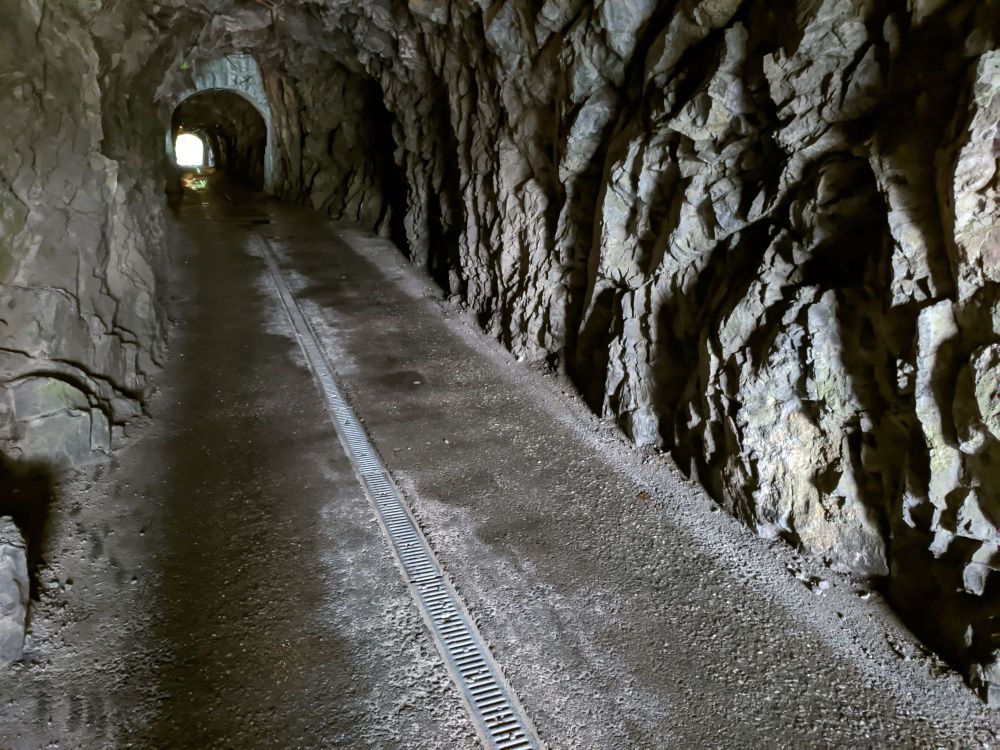
Some of the track had to be hewn from the vertical rock. More waterfalls!

img_20240722_1945362764346066751414843

How many waterfalls are enough? Instead of too many flower photos, there’s too many waterfall photos in this post.

img_20240722_1918513320414270659014610

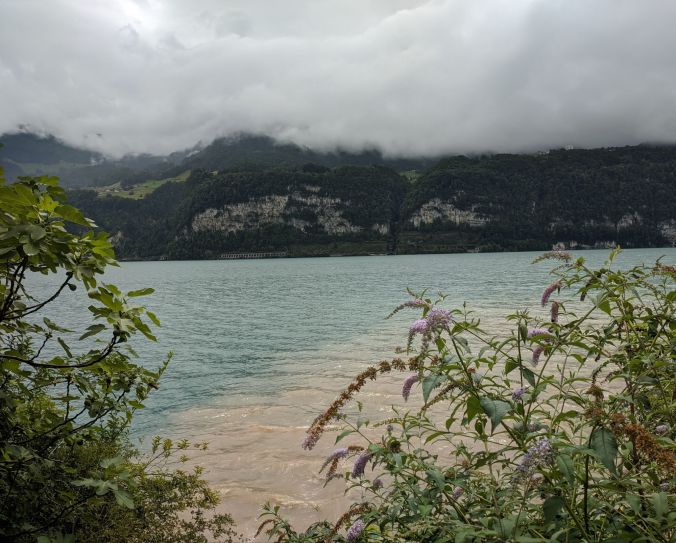
The brown coloured water is the outlet from the waterfall pouring down the mountain to the Lake.

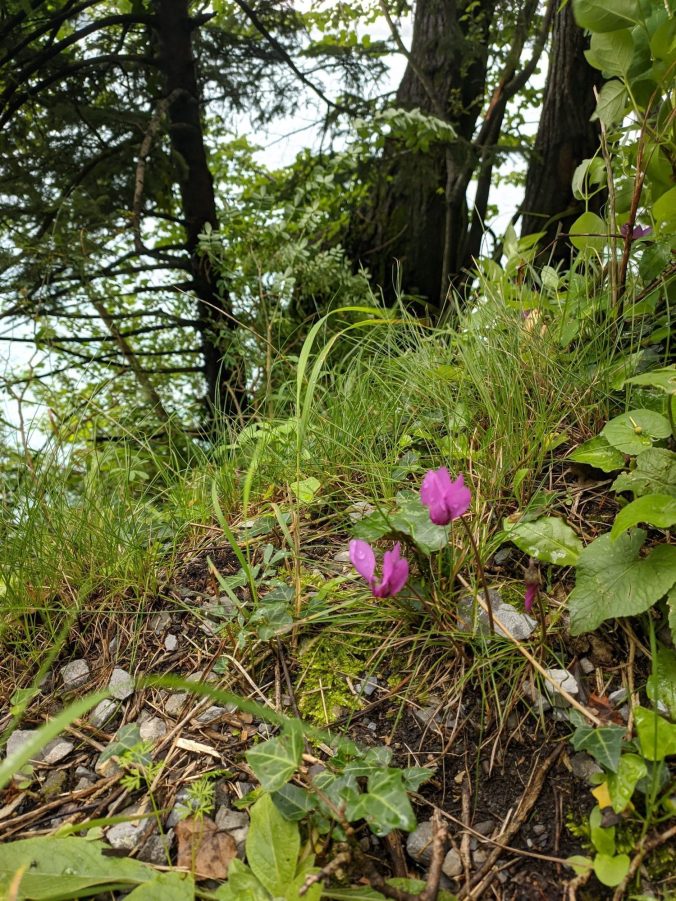
Wild cyclamens.

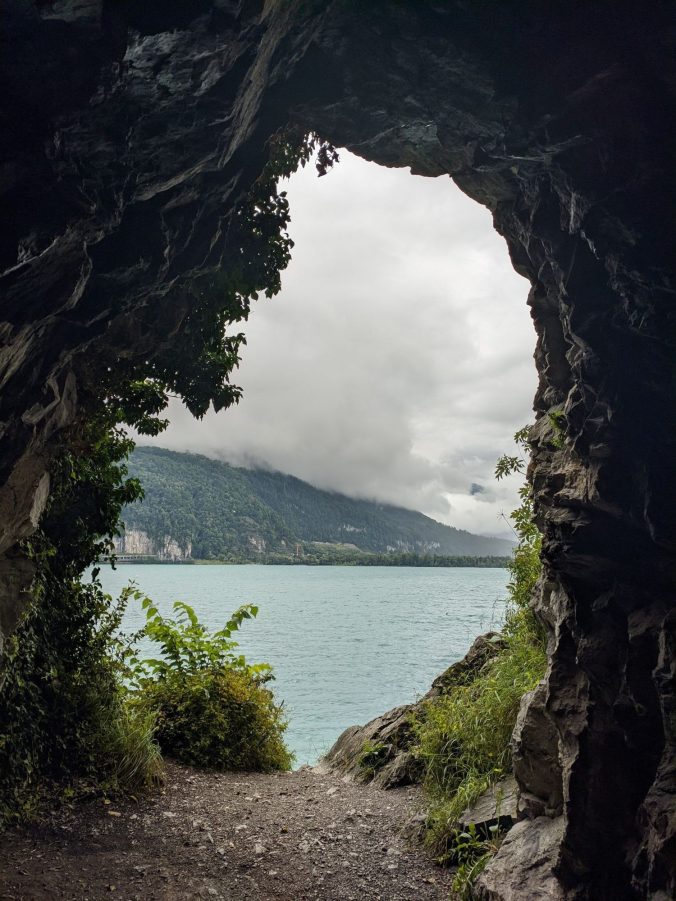
Through two tunnels with little off passages looking out on the lake.

img_20240722_1950308682523493768743686

It rained a bit along the last bit of the track, as I walked and chatted to a young English lass from the north of England who’s on our Oak Hall tour. She’s going to visit friends in Australia later this year. Nearly every potential English tourist asks about Australia’s spiders and snakes and how dangerous they are. The number of times we’ve been asked that….. I told her she’d be lucky to see either. That it can be just as dangerous to cross a field of cows – people have been badly damaged or died by cows! She laughed, agreed with me and was greatly relieved.

img_20240722_1928107078106047094176883

At Weesee, another pretty lake town, Philip was finishing his second (disappointing) hot chocolate drink. We explored a few nearby streets of the town before getting back for the journey back down the lake to the bus.

img_20240722_2031528639844659139763816

In the 1800s Franz Liszt the composer and pianist stayed in this town for two days and the Lake inspired him to write some music.

img_20240722_2114566128392796451213223

Philip would be constantly banging his head on the doors here!

img_20240722_2122573900842304514004282

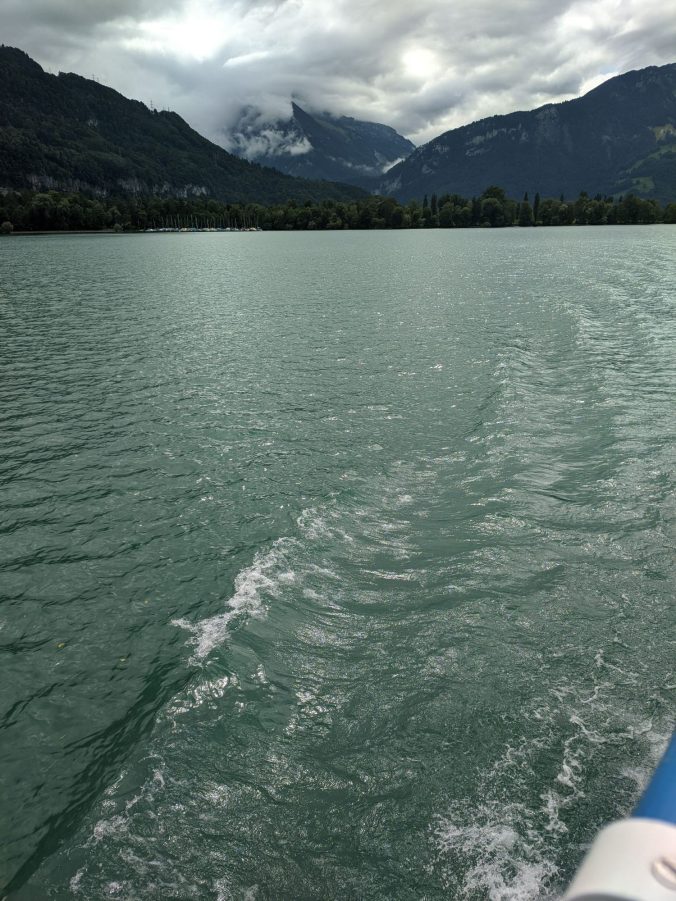
I sat on the top deck of the boat. It was a quiet boat – I even wondered if it was electric, but it wasn’t. Listening to the gentle splashing of the wash of the boat as it ploughed through the jade-green water, looking out at the majestic sheer cliffs, seeing more waterfalls and watching the swirling, swaying tattered cloud-scarves weaving around the tops of the mountains. Relaxing, soothing, calming balm for the senses and soul.

Another delightful and very different day.

Cowbells, curds and whey.

I forgot to post the photo below yesterday. I’ve been having problems with the blog software lately. Is it to do with the recent outage? I’ve no idea.

image1305067271011588049

Philip specially took the photo. It’s me going up in the cable car yesterday morning with Yolanda who’s the group leader and Ritchie, the Oak Hall bus driver. Hanging underneath the cable car is the toboggan to be used coming back down the mountain on the toboggan track.

Today after breakfast I went with a group by gondola – a different gondola going in a different direction – to a higher mountain peak.

img_20240721_1613053997111880404469656

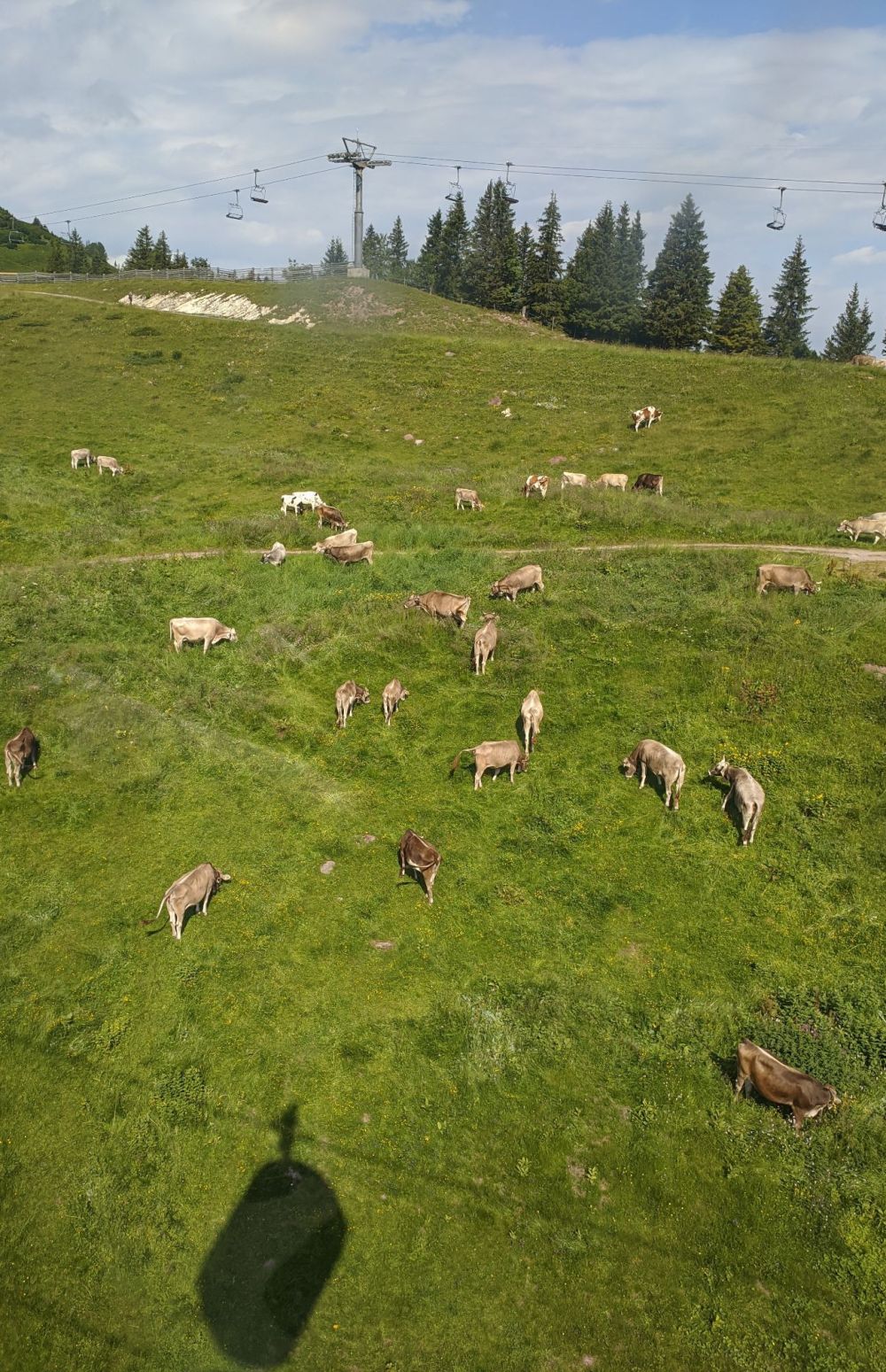
You can see the shadow of the gondola on the ground underneath

We went to Maschgenkamm which is 2020 metres high.

img_20240721_1624543666805029239082054

At the top of the mountain – me, being the tourist! That’s snow on the mountains behind.

Everybody else decided to go back down the mountain by gondola, but I wanted to walk it. So I did. On my own. I’d only paid for a one-way ticket, so my choice was easily made.

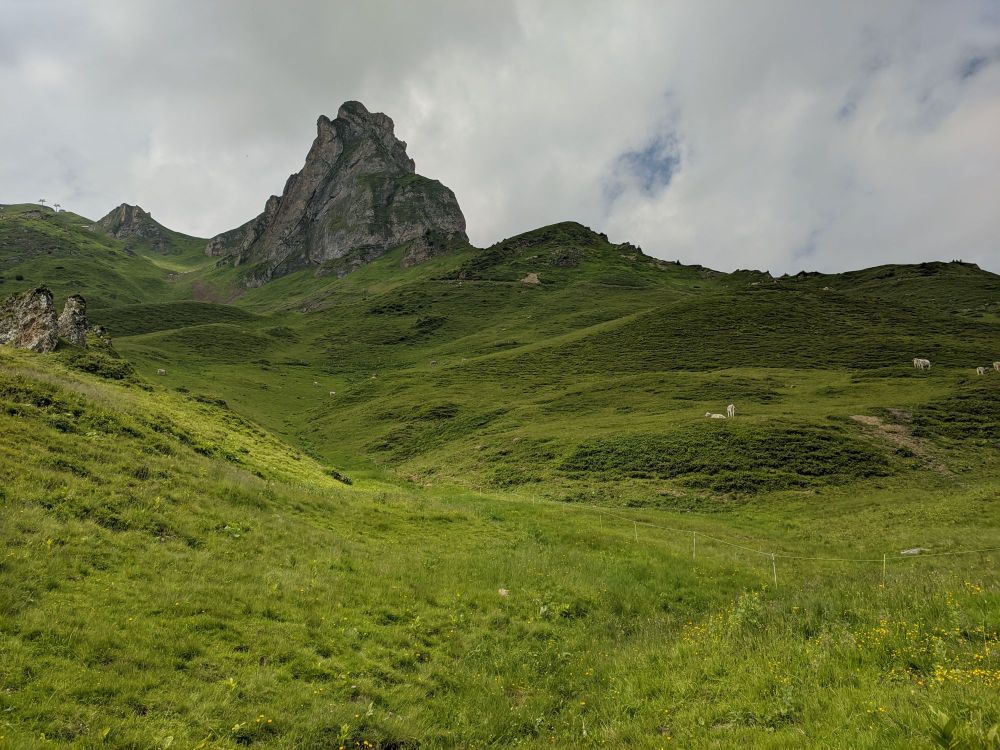
There’s different tracks and paths all over the mountains, and they’re (mostly) well signposted. Walkers and mountain bikers all strenuously pushing themselves, so there are people around – just no one I knew.

Every day I think to myself that I’ve taken more than enough photos – I don’t need any more!

And then I see the most spectacular scenes and promptly break my resolutions.

img_20240721_1734253730259337633750912

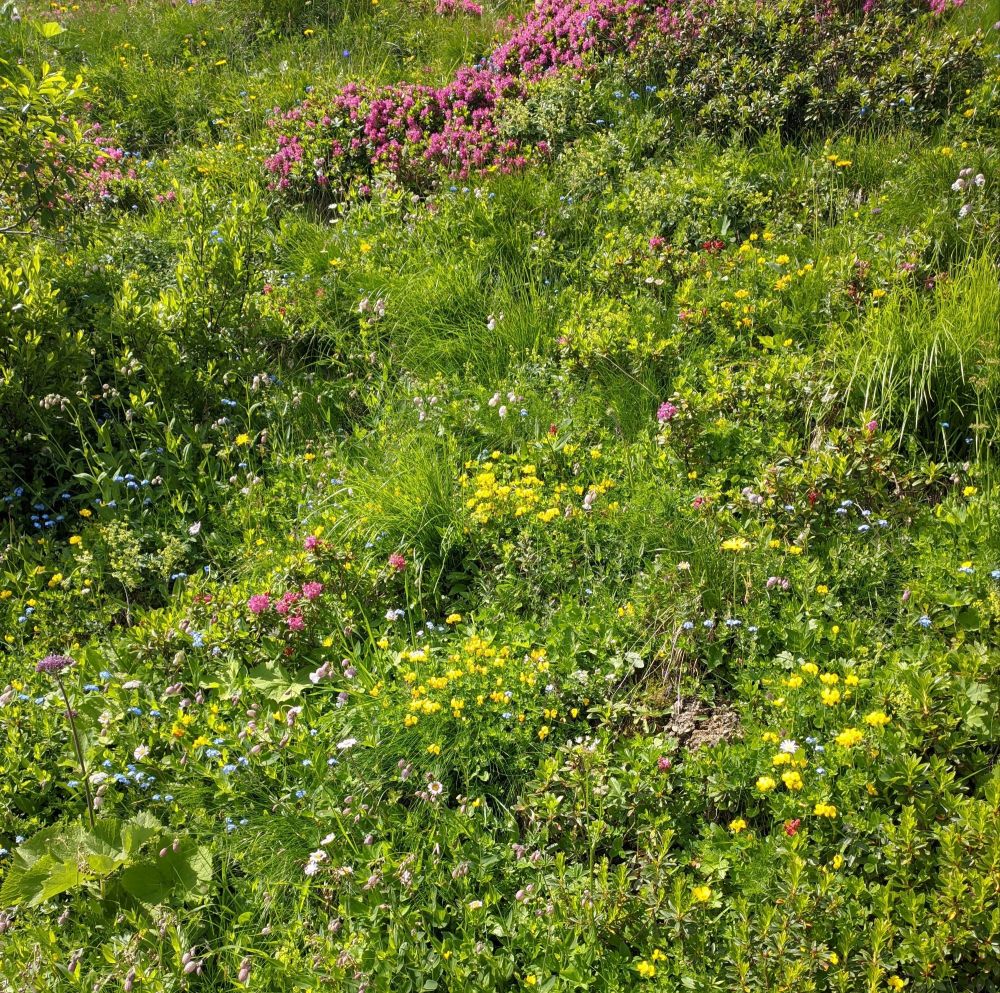
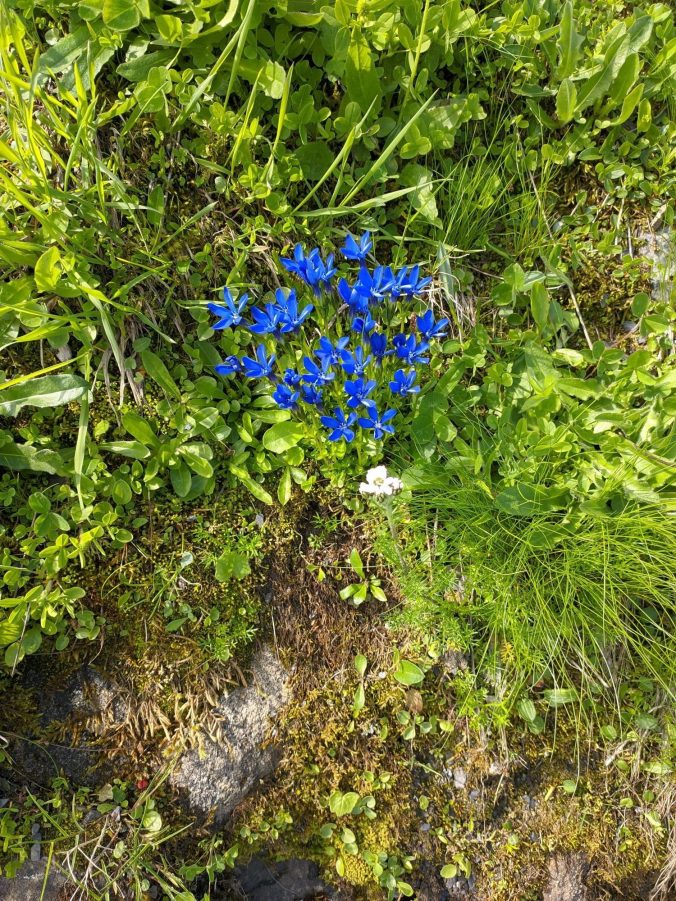
The alpine wildflowers are incredibly beautiful and diverse. Often, carpets of them. No wonder alpine meadow flowers are talked of in books like Heidi and Treasures of the Snow.

img_20240721_162938130257045835395803

At this higher mountain height, the flowers were different.

img_20240721_1659056065151414205797160

Very vivid, colourful and bright. Carpets of them everywhere.

img_20240721_1654451525376819929350724

Daisies, forget-me-knots, anemones, bluebells and many others I don’t know.

Is there such a thing as too many flower photos?

img_20240721_1658473228697400557470490

I was usually tramping along to the sound of cowbells.

img_20240721_1733375627022082533692120

The bells are very resonant, ringing round the hills. Maybe that’s why the song says “The hills are alive with the sound of music”…

Sometimes I had to watch where I was placing my feet. Not because of dangerous heights, but because of cowpats!

img_20240721_1735022873562436506414118

And yet with all the cows in the fields, and the cowpats on the road… hardly any flies! Amazing. Not once did I need to flap them away. I was barely aware of them. When I was close to the cows, I could see them on the cows. But there’s not clouds of them. The flies seem happy to stay around the cows.

You can tell this is just a big surprise for me, as I keep harping on about flies!!

img_20240721_1735483824682493472209803

At times when I was walking along, all I could hear were cowbells, birdsong and the rushing, running waters of a nearby narrow stream. And me softly singing to myself.

img_20240721_1712498223018712766931621

A deep peace.

It took me three hours to get back to the chalet.

As for the “curds and whey”? This morning, Philip went with a group to watch – and hopefully participate in cheesemaking at the farm that’s very nearby – where they have the restaurant. They went to the farm, but they weren’t making cheese today. Just butter. All by hand. All the group could do was watch, not participate. Not even any tastings!

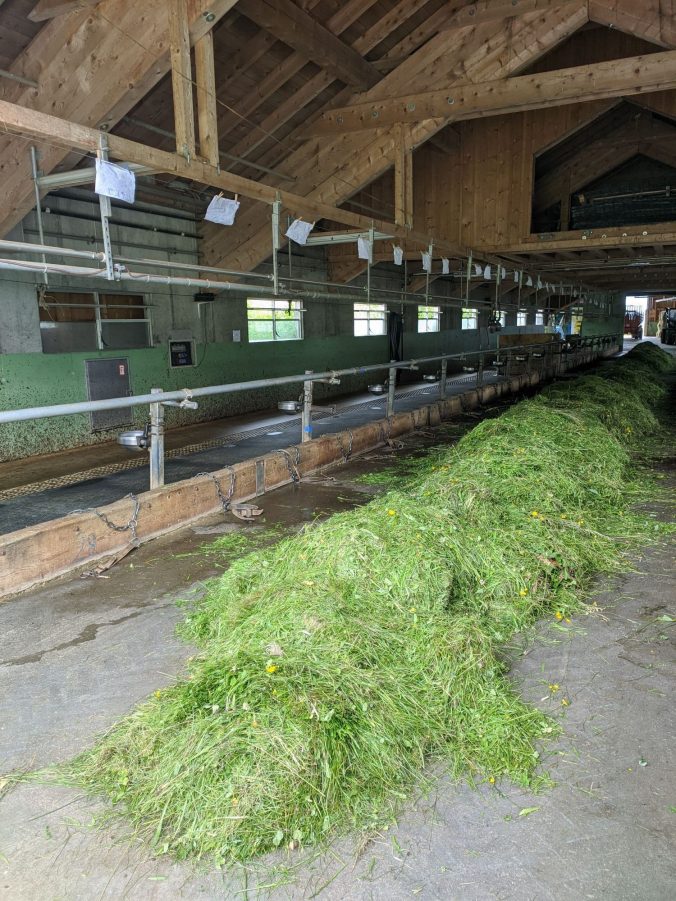
New mown hay in the cowshed.

We had a restful afternoon today. Mainly reading and talking to some of the group. Clouds started gathering and building up. The tops of the mountains disappeared behind them, till the clouds descended and filled up the valley between us and the mountains, and the mountains completely disappeared behind a thick grey mist. Rain with thunder and lightning, and different layers and varying gradients of grey clouds. The mountains seem like they’ve disappeared. Not even a vague outline or shadow. Disappeared completely. Hard to believe they were ever there. But they are! It’s a bit like that with God sometimes. And like the mountains, He’s still there too.

img_20240722_0211125931096526548068461

Up in the clouds …

A different pace today after yesterday’s exertions.

Philip and I took our turn to volunteer to in the kitchen after breakfast and dinner today. Volunteering is not only a great way to help keep the costs down of an Oak Hall trip, but a wonderful way to get to know others on the trip. We really enjoyed it. We’ll help again after dinner tonight.

Lots of sunshine again today with a few big balls of fluffy clouds perched on the tops of the high mountains in the distance.

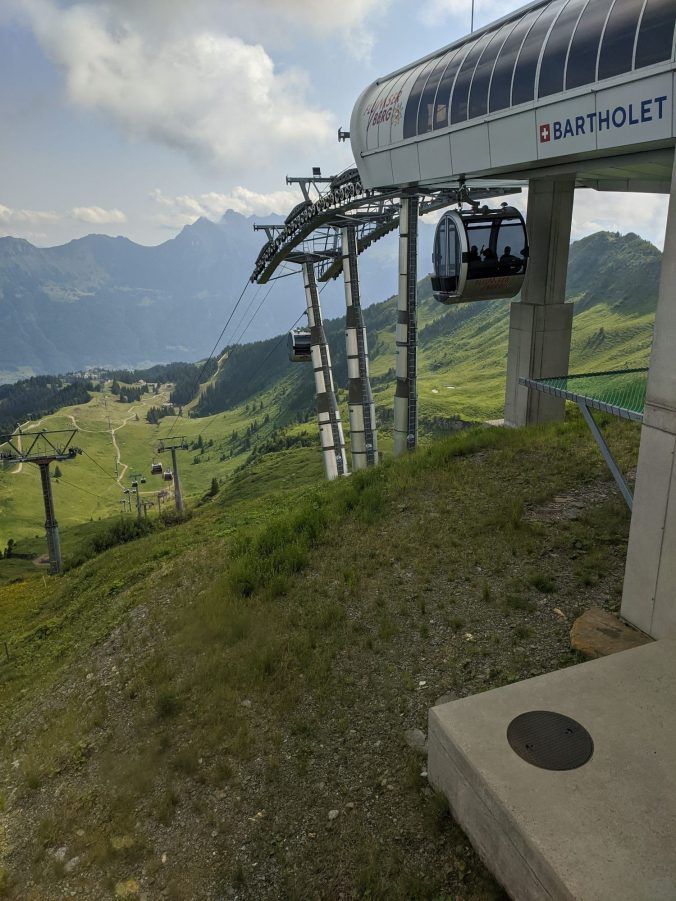
There were lots of options today. Philip encouraged me to go for the tobogganing one. He’s not interested in doing it himself. I was concerned about the cost, but the cable car ride to the top of the mountain plus the toboggan ride down was $40AUD. Bargain! And such fun! I’m so glad I did it.

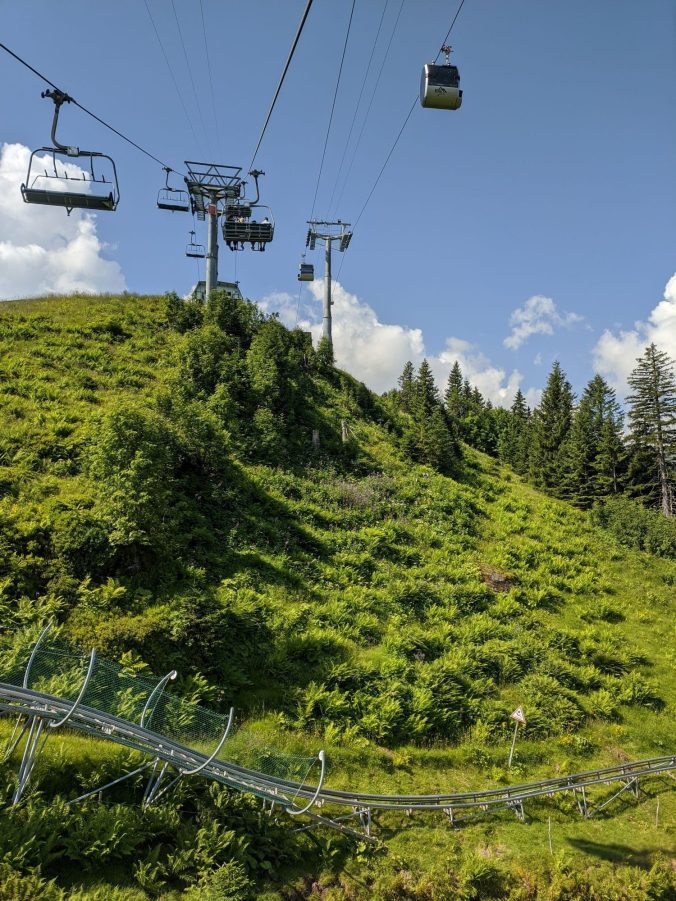
Going up in the chair lift was like going up in a ski lift. Not that I’ve ever been in a ski lift, but I’ve seen the pictures!

In the photo above, there’s part of the toboggan track at the bottom. The chair lifts on the left, and the gondolas on the right are for further up the mountain.

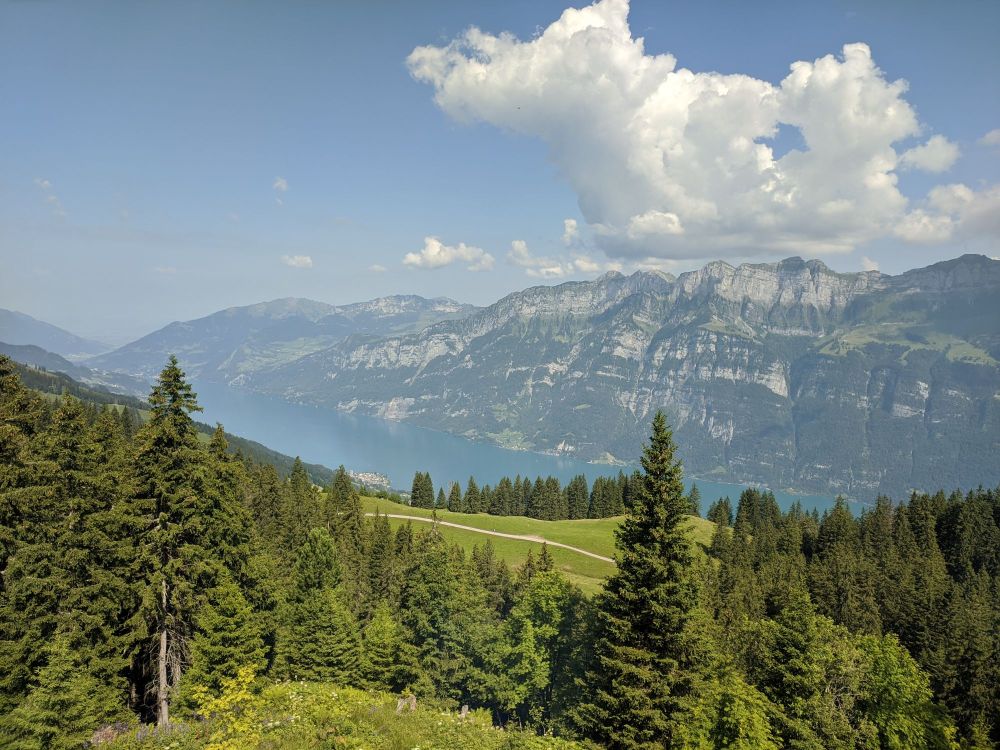
Amazing views all around – the mountains, the long, green, placid, Lake Walensee way down below, the cows in the meadows with their ringing cowbells, people far below either hiking or mountain-bike riding on the trails, swinging over the tops of giant fir trees.

I kept twisting around and craning my neck trying to take it all in. It was a very smooth ride – very calming and relaxing to glide up the mountainside.

img_20240720_1657178211426584747333983

At the top we got on the toboggan and strapped ourselves in. I gulped a bit at the top and wondered whether this was a good idea after all! But too late to pull out now! Quick photo, then I hung onto the controls and didn’t get any photos on the way down because you need both hands to accelerate and brake it.

And off we went. It was so exhilarating – a bit like a rollercoaster ride.

Here’s a map photo of this morning’s ride. The black straight vertical line is the chair lift ride up the mountain. The wiggly purple line is the toboggan ride down to the start.

But you can vary the speed as you hurtle down the slope and navigate the loops and corners if you want to. It’s a twenty-minute ride, so you get your money’s worth! It was such fun. Philip waited at the bottom and took a photo as I hurtled past him.

signal-2024-07-20-21-14-28-329~2950876965772580391.

Philip and I then took a little detour walk to a dairy farm restaurant nearby.

img_20240720_171817909938701474072271

The three buildings on the left sitting on the ridge of the hill, are where we’re headed for the restaurant.

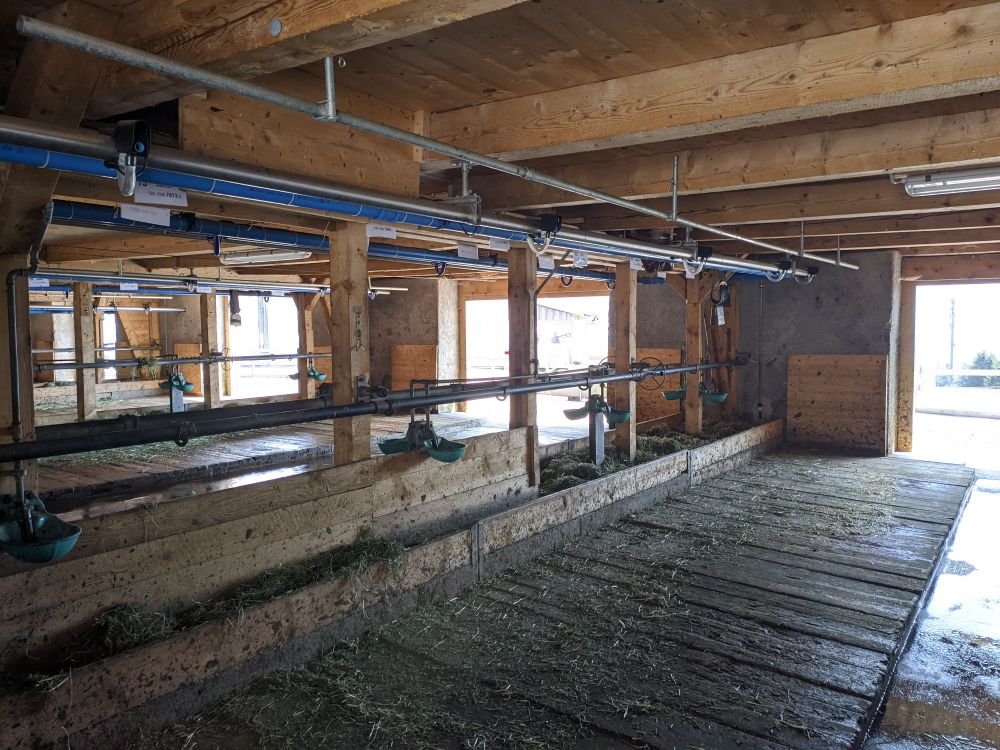
The cows with their cowbells ringing are in the meadows. The milking sheds nearby have been hosed out and cleaned for the day.

img_20240720_1727455073233109227172904

Just the farmyard smells and some of the meadow hay still there. I can’t get over how few flies there are here. Cows on working farms are so close by, yet there are so few flies. Compared to Australia!

img_20240720_1754558724851844445562760

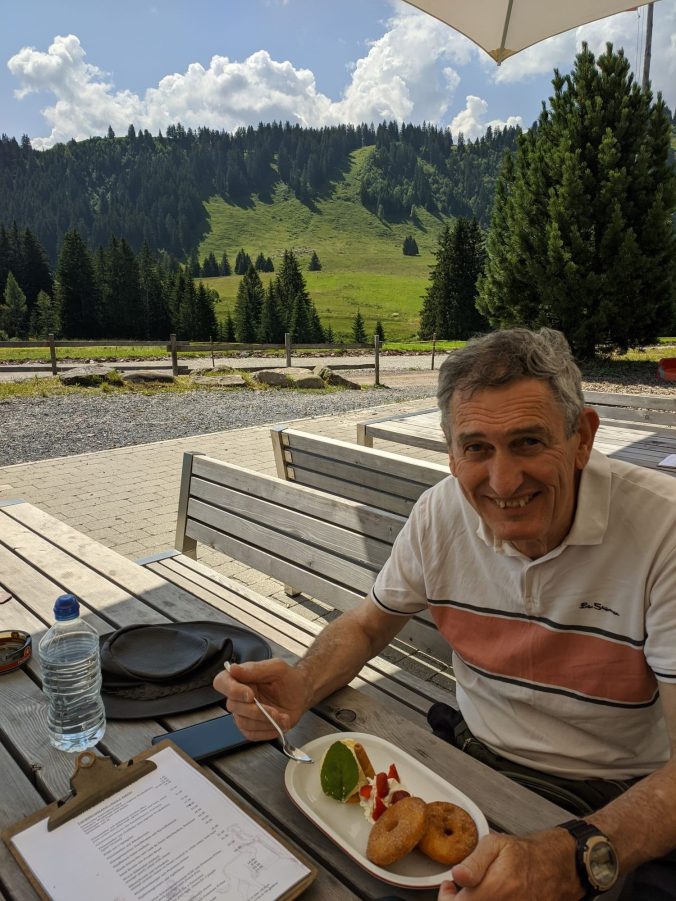
There’s a big, fancy, well-run restaurant next door to the farmhouse and farmyards! Philip had cinnamon apple rings with ice-cream, cream and strawberries that he said was delicious.

You can’t see them clearly, but the cows from the farm are in the meadow behind Philip’s left shoulder

I realise that the ice-cream is probably not made directly from the cows in the nearby meadows. Far too many government regulations for that to happen. Maybe it is – I don’t know. But even so….! As a diary farmer’s granddaughter, I’m amazed at the lack of flies. And that you’re allowed to have restaurants so close to animals.

img_20240720_1754459184363700511181977

This restaurant fits my Swiss stereotypes! Sloping roof, red geranium window boxes.

Back to the chalet for us and we ate our picnic lunch sitting out on the patio outside, looking at the mountains in front of us as the sunlight constantly shifted the colours, the shades and shapes of the mountain face.

img_20240720_2051193681899380309878575

This afternoon, I went on another fun local excursion. Taking a gondola (which is an enclosed cable car) ride and then riding it down … far down – to Lake Walensee below.

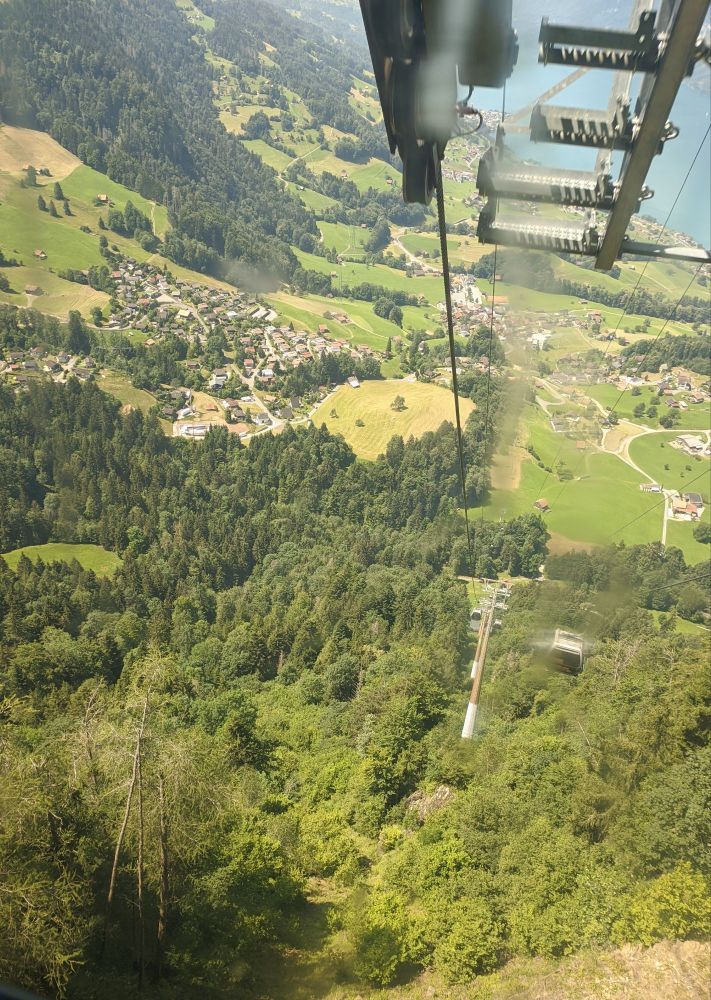
The gondola ride was twenty minutes and far more exciting than the cable car. You go over the edge of the mountain cliff side and it feels like you’re lurching almost vertically straight down the mountainside. This ride did give me those butterflies-in-the-tummy feeling as we sailed down the mountainside for twenty minutes. Lake Walensee is a very long way down below.

img_20240720_1927264844008959029856870

There’s a gondola coming back up on the right

Past the cliff face covered with firs and birch trees, past farmhouses where a lady was hanging out her washing on her lines, past the farm hillsides where they’re mowing or gathering the hay, following a rushing, gurgling brook as it also hurtled down the mountainside past the houses. All the way down to the little town on the shores of the Lake. It’s hard on the photos to get an idea of just how steep the gondola ride is.

img_20240720_1926218209832120561143818

Down by the Lake there’s roads and a railway and little town all geared for the tourists. Boats that cruise on the Lake. Families having “beach” fun.

img_20240720_1950024956519794292180578

I still can’t get over pebble beaches and that people lie down on those pebble beaches as if they’re sand. Children jumping and splashing in the water like children do all over the world when they’re at the beach. But they can’t play in the pebbles like they do in the sand. So, they mostly play in the water. Paddleboards, kayaks and water trampolines.

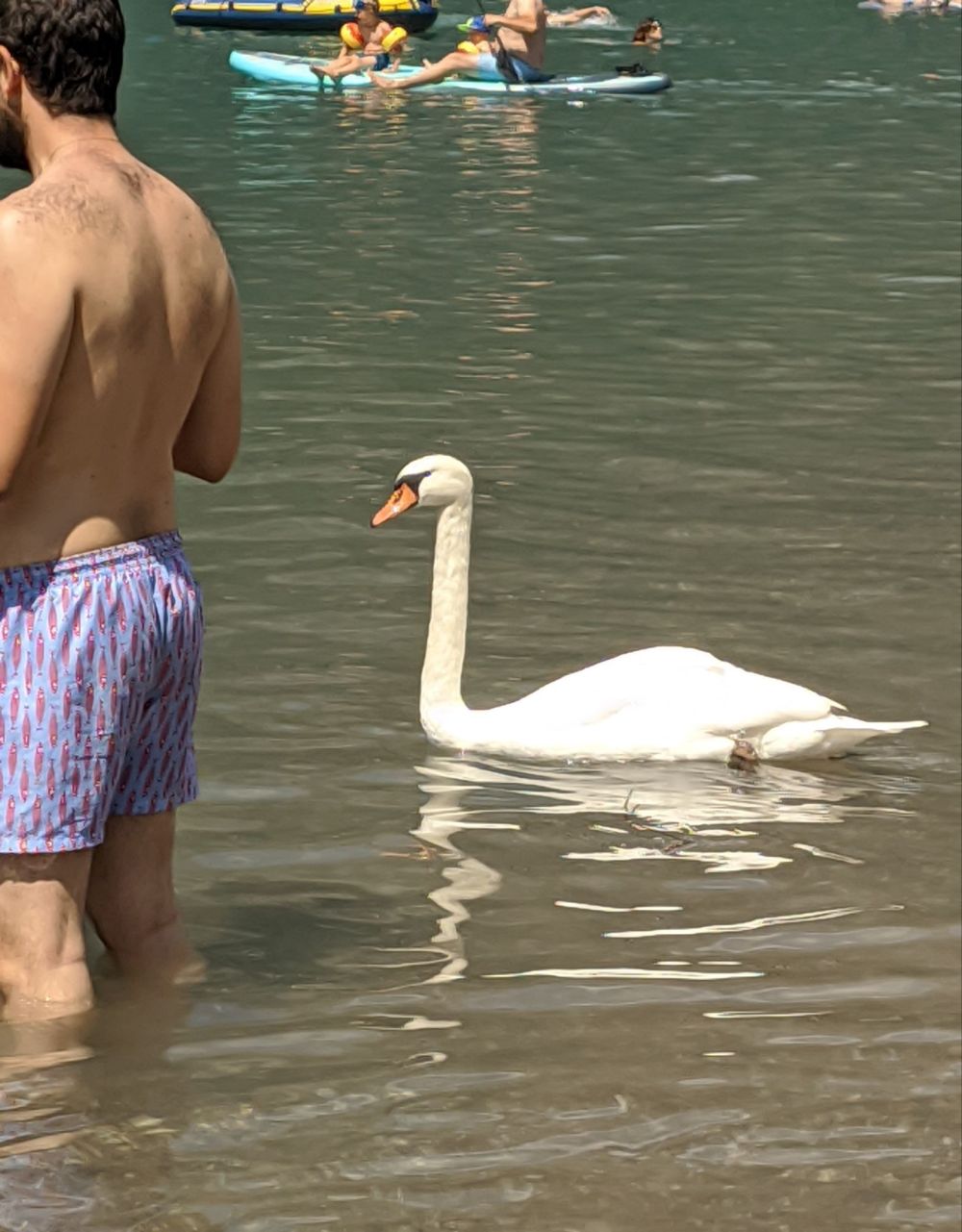
A white swan swimming among the swimmers often displayed a threatening attitude to people. I think swans can be quite intimidating.

img_20240720_2011205929391661029843958

I went for another swim!

I had been told that the water was warmer here than the little lake I swam in, up in the mountains the other day. I don’t believe them! This Lake’s water was still very cold. The only difference was that the air temperature down at the lake was warmer than up in the mountains.

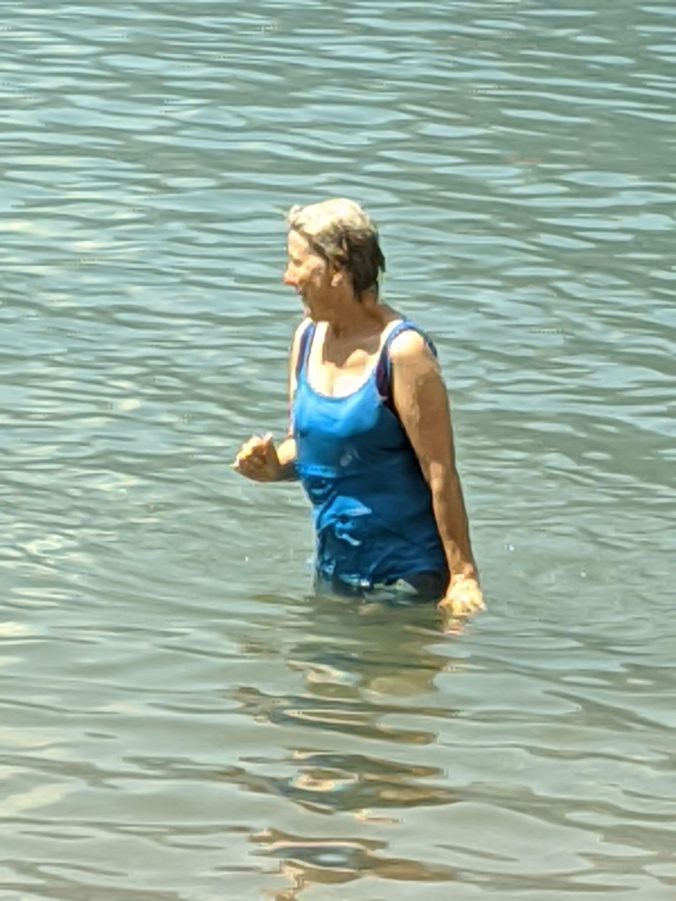
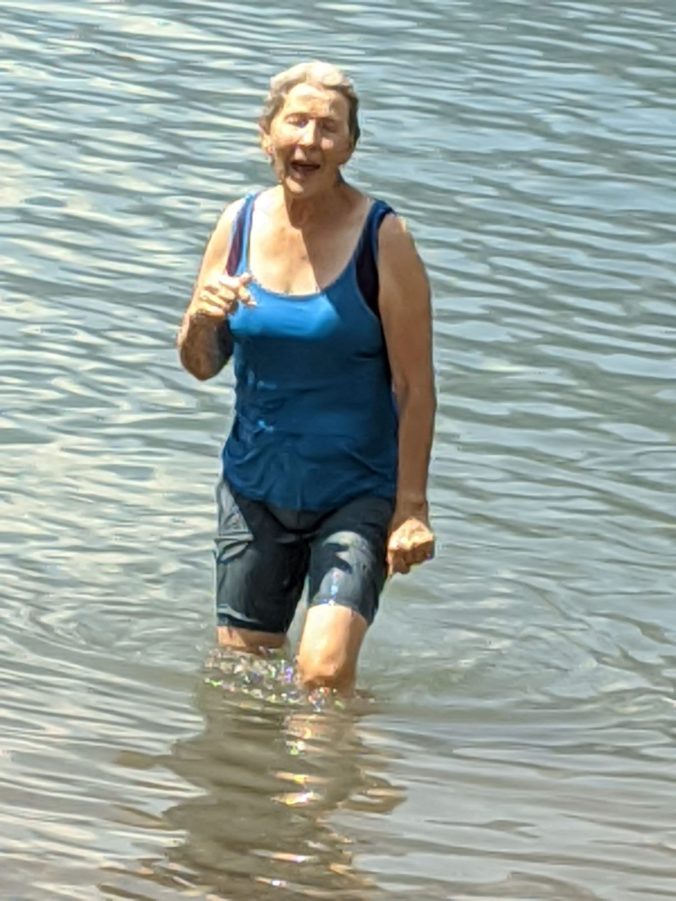
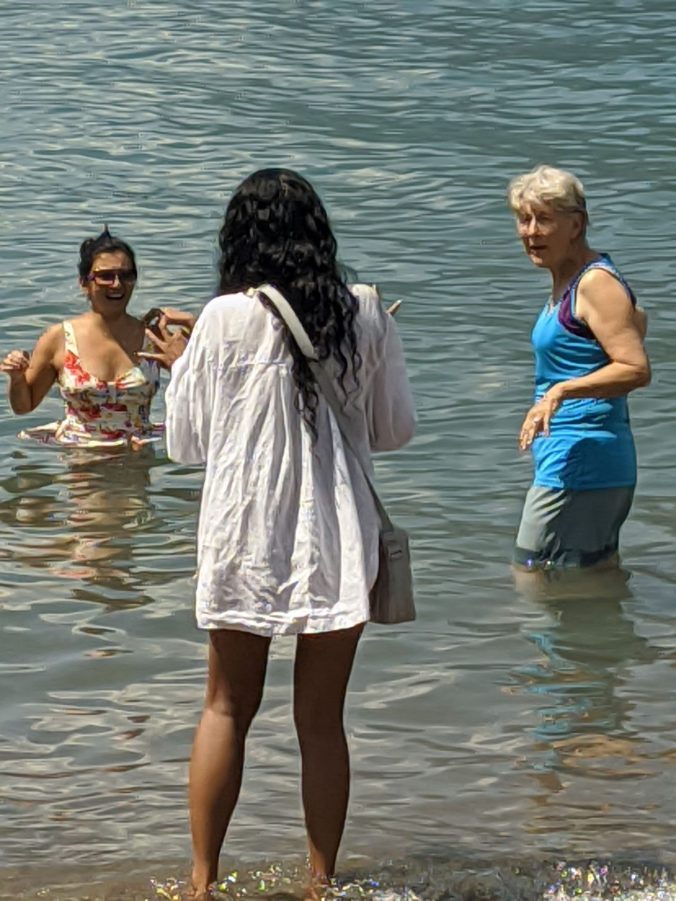
I asked a lady from the Oak Hall group to take a photo of me swimming, to prove to you that I did indeed have another swim!

But it was a very short swim again. Just a couple of minutes. Then I chatted to another lady while I waded in the water for a while. I didn’t stay long by the Lake. Some of our group stayed there for most of the day. But I’d had my swim, thoroughly enjoyed looking around at the beautiful lake and mountainsides and there was nothing else to tempt me to linger longer.

img_20240720_1951156775787388334778802

Going back up the mountain, I was in the gondola car by myself, making it much easier to take my photos. Not having to juggle photo angles around other people in the gondola.

img_20240720_2043183245386567949450196

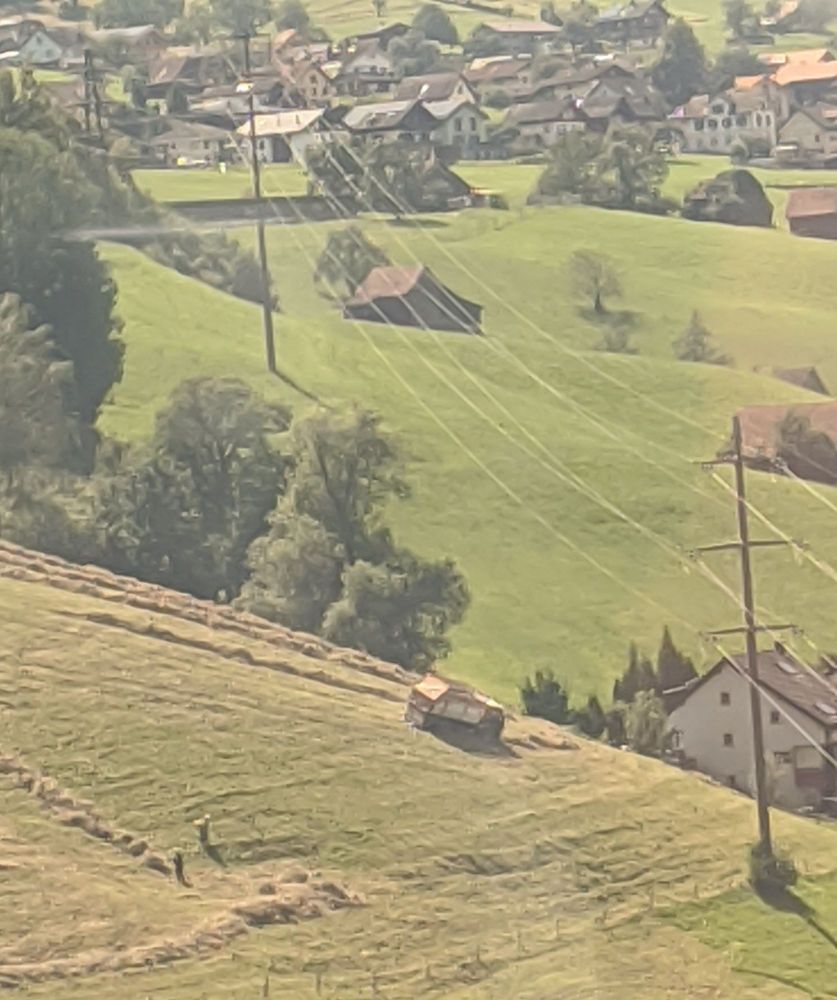
I took this photo from the gondola. It’s showing a little truck on a steep hill gathering up the meadow hay.

I still find it hard to believe what a wonderful day and what a great privilege to be in such a position to experience all this.

00000img_00000_burst20240720205425230_cover8407427669525197506

I’ve been having a little muse about the value of learning and experiencing new places, the history in those places and looking at the past in context. Not looking at the past in isolation. Sometimes it can expose parts of history that we find very uncomfortable to look at or to think about. (This was more in ancient Italy and some of the historic homes in England.) I think it’s about learning to think about some things in a more complex way, more constructively with interest and knowledge, without enforcing agreement.

img_20240720_1958333501209325480600270

I don’t think it helps to look at the past and impose the lens we have developed today with pushing our thoughts and values onto different past eras. After all, when people from the future look back at our times, they will have different ideas, perceptions and prejudices to what we have now. We all live in a particular time and place, and where we are in time and space shapes and moulds us. It’s that “chronological snobbery” rearing its head again.

I think it’s important to be connected to our histories. Being connected to it, being connected to beauty and nature makes our lives better. Provides new perspectives and helps us see the context and landscape we sit in. No one is an island.

It is also a privilege and a duty to pass on nature, beauty, history and values to those who come after us, and learning about them is the first step in being able to do this. Having time away in different places gives room and space for thoughts like this.

img_20240720_1657171525869885772452480

Or maybe I’m just trying to justify our holiday time away!! Motives – especially mine – are always very mixed and muddy!

Speed-dialled tourist …

It still takes a bit to get my head wrapped around the proximity of the countries here. Today, the Oak Hall expedition was to visit three countries in one day! We had about two hours at each of the three stops.

img_20240719_1441585868317340786757705

We did it! But we got back to the chalet late this evening, so this blog will also be “speed-dialled” tonight!

img_20240719_1446111884927790004686618

Philip and I rode on the top deck of the very comfortable coach bus, zig-zagging down the switchbacks and steep hillsides of the mountainside, all the way to the flat valley far below. Hats off to the bus-driver for his skills!

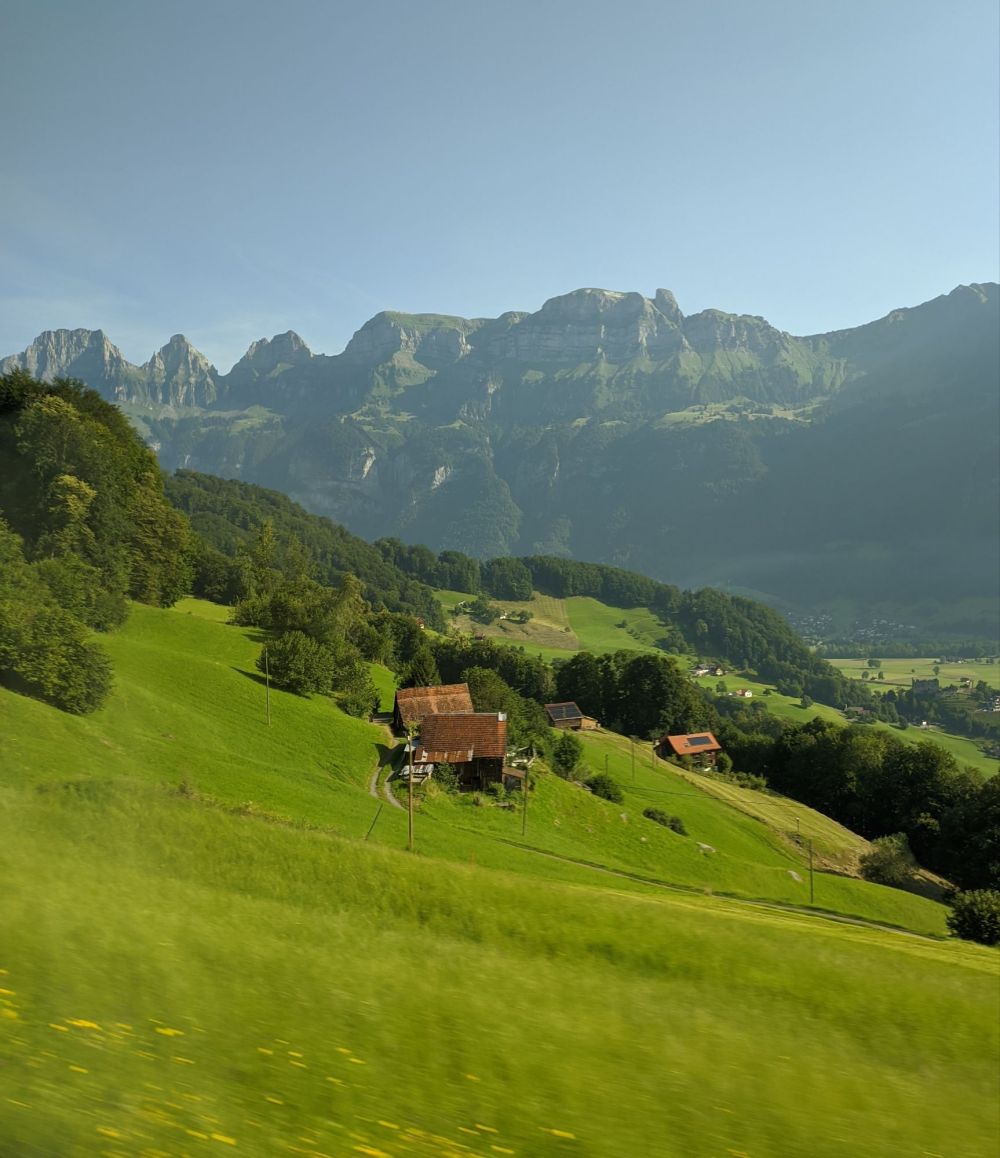
Lots of “alpine” looking houses scattered up and down the steep, steep mountains. But no matter how steep the slope, it seems like most land is being cropped for hay. Mown – either by machine, but occasionally I saw a scythe to mow it. Then raked – sometimes by machine, but sometimes by hand with huge rakes – and left in long rows to dry. Then bundled up to use for winter feed. All very hard work and all done on steep mountainsides! (But I wasn’t quick enough to get any photos of it!)

img_20240719_1508364348556630347165980

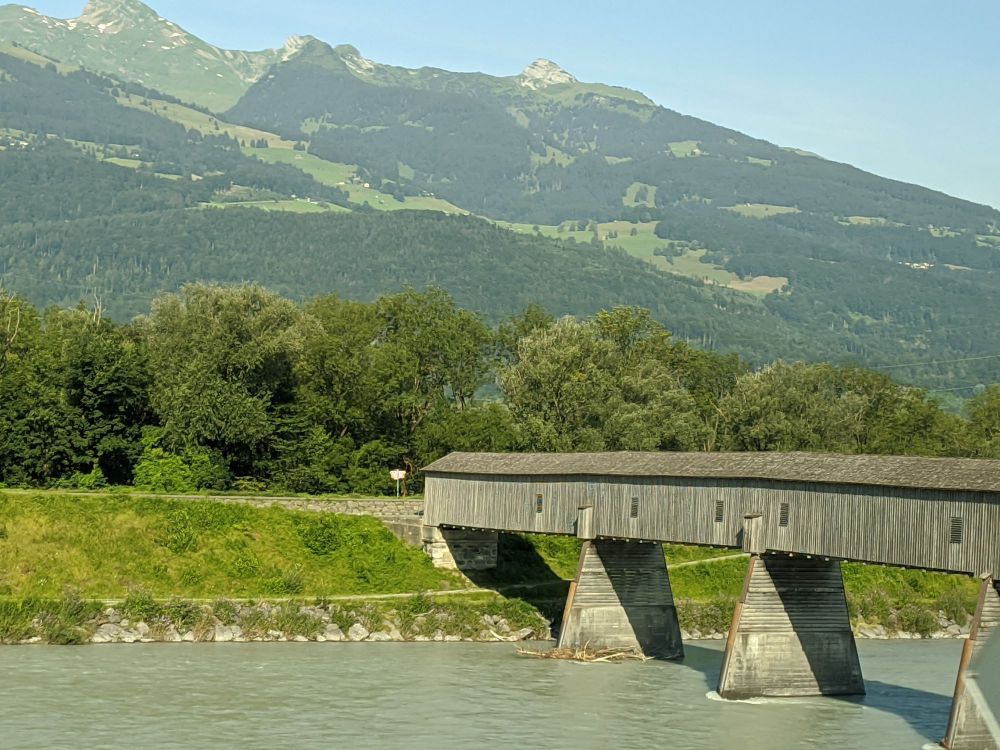
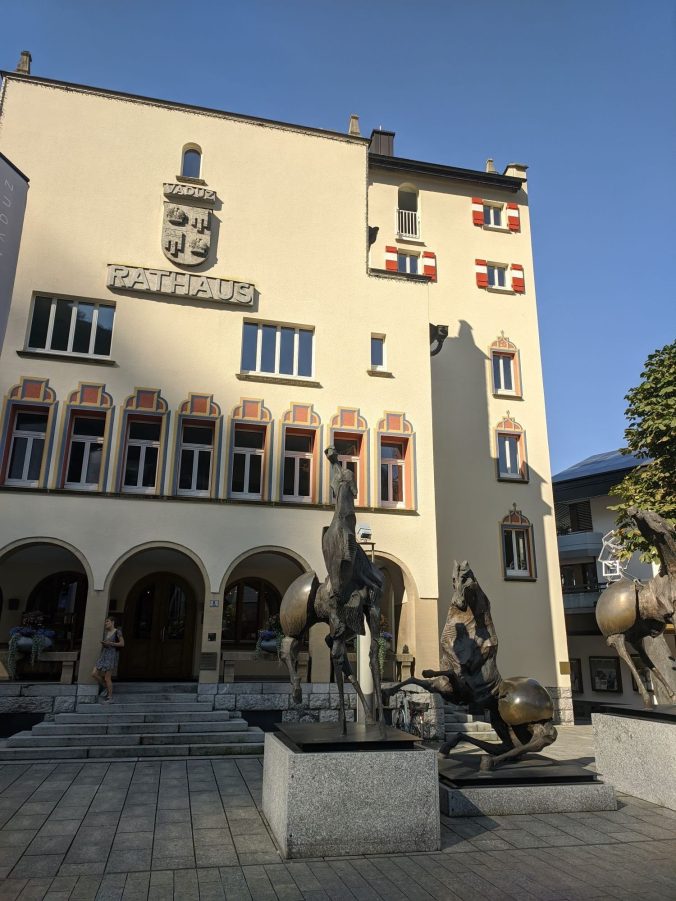
Crossing over the Rhine River, our first stop was Vaduz, the capital of Liechtenstein. If you like statistics!! – 40,000 people, 160,000 square miles, the fourth smallest country in Europe, independently ruled with a constitutional hereditary Prince with a democratic parliament.

My uninformed caricature of this country was that it was famous for stamps. Which it is, but there’s so much more. There usually is!

Philip took a 30 minute trolley-train ride around Vaduz, but wasn’t able to get any good photos. He said it was very interesting though.

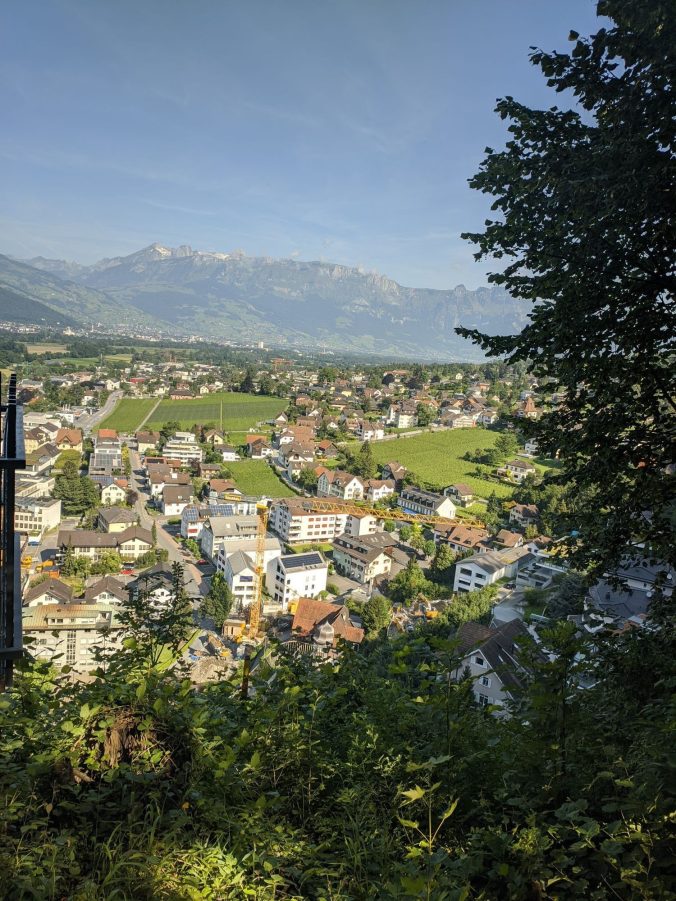
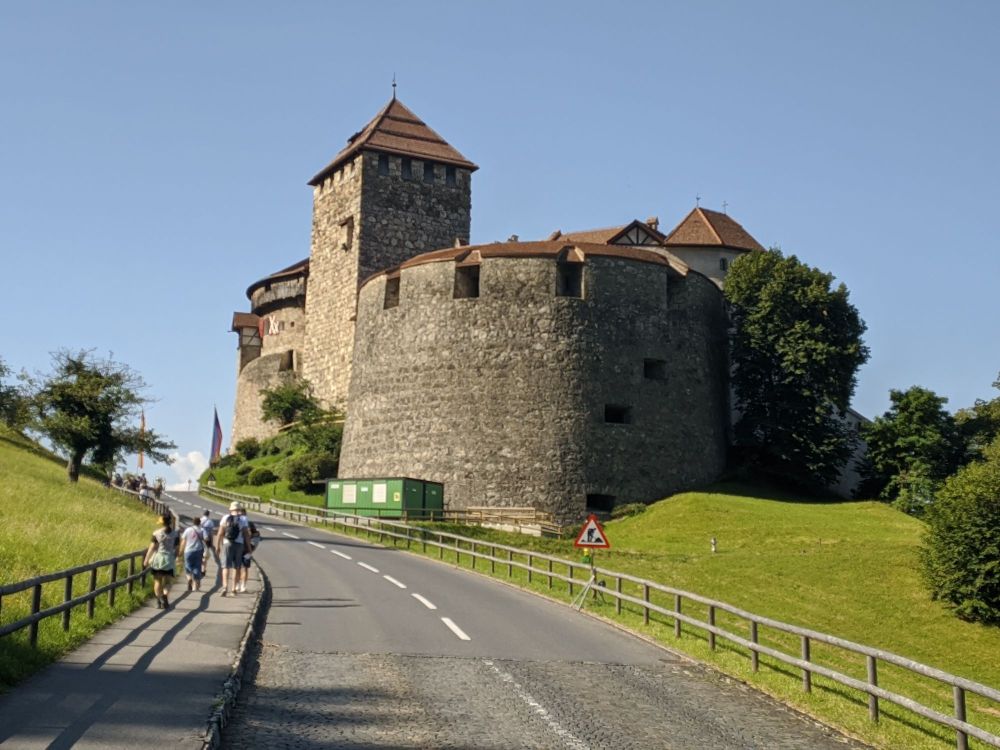
I chose another cardio hike up the steep cliff path to the Castle overlooking the city.

That’s the white castle at the top of the cliffs

img_20240719_1607203101518291625124447

Great views, but the Castle is the Prince’s personal residence, so not open to the public.

img_20240719_1542508207268479192686381

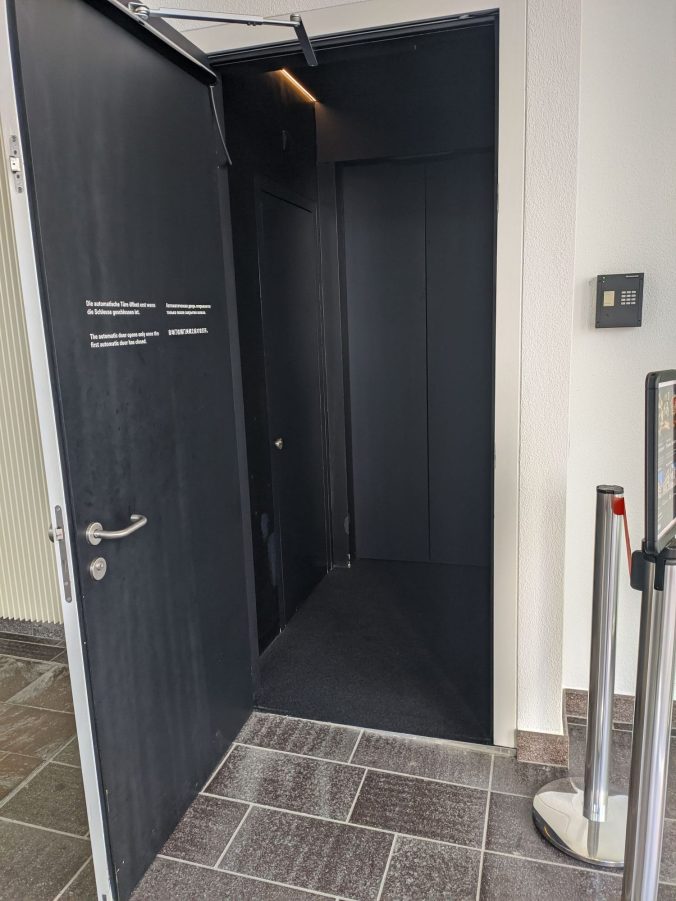
I chose to visit the Vaduz Treasure Chamber. A long, very dark room filled with Liechtenstein treasures, like history weapons, ceremonial gifts, Faberge Easter eggs, moon rocks from Apollo 11 mission. I was the only one in there, and the guard said No photos and watched me very closely so I couldn’t even sneak a photo. It’s on their website if you’re interested…. Here’s the door I exited!

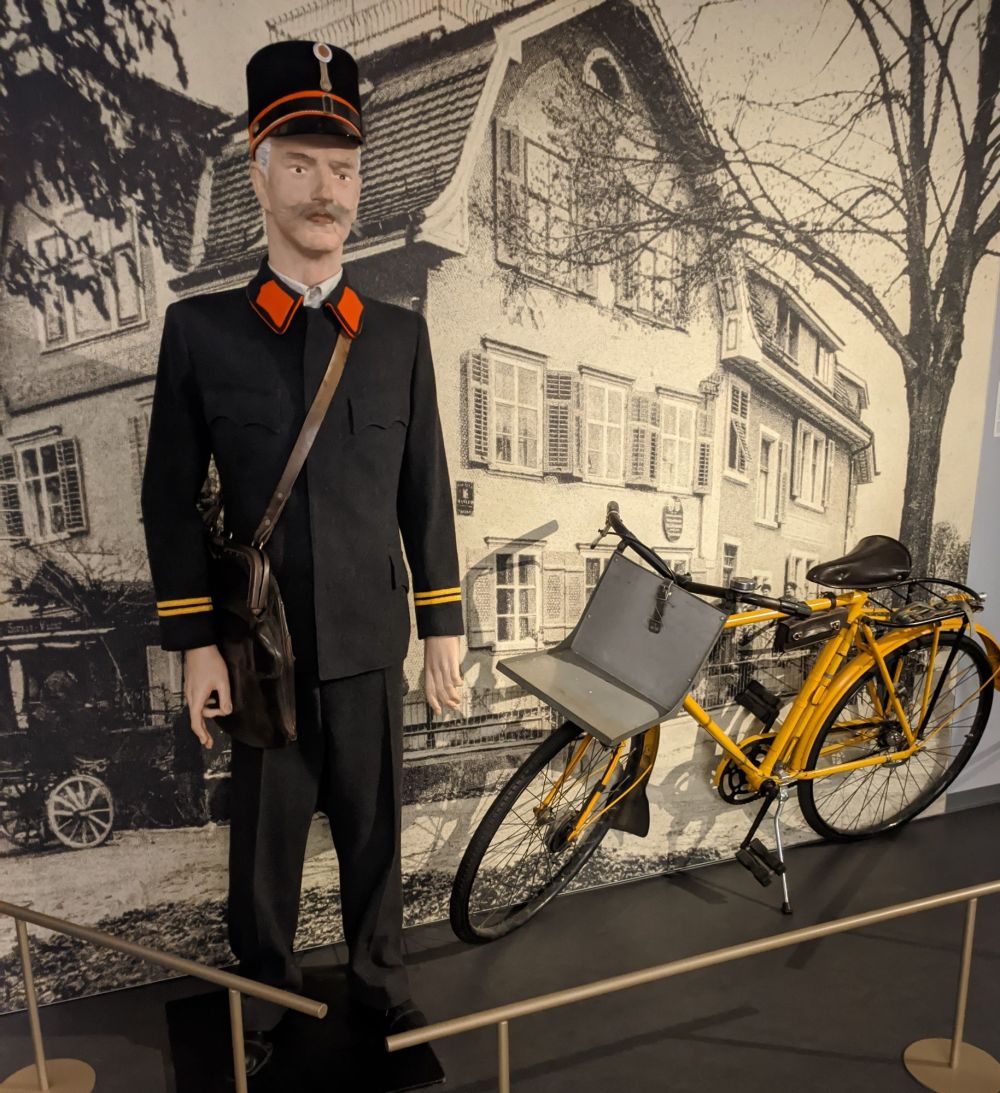
I also did a quick look in their little Postal Museum next door. Because it was free! Here’s an Austrian postman from last century.

img_20240719_1646085843056278406848244

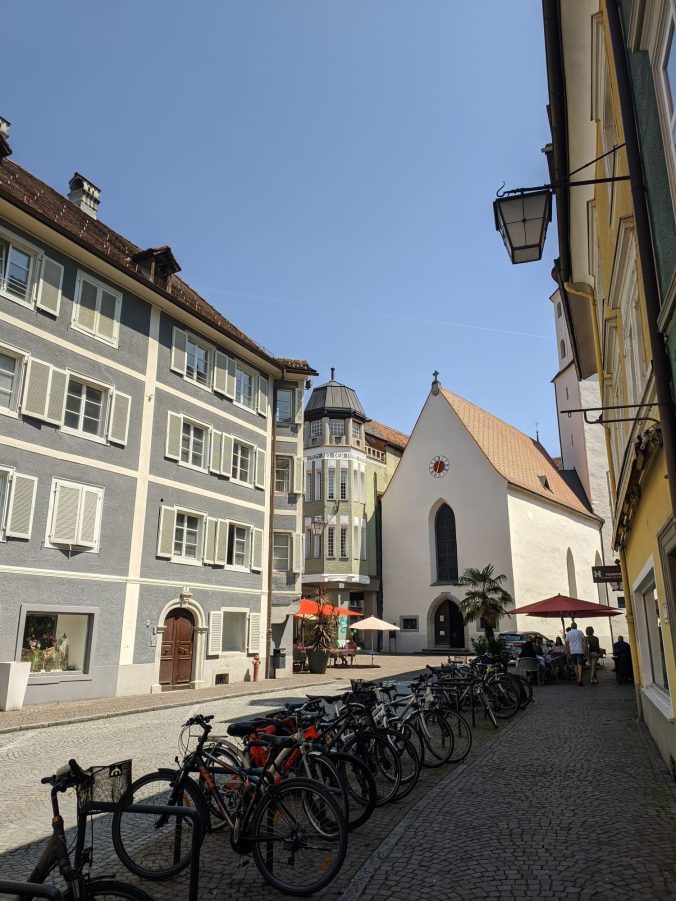
Back in the bus, and crossed the border into Austria to the town of Feldkirch which has an unmistakable Austrian atmosphere.

img_20240719_1749264965808550055310499

Quaint, old, cobbled streets with cafes, shops, churches, gardens and a great castle.

We ate our picnic lunch beside the Rhine River, a pale, milky, jade-green colour running fast.

img_20240719_1816185221482518127554383

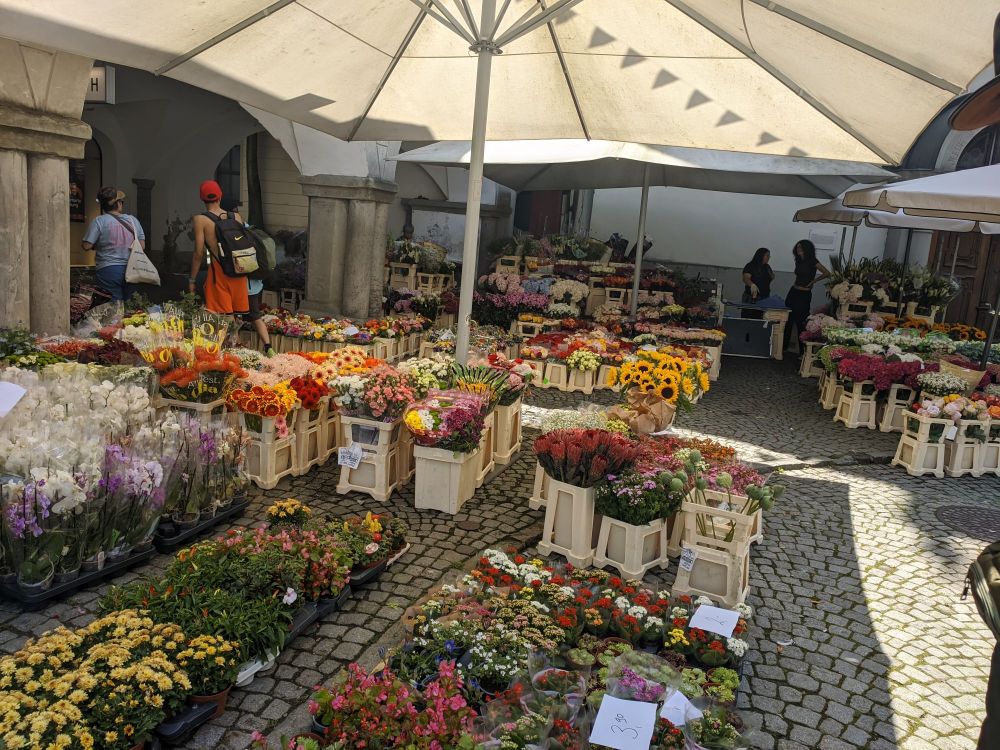
Beautiful, cultivated flower gardens and in pots everywhere. Here’s a flower market.

img_20240719_1841143461784695530715807

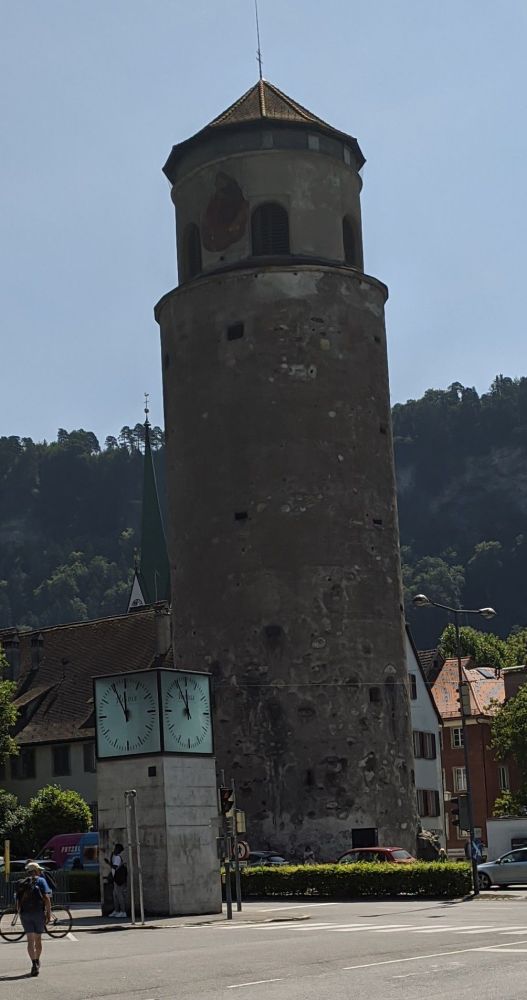
I don’t know what this interesting looking building was!!

img_20240719_1755488472131877671972494

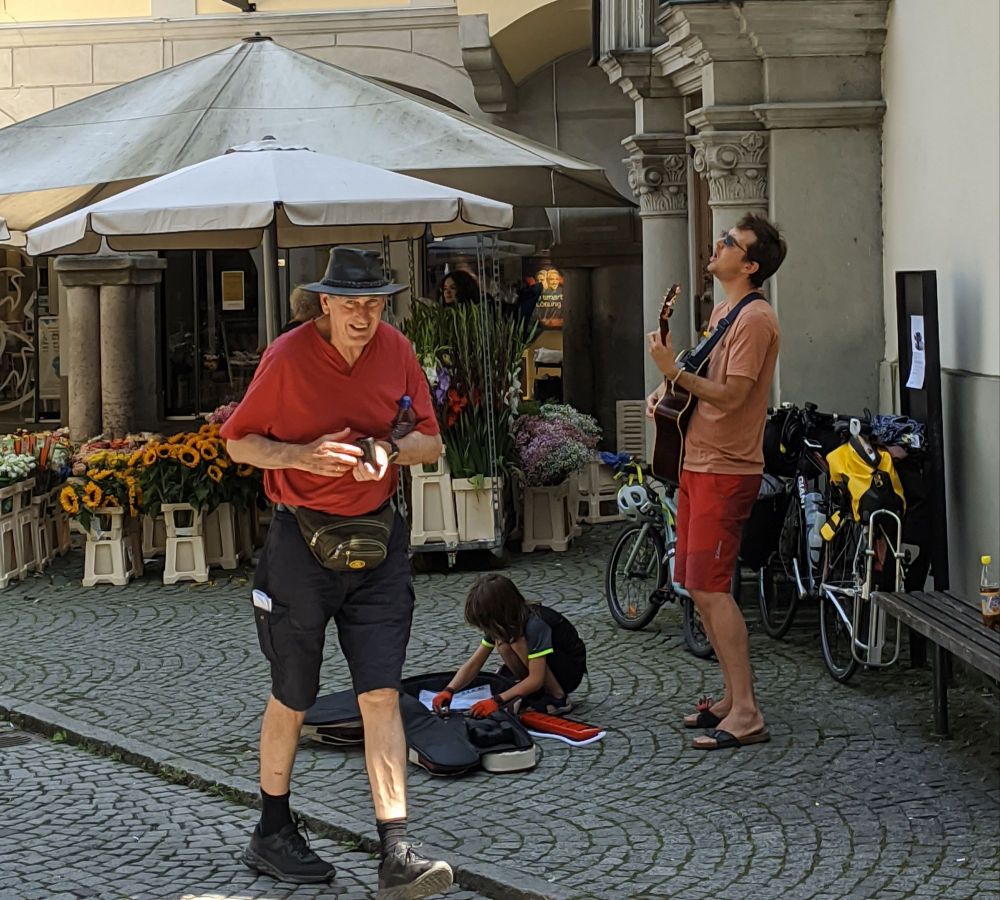
Used up our last Euros on a busker.

img_20240719_1843445797860545360565551

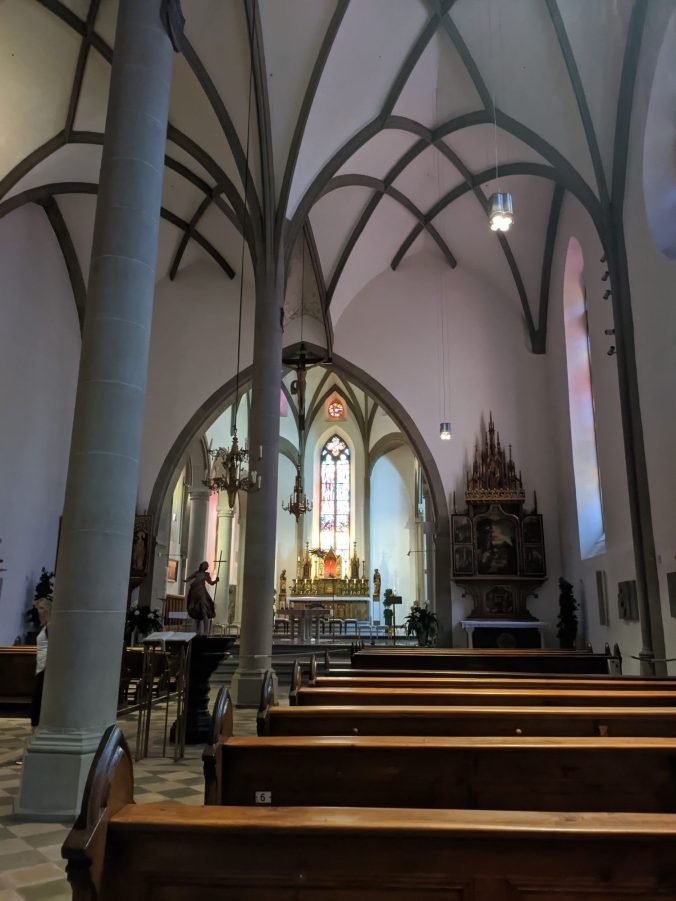
We wandered around, admiring the architecture and paintings on the buildings, visited inside a couple of churches we passed. Meaningful and worshipful spaces.

It was getting very sunny and hot. Philip ate the darkest chocolate ice-cream he’s ever eaten and said it was good.

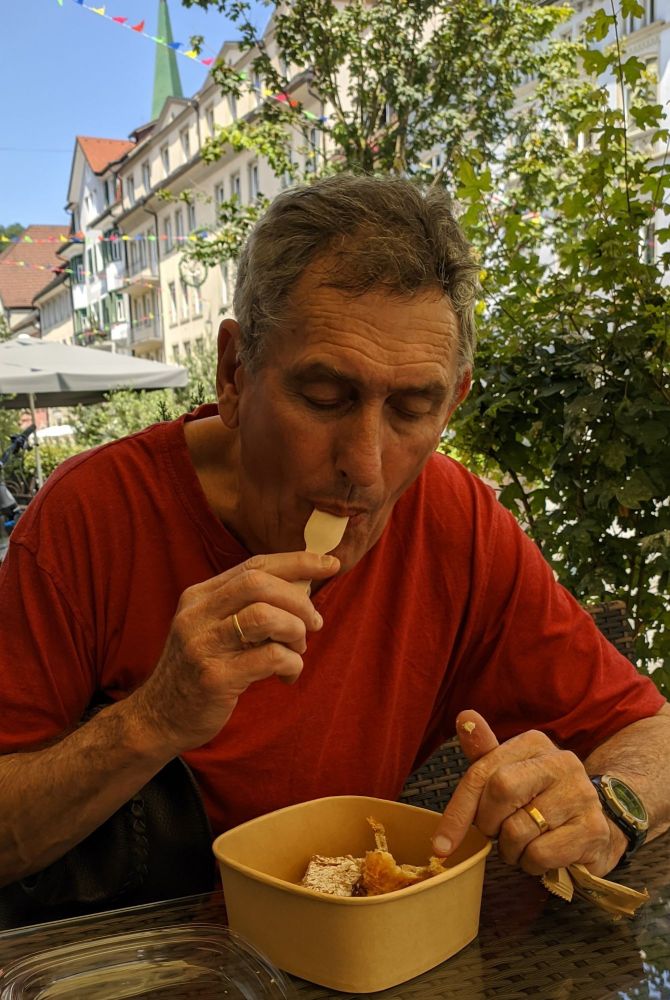
We passed a cafe that had Apelstruedel on its chalkboard. Philip told the owner, My daughter said that Austrians make the best apple strudel anywhere. “Ach, ve do”, he agreed and promptly added more strudel in Philip’s container. Philip said it was indeed very good!

img_20240719_1935236684628835181212090

In Austria, you can get marijuana in little disposal cabinets along the street … if you want to.

img_20240719_1942007352915721206084668

Back in the bus. This time to drive back to Switzerland to the pretty town of Rapperswil, set on the edge of Lake Zurich, with a beautiful lakefront promenade, lots of boats and people swimming in the lake.

img_20240719_2143164423009379000167700

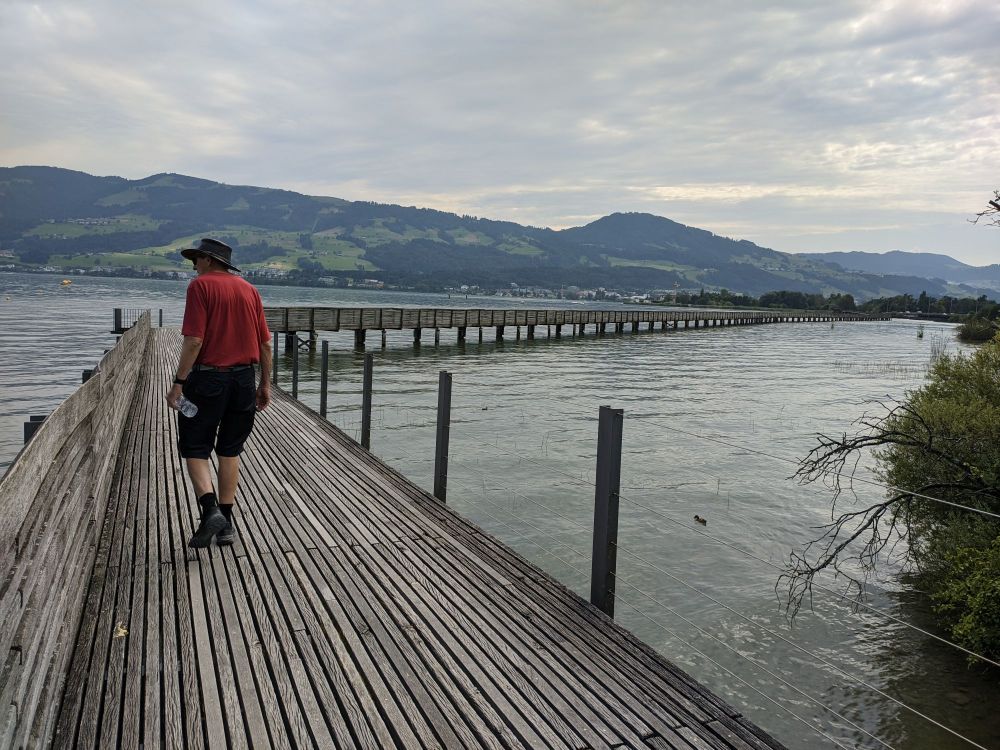
The original footbridge across Lake Zurich was built to help pilgrims make their way across to Santiago de Compostela. The original footbridge was replaced twenty years ago, but still goes all the way across.

img_20240719_2143353750864121355824976

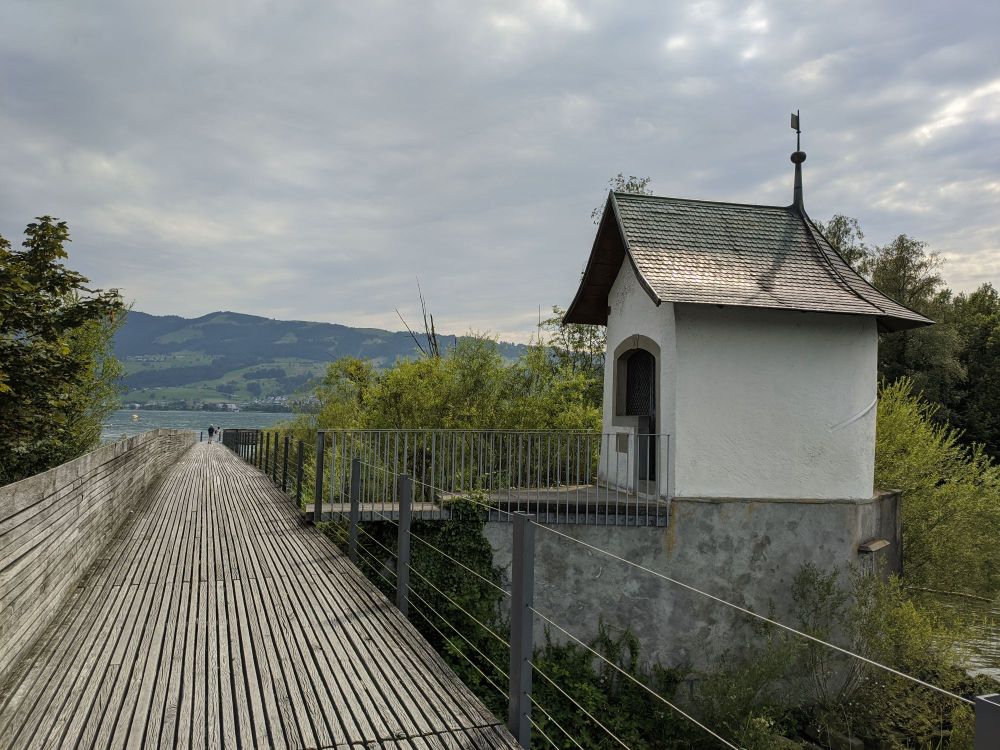
There’s the remains of a chapel on the bridge.

img_20240719_2145334325372695208091336

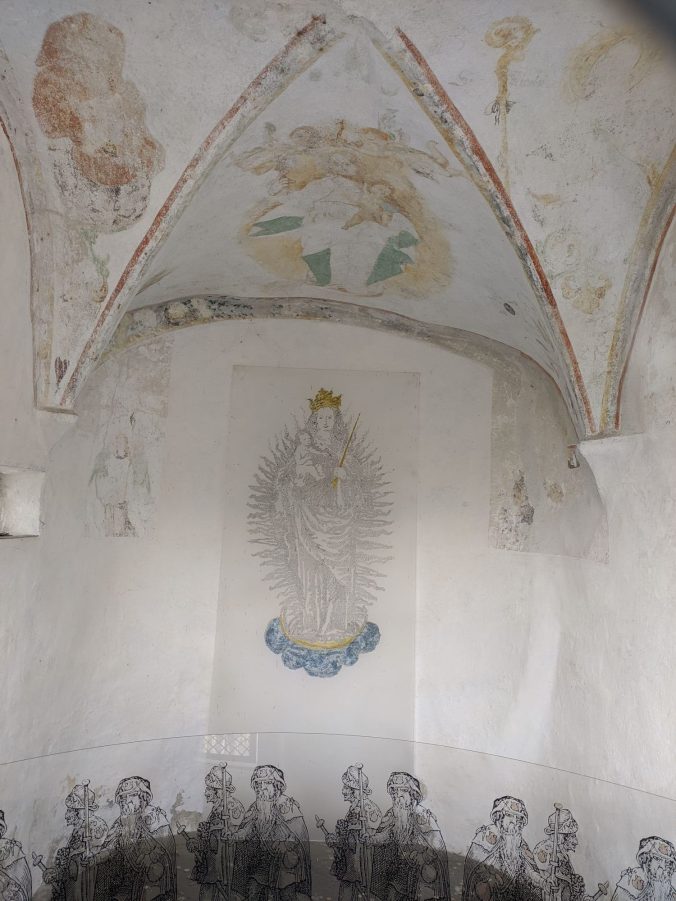
Here’s the chapel (above) and a faded fresco inside (below).

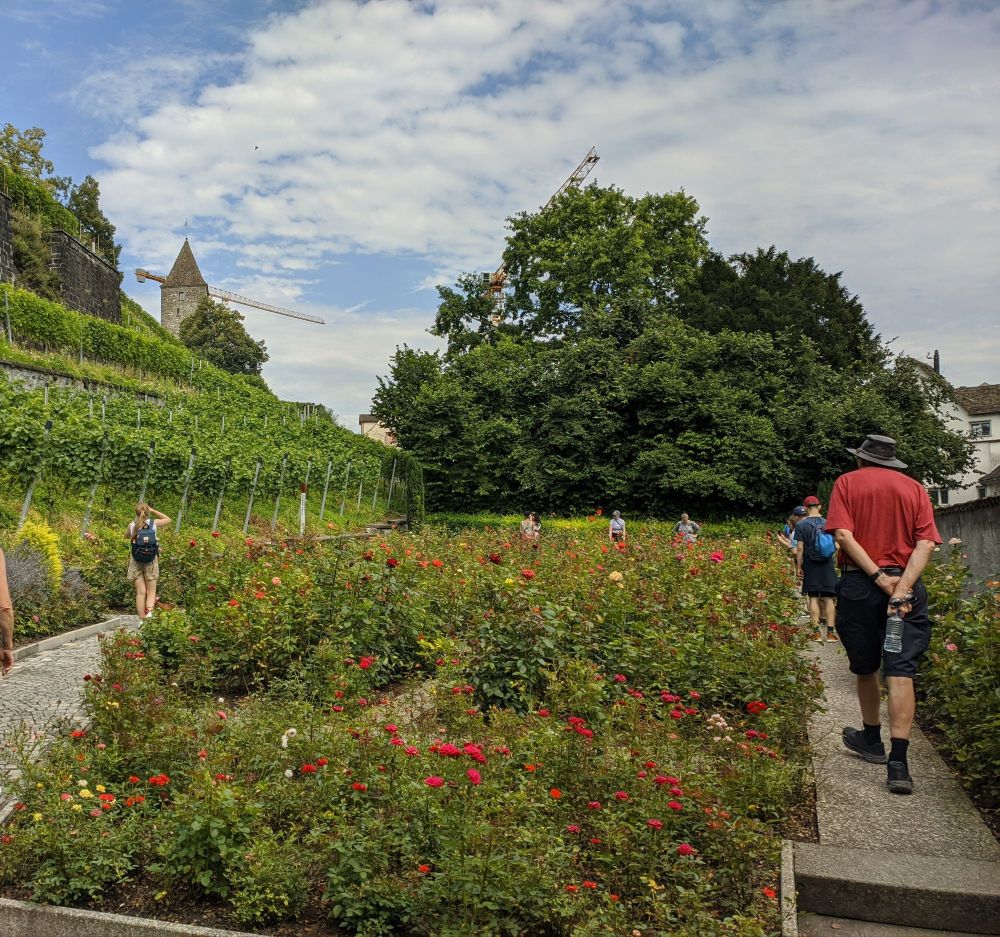
We visited one of their famous rose gardens. Philip thought they should dead-head the roses more frequently.

img_20240719_2159481787178192313661875

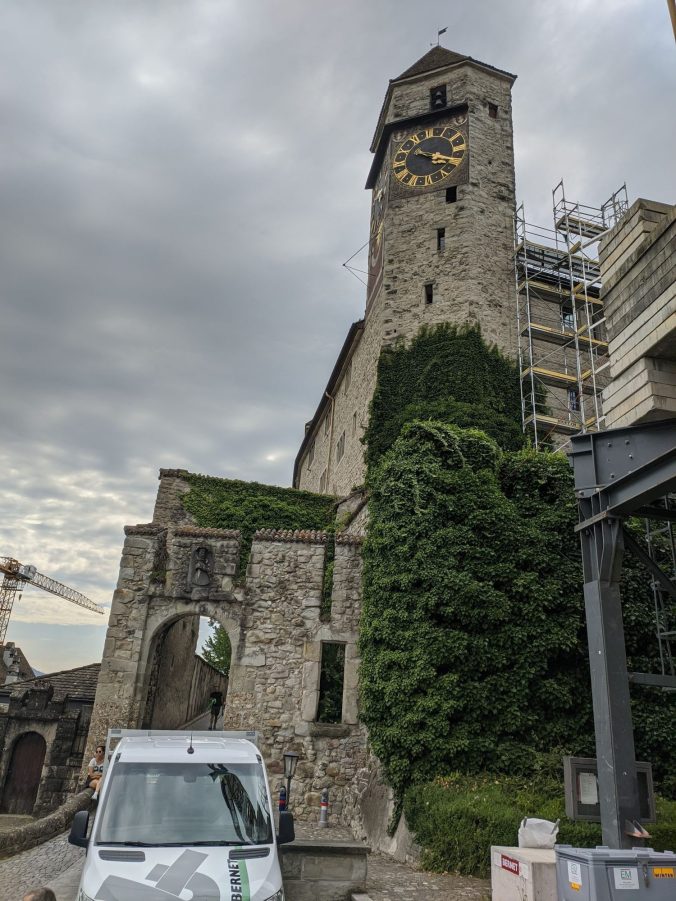
A nearby monastery with vineyards, a huge Cathedral.

Along the lakeside promenade, we stopped to watch a game of petanque which was being played for sheep stations.

We fitted a lot into the day. My head feels full to bursting! Back to the chalet for dinner, an evening meeting that was encouraging.
img_20240720_0013244571511315306081509

My blog is done and it’s time for bed!

Where’s Heidi?

Yesterday was a travelling day.
img_20240717_2124511565534706424346812

We left Surrey and travelled by bus up to Heathrow airport on the edge of London, meeting up with the Oak Hall tour and flying over the English Channel, then over parts of Europe to Basel. There were not a lot of clouds, so it surprised me how narrow the English Channel is as we flew over it.

I’m not sure how many countries we flew over – I didn’t track the plane’s flight. But it was just over an hour’s flight! Amazing. At Basel (pronounced variously as Basil, Barsil or Barl by different people) we got on a big coach together. Going through customs, the officer asked us where we were going. We started fumbling through our data, trying to remember the name of the town we’re based in. “No,” he said, “Which country – France, Germany or Switzerland?” Because from Basel you can easily get to any of them. “Oh, Switzerland please!”

img_20240718_0237438548652002449497436

Not a good photo but the only one I took on the coach of the scenery before it got dark

The big coach rolled on big highways, through a mix of industry and intensive cultivated land – many crops already harvested. Lots of tunnels, some of them very long as the dusk darkened and night came on. A two- and half-hour bus ride, skirting south of Zurich and driving further east, as we gradually started going higher and higher into the mountains. We couldn’t see the mountains – just felt their presence as we started driving steep switchbacks up and up.

We were glad to arrive at 11pm and be welcomed. Straight to bed for us! We didn’t read our Oak Hall instructions properly. We didn’t bring towels. I’ve got a shawl I can use, and Philip used one of his singlets. The only shop here is a tiny supermarket. It’ll help to make us innovative.

We’re based at the town of Flumserberg – a ski resort in winter with summer activities too. Staying in a chalet that’s 100 years old, badly neglected for years, but now recently renovated. Basic but very comfortable. Run by volunteers and we help with some of the duties. But we have our own room and en-suite, for which I’m grateful!

img_20240718_1526462758450300540890161

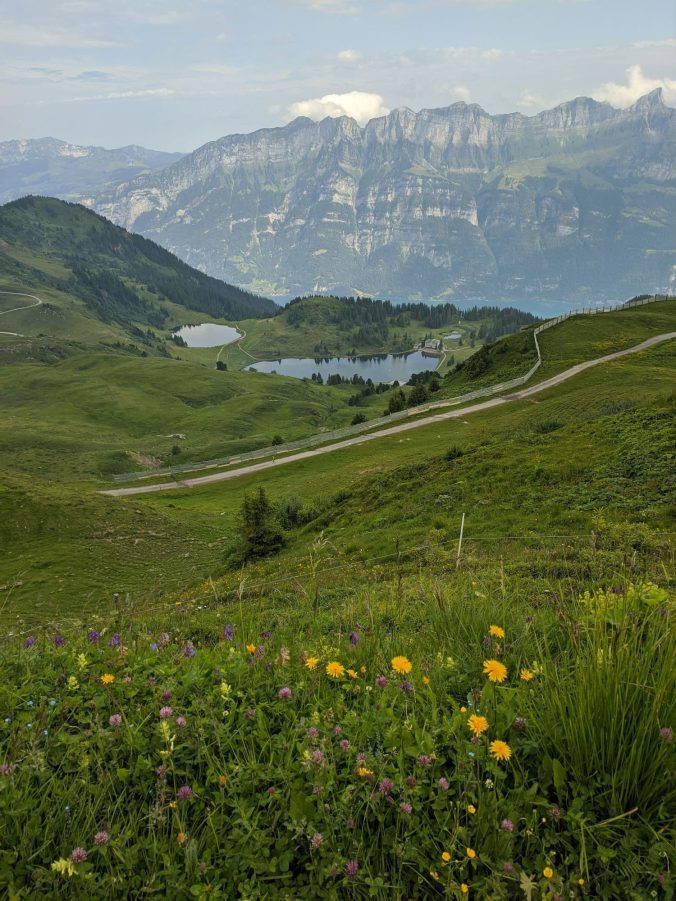
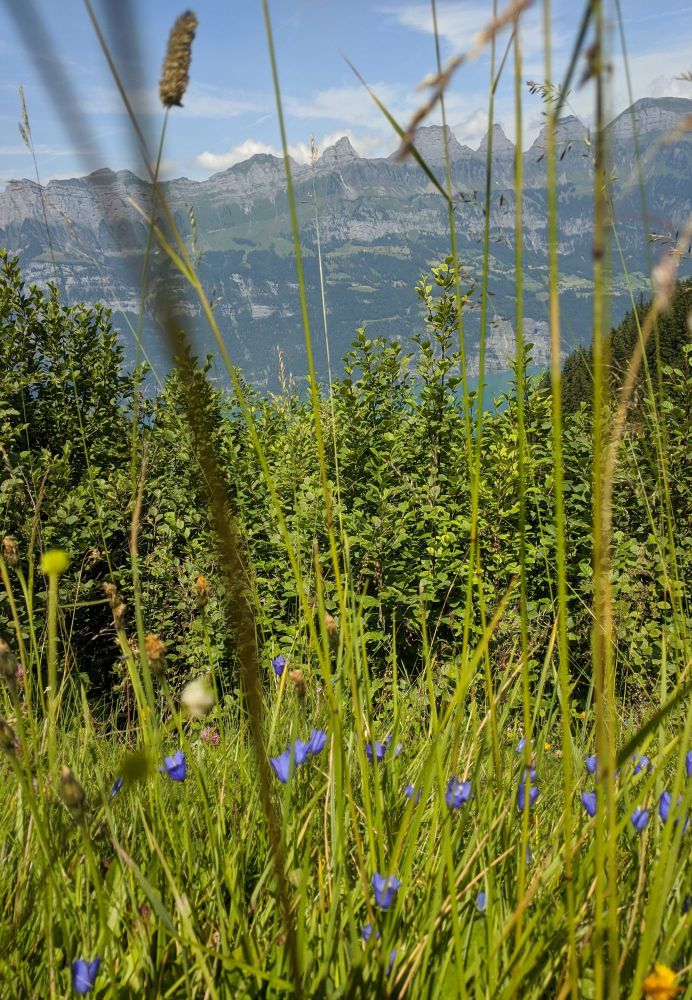
When we woke up this morning, this was the view from our bedroom window! Sunshine and warmth, clear mountain air. We’re at 1,400 metres above sea level.

img_20240718_1420363228264451717210984

There is no photo that gives any scale or idea of the majesty of these mountains. It’s hard to stop taking photos wherever you like, but none of them do justice to the scene in front of you.

img_20240718_1529221718034800189408576

One of them most enchanting things is hearing the constant ringing of cow bells. Where’s Heidi? …. but she had goats, not cows. It’s enchanting – there’s different tones and pitches in the bells. Like a lullaby in the background. I love it.

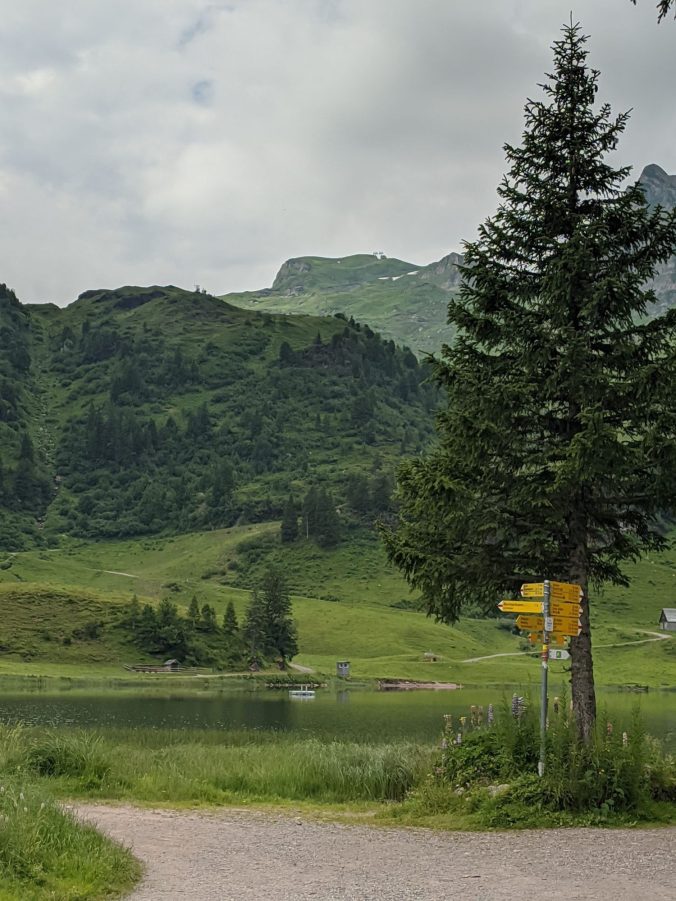
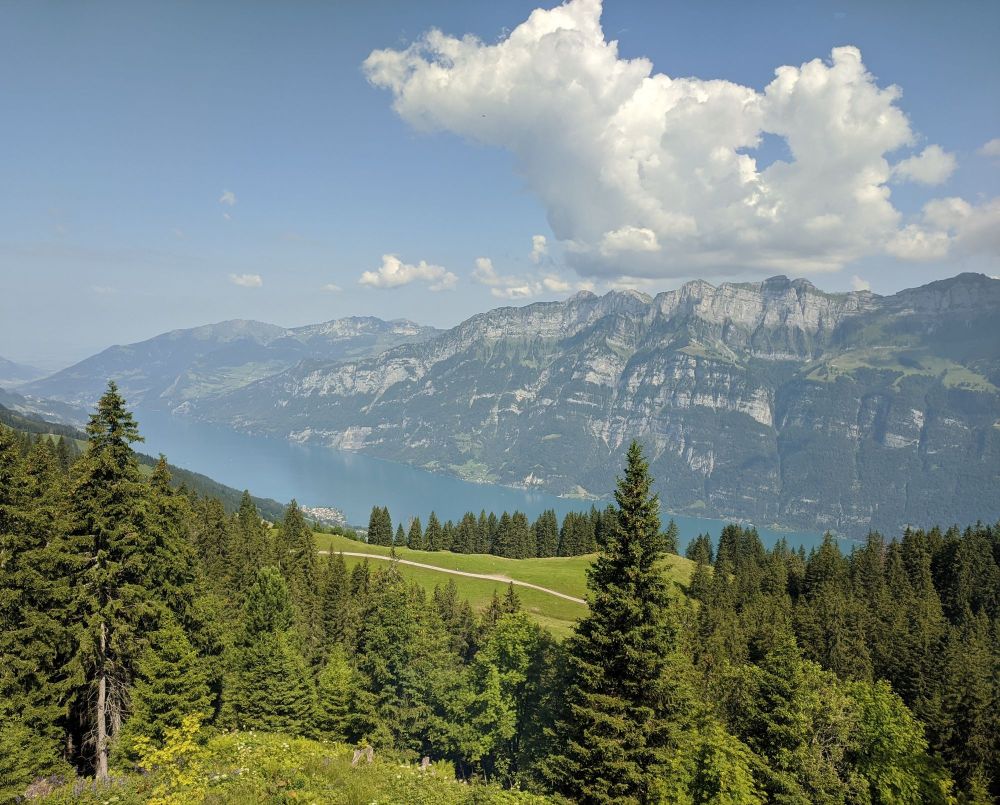
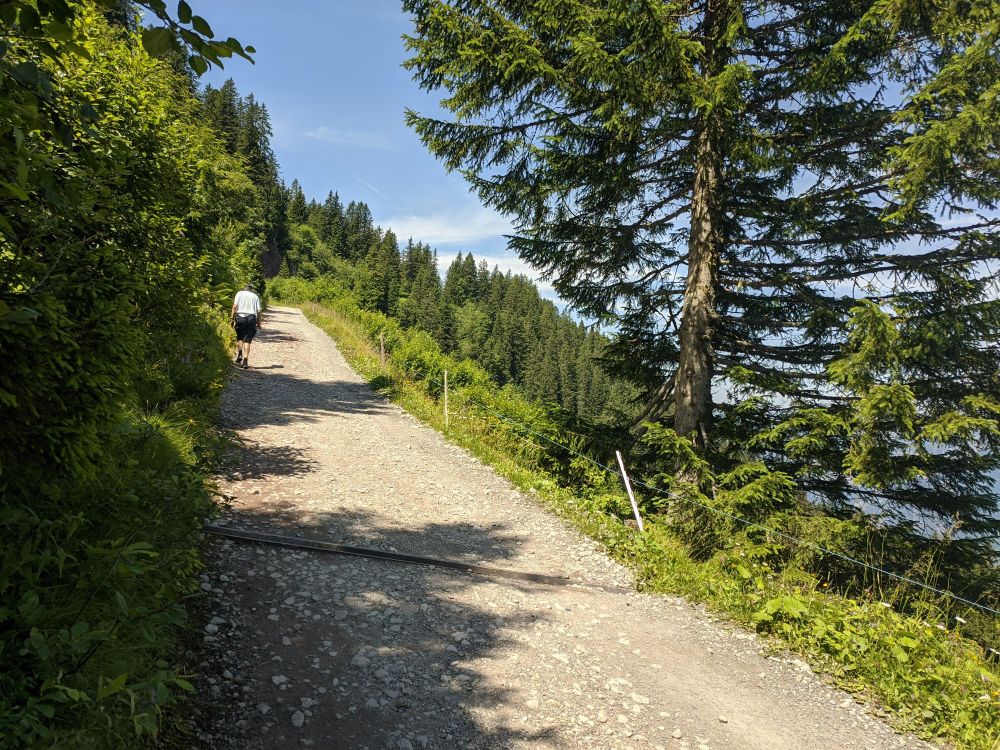
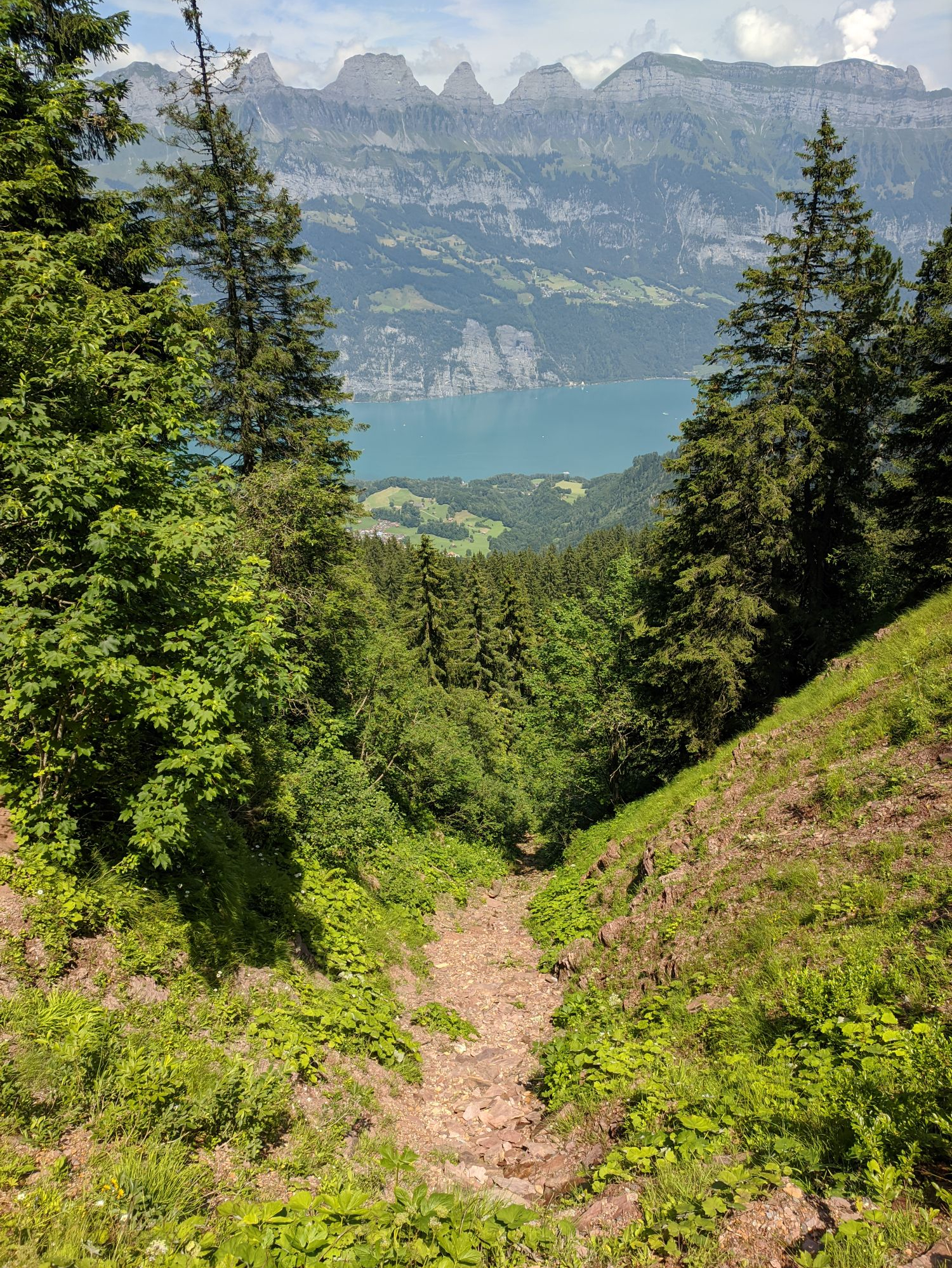
After breakfast this morning, some of us went on a mountain hike. We were told it was a fairly easy hike – to a mountain lake. But not this lake (below). That’s Lake Walensee – we saw it far below while walking on our hiking trail.

img_20240718_1750544393087013057200185

Only about half of the group finished the hike. Not sure what “easy” means. Compared to scaling the Matterhorn?

img_20240718_1819367241752425721755469

img_20240718_1725443637652941750906673

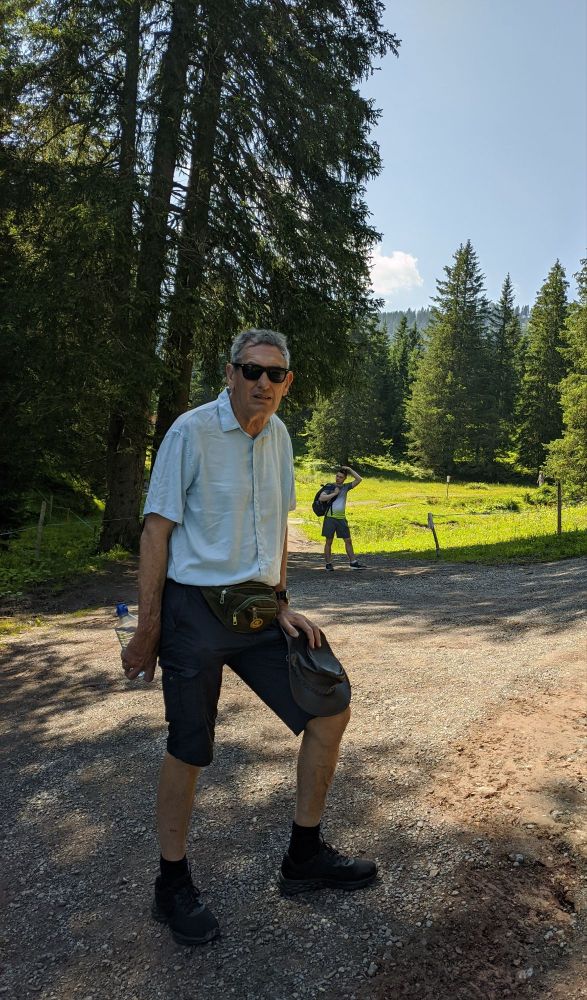
Philip and I are both so glad we did it. But were surprised at the slow speed of some of the younger people. It took us an hour and a half to get to the lake destination, and 45 minutes to get back to the chalet.

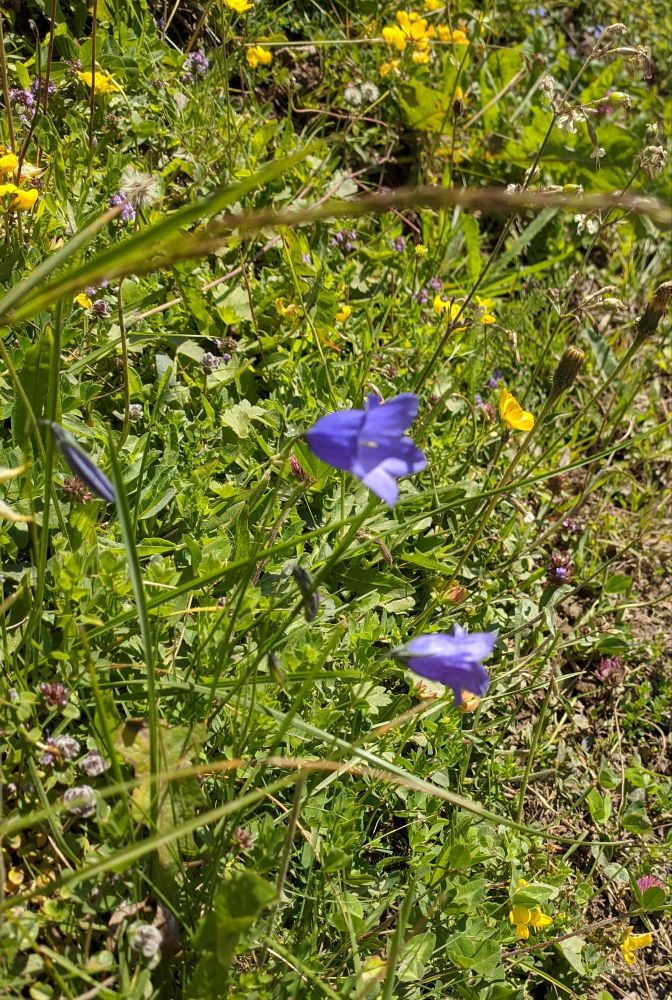
Beautiful, fascinating, stunning wildflowers everywhere, the varieties of flowers changing as we climbed higher and higher.

img_20240718_1740254576771086967679030

It was a very steep track, but wide. I couldn’t resist taking lots of wildflower photos but wasn’t happy with many of them. They never really captured the range, the colour intensity or the variety and carpets of them.

img_20240718_1821264102662529689850388

We did two brave things today!

At one place on the track, even though it was wide, one side dropped away very steeply – a very long way down, all the way to Lake Walensee way, way down below – a long, wide, milky green-blue lake. Philip turned his face resolutely to the safe cliff face, gritted his teeth and got through that section.

We arrived at our destination Lake Seebenalup. It’s over 1600 metres.

img_20240718_1837005025181365399824794

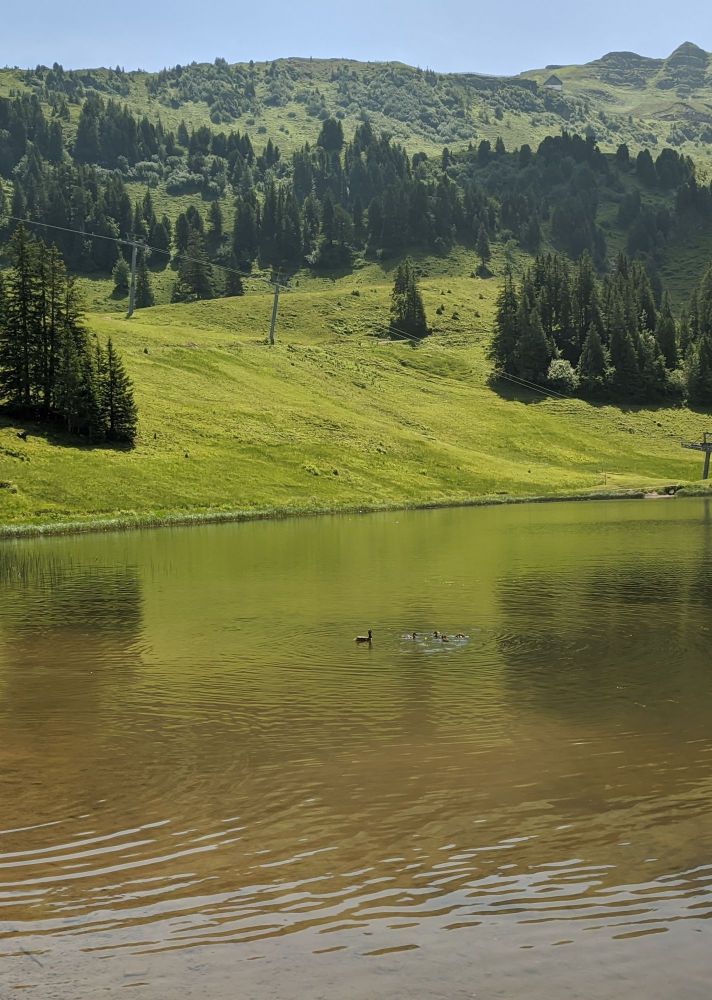
A much smaller lake – still the same milky, green-blue lake – and stunningly beautiful. Not only families playing on and around the water, but ducks with their ducklings.

img_20240718_1905073698308219820674803

My turn to be brave!

img_20240718_1916367495981766915433854

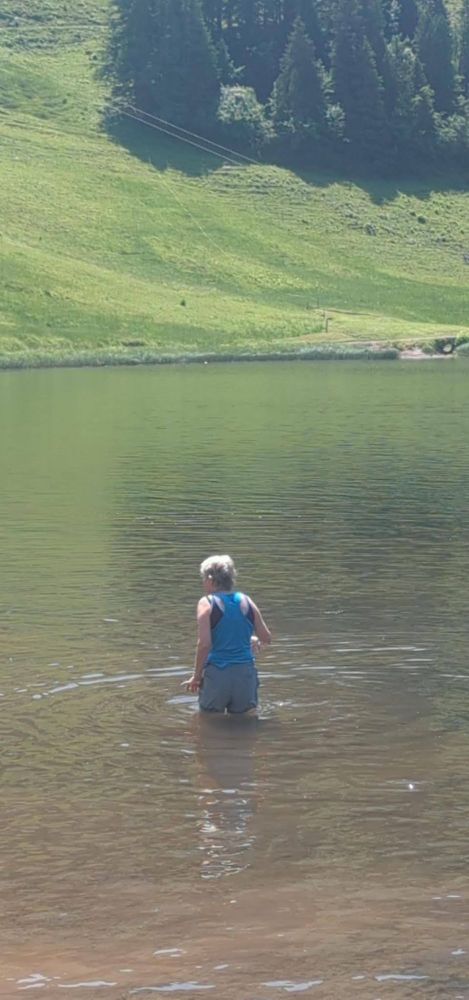
I decided I’d go for a lake dip, no matter what! Cold water with stony, muddy lake bottom and weeds. I gritted my teeth and did it. Icy, icy cold and it was a very quick dip, but I did it! The only reason I did it was that I knew I would regret it if I didn’t.

image-16592430649949987152

We ate our picnic lunch in that beautiful spot and then enjoyed the walk back down the steep track back to the chalet.

img_20240718_2001148728117965687721632

A wonderful challenge.

img_20240718_1919202284518441481895515

So glad we did it – and so grateful we can still do it! Do it together and enjoy doing it together. I can’t help but be awed by the spectacular imagination of our Creator and Father God.

img_20240718_1937362738723115560767641

Too many photos I know! But what a gloriously stunning place. It makes me glad to be alive!

img_20240718_1831528773786231244025241

An English Summer’s Day…

Philip and I went for a short walk this morning to a nearby supermarket and by the pathway I discovered ……

…… ripe blackberries! It’s still very early in the season, but I’ve constantly looked out for them and this morning I was rewarded. Puckeringly tart, but so enjoyable.

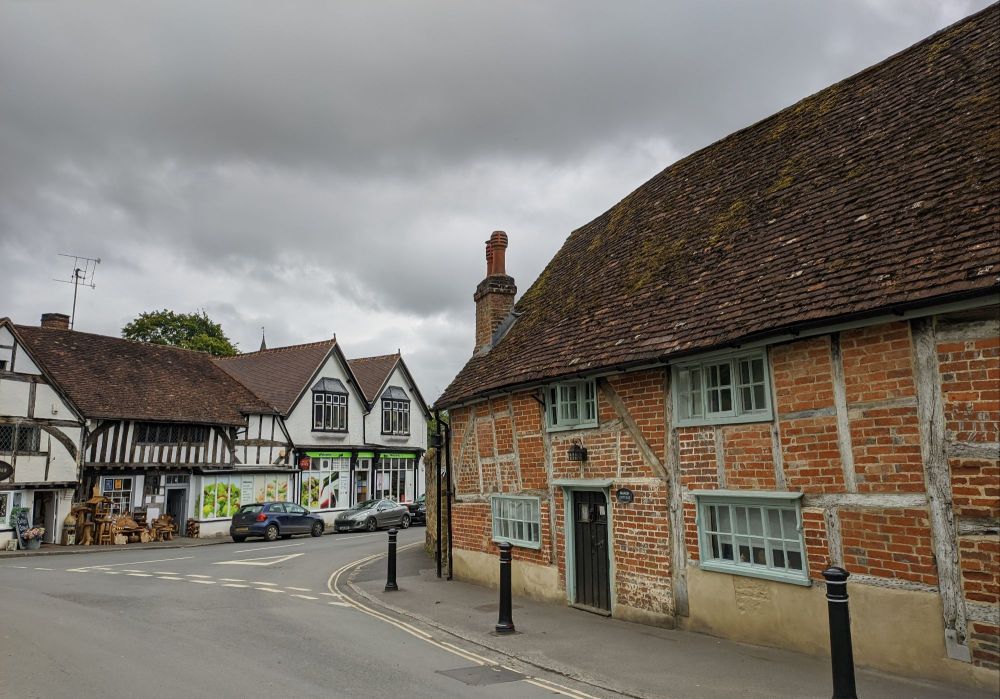
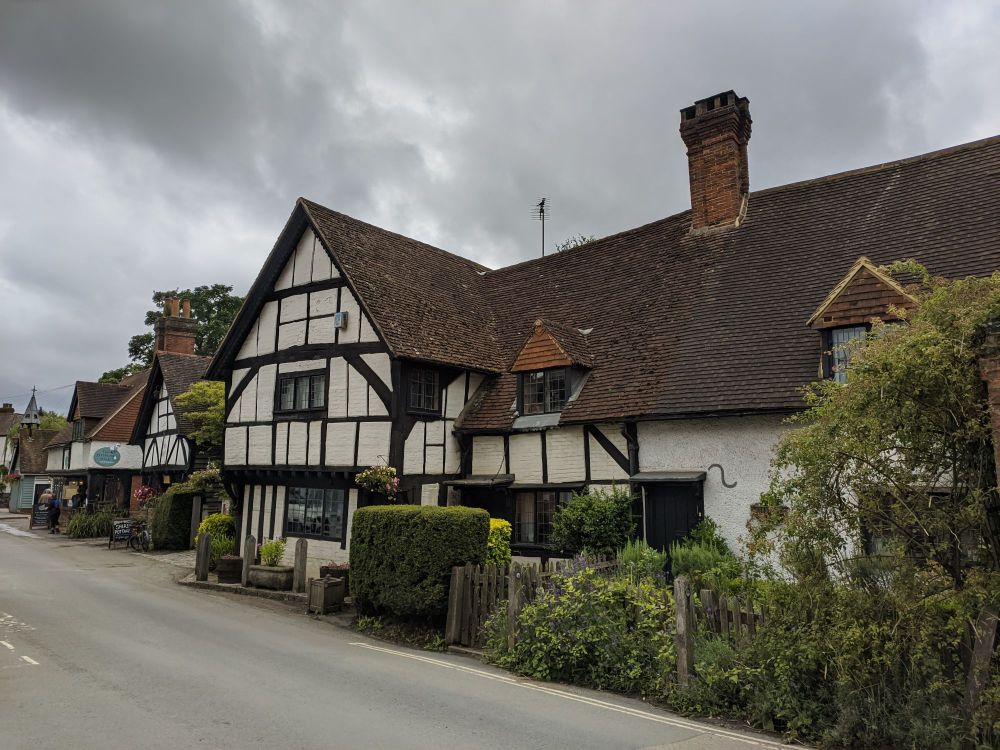
Gill and Peter drove us this morning through the glorious, rolling green countryside of Surrey to the village of Shere. A much-visited tourist village. And as we’re tourists, we visited it!

img_20240716_1858261390769753948757631

Some of the houses were built in the late 1400s and the photos don’t show the radical wonkiness of these houses. They are such fun to look and marvel at.

img_20240716_2050173558706051096683173

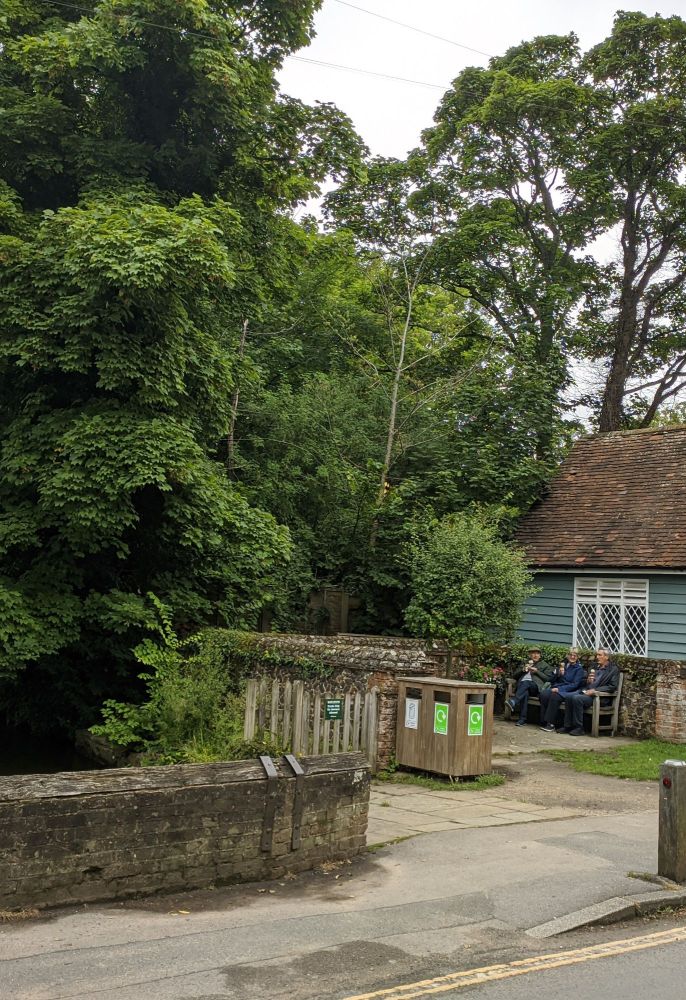
We had a great lunch at The Dabbling Duck, near the village stream.

Philip joined Gill and Peter to eat ice-cream near the village stream. Nearly as good as Gabriel’s ice-cream, but still not as good as Philip’s home-made ice-cream.

img_20240716_2036298068043600925104371

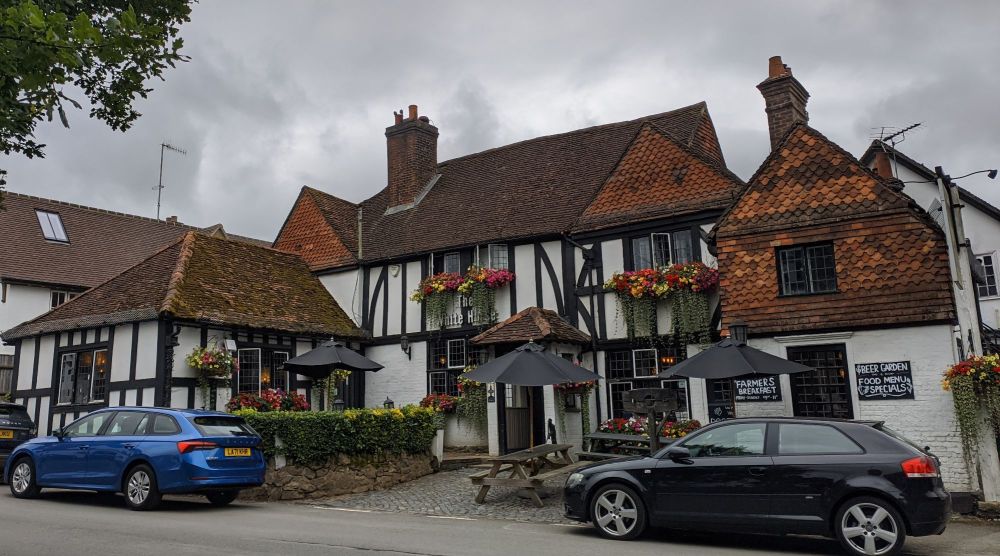
Do you remember the movie “The Holiday” with Jude Law, Kate Winslett and Cameron Diaz? Well, this village and this pub (photo below) were used as a setting for some of that movie. It’s been a long time since I’ve seen the movie, so I didn’t recognise any settings.

img_20240716_1959171195036941633124565

Wherever I looked there was another fascinating house to gawk at.

img_20240716_204914216216133009681574

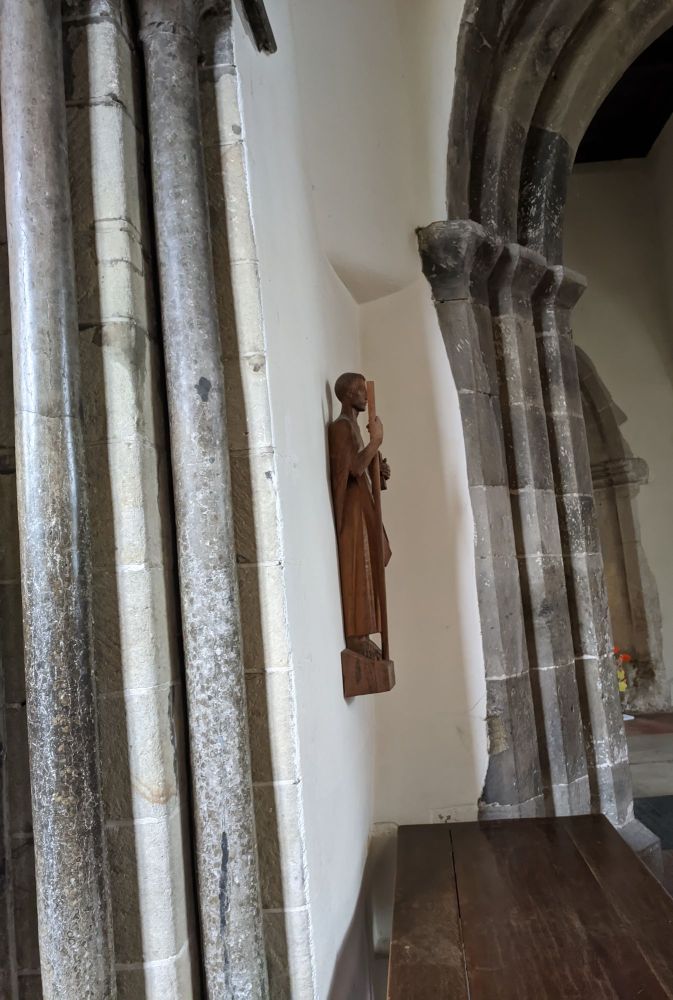
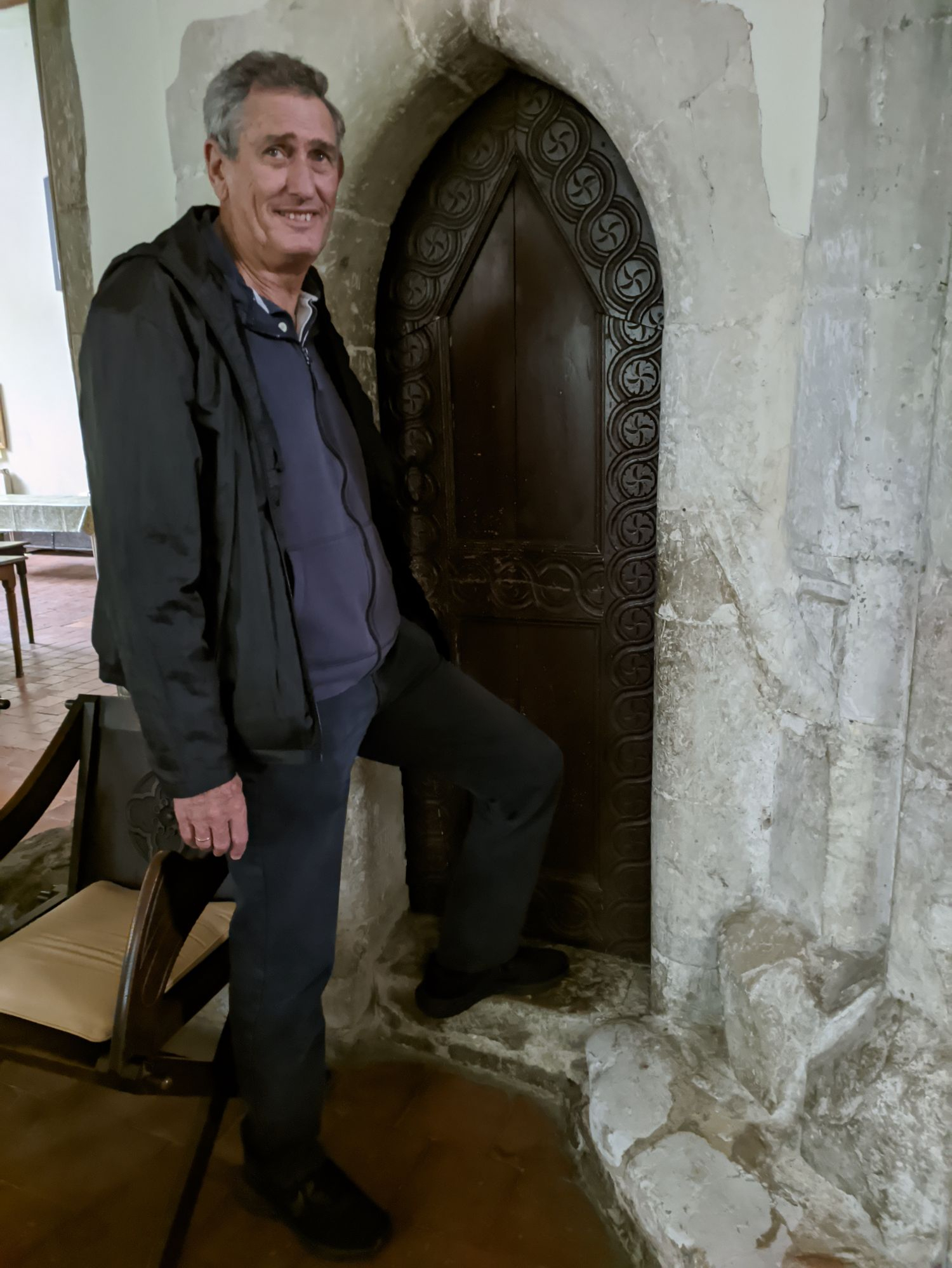
The village church is St James, and as well as a churchyard of lop-sided worn grave headstones, it has a history going back to mid-1100s and a list of all their rectors since 1270!

There are bricked-in arches in the church where an anchoress called Christine Carpenter in early 1300s withdrew from her world to lead an intensely prayer-focussed life. She received her food and drink through a metal grating on the outside wall of the church.

img_20240716_2020416459021941968555768

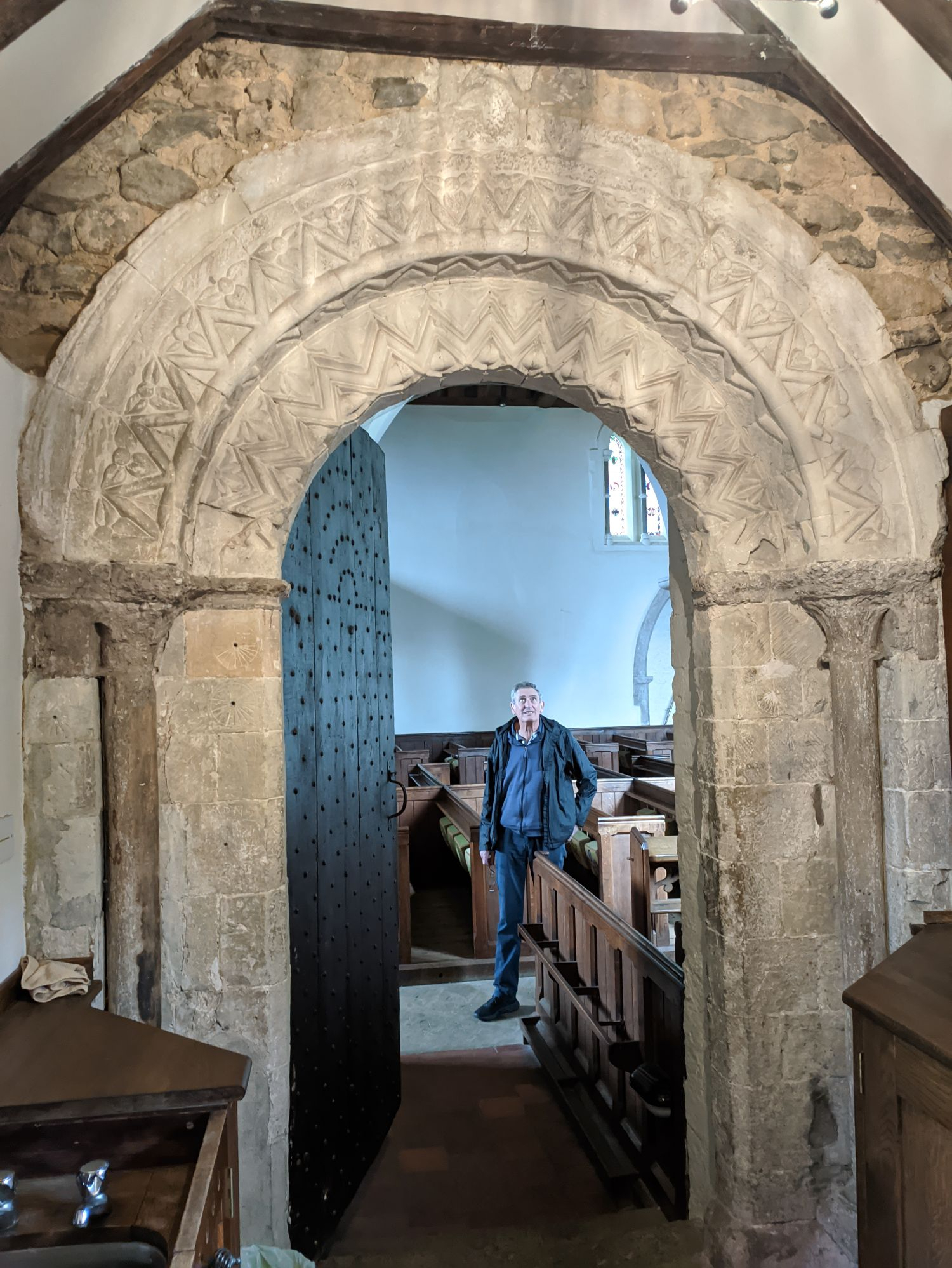
St James church has been on the Pilgrims’ Way since it was built in 1190, between Winchester and Canterbury after Archbishop Thomas a Beckett was murdered. Pilgrims still walk this route today and can get a scallop shell stamp at the church as they walk the Pilgrims’ Way.

A Norman arch in the church.

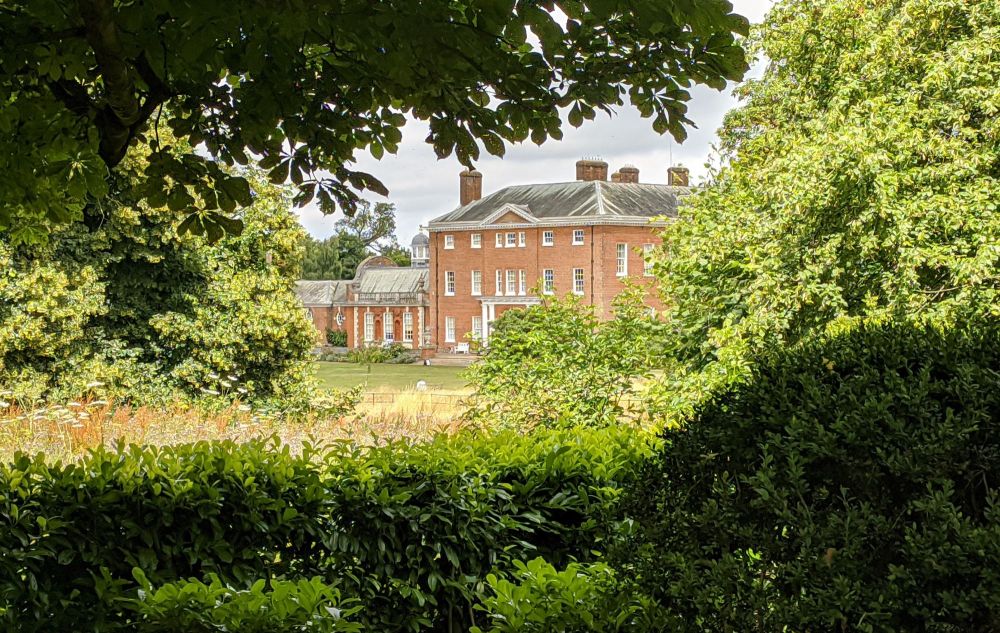
On we drove to nearby Hatchlands Park, a Georgian family home since it was built in 1756. It’s still a family home and they live upstairs. But the parklands around it and the ground floor are usually open to the public.

img_20240716_2109587677636406008649728

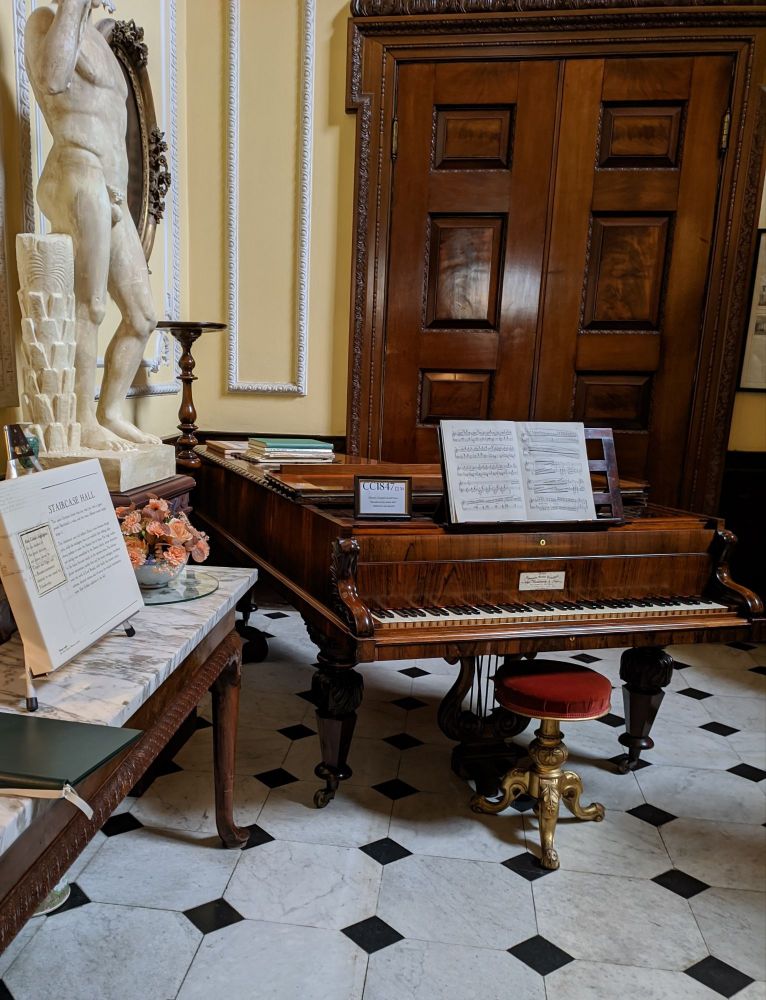
There you can see the most extraordinary collection of keyboard instruments. The current tenant of this house has been collecting instruments and other very interesting things for decades.

I got goosebumps as I looked up close to a piano played by J.C. Bach and by Mozart. Bach autographed the soundboard! Harpsichords from early 1600s. Instruments either owned or played by Charles II, Chopin, Liszt, Edward Elgar and the like.

img_20240716_2142543751794040542109335

Their music sheets, the walls covered with collectable artwork. It was amazing. I felt like my jaw had dropped and hit the floor. It had the effect on me of making history timelines compressing tightly and centuries-old history feeling like “yesterday”.

img_20240716_2157201588554216730010788

A built-in pipe organ.

Scones for afternoon tea at the cafe in the old kitchens.

In another little outbuilding is a second-hand bookshop run on an honesty box system. Woohoo! I skipped afternoon tea and headed straight to it. I found a couple of paperbacks in the bargain box. I did find some other more interesting books, but they were too heavy for plane luggage, and they had to be left behind.

img_20240716_2217185955443424132507277

A wonderful English day to be sure. We didn’t get to take our jumpers off, but it’s still the summer season. So therefore, a wonderful English summer’s day! Thank you Gill and Peter.

To finish off, here’s some extra photos of our English summer day.

Goodnight! We’re off to Switzerland tomorrow.

Full steam ahead…

It’s been a few days since I wrote. I’ve been a bit off colour, probably something I ate, but getting back on track now. Philip and I flew out from Bergen in Norway on Saturday.

img_20240713_1413287117155408661471648

We had a “small world” experience in the Bergen airport, when who should walk past but his second cousin from Perth with her two children, holidaying in Europe. We didn’t even know they were there, so we had a lovely catch-up together until our flight to Copenhagen and then straight on (apart from waiting in an airport in endless lines) back to Heathrow England. It took us the best part of the day to eventually arrive in Guildford to be warmly welcomed by Philip’s fourth-or-fifth cousin, Gill and Peter.

img_20240714_1702113000052827412008941

Yesterday was mostly a lovely warm(ish) day. Gill baked a wonderful Sunday lunch roast and her son, Philip and his wife Sam with two of their teenage children, Zara and Oliver came and we had a great Sunday afternoon together which included watching the final of the men’s Wimbledon match on TV.

img_20240714_2016145864500556913251764

It is back to clouds and rain today. Gill is not impressed with the English “summer” this year! We’ve had an exciting adventure today, taking the one-hour train south to Portsmouth on the southern English coast to the Portsmouth Historic Dockyard. It’s been an important military, dry dock and naval port for centuries. All we saw today as we looked around was barely scratch the surface… again! I think one of the side-benefits of history is that it helps to re-set our perspective of the transience of life, fight “chronological snobbery” and appreciate all that we do have today.

img_20240715_2300357273806185548265467

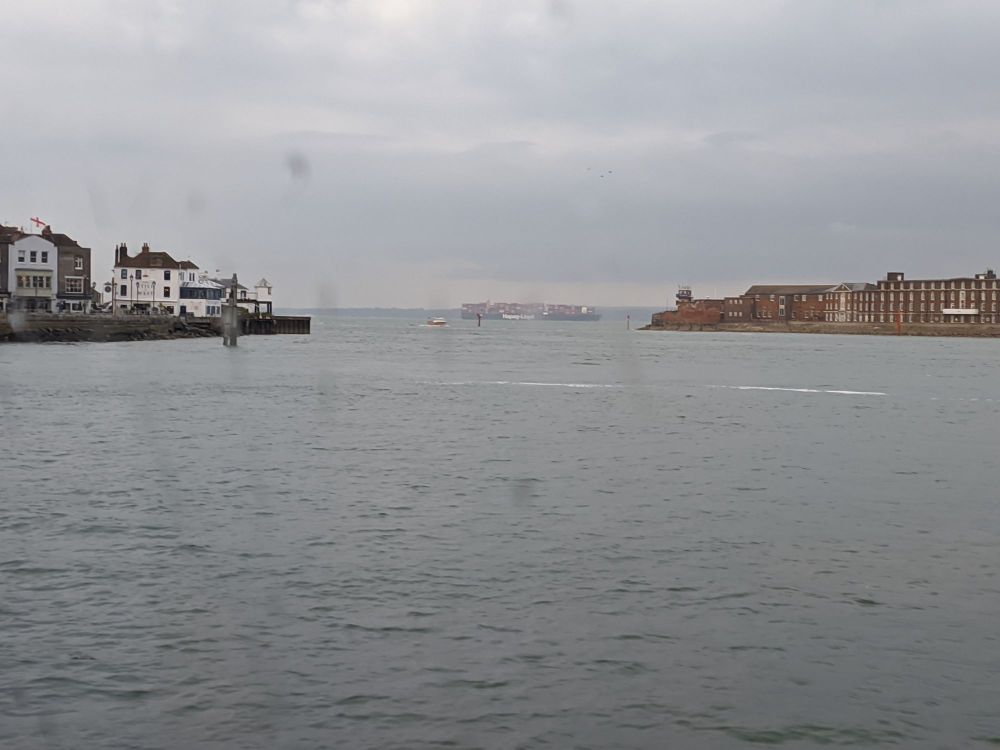
The mouth of Portsmouth Harbour

We first visited the “Mary Rose” exhibition.

img_20240715_1922114229497069680332983

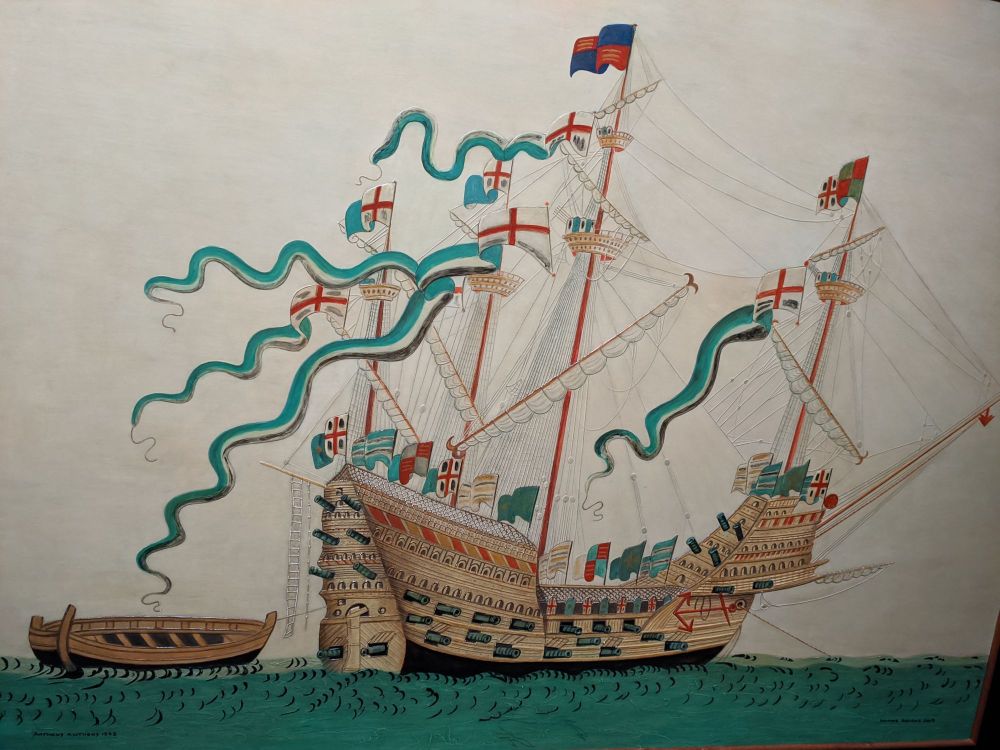
The Mary Rose was a warship built in the early 1500s by Henry VIII – he was still a teenager – and was in use for 34 years and was one of his favourites until it sank in the Solent Channel in 1545 in a battle with the French.

img_20240715_191225~22041839257275136892.

It took many, many years and lots of effort, toil, ingenuity and money to salvage and conserve the remains of this ship. It was rediscovered in 1971 and finally raised in 1982 from the seabed. 19,000 items were salvaged from the ship. Here’s just a few that caught my eye.

img_20240715_2045293688296374927870826

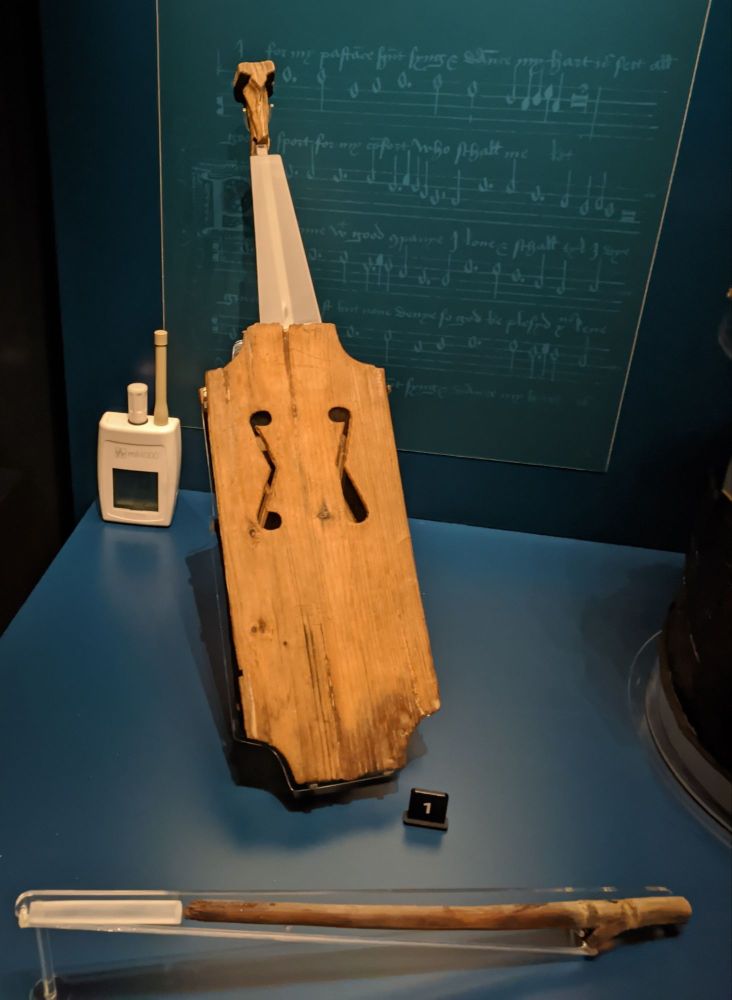
Musical instruments – a fiddle and a drumstick

Now they have amazing technology to not only conserve this piece of history, but to investigate life on the ship when it went down – the people (and a dog), what they ate, what they wore. You could spend a week in there and not see it all.

img_20240715_202719~26789774045303819273.

Halyards & pikes for hand-to-hand fighting – they were very heavy to lift, let alone swing around as a weapon!

Philip having a go at using a longbow. Englishmen were famous archers.

All of the men of the Mary Rose could use a longbow. A law made every fit male in England practise with a bow from an early age. Modern archery bows use about 17kgs of strength. The one Philip is using needed 35 kgs of strength. But Tudor archers needed to use about 65 kgs of strength. Philip said it was very hard to do! The skeletons of some of the archers on the Mary Rose have grooves in their fingers from the “string” and twisted spines from the exertion.

All year round the ship was damp and dark with a strong smell of tar, stagnant water and sweating, unwashed men. The crew slept on the hard deck. Only some elite soldiers had uniforms, the rest wore their own clothes. And if they didn’t have a change of clothing when it was stormy or raining as they were on the open decks or in the rigging, it would be a long time before they could get dry.

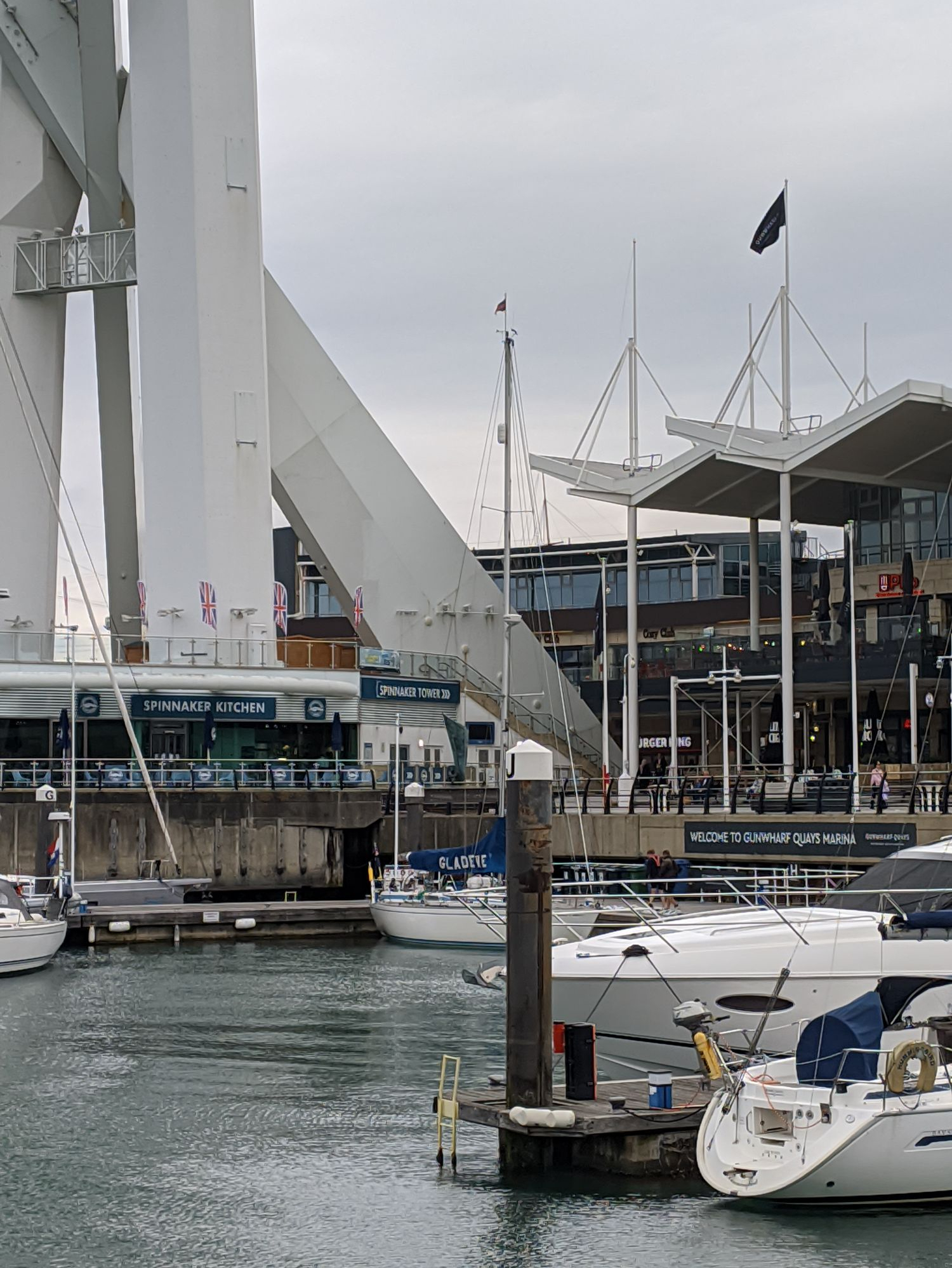
We did a harbour cruise on a ferry around Portsmouth Harbour. It’s still used as a maintenance dockyard as well as a busy harbour for all sizes of boats.

It was from Portsmouth that the First Fleet to Botany Bay in Australia set sail.

img_20240715_2245523612716040656155458

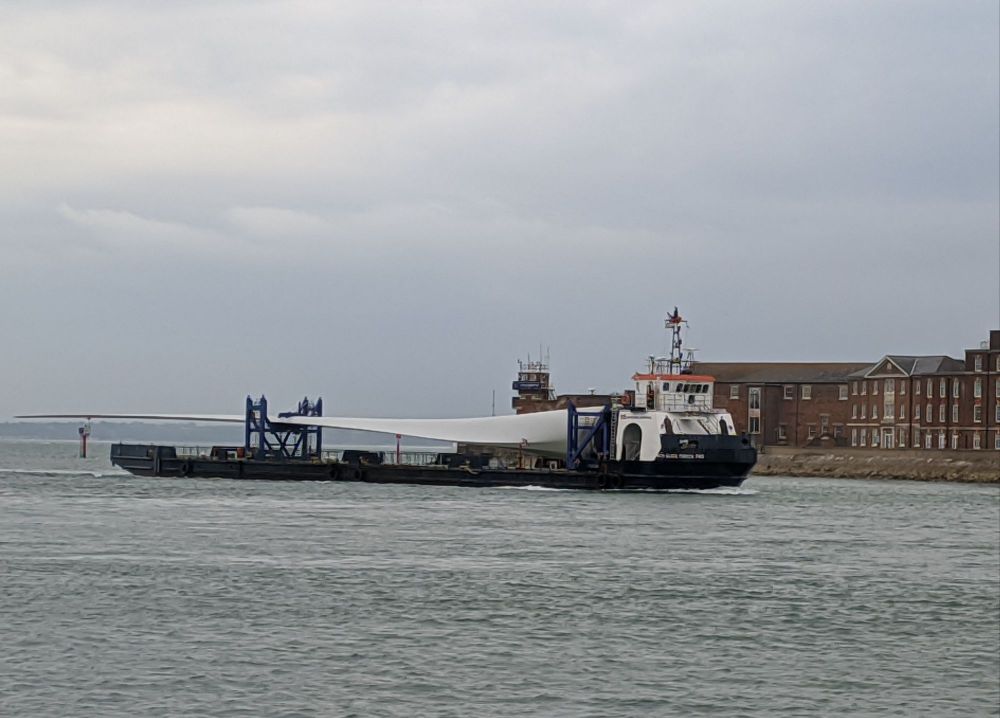
This is a ferry boat coming into Portsmouth Harbour carrying a wind blade for wind farms. Made on the Isle of Wight and ferried over to English mainland. Each blade must be started and finished within twelve hours & no interruptions. The workers are well paid but get severe reactions from the chemicals used to make them. Food for thought!

We didn’t do the “Victory” tour – the very famous ship of Sir Horatio Nelson at the battle of Trafalgar in 1805. Ships like the Victory are cramped, very low ceilings and are difficult for tall people to explore. But I did hear an interesting story that just before he died Nelson said he didn’t want to be buried at sea. (He died in the midst of battle.) He wanted to be buried with a Christian funeral in England, which was several months’ sail away, so they pickled his body in a full rum barrel until they could get him back to England!

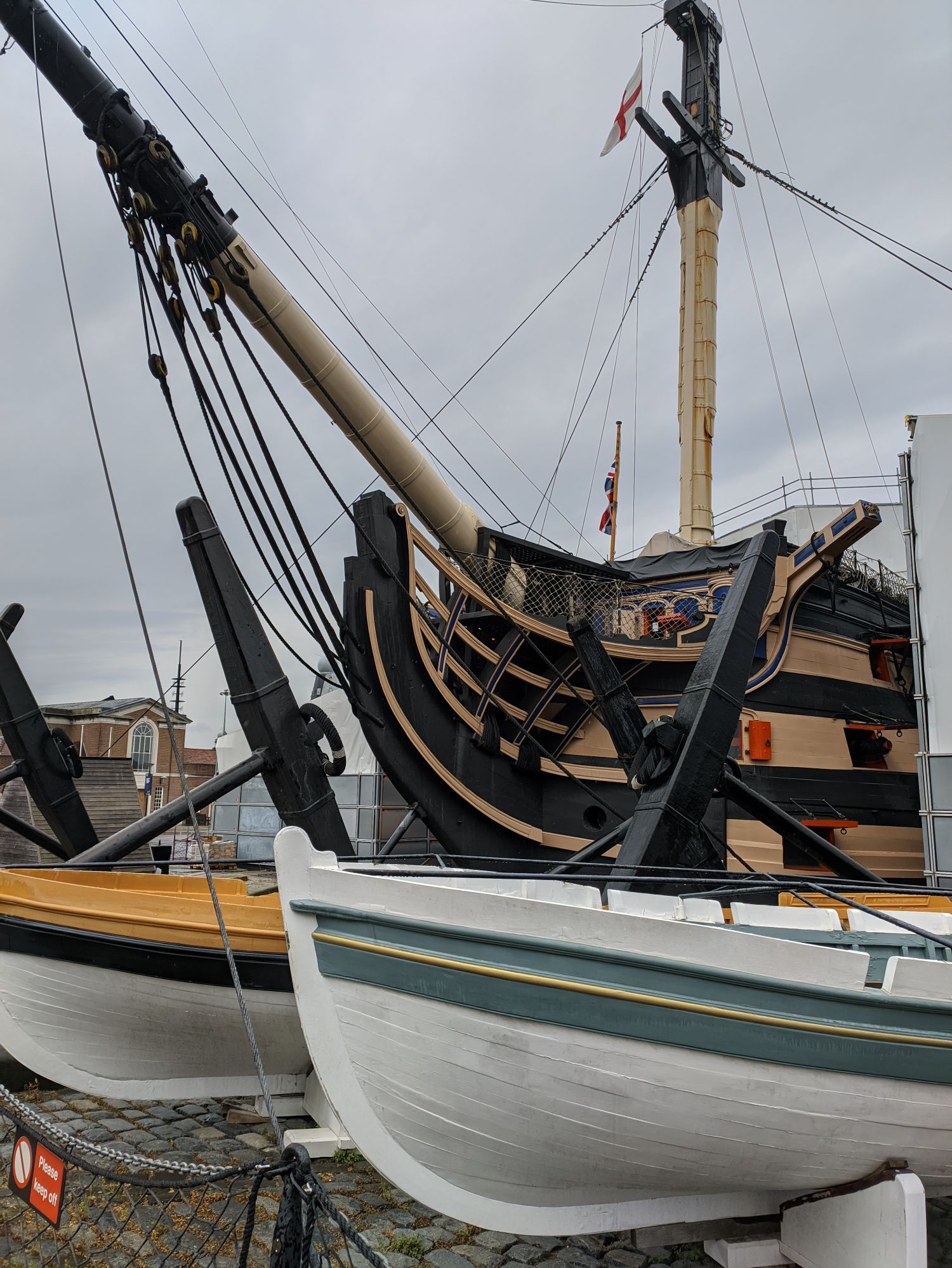
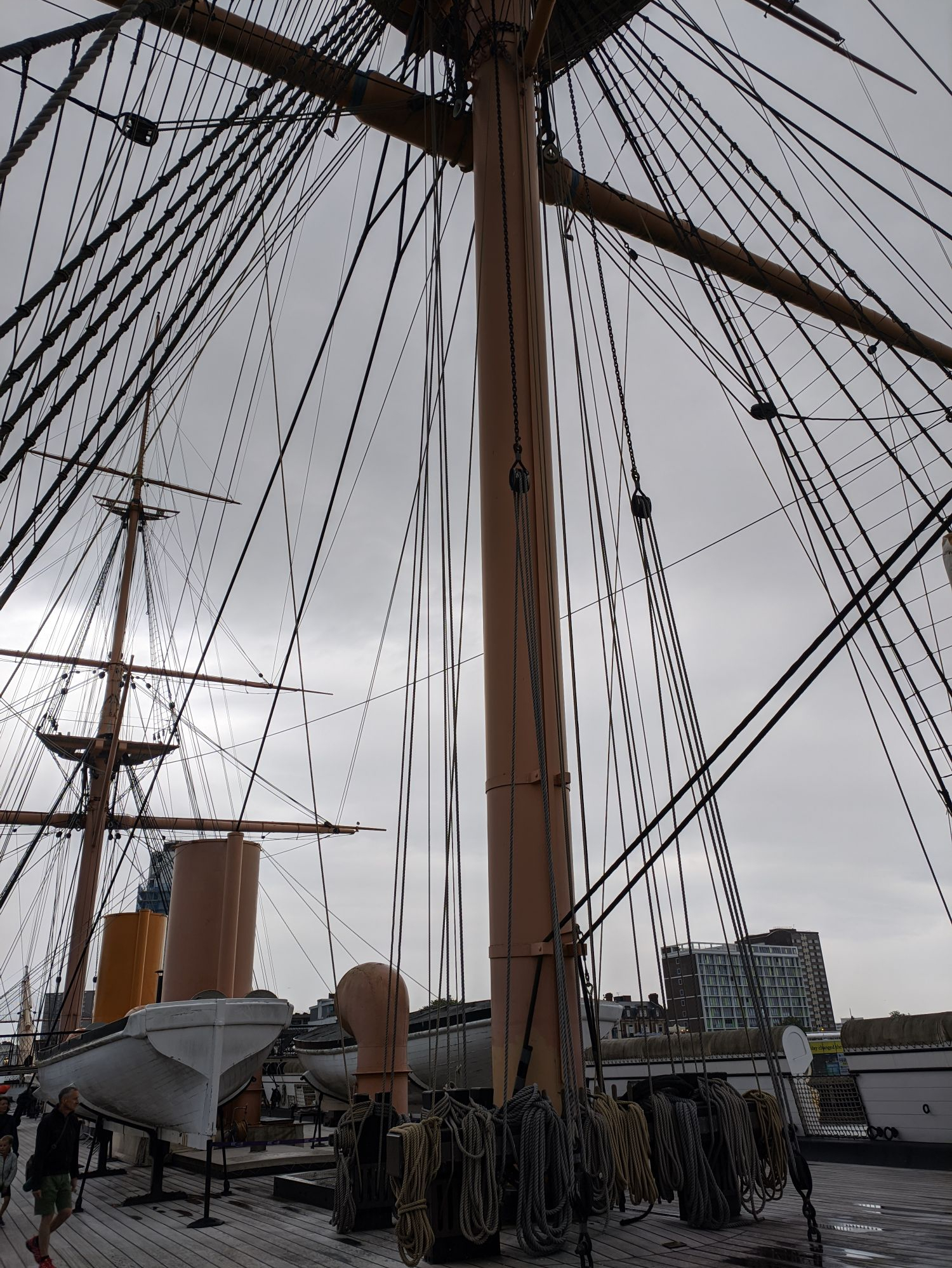
But we did a tour of “The Warrior” a sail and steam ship that was the pride of Queen Victoria’s Navy and was for a time, the largest warship in the world.

img_20240715_2351226209962874068434311

I am so glad I never had to work in the Navy in any period of history!

It was such a tough life – and that is such a big understatement.

img_20240715_2315188079755781393630646

Cramped, tight, working and living conditions. Photo below shows a rolled-up hammock on the table with eating utensils. The hammock was slung at the end of the table. In between each table are the cannons!

img_20240715_231405182017296991192352

Ordinary sailors would have to climb over the sides at the front of the Ship to go to the toilet! Sailor divers would have to dive under the Ship to inspect and clean the hull.

It took four or five hours to raise the Warrior’s anchor. 520 of the crew ate and slept together.

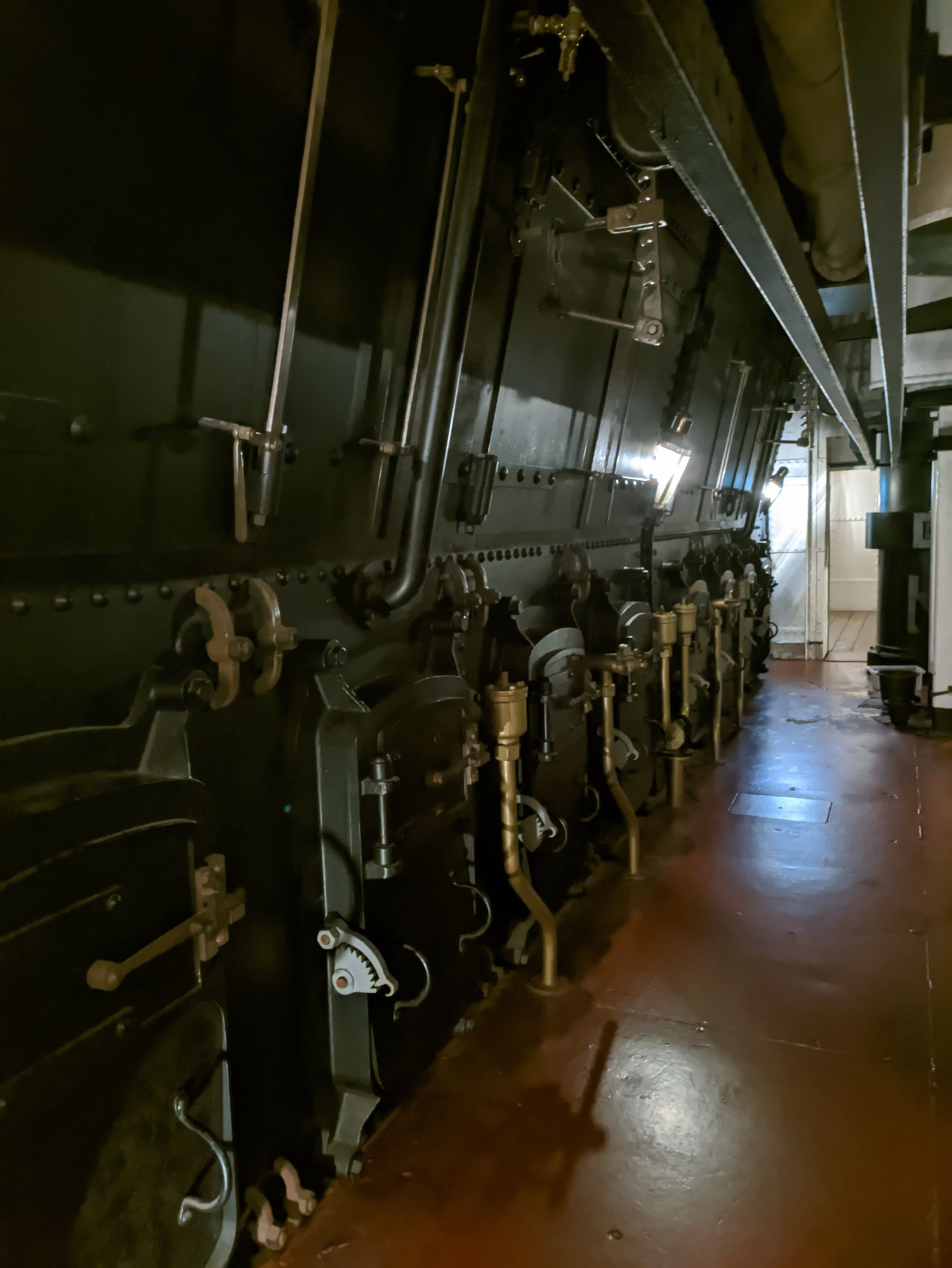
They had to carry 853 tons of coal for the stokers to fuel ten boilers, each with four furnaces – enough for three and a half days at top speed. Hardly any light anywhere apart from the top deck, just a tiny little porthole every now and then.

img_20240715_2332206068148764884191305

They mostly ate salted food – beef and pork. The storeroom held 30 tons of ship’s biscuit which looked hard and tasteless.

I am very glad we came home through the rain to a hot, delicious dinner cooked by Gill and the prospect of a shower and a warm, cosy bed. How blessed are we in our lives in these days!

img_20240715_1803341299859757912136115

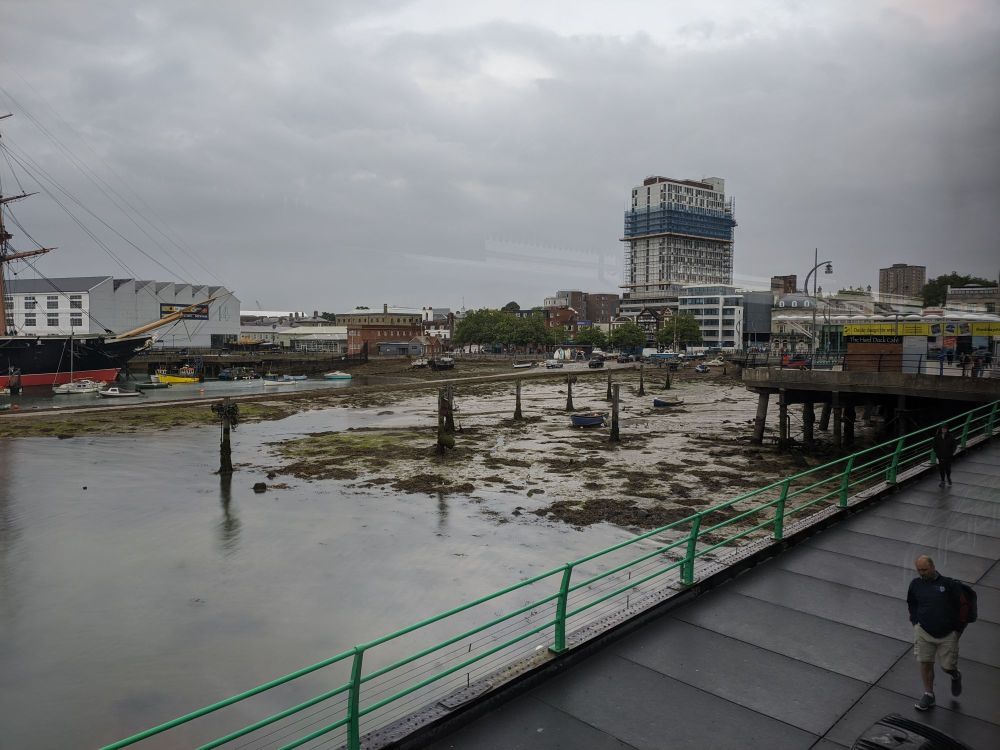
Low tide at Portsmouth Harbour with seaweed, seagulls and beached dinghies

img_20240715_2117418473042742151613598

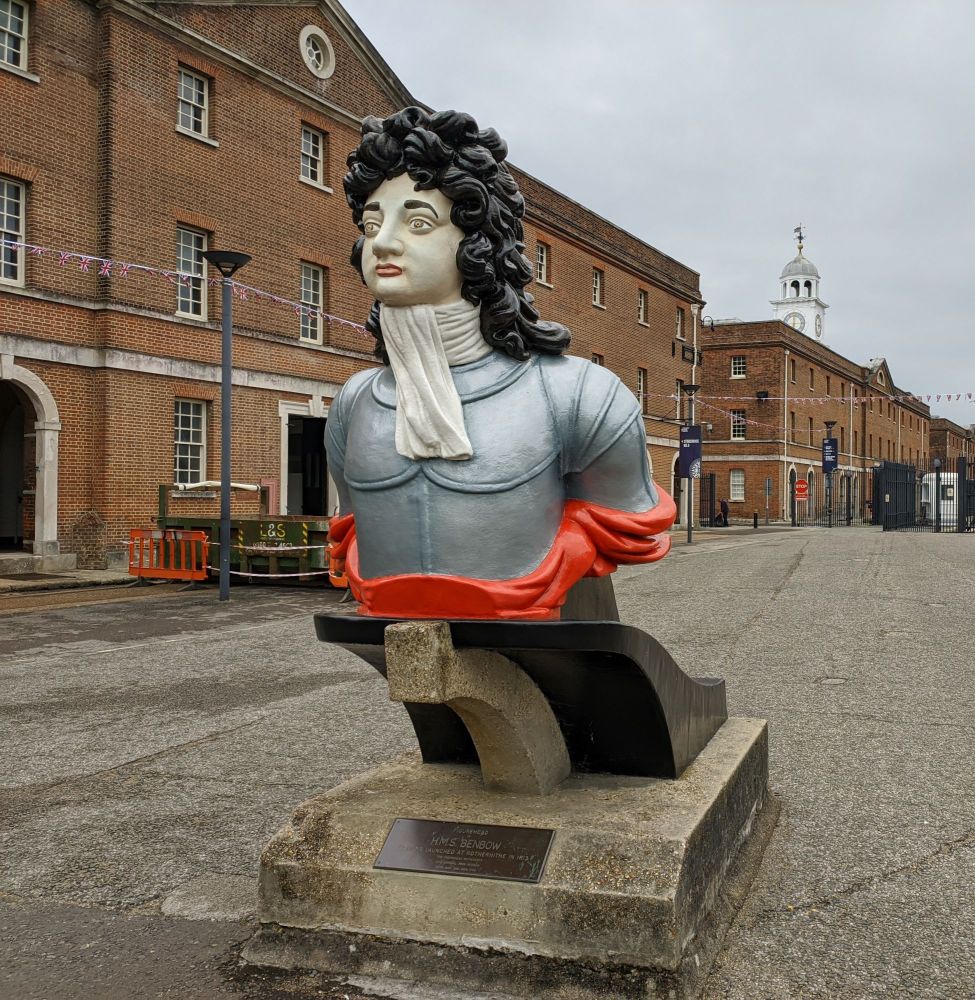
Admiral Benbow!

A Bergen Meander…

After our long, adventurous day yesterday train-travelling, we decided after breakfast this morning to explore Bergen by meandering at a slower pace to see what we came across. What would we find and discover?

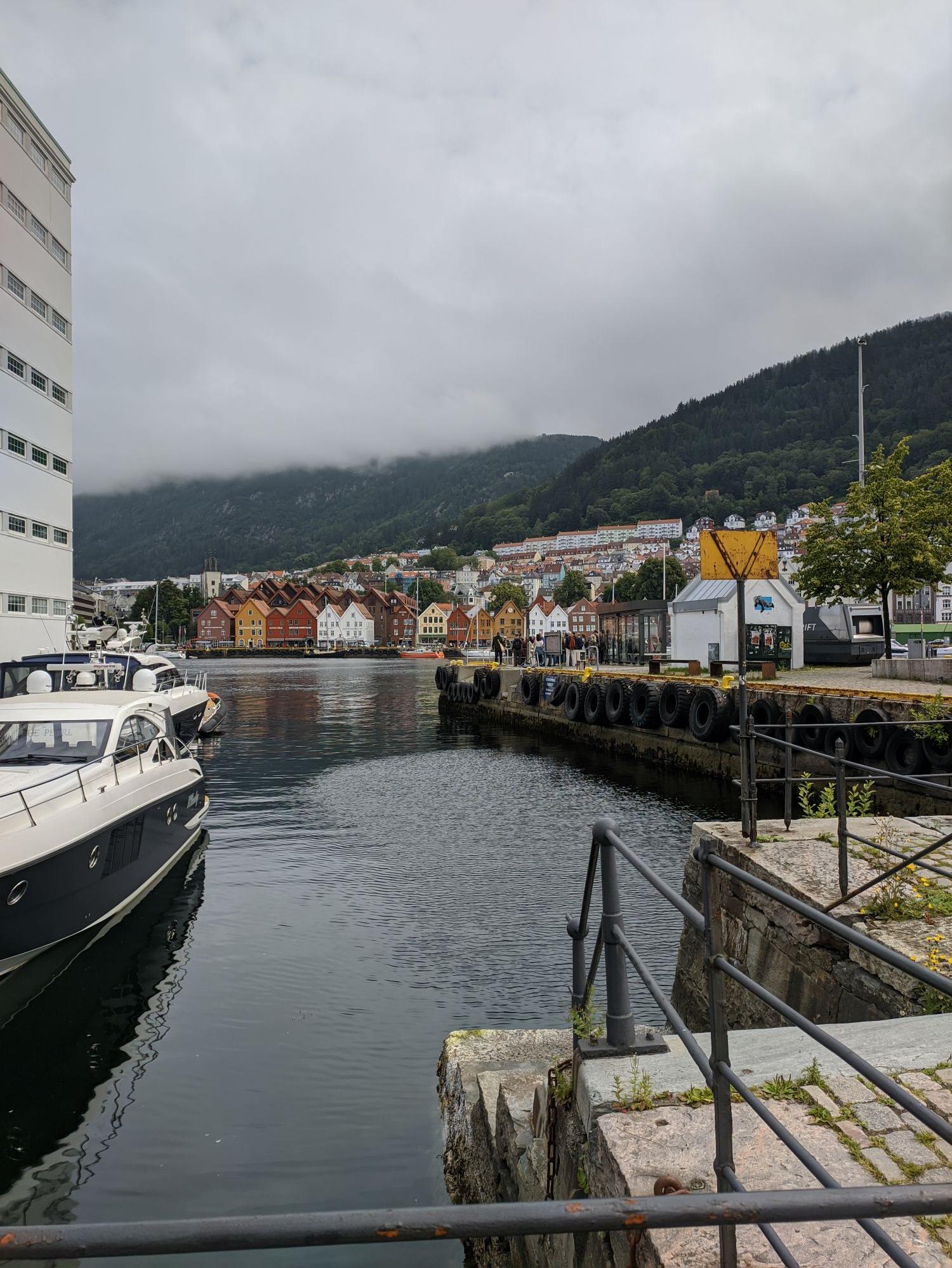
There’s a briny scent in the air here as Bergen is surrounded not only by steep mountains, but by fjords. Nothing is far from the sea – it’s a maritime town. It’s still one of Europe’s busiest ports and has been since the 1000s. It’s also Europe’s rainiest town, but today it was only cloudy, and we even saw a few small patches of blue sky!

img_20240712_1822374819222796902721900

We walked with no particular destination in mind. This open garage attached to a little, ancient-looking wooden, wobbly cottage was the first interesting thing that caught my eye. No particular reason, but I appreciated the eclectic things jumbled together! Maybe it’s a symbolic collection of all that Bergen is and offers!

img_20240712_1602391922991883142178932

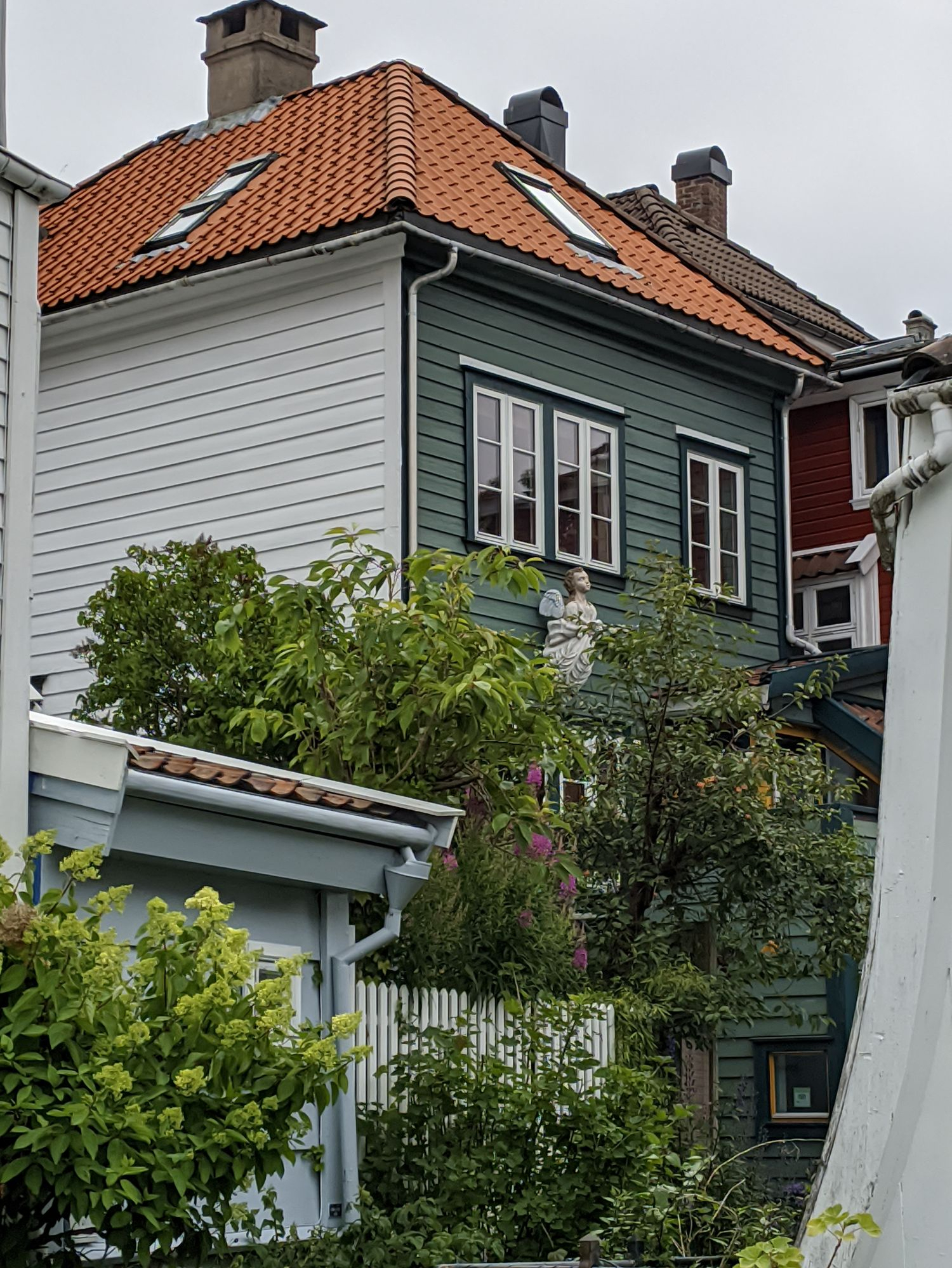
This house has what looks like a ship’s figurehead attached to its front wall.

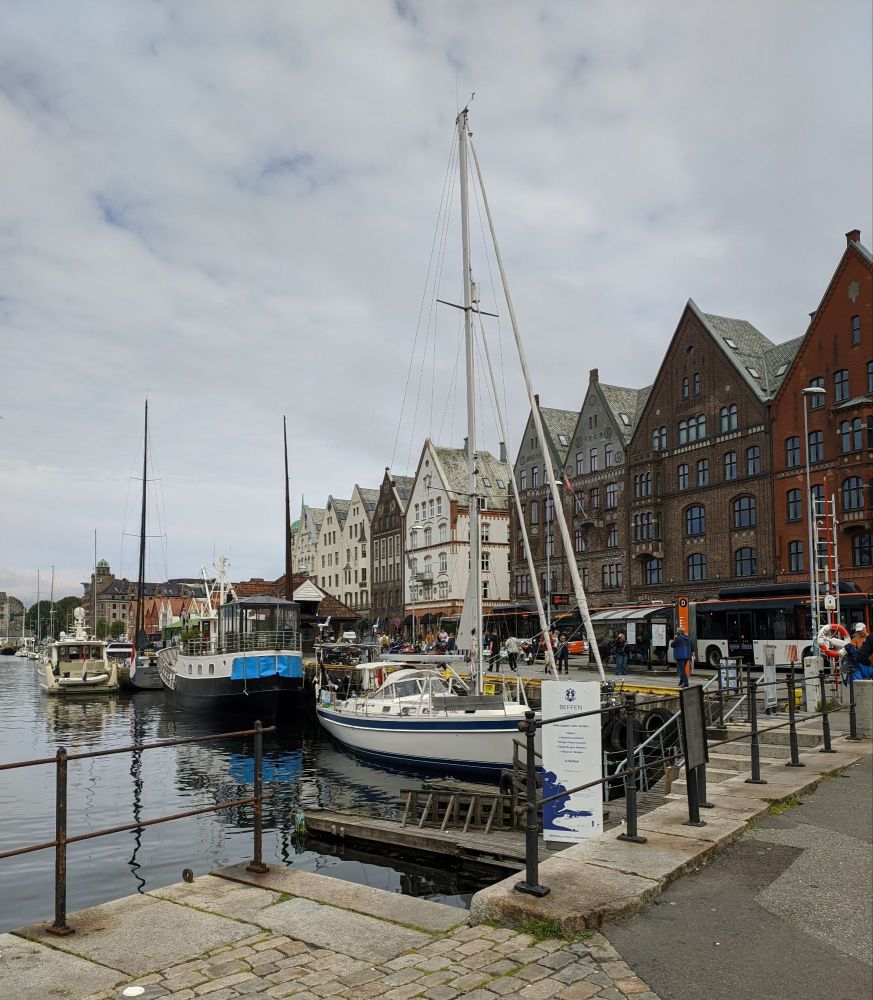
Boats, boats everywhere – from huge cruise liners to ordinary little boats and everything in between.

I liked the illustrations of this Sardine Factory.

img_20240712_1625057175003005046209016

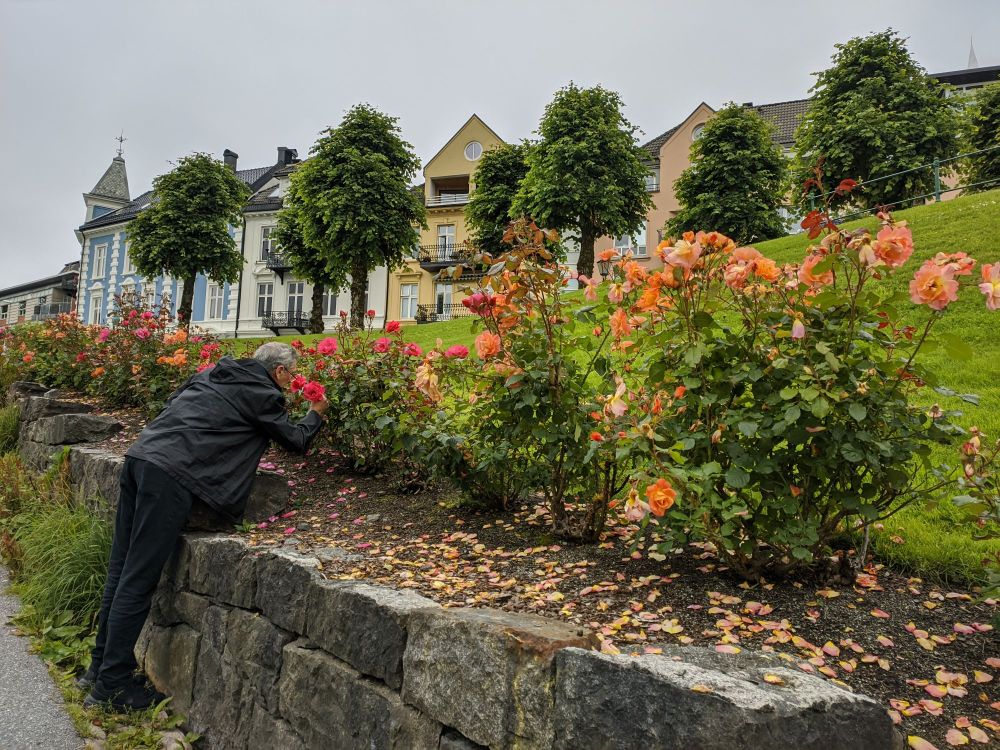
Philip stopped to smell the roses with very Bergin-looking houses in the background.

img_20240712_1630466225894548408824604

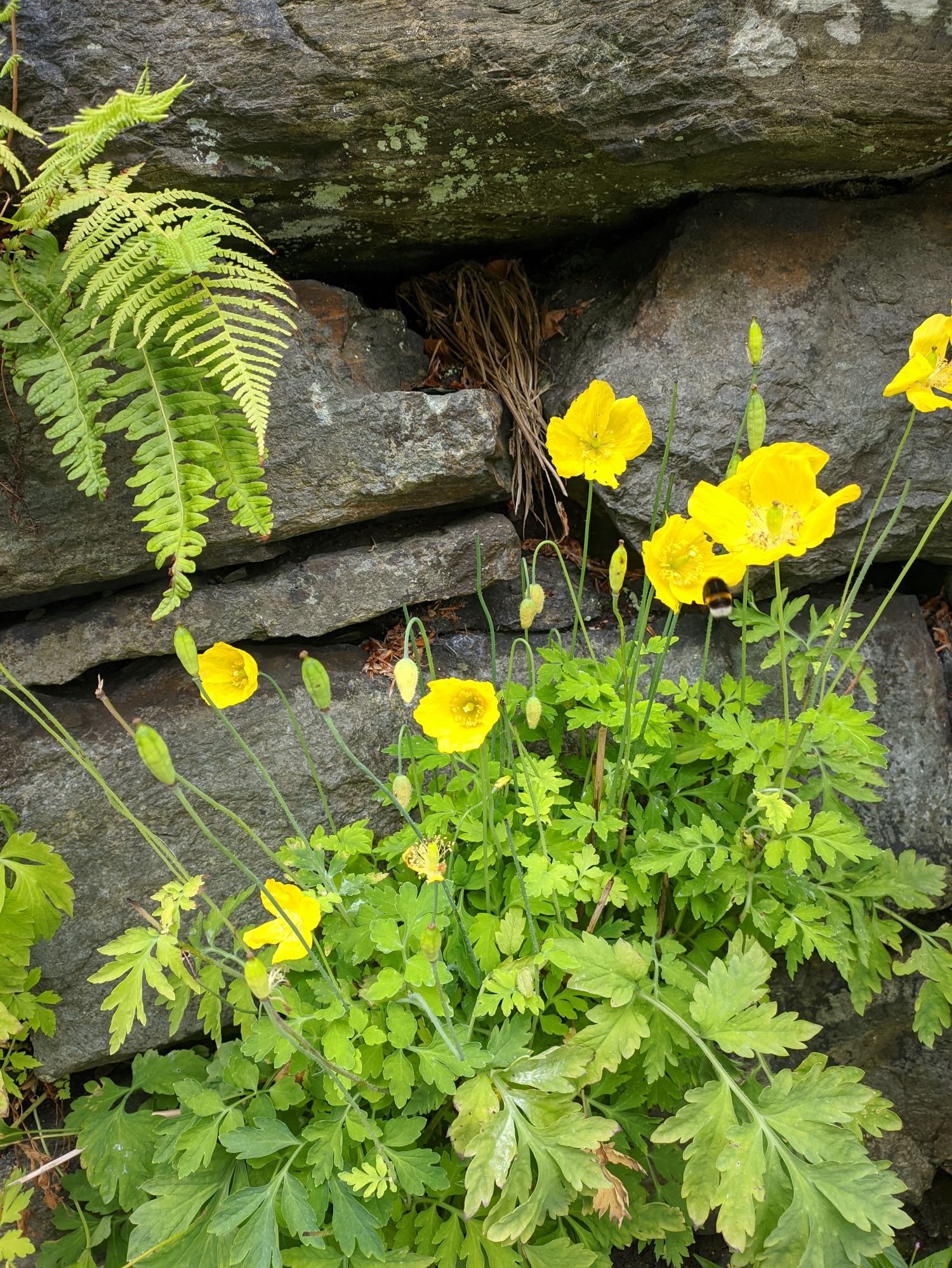
I found these yellow poppies growing out of a stone wall. Never seen yellow poppies before – they were keeping a huge bumble bee very busy. (You’ll have to look hard to see the bumble bee on the edge of a poppy.)

Norwegians love swimming. The bright blue pool is heated to 30C, but right next to it, people can go swimming in the sea water. If you look closely, there’s some people in swimming in the sea. Quite a few people were doing it! The sea water temperature was 14C! (I looked it up.) No wonder Norwegians are such a hardy lot. Between their long winters and cold-sea swimming…..!

img_20240712_1645073126666786278255418

Nearby was this totem pole given as a gift from North Pacific tribes near Seattle.

We meandered around the peninsula to the famous tourist spot of the Fish Market, selling everything from cheeses to live seafood to dried fish.

img_20240712_1732332916112536985278954

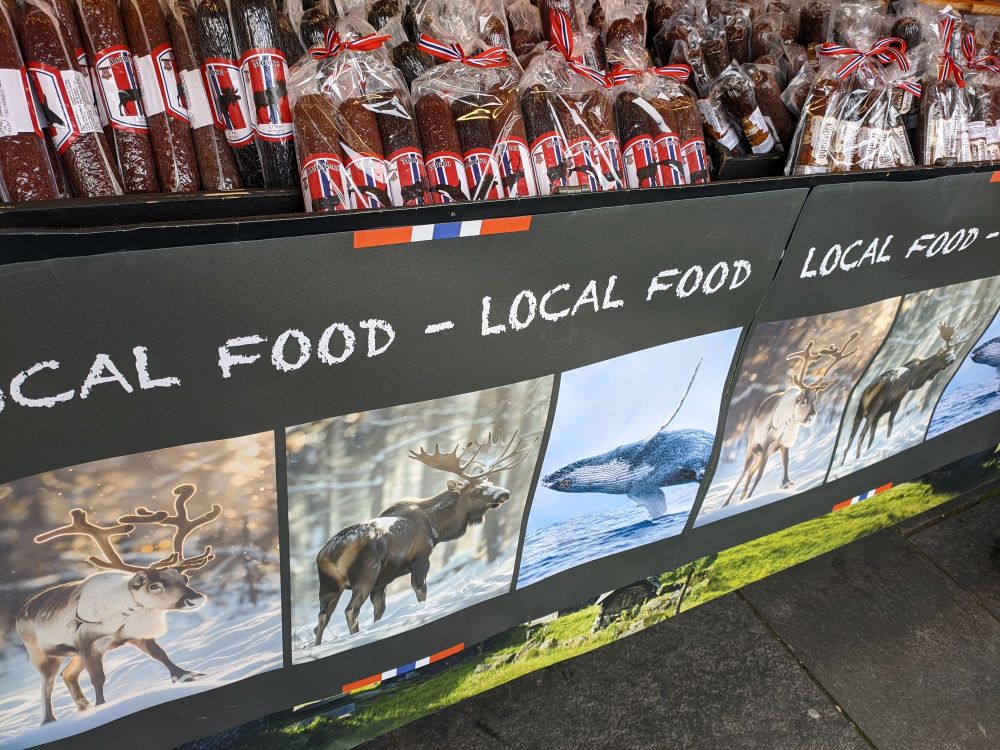
And not just fish – you can also buy and eat moose, reindeer, whale! But we didn’t. That was a surprise. In my small world, it hadn’t dawned on me that you could or would eat those meats.

img_20240712_173323269339621283639530

Philip had been told by friends that Norwegian ice-cream and hot chocolate was “to die for”. He’s had trouble tracking them both down but managed it today. He enjoyed them both, but said they weren’t actually as good as the Gabriel’s chocolate we get down at Dunsborough in WA!

img_20240712_1744472705827579767481390

Nearby I took a photo of this statue of Shetlands Larsen whom I’d never heard of. I looked him up later. Leif Larsen was a highly decorated Norwegian sailor who escaped Norway in World War 2 in a fishing boat. He was a remarkable leader who then made 52 trips to Norway in ordinary, small fishing boats during that time doing dangerous war work, delivering Allied soldiers and ammunition and rescuing refugees and resistance operatives. A truly remarkable man who deserves wider recognition, I think.

img_20240712_1746461741672798208891967

Nearby is the Hanseatic Museum (which is closed due to renovations) and Hanseatic houses. German merchants were here in this area for 400 years – from 1300s to 1700s, trading their grains for stockfish. This area is now UNESCO protected and was a fascinating discovery as we wandered through the little backstreets behind the shop fronts with interesting, poky little artisan shops. These tenement buildings are of medieval origin. Traditionally they were living quarters, offices, living rooms and storage space for the international trade based on stockfish.

img_20240712_1741266408745387569258565

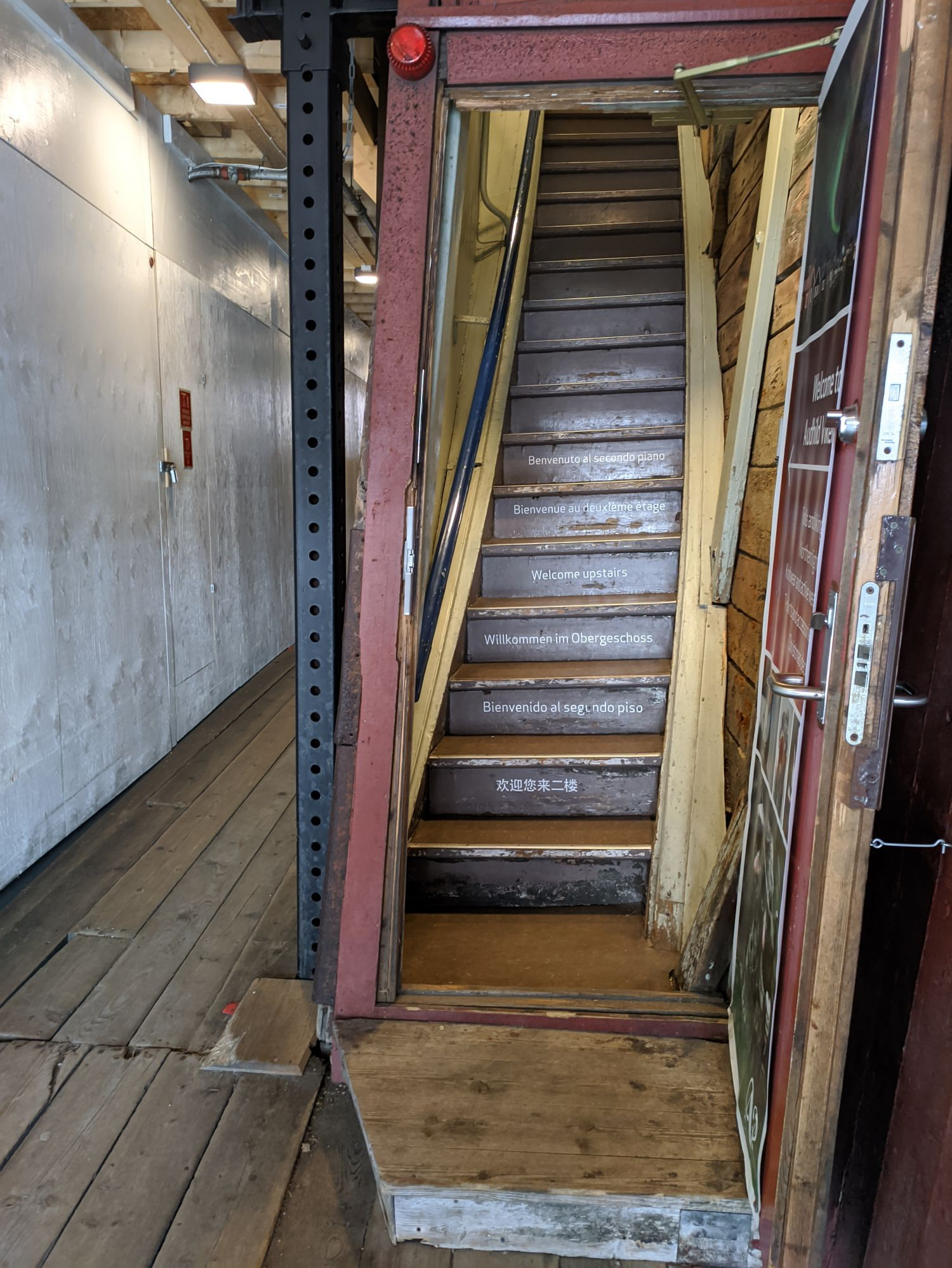
Notice the angle of the steps and door frames! They are being restored!

This wooden shop is “resting” on loose blocks of stone for its foundations.

img_20240712_2003518059074278577775999

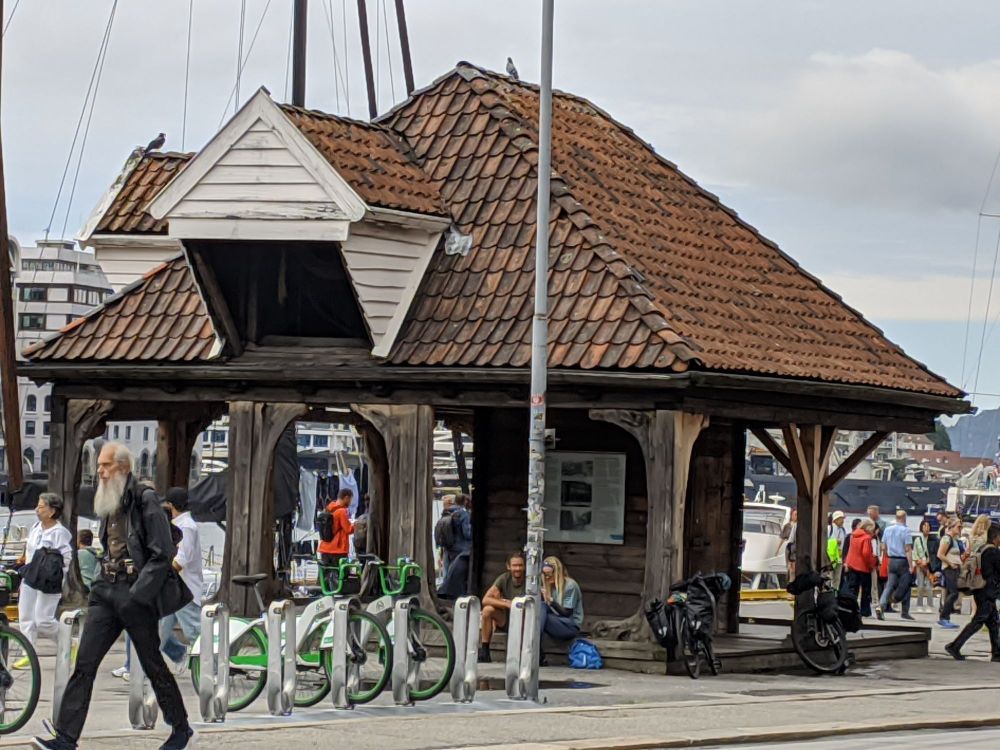
This is a replica of a Hanseatic wooden building used in their trading days

I noticed at the wharf, boats could either fill their engines with petrol or recharge their electric batteries. I’ve never seen that at a wharf before.

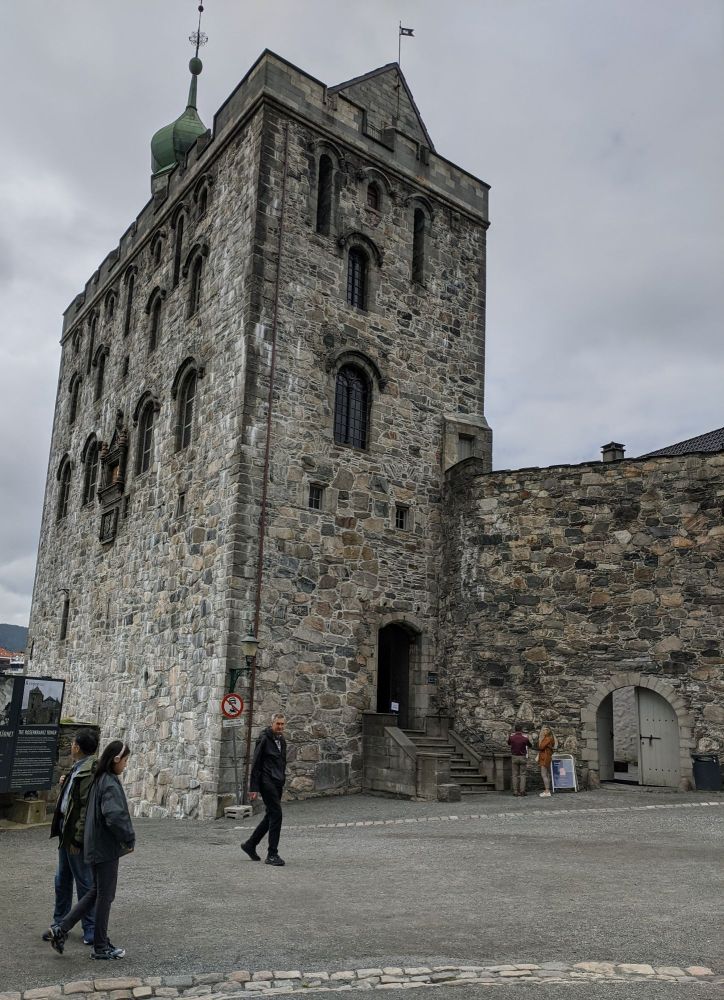
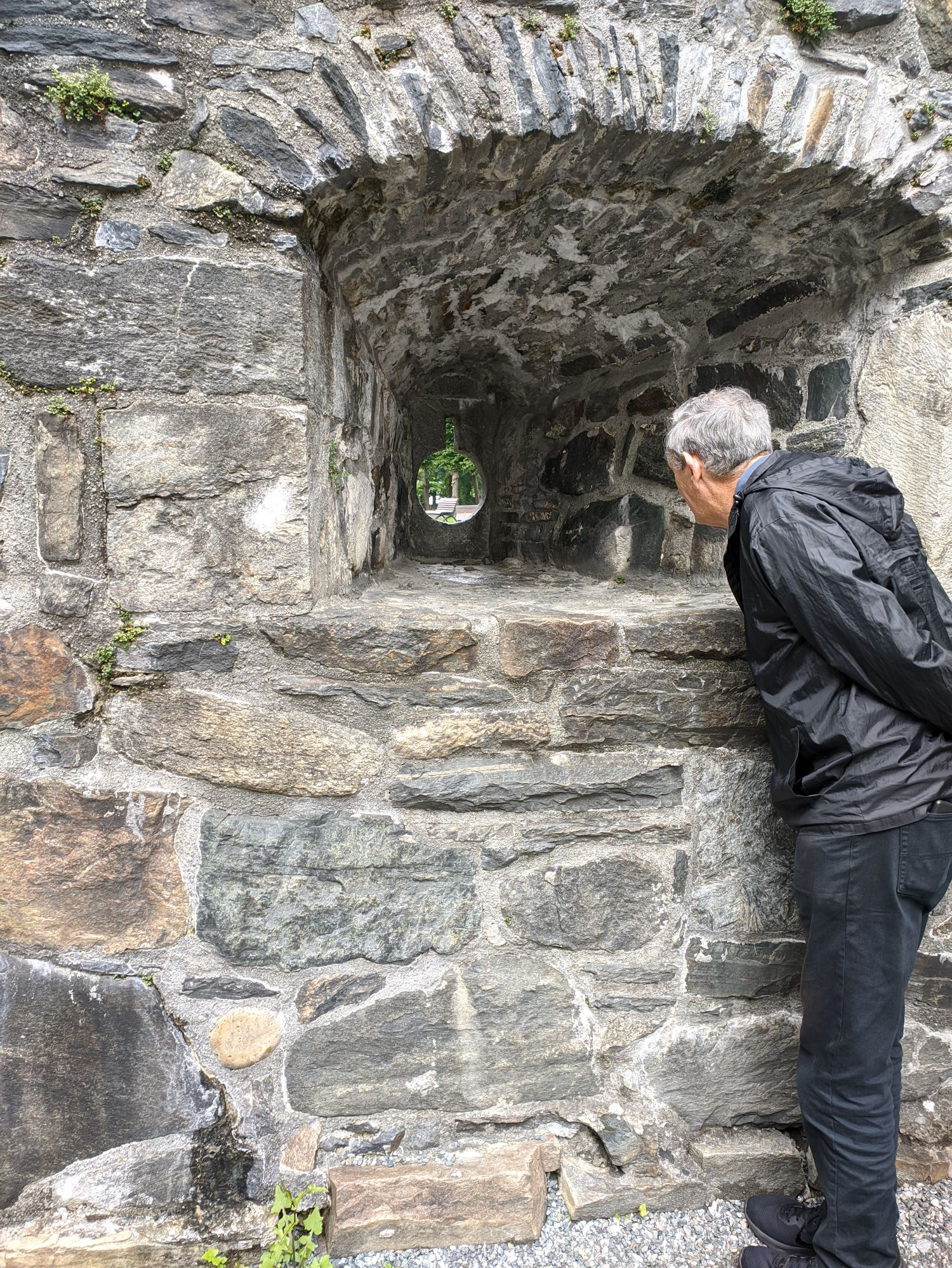
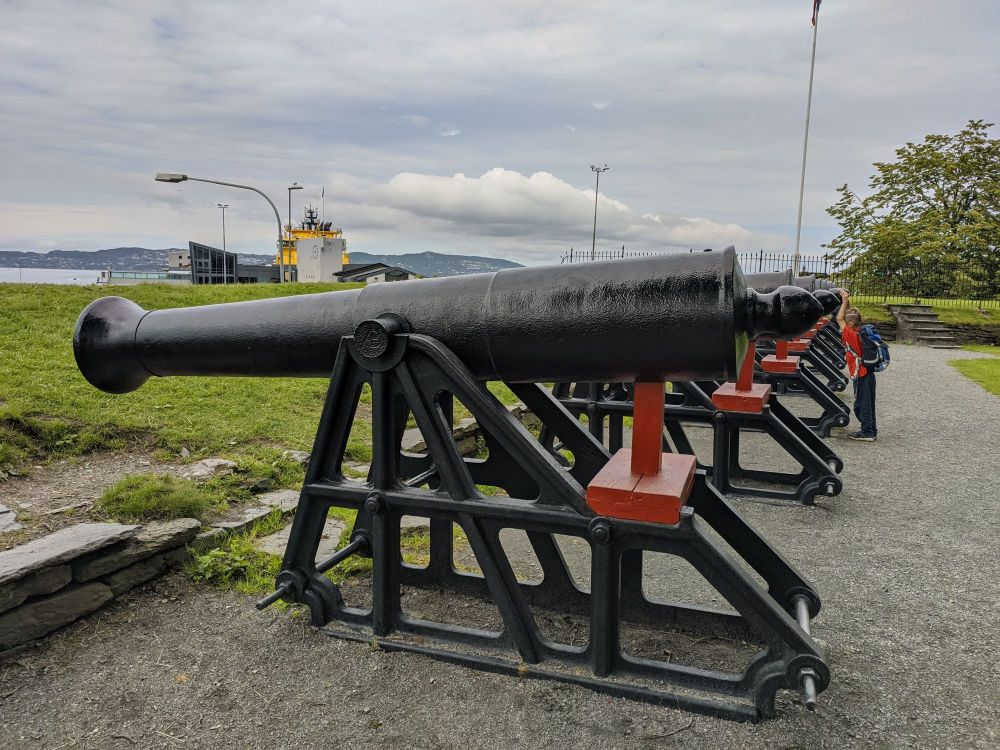
We meandered further down another peninsula to the Bergenhus Fortress. Started in the early 1500s it’s been used for military, royal and religious uses, sometimes simultaneously. It’s only ever been attacked militarily once in 1665 by the English. During World War 2 the Germans used it as their western headquarters. It’s still used today by different groups. We could freely wander around the grounds – and we did, eating my lunch there, but we didn’t pay to see inside.

This is called the Rosencrantz tower!

img_20240712_1827349073124455361028249
img_20240712_190734495512589495202703

We finished our meanderings by sitting in a little park and reading our books in the late afternoon. There’s lots of beautiful parks around, and lots of bright, colourful annual flowers in pots scattered lavishly around. I guess they have to make the most of their short flowering season! We’d been walking for nearly four hours! So much to see, explore and learn – and we barely scratched the surface.

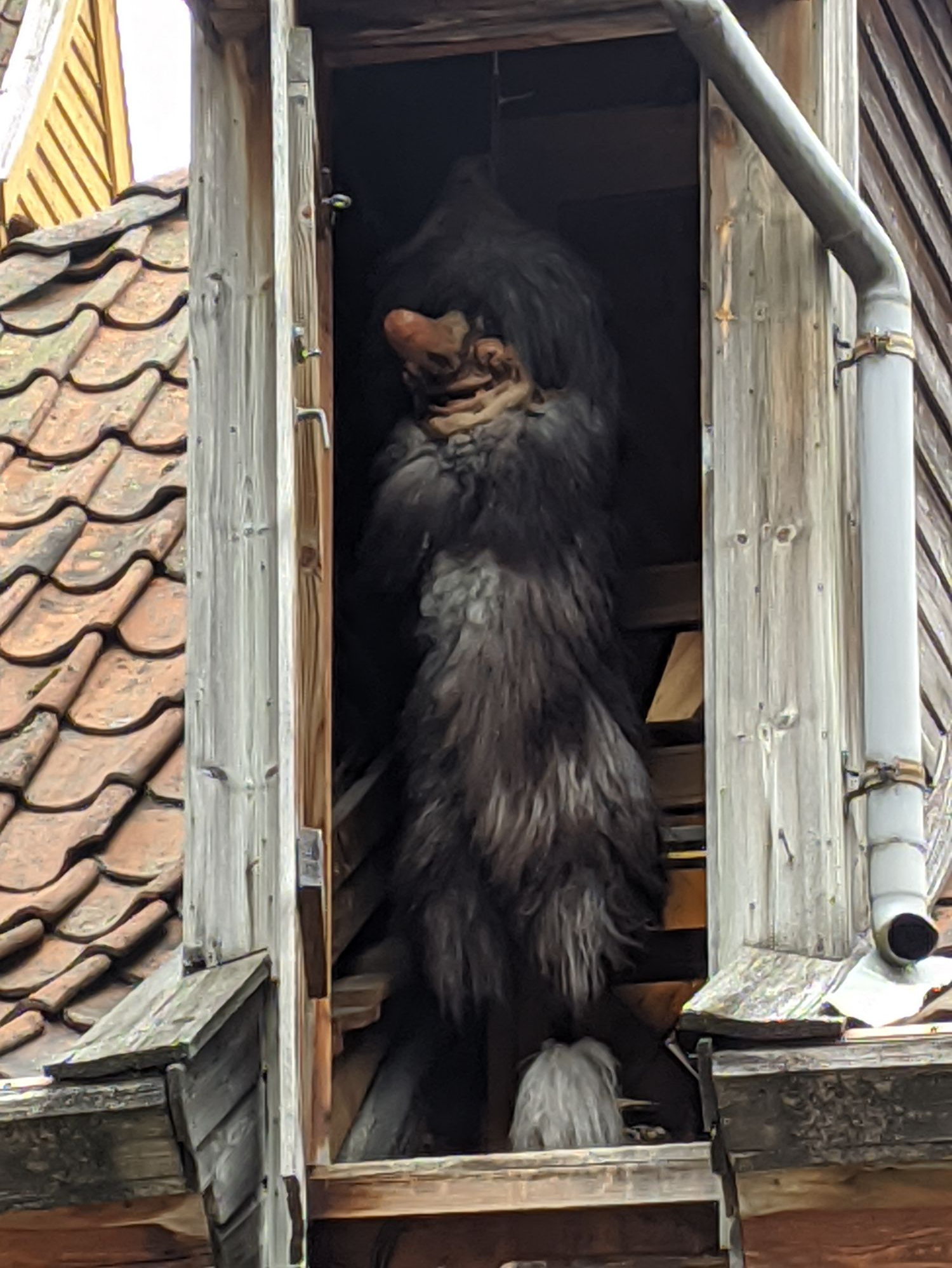
An eye-catching life-sized troll in the roof of one of the little shops near the wharf!

Bergen is a beautiful city with houses steeply stacked into the surrounding hillsides, full of interest and history. Tomorrow we’re on the move again!