It’s been a few days since I wrote. I’ve been a bit off colour, probably something I ate, but getting back on track now. Philip and I flew out from Bergen in Norway on Saturday.

We had a “small world” experience in the Bergen airport, when who should walk past but his second cousin from Perth with her two children, holidaying in Europe. We didn’t even know they were there, so we had a lovely catch-up together until our flight to Copenhagen and then straight on (apart from waiting in an airport in endless lines) back to Heathrow England. It took us the best part of the day to eventually arrive in Guildford to be warmly welcomed by Philip’s fourth-or-fifth cousin, Gill and Peter.

Yesterday was mostly a lovely warm(ish) day. Gill baked a wonderful Sunday lunch roast and her son, Philip and his wife Sam with two of their teenage children, Zara and Oliver came and we had a great Sunday afternoon together which included watching the final of the men’s Wimbledon match on TV.

It is back to clouds and rain today. Gill is not impressed with the English “summer” this year! We’ve had an exciting adventure today, taking the one-hour train south to Portsmouth on the southern English coast to the Portsmouth Historic Dockyard. It’s been an important military, dry dock and naval port for centuries. All we saw today as we looked around was barely scratch the surface… again! I think one of the side-benefits of history is that it helps to re-set our perspective of the transience of life, fight “chronological snobbery” and appreciate all that we do have today.
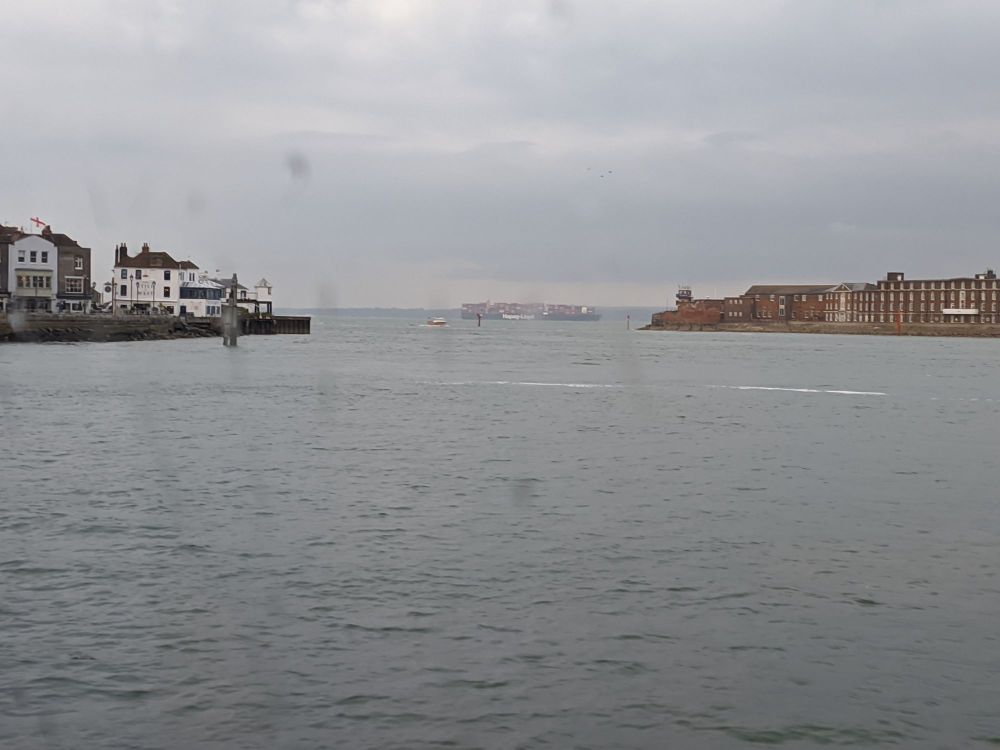
The mouth of Portsmouth Harbour
We first visited the “Mary Rose” exhibition.
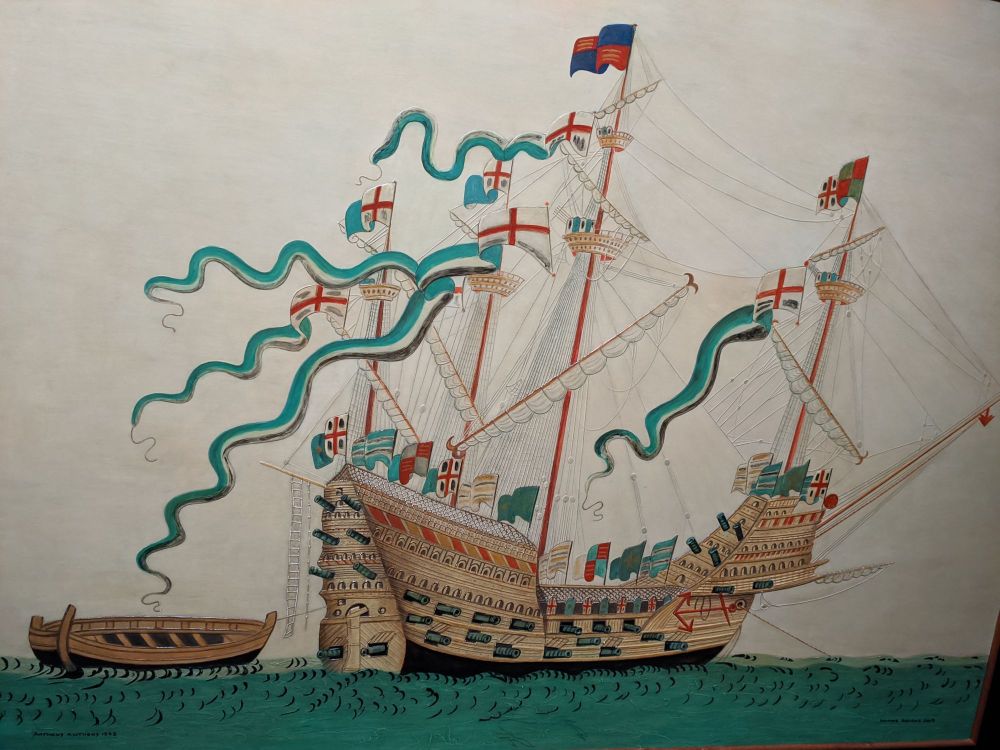
The Mary Rose was a warship built in the early 1500s by Henry VIII – he was still a teenager – and was in use for 34 years and was one of his favourites until it sank in the Solent Channel in 1545 in a battle with the French.

It took many, many years and lots of effort, toil, ingenuity and money to salvage and conserve the remains of this ship. It was rediscovered in 1971 and finally raised in 1982 from the seabed. 19,000 items were salvaged from the ship. Here’s just a few that caught my eye.
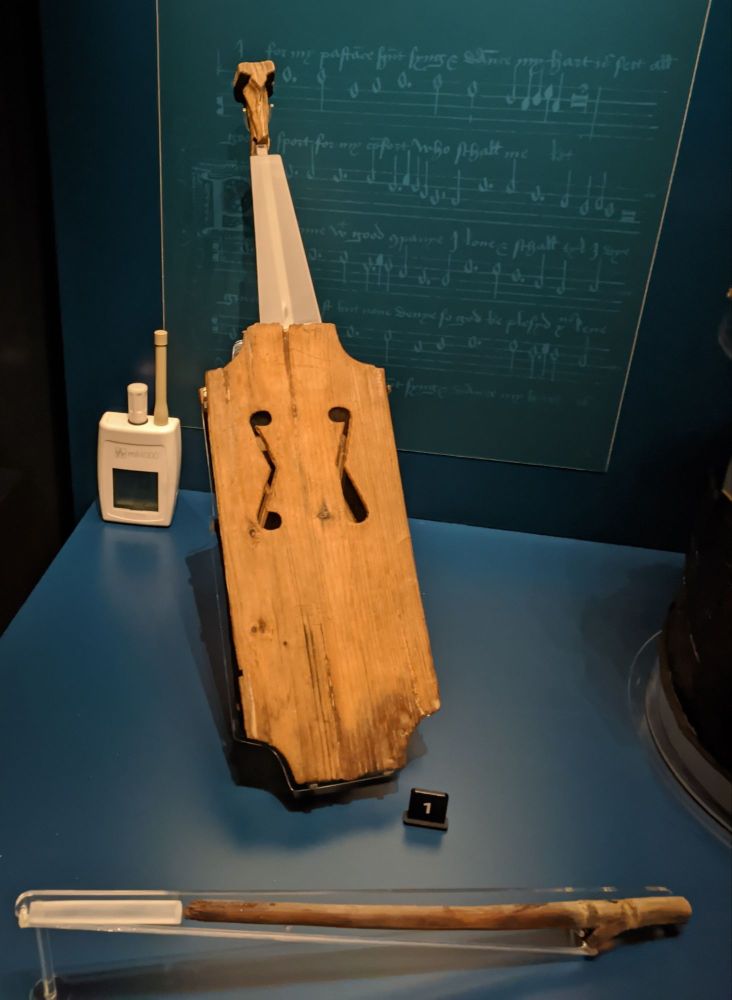
Musical instruments – a fiddle and a drumstick
Now they have amazing technology to not only conserve this piece of history, but to investigate life on the ship when it went down – the people (and a dog), what they ate, what they wore. You could spend a week in there and not see it all.

Halyards & pikes for hand-to-hand fighting – they were very heavy to lift, let alone swing around as a weapon!

Philip having a go at using a longbow. Englishmen were famous archers.
All of the men of the Mary Rose could use a longbow. A law made every fit male in England practise with a bow from an early age. Modern archery bows use about 17kgs of strength. The one Philip is using needed 35 kgs of strength. But Tudor archers needed to use about 65 kgs of strength. Philip said it was very hard to do! The skeletons of some of the archers on the Mary Rose have grooves in their fingers from the “string” and twisted spines from the exertion.
All year round the ship was damp and dark with a strong smell of tar, stagnant water and sweating, unwashed men. The crew slept on the hard deck. Only some elite soldiers had uniforms, the rest wore their own clothes. And if they didn’t have a change of clothing when it was stormy or raining as they were on the open decks or in the rigging, it would be a long time before they could get dry.
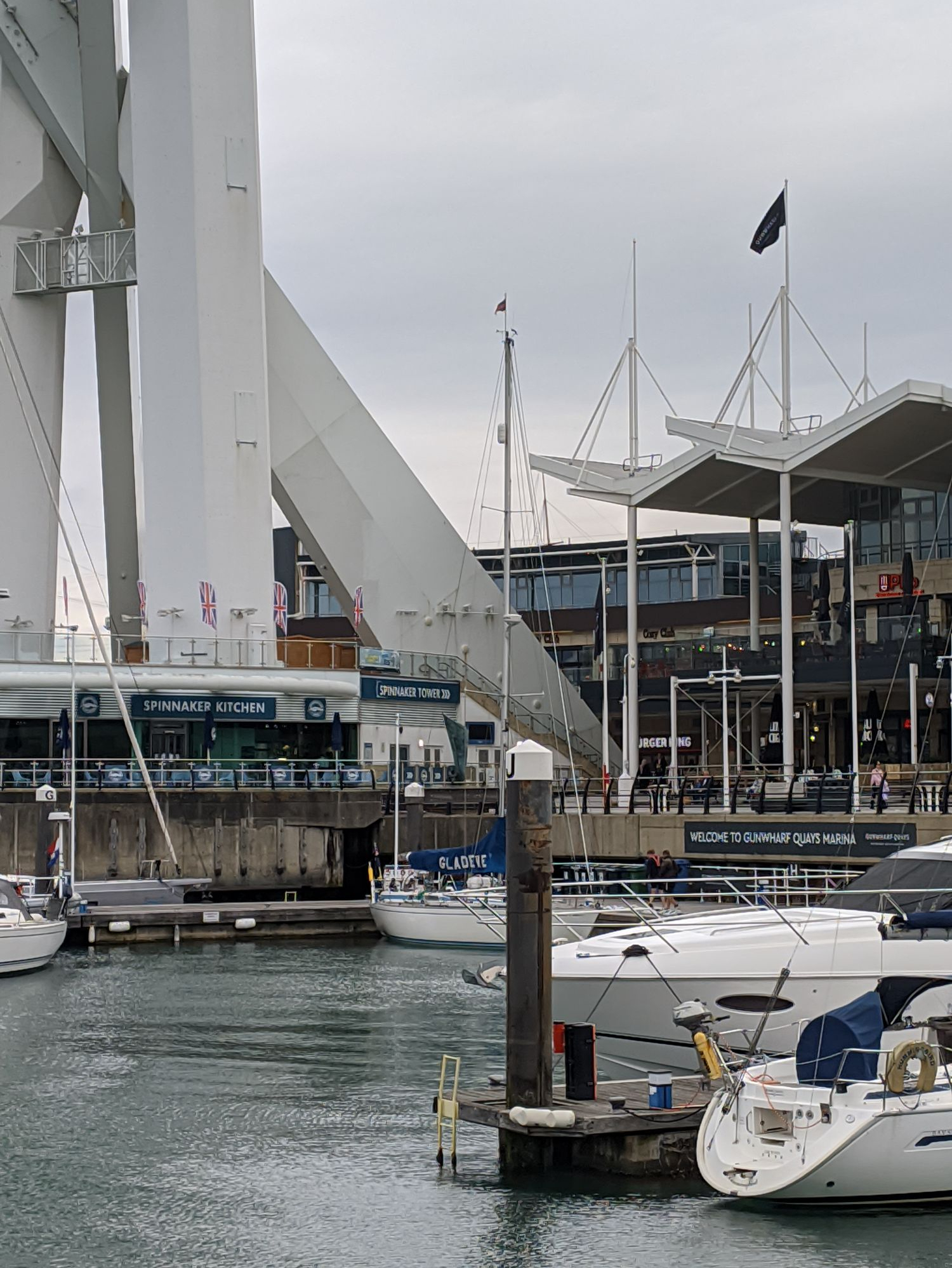
We did a harbour cruise on a ferry around Portsmouth Harbour. It’s still used as a maintenance dockyard as well as a busy harbour for all sizes of boats.
It was from Portsmouth that the First Fleet to Botany Bay in Australia set sail.
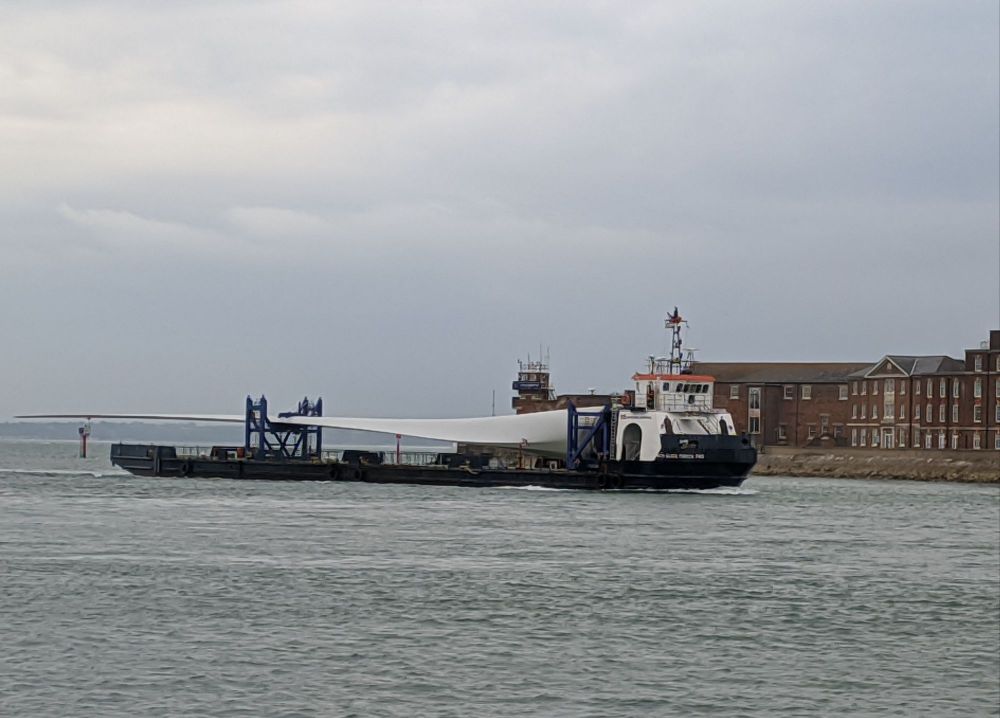
This is a ferry boat coming into Portsmouth Harbour carrying a wind blade for wind farms. Made on the Isle of Wight and ferried over to English mainland. Each blade must be started and finished within twelve hours & no interruptions. The workers are well paid but get severe reactions from the chemicals used to make them. Food for thought!
We didn’t do the “Victory” tour – the very famous ship of Sir Horatio Nelson at the battle of Trafalgar in 1805. Ships like the Victory are cramped, very low ceilings and are difficult for tall people to explore. But I did hear an interesting story that just before he died Nelson said he didn’t want to be buried at sea. (He died in the midst of battle.) He wanted to be buried with a Christian funeral in England, which was several months’ sail away, so they pickled his body in a full rum barrel until they could get him back to England!
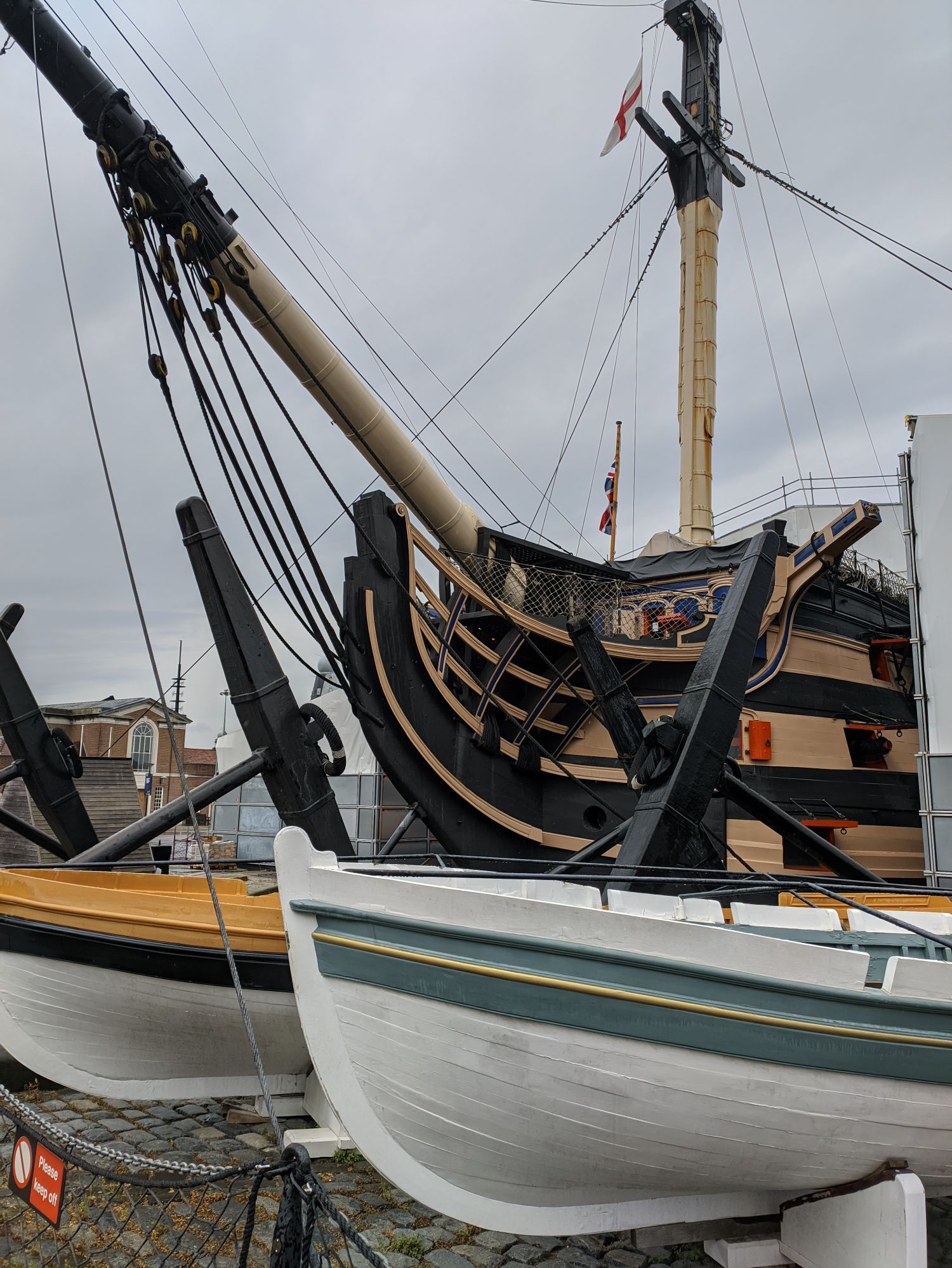
But we did a tour of “The Warrior” a sail and steam ship that was the pride of Queen Victoria’s Navy and was for a time, the largest warship in the world.

I am so glad I never had to work in the Navy in any period of history!
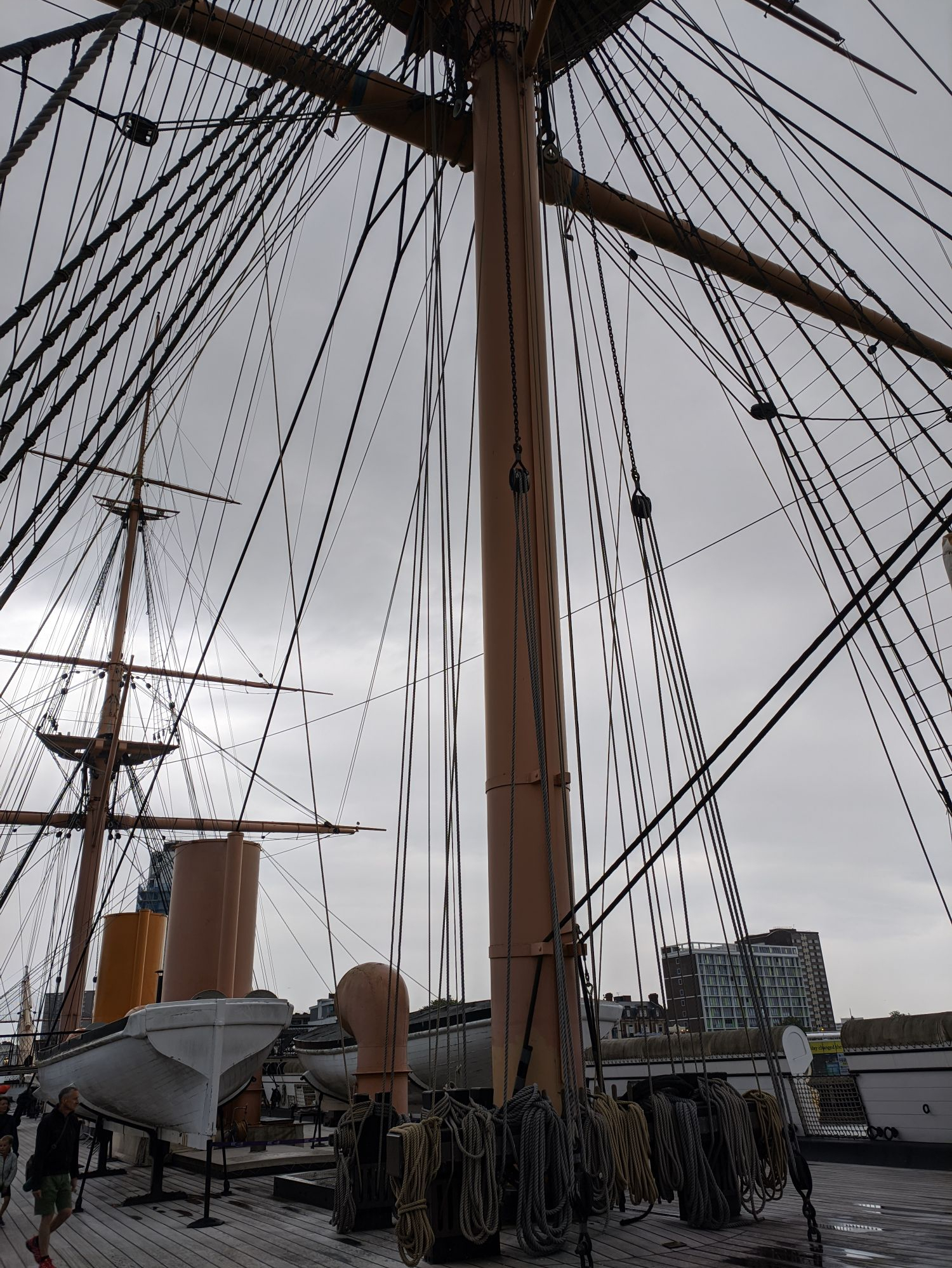
It was such a tough life – and that is such a big understatement.

Cramped, tight, working and living conditions. Photo below shows a rolled-up hammock on the table with eating utensils. The hammock was slung at the end of the table. In between each table are the cannons!

Ordinary sailors would have to climb over the sides at the front of the Ship to go to the toilet! Sailor divers would have to dive under the Ship to inspect and clean the hull.

It took four or five hours to raise the Warrior’s anchor. 520 of the crew ate and slept together.
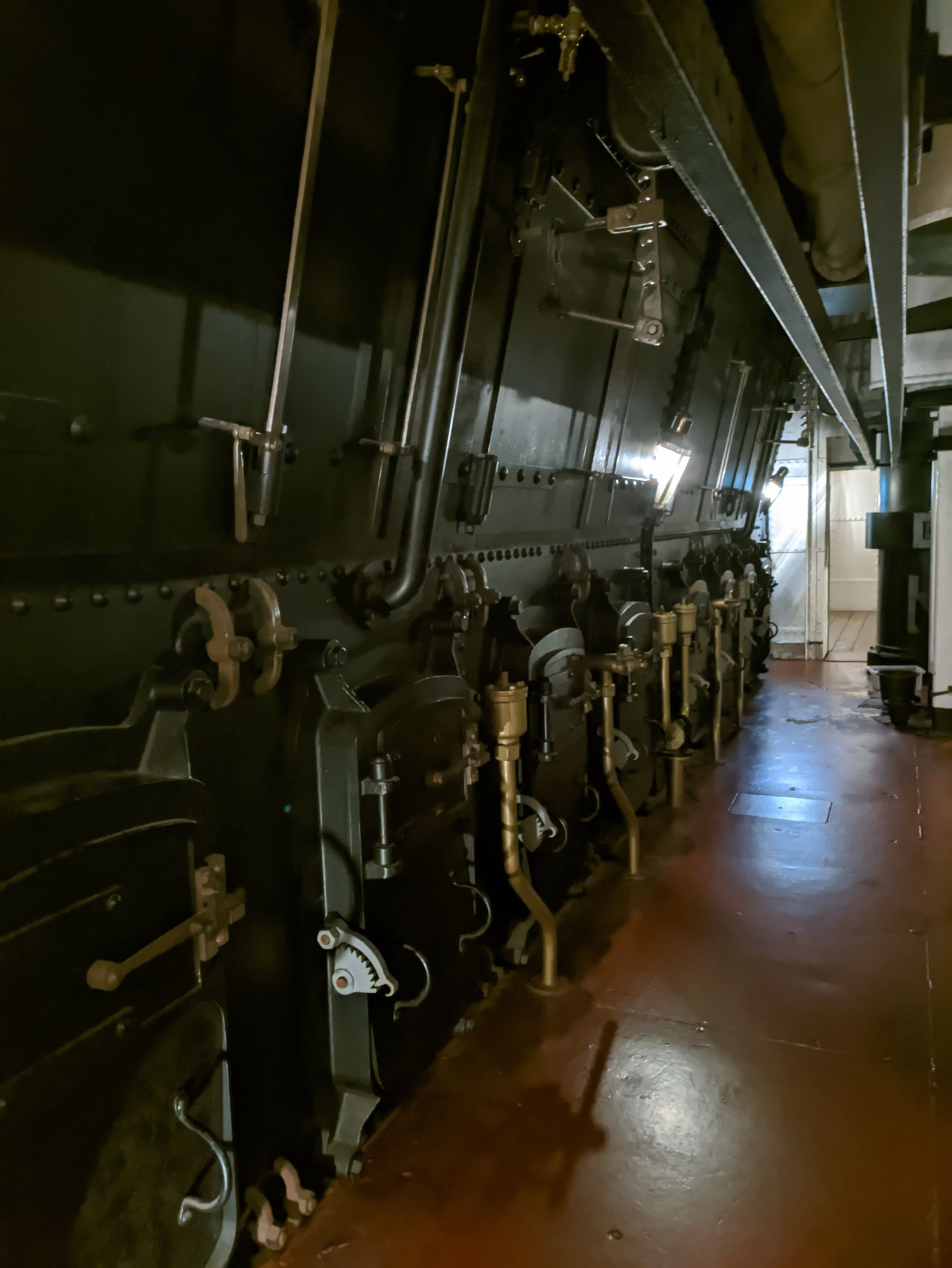
They had to carry 853 tons of coal for the stokers to fuel ten boilers, each with four furnaces – enough for three and a half days at top speed. Hardly any light anywhere apart from the top deck, just a tiny little porthole every now and then.

They mostly ate salted food – beef and pork. The storeroom held 30 tons of ship’s biscuit which looked hard and tasteless.
I am very glad we came home through the rain to a hot, delicious dinner cooked by Gill and the prospect of a shower and a warm, cosy bed. How blessed are we in our lives in these days!
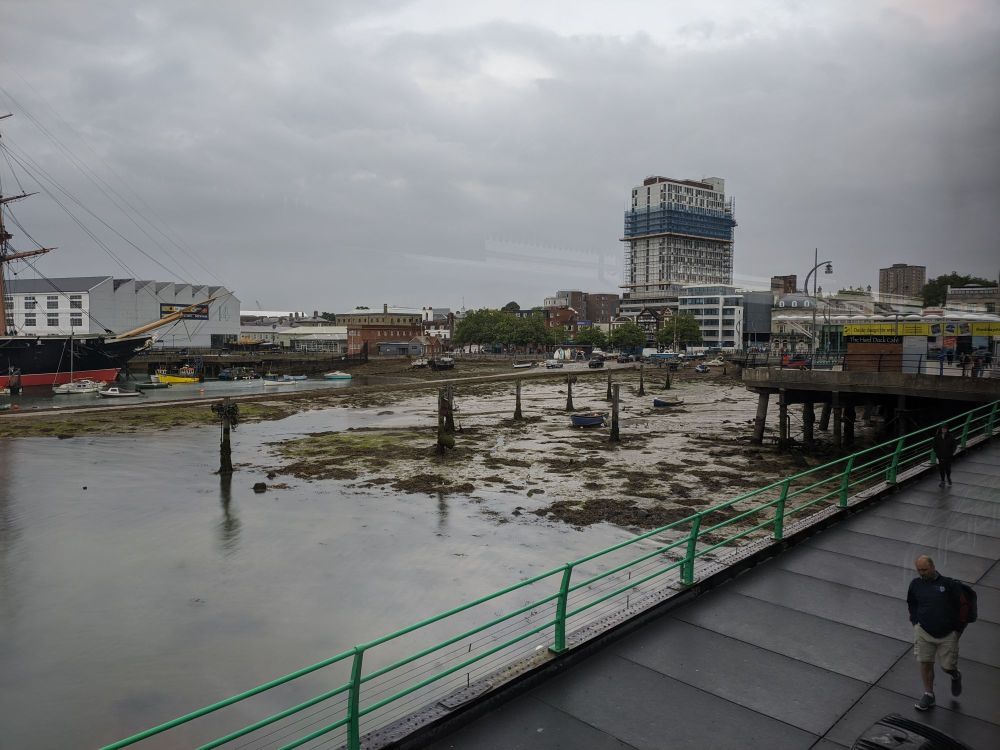
Low tide at Portsmouth Harbour with seaweed, seagulls and beached dinghies
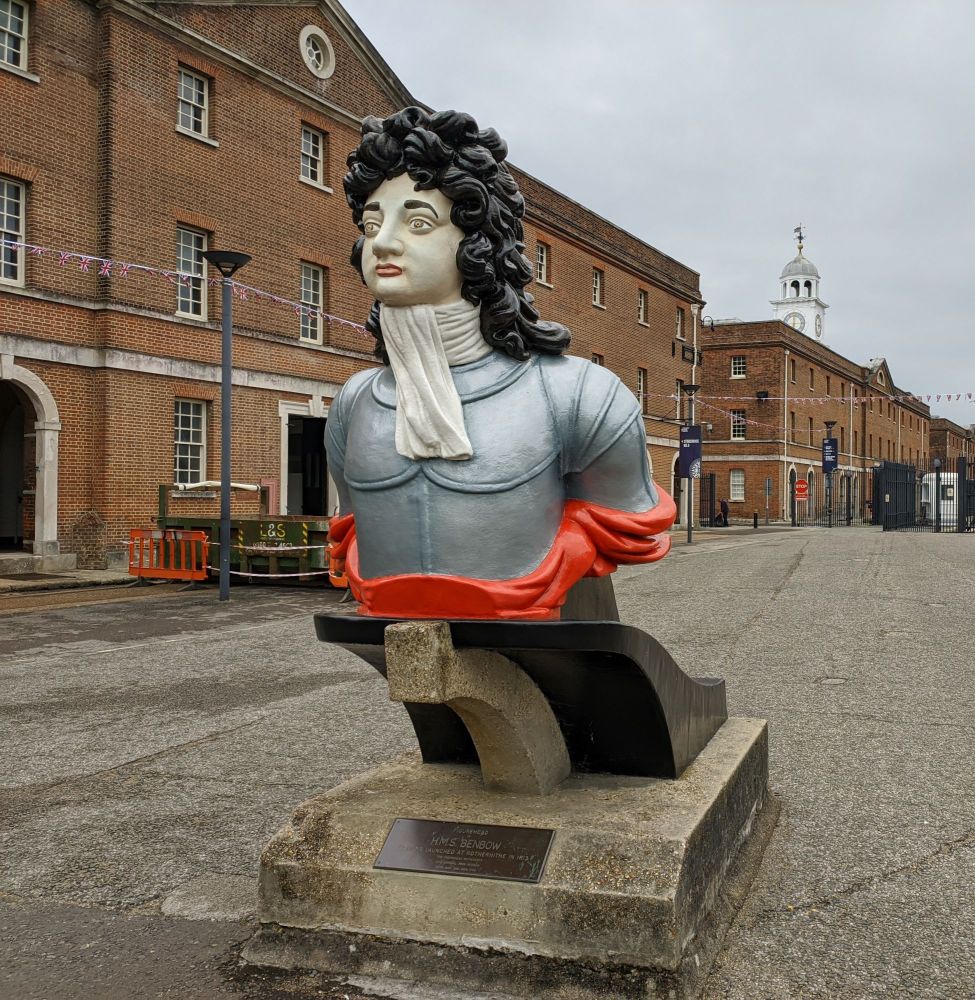
Admiral Benbow!
 Standing on a hill