Not only is it raining today, it’s rained all day – a mostly light, misty “Melbourne” type of rain such as I remember. Such a contrast to yesterday’s sunshine.
This is a different blog tonight. Lots of stories and not much action by us!
Peter picked us up late morning and while we waited for Auntie Mollie to be ready, he drove us around Drammen. (Us seeing Auntie Mollie who is 97 years old is the main reason we’re in Norway.)

Peter drove us up into the nearby mountains which were draped with light grey, diaphanous clouds like a swirling scarf around its head. Back in 1960, an engineer who was digging out boulders from the mountain to construct new shipping places decided to not just dig into the mountainside, but to dig upwards in a huge spiral inside the mountain to come out at the top of the mountain. This spiral became a long spiral tunnel for cars, known as the Spiral Tunnel. Norwegians seem to have a puckish sense of humour because half-way up the tunnel is this grotto of trolls in a lay-by lit up. It’s not a good picture, but you get the idea!

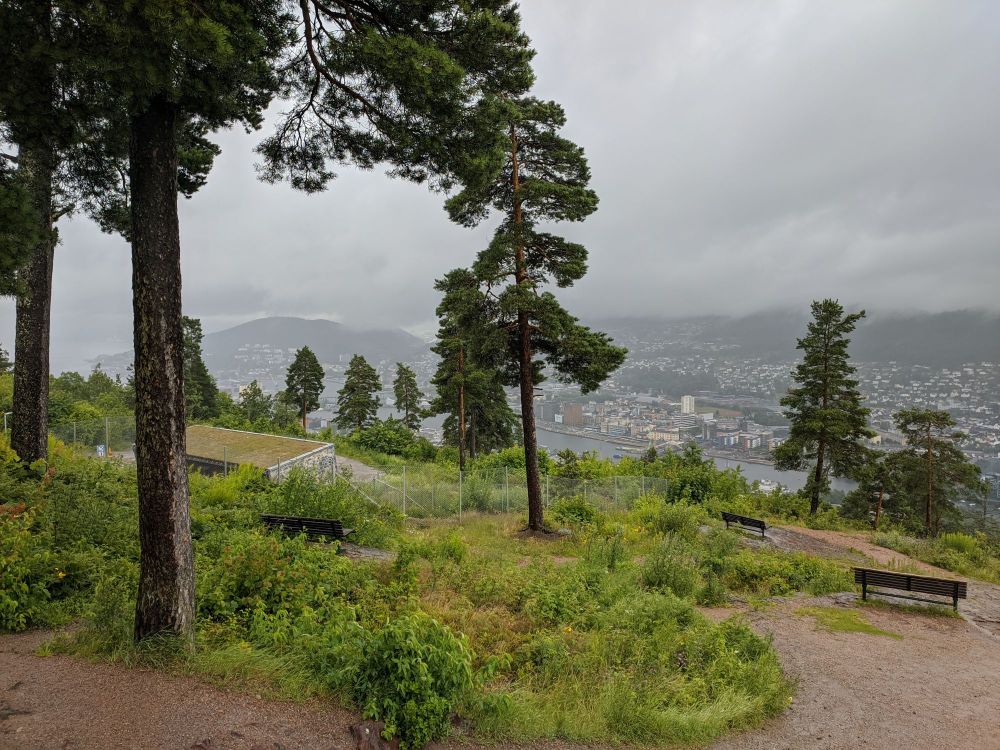
At the top of the mountain, you normally get great views of the city of Drammen below on both sides of the Drammen River which runs into the Drammen Fjord which runs into the Oslo Fjord which runs into the ocean. But today it was a very misty view. Still beautiful, but opaque.
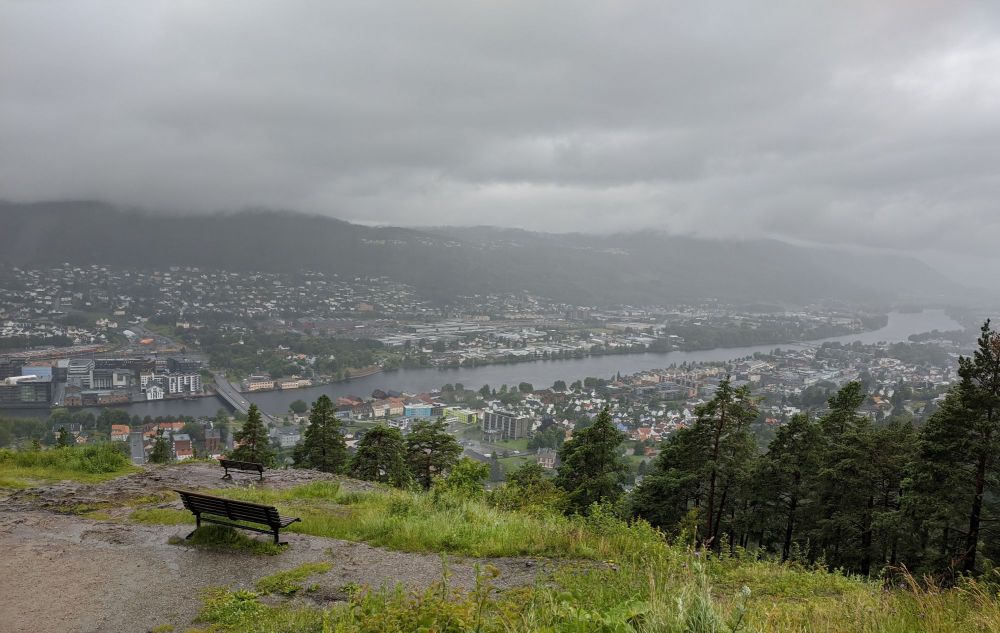
Norwegians love their outdoors – skiing in the winter, and trekking and climbing in the summer. There’s paths and trails all over this mountain. They’re very energetic because these mountains are very steep.
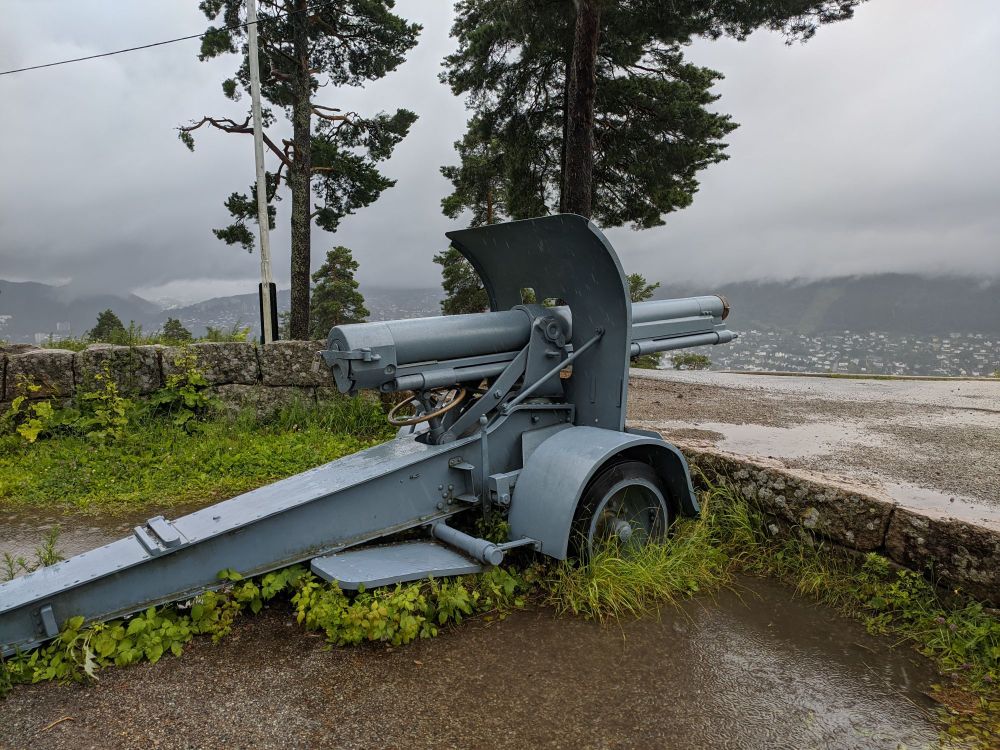
This cannon is the only one remaining from 1905 when it was feared that Sweden would invade Norway to incorporate it into Sweden. But the Swedes changed their mind and instead of war, let Norway become independent instead. If only all international conflicts could so easily be sorted out!
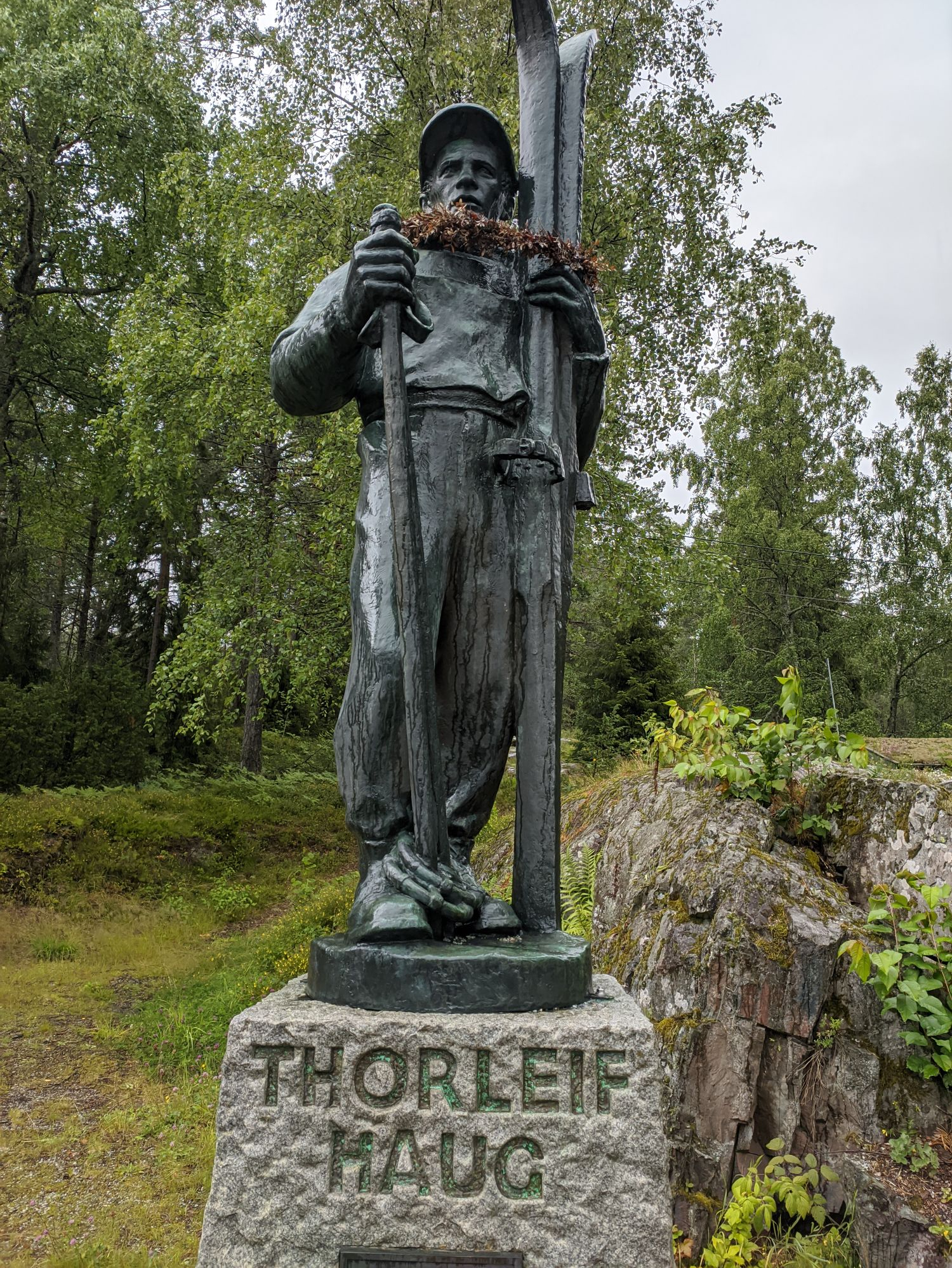
On the mountain top was also this statue so I asked Peter this story. Thorleif Haug lived nearby and in 1924 he skied across the country to Bergen. Philip and I are taking a famous train ride from Drammen to Bergen tomorrow and it’s going to take about seven hours by train! He skied all the way there – full of high Norwegian mountains and fjords! He won several gold medals in Olympic Games and European championships and is one of the most decorated sports heroes of Norway. After the Olympics he worked as a plumber and died 10 years later of pneumonia.
Peter drove us around the misty fjords – lots of farmlands, wheat fields, apple and cherry orchards dotted with farmhouses and small towns.
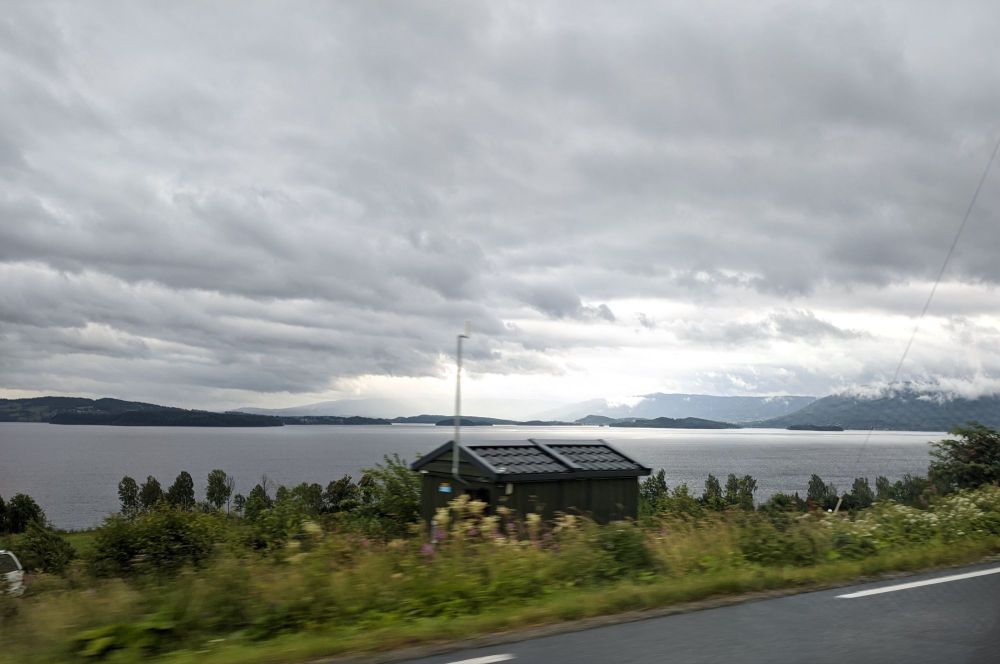
Auntie Mollie is “famous” in the family because she was awarded an Order of Australia medal, but she never talks of it. It was only recently that we heard about it, when we found out it was in connection with Australian War Graves in Norway. But we didn’t know anything more than that about it, so we asked Peter more details.

After Auntie Mollie married her Norwegian husband Gunnar, he took her around to the many different cemeteries around the country that had Commonwealth, and especially Australian war graves. She started wondering whether the families of these war dead knew where their loved ones were buried. So she spent inordinate amounts of time, effort and money in writing – it was back in the days of snail mail and when everything was “snail” – to newspapers, veterans services and clubs, trying to track the families of those buried young men. She eventually tracked them down over the years and heard the stories of the young men and in most cases, these families had no idea where their sons, husbands, brothers, nephews were buried. The War Office would give them no information. So Auntie Mollie set about rectifying all that and some of these grateful families years later came to visit the graves. She has also taken an active part in making sure the gravestones are looked after. Now Peter helps her and plans to continue the tradition after she’s gone. Every year, on 17 May local schoolchildren near wherever these cemeteries are, collect wildflowers from the forests and put them on the graves and there’s special ceremonies that are well attended. I was very moved while standing there in the graveyard. Norway suffered terribly during the war and many Norwegians were killed by the Germans.
Peter also told us stories about his father Gunnar and what he did as a very young man in those days of the war and how they could resist the invaders.

As he drove for over an hour to one of the cemeteries, Peter suddenly stopped the car by the side of the road to this.

It’s part of a World War 2 Sunderland plane that crashed. In April 1940 the Allies knew that something was brewing with Germany in regard to Norway, but they weren’t sure what it was. Norway was neutral in the War. The Allies sent a huge Sunderland plane – it was the only one with the range to get to Norway and back without refueling, but because it was so big it was slow and not manoeuvrable. The plane made it to Oslo and could see that the Germans had invaded Norway, but it couldn’t get away in time and was shot by a faster German plane and crashed in the mountains near Drammen. One of the men didn’t die in the crash – his escape from the plane is amazing – but he was badly injured and captured by the Germans and spent the war in a POW camp. You can read about the story online – truly amazing! And this is part of the plane that crashed.

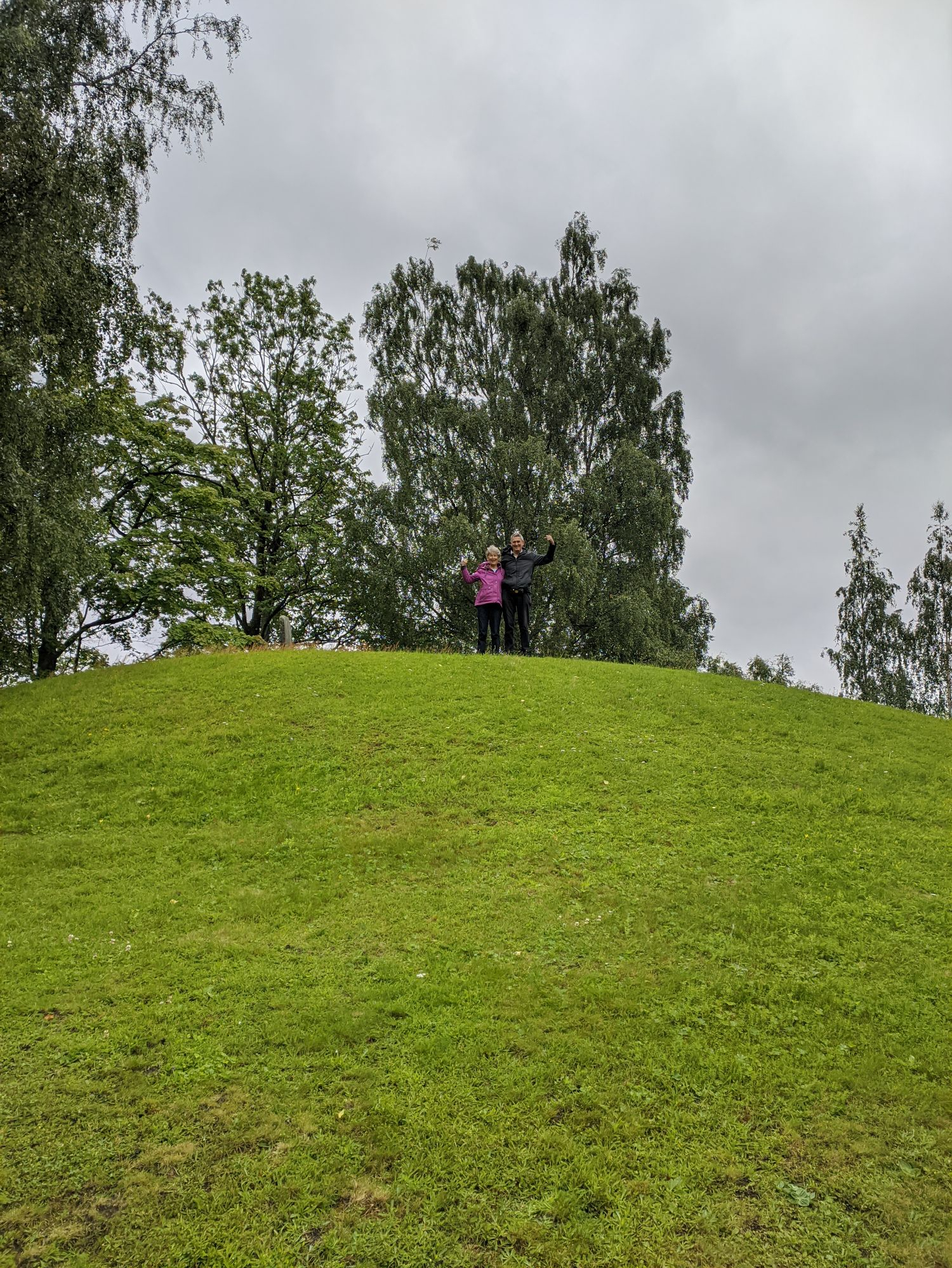
After visiting the cemetery, Peter drove around more misty, shrouded fjords and little villages and beautiful farmland and stopped at a big farm and next to some huge red Norwegian barns, there are a couple of Viking burial mounds.
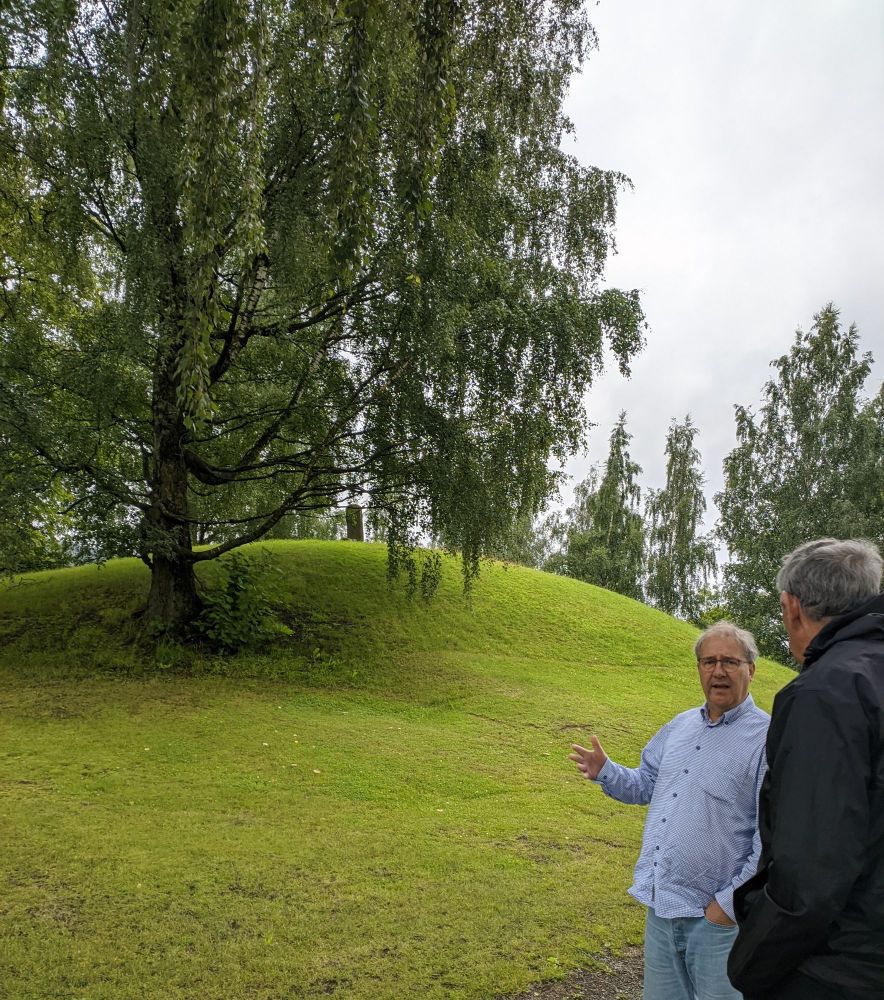
They’ve never been excavated by archaeologists because it’s very time-consuming and inordinately expensive, not only to dig but to preserve if they find anything, especially a wooden ship, that hasn’t decomposed already.
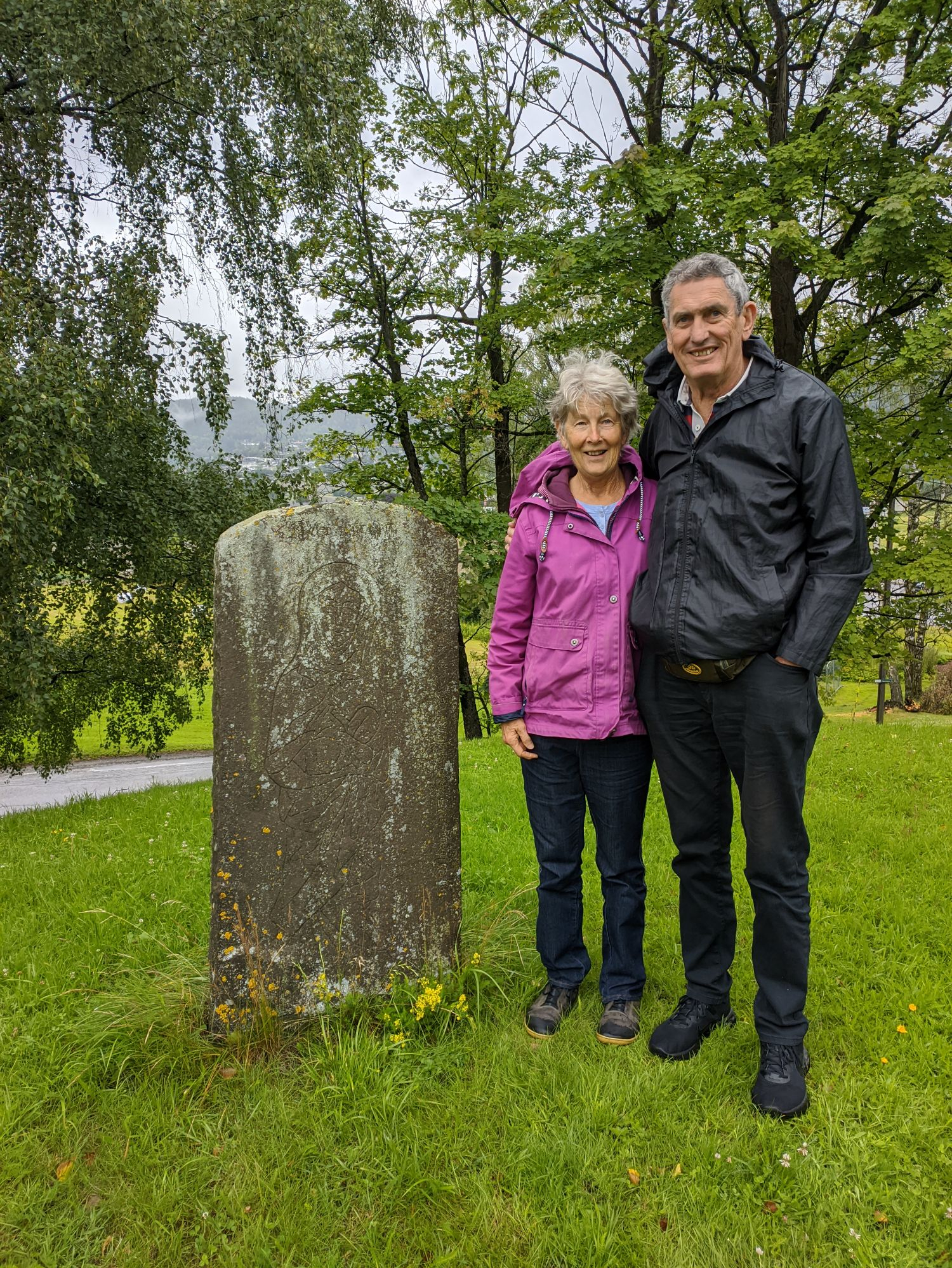
There are also stories, maybe legends, about a Saint Hallvard who lived and died a hero’s death in early 1000s. After miracles were claimed he was proclaimed a saint and he’s buried here too. Here’s his marker.
Then it was on to Auntie Mollie who had afternoon tea ready for us. We had such a lovely afternoon with her. Hearing stories, telling stories – not only of the early days of South Perth, but of ancestors in the Murchison region and her life that’s been lived to the full.

Stories I’ve heard before. Stories I’ve never heard before. Like when she was a nurse in a ship crossing the Tasman Sea from New Zealand to Australia in an horrific storm and assisting a newly minted paediatric doctor to perform an emergency appendicectomy on another passenger with very, very basic equipment. Just the two of them, being watched by the captain and all the senior ship people. No theatre – just desks pushed together – no sterile equipment, using ordinary cotton thread that was boiled in the ship’s galley. Auntie Mollie gave an anaesthetic of ether to the man – she’d never done that before. She had never liked theatre work and hadn’t done much of it. She was very pleased the man lived. And astounded when it was a headline news story around Australia, so that her family heard about it on the radio back in Perth. Not only is it a good story, but she tells it well. Lots of stories for four hours.
And then reluctantly it was time to leave her and head back to the hotel. And more travels tomorrow…
 Standing on a hill