It’s been blue skies, then dark grey clouds for most of the day, then a bit of blue skies in the late afternoon. But with a bitterly cold strong wind blowing like a gale. It’s felt more like a Perth winter’s day than an English summer’s day. But we had a very full and exciting day today nevertheless!
Keith loves to organise an expedition, so we sallied forth straight after breakfast, driving north in the Derwent Valley to Hardwick Hall built by a truly remarkable woman known as Bess of Hardwick who lived in the 1500s and early 1600s during the reign of Queen Elizabeth 1. She started life in a farming-gentry family. She was a very shrewd businesswoman plus after a series of four marriages (her husbands kept dying) she rose to the highest levels of English nobility – being on best terms with Queen Elizabeth and Mary Queen of Scots and was the wealthiest woman in England (after the Queen) by the time she died aged 87. A very powerful, wealthy woman.

Bess first rebuilt old Hardwick Hall – but which now, after several centuries, has fallen into ruins. But you can still climb up the inner stairs to the roof and see glimpses of the grandeur there.

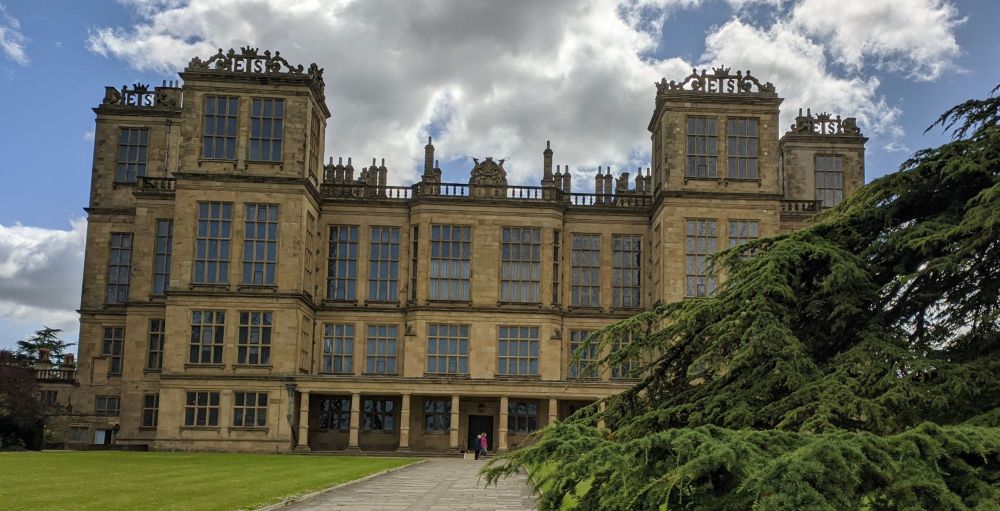
But Bess was out to impress everyone and she spent seven years building the new Hardwick Hall next door to the old one and lavishly spent money on it. The front of the house is mostly glass – an unheard-of innovation at the time – she bought the glassworks and the lead mine for the leadwork in the glass panes – so she could have the windows more cheaply. But she wanted lots of light inside her house. Most houses of this era are mostly bricks with windows.
Inside the National Trust have spent 25 years restoring the richly coloured tapestries that hang on all the walls – room after room after room hung with tapestries of both Biblical and classical stories. The tapestries not only helped to keep the rooms warmer, but through the pictures on the tapestries made powerful statements about how Bess wanted to be perceived.
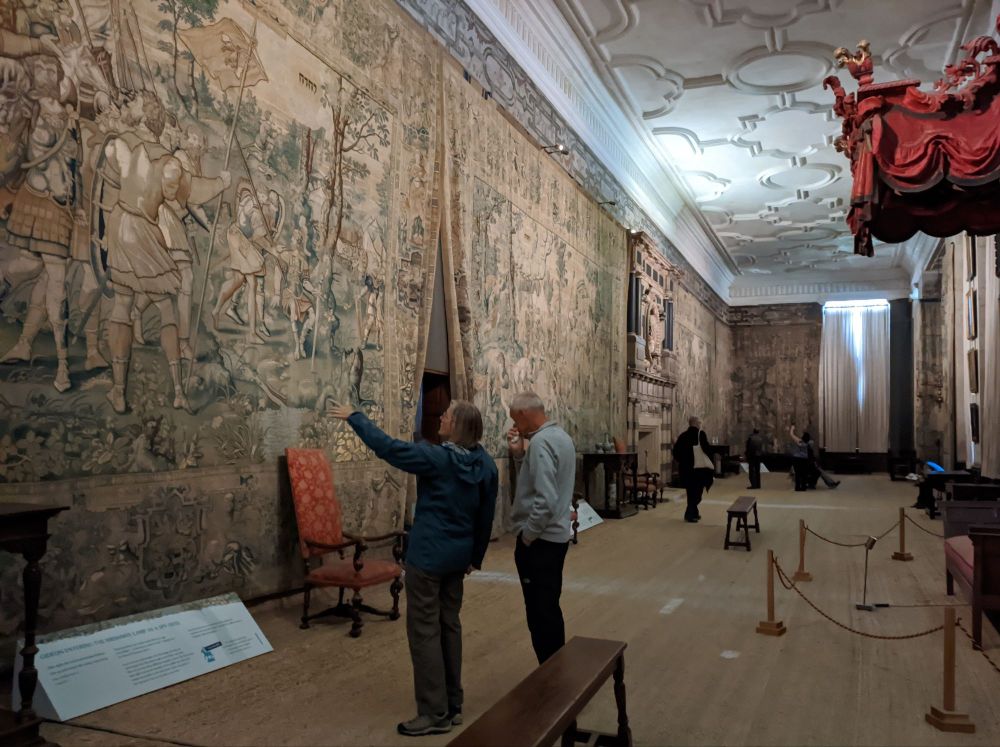
Here’s Deb and Keith deciphering the story of Gideon in the tapestry
I peered closely at the tapestry work – all done by men at the time – and the tapestries are huge – and they are exquisitely done. After a while, my brain reached saturation point in this magnificent Elizabeth manor.

Above the tapestries are richly painted plaster friezes of scenes. Very colourful rooms!
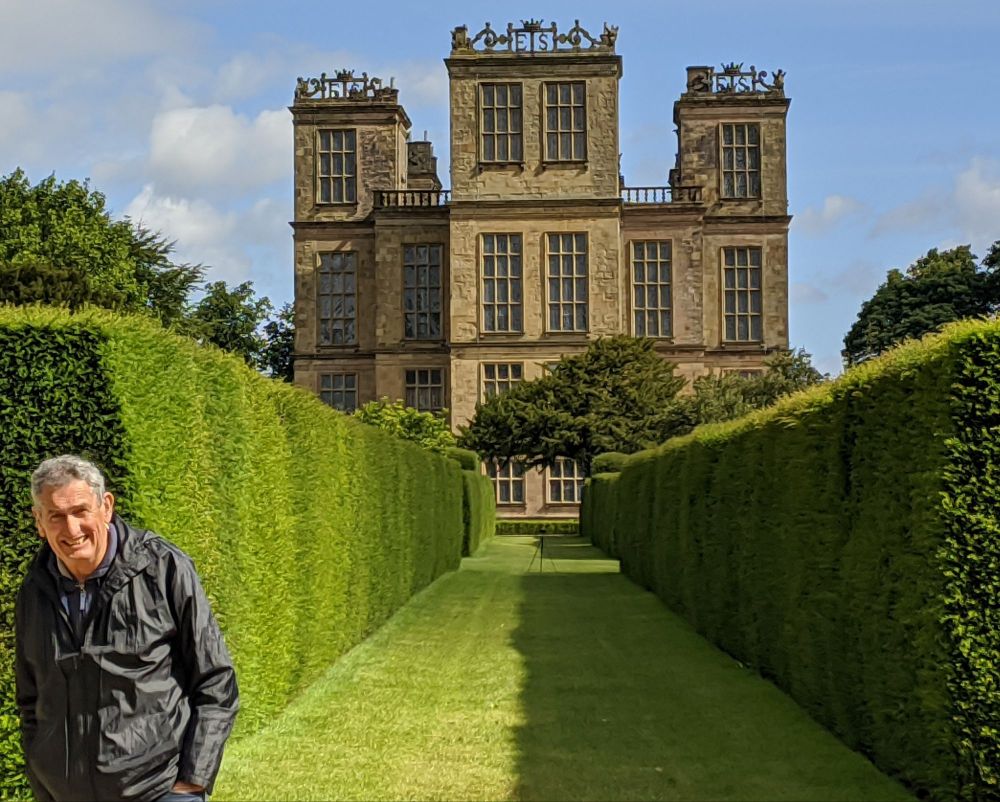
An interesting sidenote is that Bess had lots of pictures and tapestries done showing strong and virtuous women. But she and her last husband, the Earl of Shrewsbury ended up hating each other and living apart. She also built Chatsworth House – she was one of the biggest and most innovative builders of her times. If you look closely at the top of Hardwick Hall, you can see where she’s carved out her initials E.S. (Elizabeth of Shrewbury) on all sides. She liked to make big statements about her power and wealth!
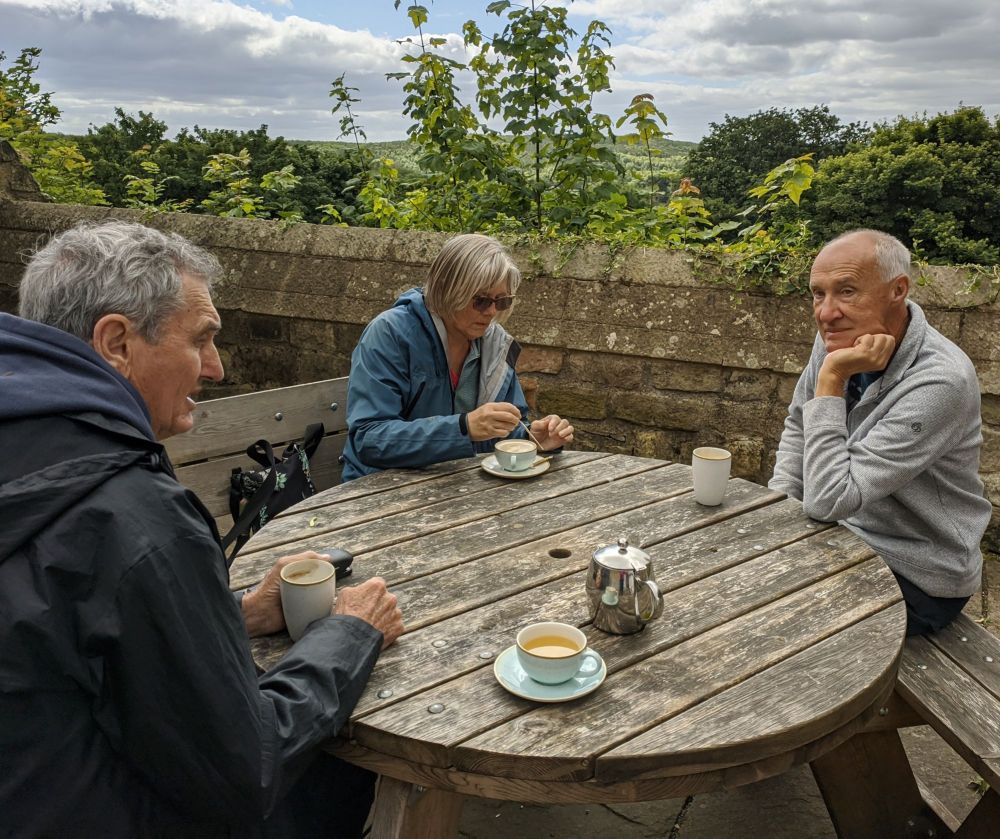
We had lunch there, but we brought our own picnic lunch. Keith objects to paying good money for sub-standard food at a cafe!
Here’s a little bat lying on the stone floor step in the old Hardwick Hall. I think it’s too cold, so somebody picked it up and put it on a warmer ledge.

Last photo of tapestries – these are all tapestries along the stone staircase!

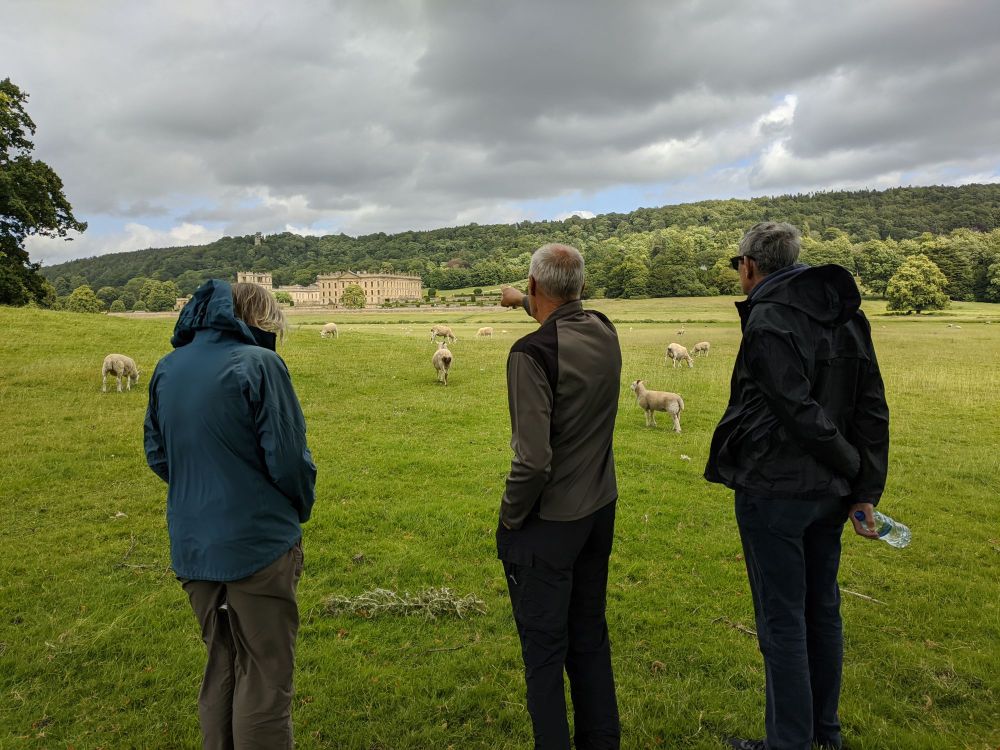
Then we did a long, brisk walk through the grounds of Chatsworth House, strolling through green fields studded with huge English trees and many sheep with their lambs ambling around and focussed on keeping the grass shorter. Keith’s father used to be a tenant farmer for the Dukes of Devonshire (their surname is Cavendish) who own Chatsworth Park, and Keith grew up on the farm nearby, so he knows the grounds very well. Up some steep hill slopes, looking out over the green valleys and hills.
We had a nice dinner at a nearby pub, the Cavendish club and finished off with visiting the nearby parish church. Here’s a bit of trivia for you. This white stone in the foreground of the photo below is in memory of John F. Kennedy, the American President who visited the grave in front of the stone where his sister, Kathleen was buried. Kathleen had married into the Cavendish family.

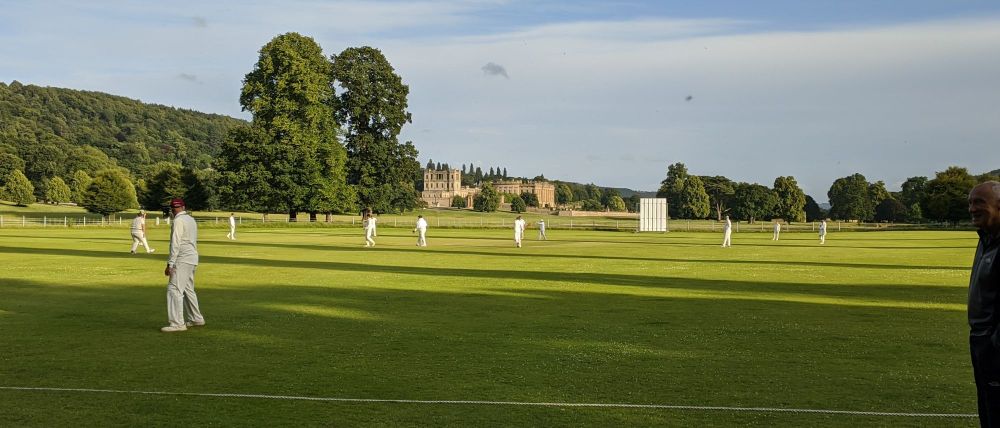
Another bit of trivia for you. The Cavendish banana is named after them too. Here’s some cricketers playing a match on an English “summer” evening in the Chatsworth grounds. The club room behind me has a little thatched roof!
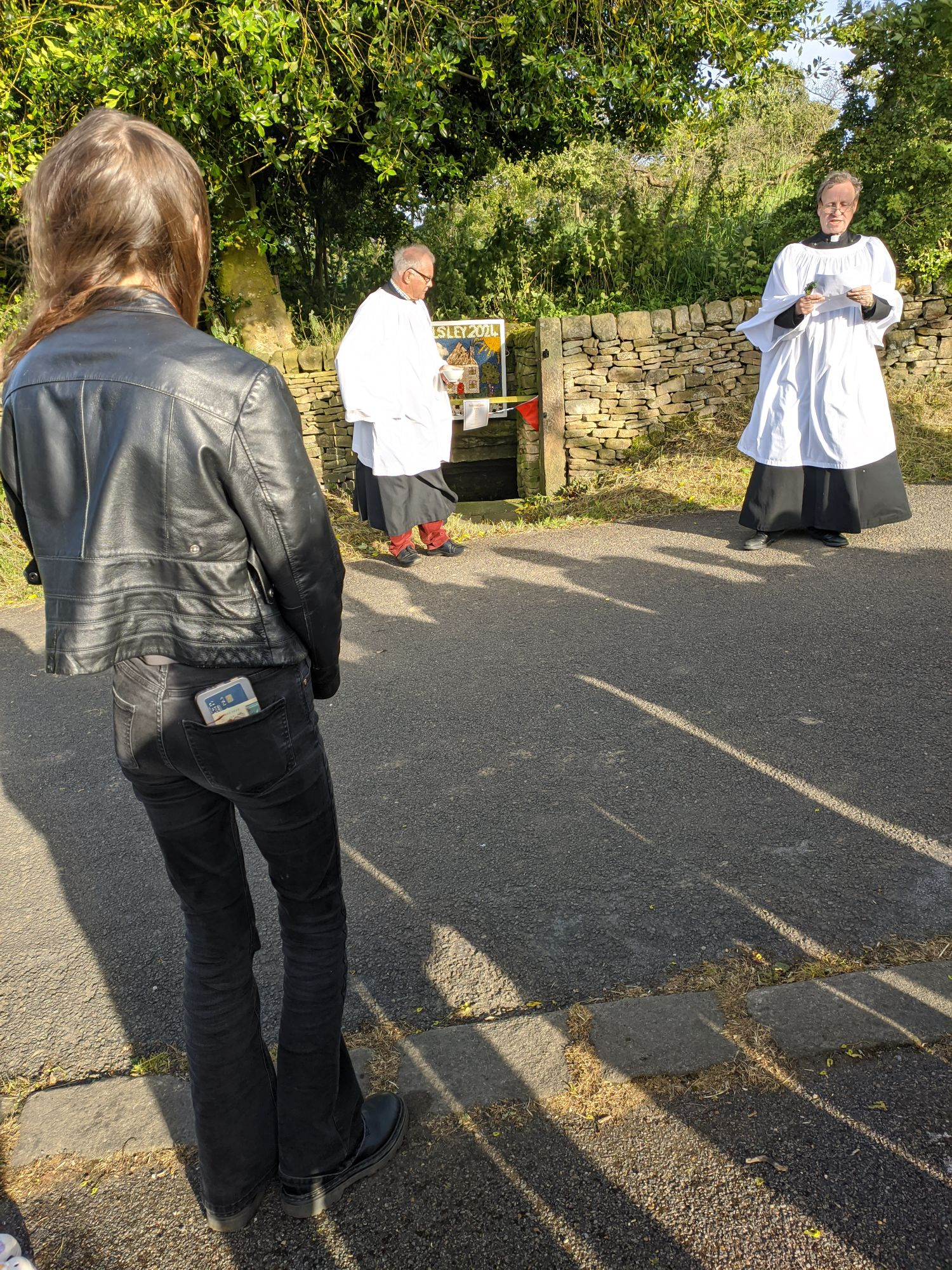
Lastly, Keith saw a notice that the Dressing of the Wells Blessing was happening nearby. So we drove a few minutes to another little village where the Vicar blessed the local well. We got there just in time. It’s an ancient custom going back many hundreds and hundreds of years. Local villages would “dress” their wells with beautiful pictures made of flowers and the local priest would ask God to bless their wells and water supply, knowing that they needed the protection of God to for their water supply. Keith said the villagers used to do elaborate and beautiful Biblical scenes, but now it’s much scrappier, usually done by children and not always on theme. But the words the vicar said and prayed, I found, are still meaningful and a good reminder that we are not autonomous and powerful, but we are reliant on God who is our Creator and Good Father.
And to finish off, here’s a photo of the remarkable Bess of Hardwick!

 Standing on a hill