We’ve been staying at Nof Ginosar. In bungalow rooms on an Israeli kibbutz. And there’s a big hotel too. This kibbutz was started in the 1930s before Israel won their war of independence. There’s air-raid bunkers around the grounds.
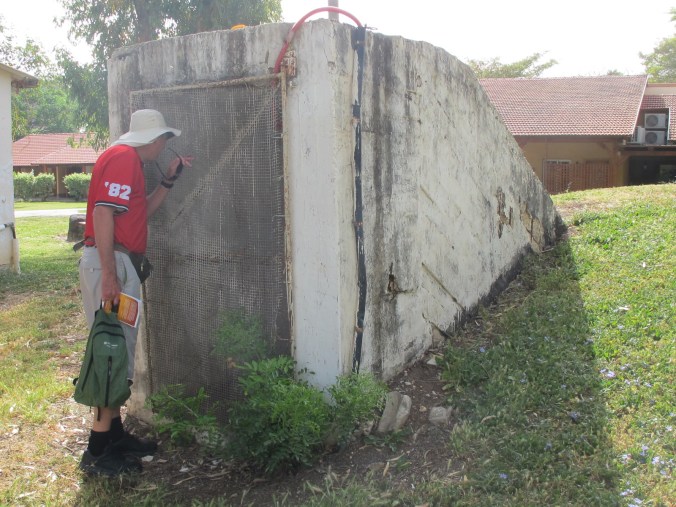
Kibbutzs (I don’t know what the plural of Kibbutz is) were set up as Zionist socialist communities and many of them were more politically than religiously motivated. This kibbutz now earns its money in tourism. They don’t farm any more. At the back of the property are still the families living there with their children. But the bunkers would have been built in their times of war. Most of them are used for old storage. But there’s a big one that’s been turned into a meeting room for tour groups. We had our study and meditation time in it last night.

This sign is on one of the doors of the hotel. So we asked about it. It’s for Jewish guests to use on the Sabbath. It’s left open manually, so they’re not using electricity or doing work on the Sabbath. And on the Sabbath the elevator stops at every floor. So that Jewish guests don’t have to press the elevator button which consists of work. And you can’t do work on the Sabbath.
On this property is also a little museum with one exhibit. Philip and I went to see it this morning. A few years ago, following a drought which lowered the shore line of Lake Galilee a couple of working fisherman discovered the remains of an old boat. Not far from this kibbutz. Archaeologists got very excited because the boat was found to be 2,000 years old. Here on the shores of Lake Galilee. It’s called the Jesus Boat and took them 10 years to preserve it. Because as soon as it was exposed to air the wood started to crumble to dust. It was amazing to see. Even if Jesus never stepped foot in it, there were people in his era who did. It’s a boat that was much used and often repaired during its working life before it was scuttled.

Before breakfast, there’s an option of a meditation time together that Philip and I like going to. But when we got there this morning, the room (the bunker room) was locked and the two tour leaders were missing. Our group ended up doing it standing outside. And just as we said “Amen”, Paul ran up. He’d not heard his alarm. But we’d managed fine without him. He works incredibly hard. No wonder he was tired.
After breakfast, our bus took us an hour’s drive through the high, rolling Galilee hills and mountains. Through the big town of Cana to Nazareth. Nazareth looks nothing like I had imagined. It’s a very big town of 80,000 people. A dusty, crowded, bedraggled city of concrete buildings everywhere. A mainly Arab town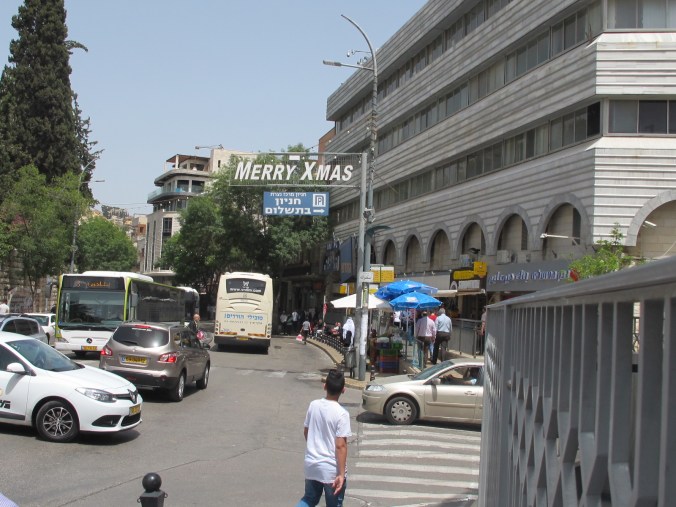 . We walked to the nearby Nazareth Village. An historically and archaelogically accurate recreation of what life was life in the first century, at the time of Jesus.
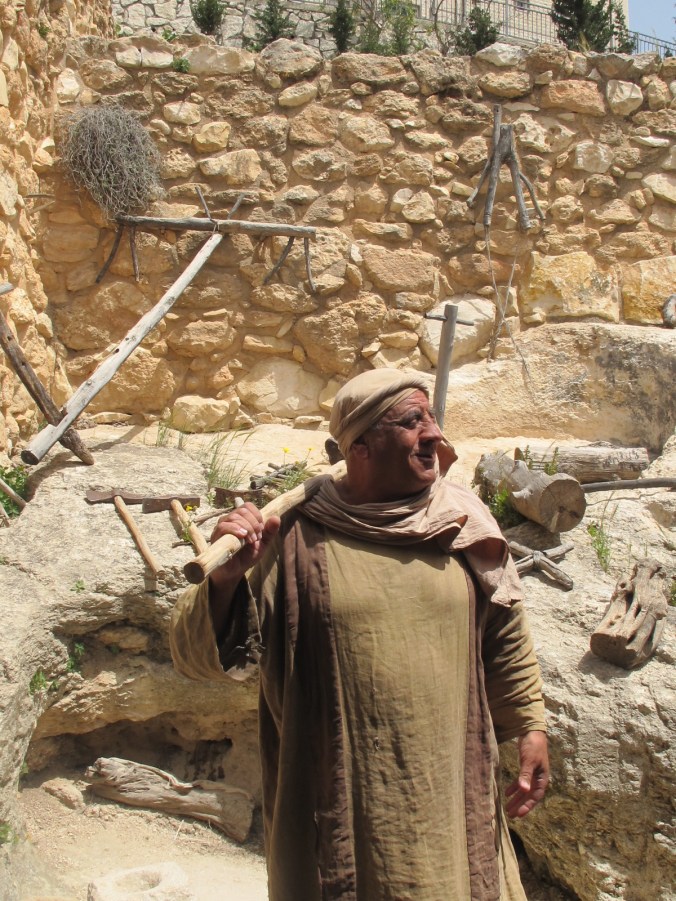
Carpenters like Joseph and Jesus worked with both stone and wood.
They started it on the side of a steep hill on land by the side of a Scottish missionary hospital. When they started working on it, they found that for centuries the land had been used for farming. They found an ancient wine press in their excavations.
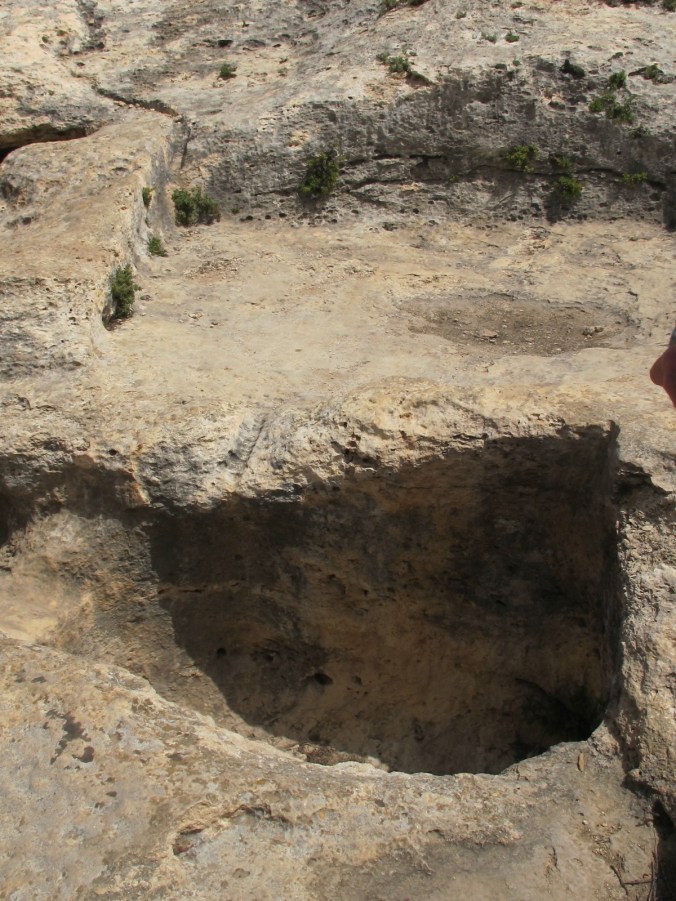
The grapes were put on the flat top section and squashed with their feet, to then drain through the small groove you can see, down to the big hole.
They’ve transplanted old olive trees. And terraced the land, just like they would have done in the first century.
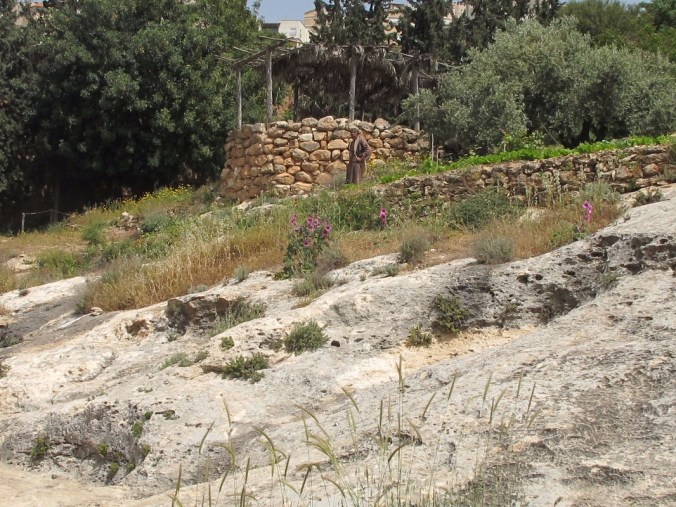
A farmer standing in his terraced garden and outside his watch-tower.
Our Nazareth guide made first century life come to life for us! Jesus’s life as a boy and man on this earth more gritty and earth-bound. Less ethereal and wispy and fuzzy round the edges.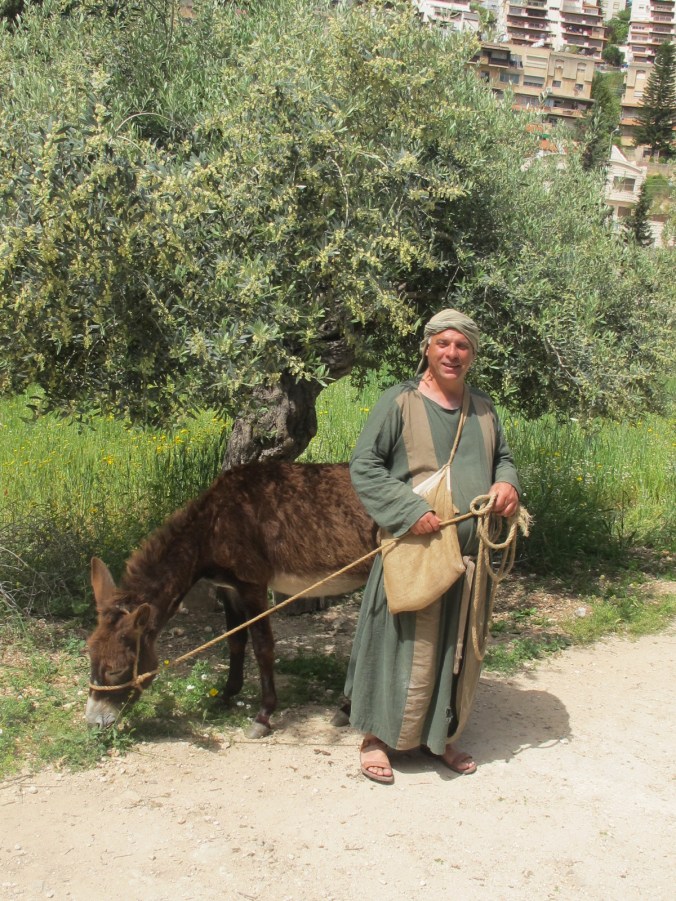 Jesus’s sayings and parables make so much more sense and are more challenging when you see the context.

They have local people dressed in costume and demonstrating things like spinning, carpentry , gardening, shepherding.

Women spinning and weaving
Reminded me of when we used to do “Journey to Bethlehem” for the community back in our Lakeside days at Christmas!
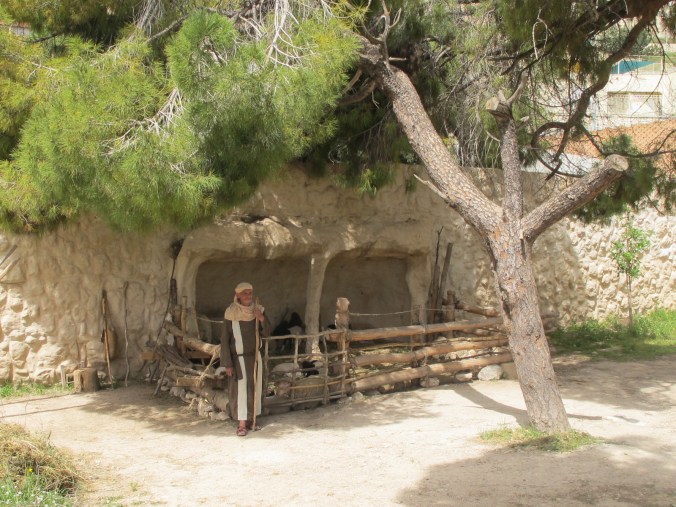
They follow the seasons. So we saw a field with wheat and tares (weeds) that will be ready for harvest soon. And they’ve got the implements there to harvest, thresh and winnow the wheat when the time for harvest comes.

Our tour guide standing on a threshing platform, and Paul holding a winnowing fork. The wheat field, with tares is behind them.
My biggest difficulty was trying to take photos without us tourists being in the way of the photo! So many of my mental pictures of daily life are wrong – either from children’s storybooks or my imagination. And Jesus talked often about daily life things. His words are now more vivid in my mind.

Today has been our warmest day by far. We’re back at the kibbutz accommodation and Philip has been for a swim in the swimming pool. I did think of going for a swim in Lake Galilee. But you have to walk out a long way and it’s a very stony, rocky bottom. So I haven’t bothered.

Tomorrow is our last day on the Oak Hall tour. Hard to believe. It’s gone by so quickly. Got to know some great people, being able to discuss life and spiritual issues and faith journeys easily. Both Philip and I feel ready to come home now. But we’ve got another week to go yet. I had crammed lots of plans next week. But we’re probably not going to do all that much now. This has been a very intense and exciting learning experience. Tiring too. Might need to recharge the physical batteries. This past fortnight has definitely recharged the spiritual and emotional batteries.
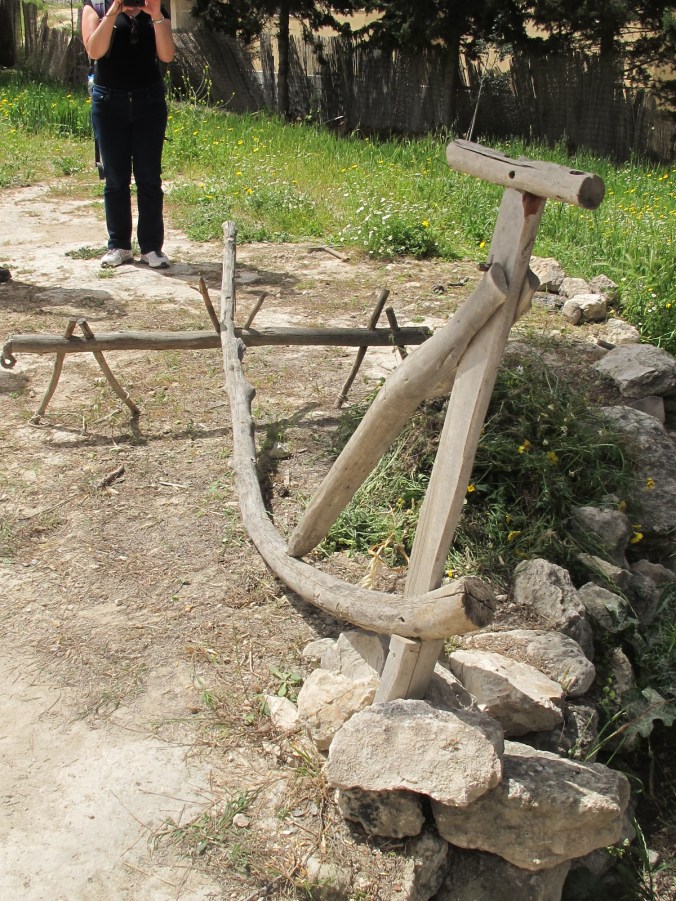
This is a synagogue built like in Jesus’s day. but the photo doesn’t show it well. The reality is very different to my imagination – and this photo!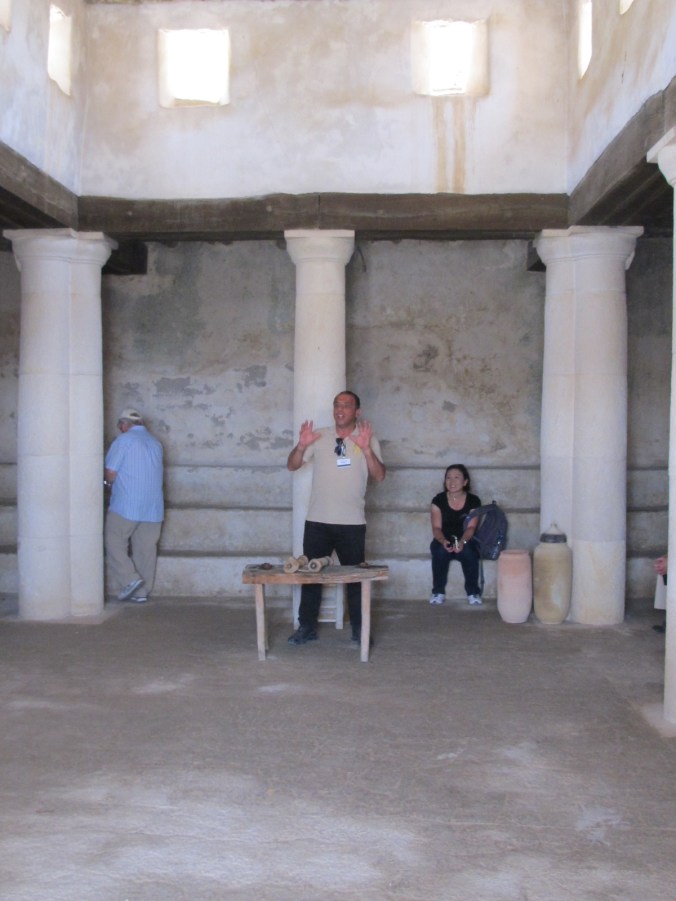 This is a plough. There’s a handle for ‘putting your hand to the plow’. The closest vertical pole is the plough stick. The two upside down “V’s” are the yokes for the animals.
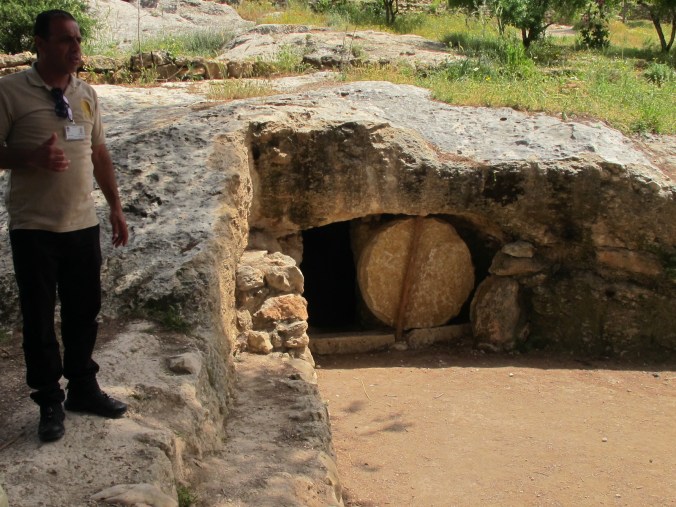
A tomb similar to what Jesus was laid in before he rose again.
 Standing on a hill