Wheer wer’ta bahn w’en Aw saw thee,
Oh Ilka Moor bah ‘at?
Wheer wer’ta bahn w’en
Aw saw thee,
On Ilka Moor bah ‘at?
Foreign language? Depends what you mean by “foreign”? Philip and I are in Yorkshire in a little town on the Yorkshire Dales called Ilkley. And it has lots of claims to fame, including being a world-famous health spa resort in the 1800s. But apparently it has also been immortalised by the world famous folk song “On Ilka Moor Baht’at” sung around many a camp fire! I can’t say I’ve ever heard it sung, so it must be before my era!
Philip and I left Rosie to spend her last holiday week in Edinburgh before she flies home, and we’ve rented a car and are staying at a friend’s welcoming house at Ilkley in Yorkshire for a few days. We’ve had lots of chats to catch up on all the news, and now they’ve left us in an empty house because they’ve had to go away for their son’s university graduation for a few days.
So a quick blog because I’m having internet issues!
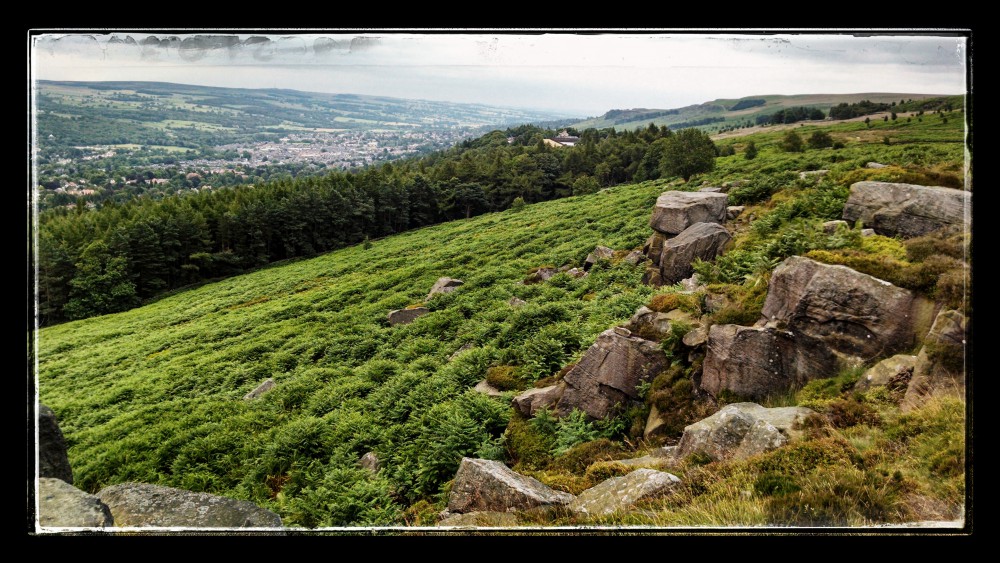
On Ilkley Moors, with town of Ilkley in valley below
After a late breakfast, Philip and I drove out to Bolton Abbey today. I went there with Rosie about 5 years ago in the wintertime. It’s a beautiful, inspiring, peaceful spot. Much more touristy in the summertime than the bleak winter. But each season brings its own special slant.
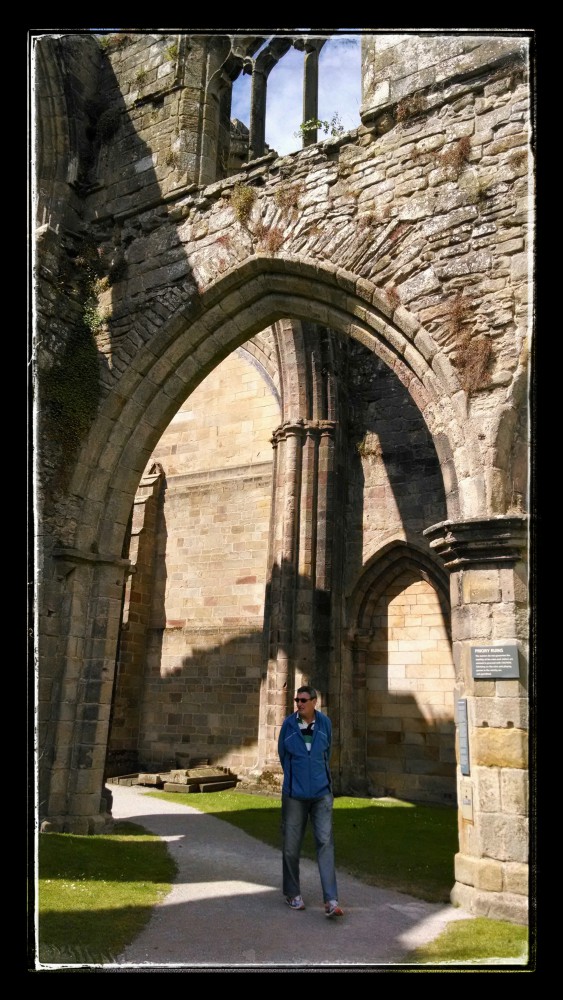
When you walk through the doorway in the high wall by the road, before you opens up a wide green river valley with a river running through and over on the left, on the banks of the river is the ruins of the once very busy and propserous Bolton Priory.

Bolton Priory was built in the 1100s on the banks of the River Wharfe and lasted until the 1500s when Henry 8th got cranky and busy to destroy the churches. The entrance part of the Priory, called the Nave, was spared the total destruction and has been continually used for worship since. Now the ruined stone tracery gives glimpses of the giftedness and craftsmanship used for God’s glory so long ago. There are scattered, fallen tombstones lying around on the green grass.
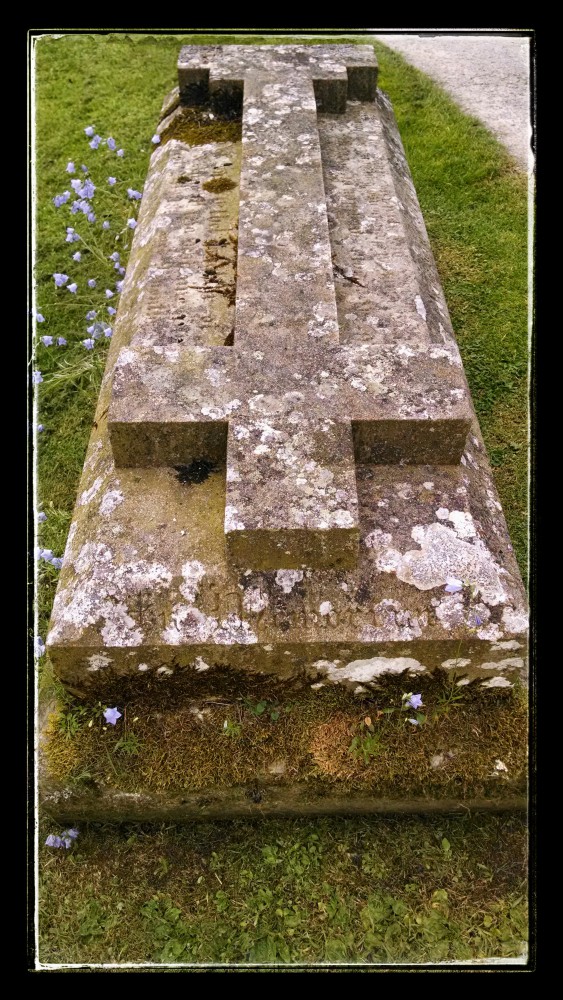
Because of Christ, out of death comes life. Blue flowers growing out from grave.
In the Nave, which is set up as an ongoing worshipping community, I knelt and sat there in prayer while Philip went round and read all the interesting history snippets. I love being in a place where thousands of people for hundreds of years have continually been worshipping God. As we were getting ready to leave, the Warden asked me if I would like to ring the bells for Angelus. Which is a midday reminder to pray. So he showed me how to do it. Just had to tug on a rope in a certain sequence that he told me. And I felt enormously privileged and very excited. A real highlight for me.
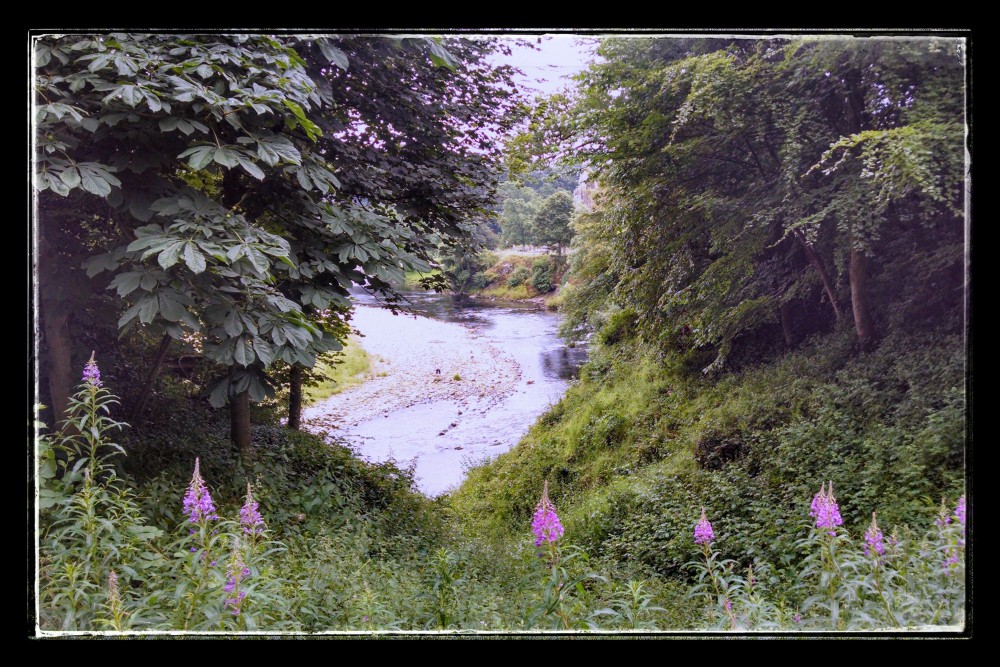
River Wharfe with Bolton Priory between the trees
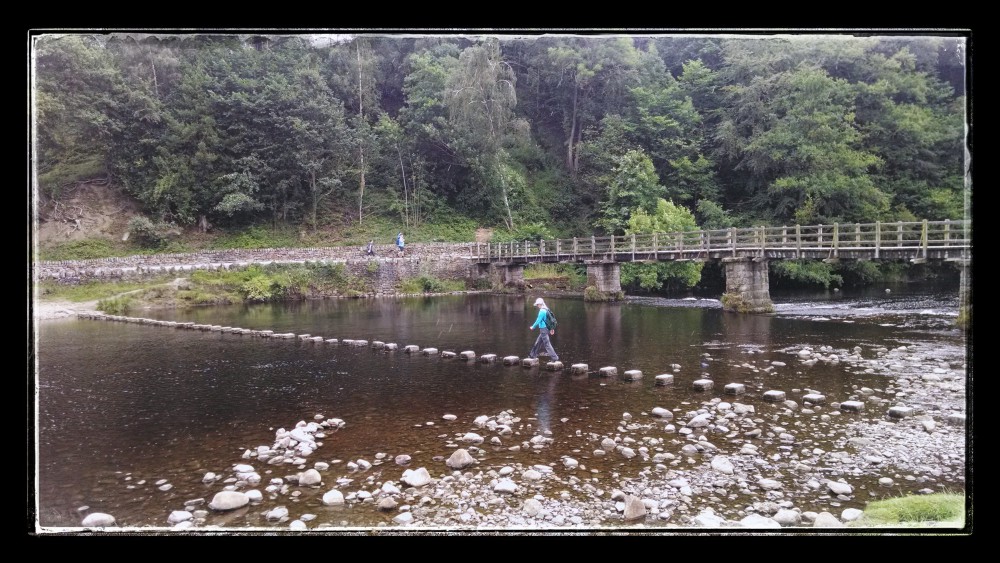
Philip walked across the little bridge and I stepped on the stepping stones that have been used since medieval times, to cross the River Wharfe and we walked along its banks, amongst the huge trees, and then across another bridge to complete the circle back to the Priory.
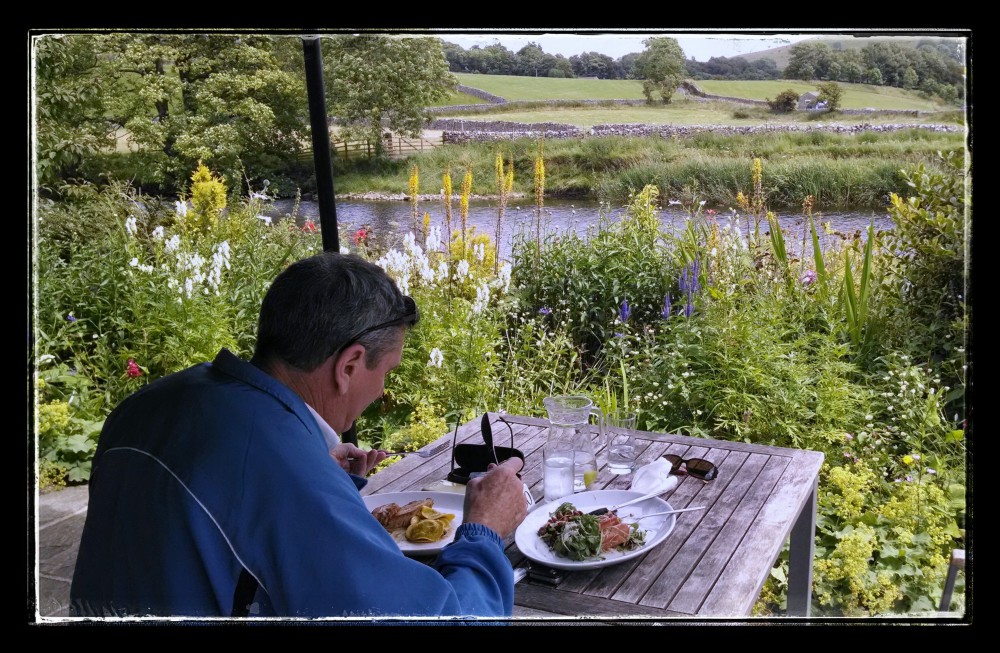
Our host had suggested to us that the nearby little village of Burnsall had a great pub to have lunch. So we took him up on his suggestion and ate it in the pub’s backyard, overlooking the River Wharfe.
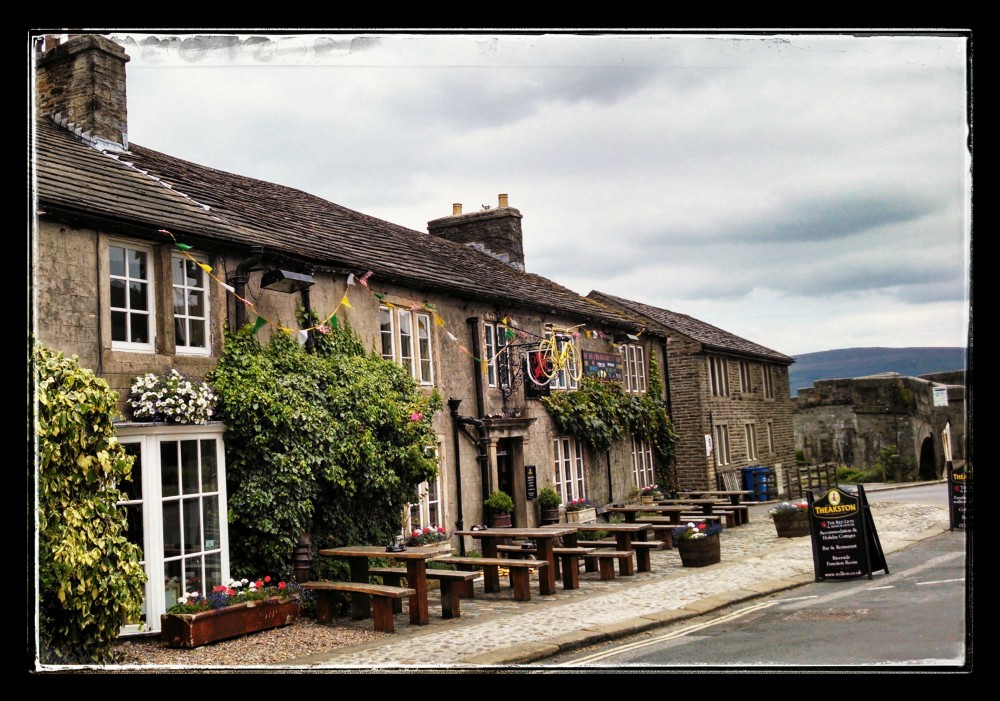
Red Lion pub. Notice yellow bicycle on walls of Red Lion. (More about that yellow bicycle later!)
The pub has been there since the 1600s. Originally for the ferrymen of the river. A fancier meal than we normally have. I had pigeon breast and enjoyed it too.

White geese on River Wharfe at Burnsall
We thought we’d keep exploring. So drove on to the village of Grassington. Cobbled, winding streets on a steep hill with old, grey stone misshapen houses leaning onto the street.

Grassington
Lots of interesting little shops to poke around and explore. Beautiful, riotiously colourful baskets of flowers everywhere, and tiny front gardens full of vivid flowers. And the wildlife I saw today was a pancake hedgehog on the road in Grassington. Poor little thing.
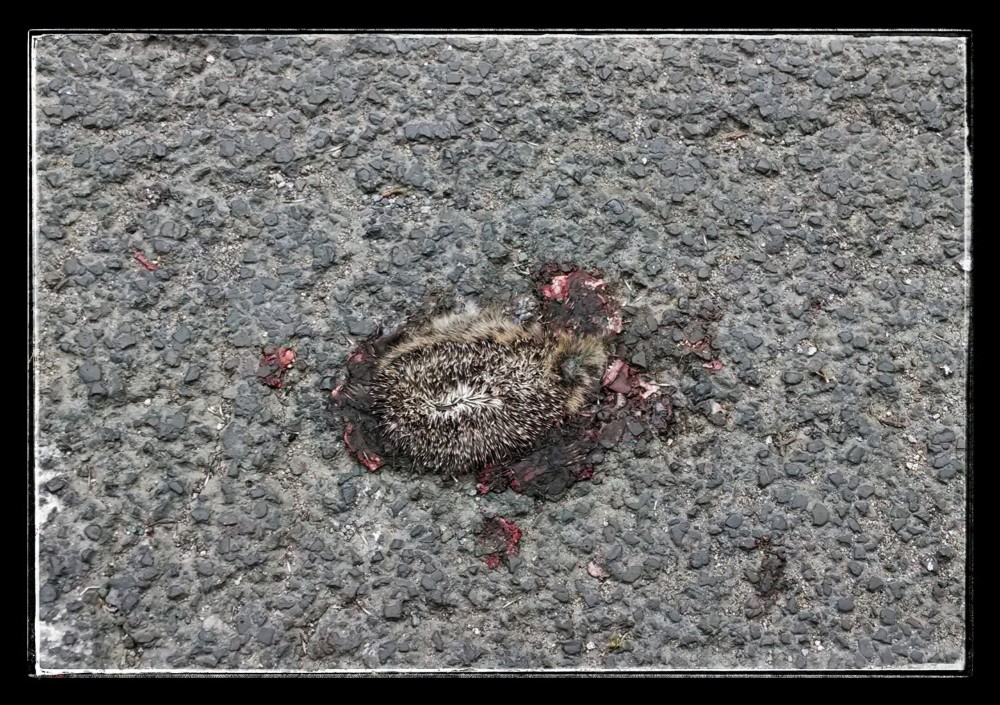
Wildlife – pancake hedgehog.
We thought we’d just keep driving through the Dales. Very narrow roads bordered on both sides by drystone walls. If an oncoming car came, it was very hard to get past. Some of the places would have been impossible. But fortunately we didn’t meet any cars when we were in those places!
The green, wide dales were dotted with white sheep and grey stone cottages. The centuries old walled fences snaked up and down the hills in jigsaw patterns. Hardly any straight lines. The high hills folded into themselves and the valleys had little villages and dark green woods. Interesting village names like Appletreewick.
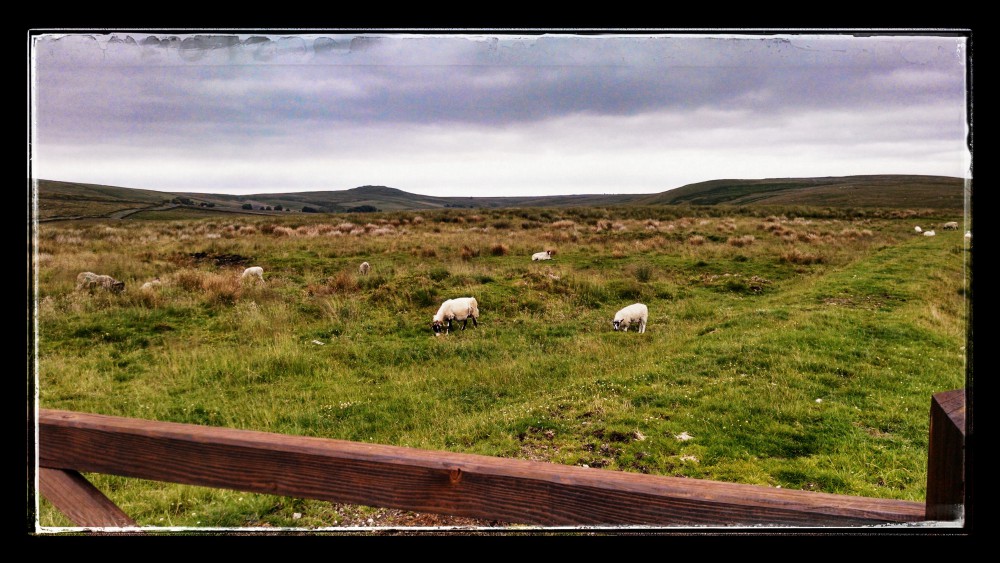
Shaun the sheep up on the High Moors
When we got back to the house In Ilkley, I walked up to the moor behind the house and along one of the many paths to a big stone where a 5,000 year old grafitti in stone is preserved.

5,000 year old grafitti. Don’t ask me how they age it!
And I found wild blueberry bushes again up on that moor. Helped myself again to a feast of the tart sweetness.
While I was doing that, Philip walked down into Ilkley Village. He went into the church where he found a plethora of history, going back to Roman times. So he had a happy time too!
 Standing on a hill